Short direct answer
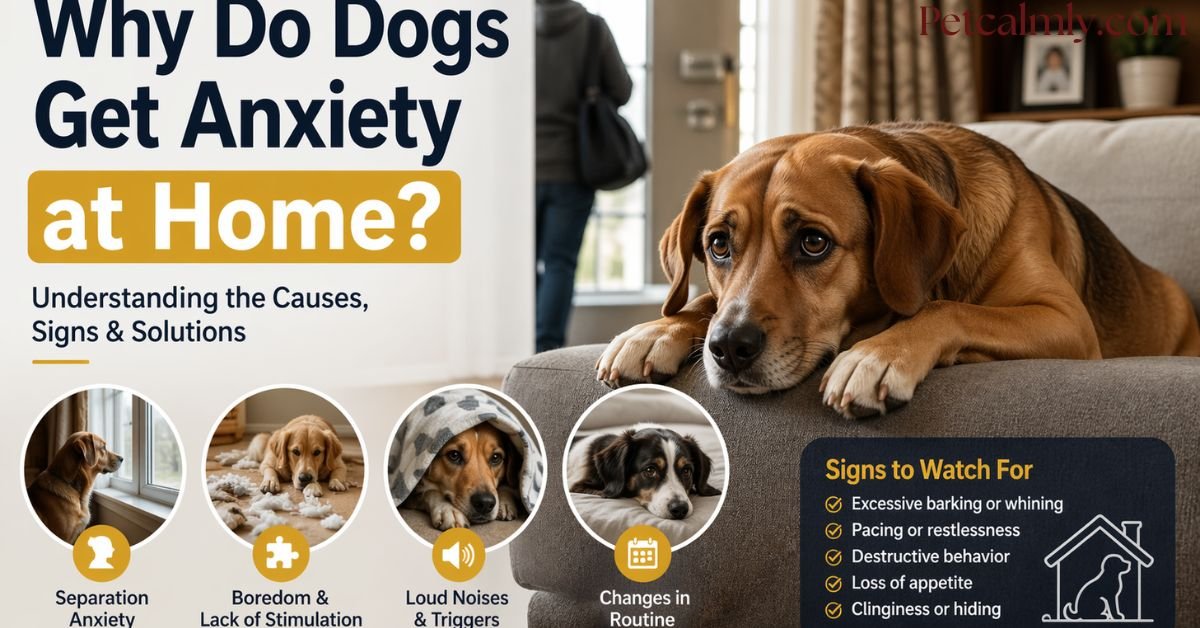
Dogs can develop anxiety at home due to separation from their owners, lack of mental stimulation, past trauma, sudden routine changes, or even subtle environmental triggers like noise. Even though home feels safe to us, dogs may associate it with stress if their emotional or physical needs are not fully met.
Why This Matters for Dog Owners
Many dog owners assume home is the safest and most relaxing place for their pet. After all, it’s where they sleep, eat, and spend most of their time. But for some dogs, home can quietly become a source of stress.
You might notice your dog pacing, whining, chewing furniture, or acting restless when nothing seems wrong. These behaviors can feel confusing or even frustrating. But they are often signs of anxiety—not bad behavior.
Understanding why dogs get anxiety at home is important because it helps you respond with care instead of punishment. When you recognize the root cause, you can create a calmer, happier environment where your dog feels truly secure.
8 Common Reasons Dogs Develop Anxiety at Home
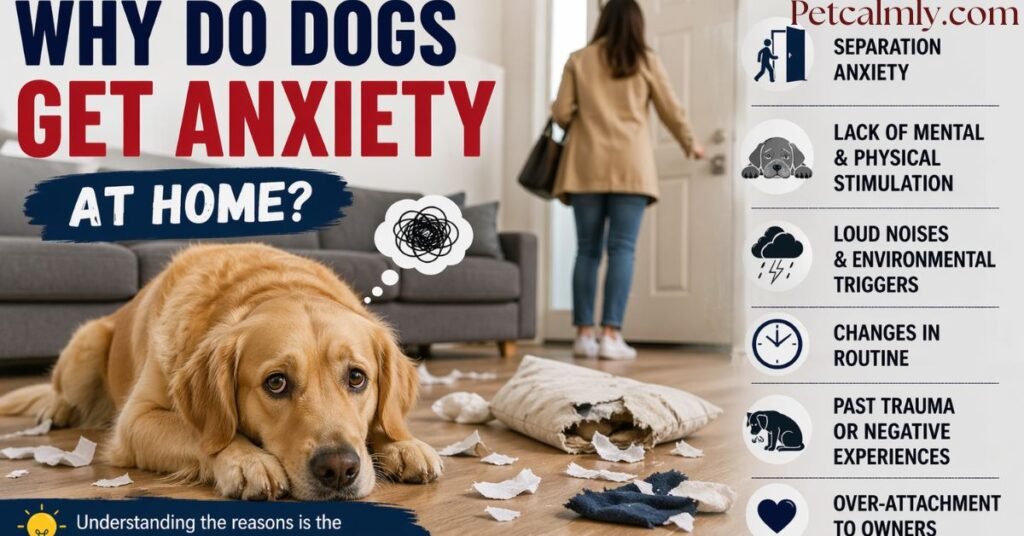
1. Separation Anxiety (The Most Common Cause)
One of the biggest reasons dogs feel anxious at home is separation anxiety. This happens when they form a strong attachment to their owner and struggle when left alone.
Even if you’re only gone for a short time, your dog may feel like they’ve been abandoned.
Example:
A dog may start barking, scratching doors, or destroying items shortly after you leave not because they’re “naughty,” but because they’re distressed.
Dogs are social animals. Being alone doesn’t come naturally to them, especially if they are used to constant companionship.
2. Lack of Mental and Physical Stimulation
Dogs need more than just food and shelter. They need activity, engagement, and purpose.
When dogs don’t get enough exercise or mental challenges, they build up energy and frustration. This can quickly turn into anxiety.
Think of it like this:
A bored dog is like a child stuck indoors all day with nothing to do—it leads to restlessness and stress.
Signs of this type of anxiety include:
- Excessive barking
- Chewing objects
- Digging or pacing indoors
3. Changes in Routine
Dogs thrive on consistency. They feel safe when they know what to expect.
Sudden changes—like a new work schedule, moving homes, or even different feeding times—can make dogs feel uncertain.
Example:
If you used to be home all day and suddenly start leaving for long hours, your dog may become anxious because their “normal” has changed.
Even small disruptions can have a big emotional impact on sensitive dogs.
4. Past Trauma or Negative Experiences
Some dogs carry emotional baggage from the past.
Rescue dogs or dogs that have experienced neglect, abuse, or abandonment may associate certain environments—including homes—with fear.
Even if your home is loving and safe, it may take time for them to fully trust their surroundings.
Mini story:
A rescue dog might panic when left alone because previous owners abandoned them. To the dog, being alone at home feels like history repeating itself.
5. Loud Noises and Environmental Triggers
Home isn’t always as peaceful as it seems.
Common household triggers include:
- Thunderstorms
- Fireworks
- Vacuum cleaners
- Construction noise
These sounds can make dogs feel threatened, especially if they don’t understand what’s happening.
Some dogs even associate certain rooms or spaces with these stressful events, increasing anxiety over time.
6. Lack of Socialization
Dogs that haven’t been properly socialized may feel anxious even in familiar environments.
They may struggle with:
- New people visiting the house
- New smells or objects
- Changes in surroundings
This type of anxiety often shows up as fear-based behavior, such as hiding or trembling.
7. Over-Attachment to Owners
Sometimes, the problem isn’t just separation—it’s over-dependence.
If a dog is constantly with their owner and never learns to be alone, they may panic the moment they are left by themselves.
This creates a cycle:
- Dog clings more
- Owner gives more attention
- Dog becomes even more dependent
8. Medical Issues That Mimic Anxiety
Not all anxiety is purely emotional.
Certain health problems can cause behaviors that look like anxiety, such as:
- Restlessness
- Whining
- Pacing
Conditions like pain, hormonal imbalances, or cognitive decline (in older dogs) may be the real cause.
That’s why it’s important to rule out medical issues if symptoms appear suddenly.
13 Signs Your Dog May Be Anxious at Home
Recognizing anxiety early can make a huge difference.
Behavioral Signs
Constant barking or whining
Destructive chewing
Scratching doors or windows
Pacing back and forth
Trying to escape
Physical Signs
Excessive panting (without exercise)
Drooling
Shaking or trembling
Loss of appetite
Emotional Clues
Clinginess
Hiding
Avoiding eye contact
Sudden aggression
Real-Life Example: What Anxiety Looks Like at Home
Imagine this:
You leave for work in the morning. Within minutes, your dog starts pacing. They whine, scratch the door, and eventually chew the edge of a table.
By the time you return, the house is messy and your dog looks both excited and stressed.
This isn’t bad behavior. It’s a dog trying to cope with overwhelming anxiety.
When Should You Be Concerned?
Not all anxious behavior is severe, but some signs should not be ignored.
You should be concerned if:
Your dog injures themselves trying to escape
Anxiety happens every time you leave
Behavior is getting worse over time
Your dog stops eating or sleeping properly
Aggression develops suddenly
In these cases, it’s best to consult a veterinarian or a professional dog behaviorist.
Early intervention can prevent long-term emotional distress.
What Should Pet Owners Do?
Helping an anxious dog doesn’t require perfection it requires patience and consistency.
1. Create a Predictable Routine
Dogs feel safer when life is predictable.
Try to:
Feed at the same times daily
Walk at regular intervals
Keep departure and return times consistent
This helps your dog understand what to expect.
2. Provide Enough Exercise
A tired dog is a calmer dog.
Daily physical activity helps release pent-up energy and reduces stress.
Examples:
Walks
Playtime (fetch, tug-of-war)
Outdoor exploration
Even 30–60 minutes can make a big difference.
3. Add Mental Stimulation
Mental exercise is just as important as physical activity.
Try:
Puzzle toys
Treat-dispensing games
Training sessions
This keeps your dog engaged and reduces boredom-related anxiety.
4. Practice Short Departures
If your dog struggles with being alone, start small.
Leave for a few minutes, then gradually increase the time.
This teaches your dog that you always come back.
5. Avoid Dramatic Goodbyes
Big emotional departures can actually increase anxiety.
Instead:
Keep goodbyes calm and brief
Avoid excessive excitement when returning home
This normalizes your comings and goings.
6. Create a Safe Space
Give your dog a comfortable area where they feel secure.
This could include:
Their bed
Favorite toys
A blanket with your scent
Some dogs benefit from crates, while others prefer open spaces.
7. Use Calming Tools (If Needed)
Certain tools can help reduce anxiety, such as:
Calming music
Anxiety wraps
Pheromone diffusers
These are not magic solutions but can support other efforts.
8. Seek Professional Help
If anxiety is severe, don’t handle it alone.
A vet or certified trainer can:
Identify triggers
Create a behavior plan
Recommend treatments if necessary
3 Mistakes to Avoid
1: Punishing Anxious Behavior
Punishment can make anxiety worse.
Your dog isn’t misbehaving on purpose they’re reacting to fear or stress.
2: Ignoring the Problem
Anxiety rarely fixes itself.
Without intervention, it often becomes more intense over time.
3: Inconsistent Routines
Changing schedules frequently can confuse your dog and increase stress.
Conclusion
Dogs get anxiety at home for many reasons separation, boredom, past trauma, or changes in routine. What looks like “bad behavior” is often a sign of emotional distress.
The good news is that most cases of anxiety can be improved with simple, consistent care. By understanding your dog’s needs, creating a stable environment, and offering mental and physical stimulation, you can turn your home into a place of comfort again.
If symptoms are severe, don’t hesitate to seek professional help. Your dog relies on you not just for food and shelter, but for emotional security too.
More Information About Pets, Please Visit Our Website: What Is Dog Anxiety in Simple Words?
Frequently Asked Questions
1: Can dogs really have anxiety at home?
Yes, dogs can feel anxious even in familiar environments. Triggers like being alone, boredom, or loud noises can make home feel stressful instead of safe.
2: How do I know if my dog has separation anxiety?
If your dog shows distress only when you leave like barking, destruction, or pacing it’s likely separation anxiety.
3: Do certain dog breeds get anxiety more easily?
Yes, some breeds that are very social or intelligent may be more prone to anxiety, especially if left alone for long periods.
4: Can I leave my anxious dog alone at home?
Yes, but it’s important to train them gradually and provide comfort tools. Sudden long absences can worsen anxiety.
5: Will my dog outgrow anxiety?
Some dogs improve with age, but most need proper training and support to overcome anxiety.
6: Should I talk to a vet about my dog’s anxiety?
Absolutely. A vet can rule out medical causes and guide you toward the best treatment plan if anxiety is severe.