Short direct answer
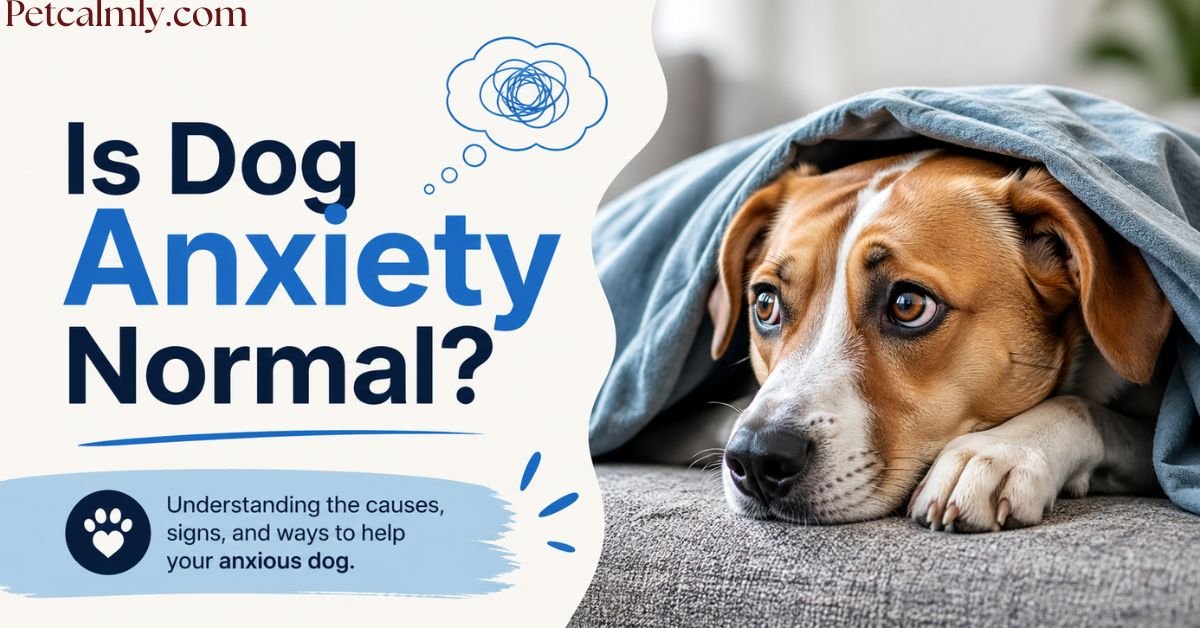
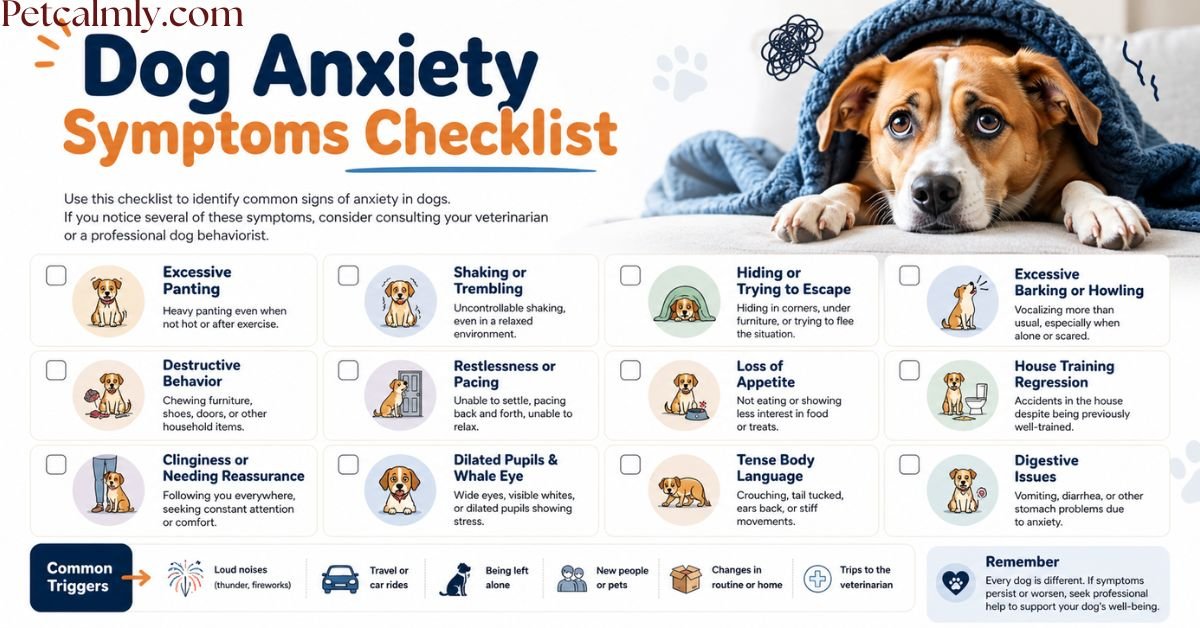
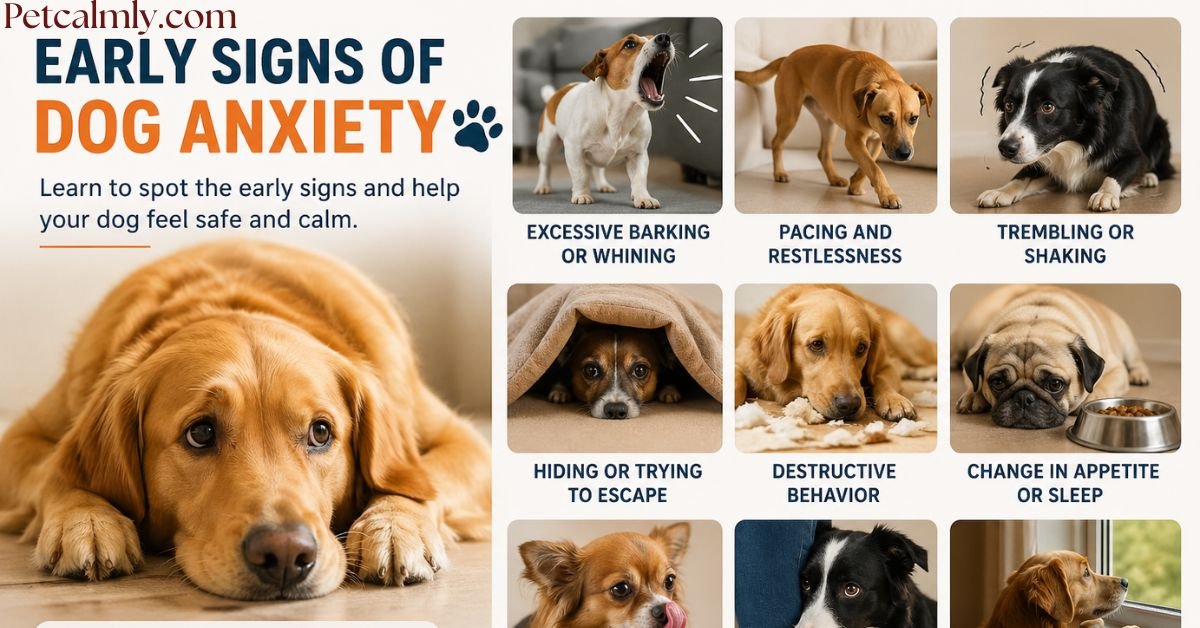
Early signs of dog anxiety include excessive barking, pacing, trembling, hiding, clinginess, destructive behavior, and changes in appetite or sleep. Dogs may also lick excessively, avoid eye contact, or try to escape. These signs usually appear when a dog feels stressed, fearful, or uncertain about its environment or routine.
Early Signs of Dog Anxiety: A Complete, In-Depth Guide for Pet Owners
Dogs are loyal, loving companions but they can also feel stress and anxiety just like humans. The challenge is that they cannot explain what they’re going through. Instead, they show it through behavior.
Many pet owners notice anxiety only when it becomes severe chewed furniture, nonstop barking, or panic when left alone. But anxiety rarely starts that way. It begins with small, subtle changes.
Understanding the early signs of dog anxiety can help you step in before things get worse. This guide will walk you through everything you need to know in a clear, practical, and trustworthy way.
Why Early Detection of Dog Anxiety Is So Important
Catching anxiety early can completely change your dog’s life.
When ignored, anxiety can:
- Turn into destructive behavior
- Lead to aggression or fear-based reactions
- Affect your dog’s physical health
- Damage your bond with your pet
But when recognized early, anxiety is often manageable with simple changes.
Think of it like a small crack in a wall. If you fix it early, it’s easy. If ignored, it becomes a bigger problem.
What Causes Anxiety in Dogs?
Dog anxiety doesn’t appear out of nowhere. There’s always a reason even if it’s not obvious at first.
Understanding the cause helps you respond in the right way.
Separation from Owners
This is one of the most common causes.
Dogs are naturally social. When left alone too long, they may feel unsafe.
Example:
Your dog is calm when you’re home but starts barking or scratching the door when you leave.
Loud Noises and Sudden Sounds
Thunderstorms, fireworks, or even traffic noise can trigger fear.
Some dogs are more sensitive than others.
Changes in Routine or Environment
Dogs love predictability.
Small changes can feel big to them:
- Moving to a new home
- New family members
- Changes in feeding or walking times
Past Trauma or Negative Experiences
Rescue dogs or dogs with difficult pasts may carry fear.
Even something small like a loud voice can remind them of past stress.
Lack of Socialization
Dogs that were not exposed to different environments early in life may feel overwhelmed easily.
Health Problems
Pain or illness can look like anxiety.
If your dog suddenly shows symptoms, a health check is important.
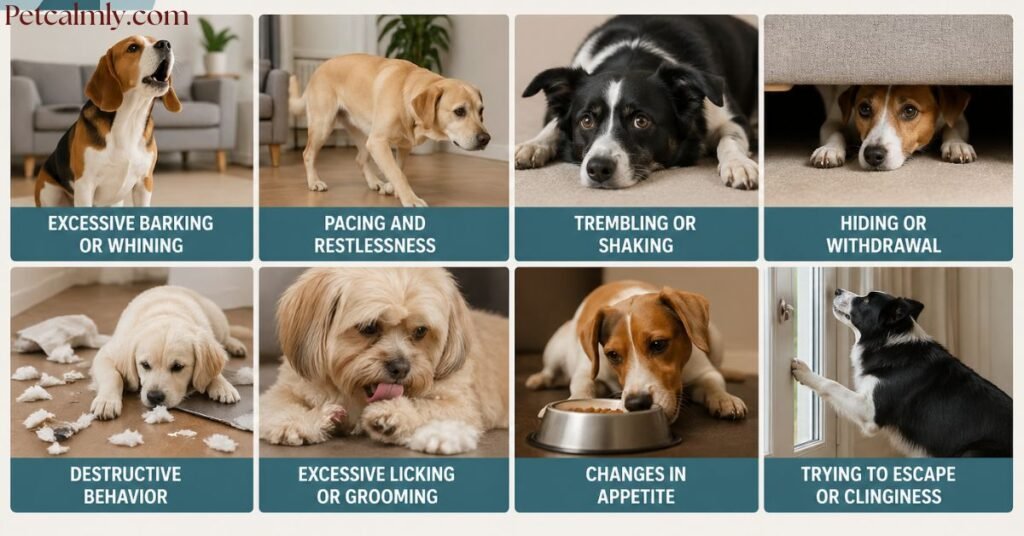
10 Early Signs of Dog Anxiety (Complete Breakdown)
Every dog reacts differently. Some become loud and restless. Others become quiet and withdrawn.
Let’s explore the most common early signs in detail.
1. Excessive Barking or Whining
A sudden increase in noise is often one of the first signs.
- Barking when left alone
- Whining for attention constantly
- Vocalizing without clear reason
Mini Scenario:
You pick up your keys, and your dog immediately starts whining. This may signal anxiety about being left alone.
2. Pacing and Restlessness
An anxious dog often struggles to relax.
- Walking back and forth repeatedly
- Circling the same area
- Constant movement even when tired
This behavior is similar to humans pacing when worried.
3. Trembling or Shaking
Physical reactions are strong indicators.
- Shaking without being cold
- Stiff body posture
- Tail tucked tightly
These signs often appear during fear-triggering events.
4. Hiding or Withdrawal
Not all anxious dogs are loud.
Some prefer to disappear.
- Hiding under beds or tables
- Avoiding eye contact
- Ignoring interaction
This can easily be mistaken as calm behavior, but it often signals fear.
5. Destructive Behavior
This is a very common early warning sign.
- Chewing furniture or shoes
- Scratching doors or walls
- Digging excessively
This usually happens when the dog is trying to release stress.
6. Changes in Eating Habits
Anxiety affects appetite.
- Eating less than usual
- Skipping meals
- Sudden overeating
Food behavior changes are often one of the earliest signs.
7. Excessive Licking or Grooming
Dogs may try to calm themselves.
- Licking paws constantly
- Chewing on skin
- Creating bald spots
This repetitive behavior is a coping mechanism.
8. Accidents in the House
If a trained dog suddenly has accidents, it could be stress not disobedience.
9. Clingy or Velcro Behavior
Some dogs become overly attached.
- Following you everywhere
- Refusing to stay alone
- Constant need for reassurance
10. Attempts to Escape
This is a serious sign.
- Scratching doors
- Jumping fences
- Trying to run away
This often happens during separation anxiety or fear.
Subtle Early Signs Most Owners Miss
Some signals are quiet but important.
Watch for:
- Yawning when not tired
- Lip licking without food
- Ears pinned back
- Avoiding certain people or places
- Sudden lack of interest in play
These are early stress signals that often go unnoticed.
Real-Life Example: How Anxiety Builds Over Time
Let’s imagine a common situation.
Day 1: Your dog eats less and seems quiet.
Day 2: It starts pacing when you prepare to leave.
Day 3: It barks and scratches the door when you go out.
Day 5: You come home to chewed furniture.
This progression shows how small signs turn into bigger problems.
If noticed early, it’s much easier to manage.
When Should You Be Concerned?
Not every unusual behavior means anxiety. But some patterns should not be ignored.
You should be concerned if:
- Behavior lasts more than a few days
- Symptoms become stronger over time
- Your dog stops eating or sleeping properly
- There is aggression or self-harm
- Escape attempts increase
If your dog is panicking or hurting itself, take it seriously.
What Should Pet Owners Do? (Simple, Effective Steps)
Helping an anxious dog doesn’t require complicated methods. Small, consistent actions can make a big difference.
Identify the Trigger
Start by observing.
Ask yourself:
- When does the behavior happen?
- What changed recently?
- Is there a pattern?
Understanding the cause is the key to solving the problem.
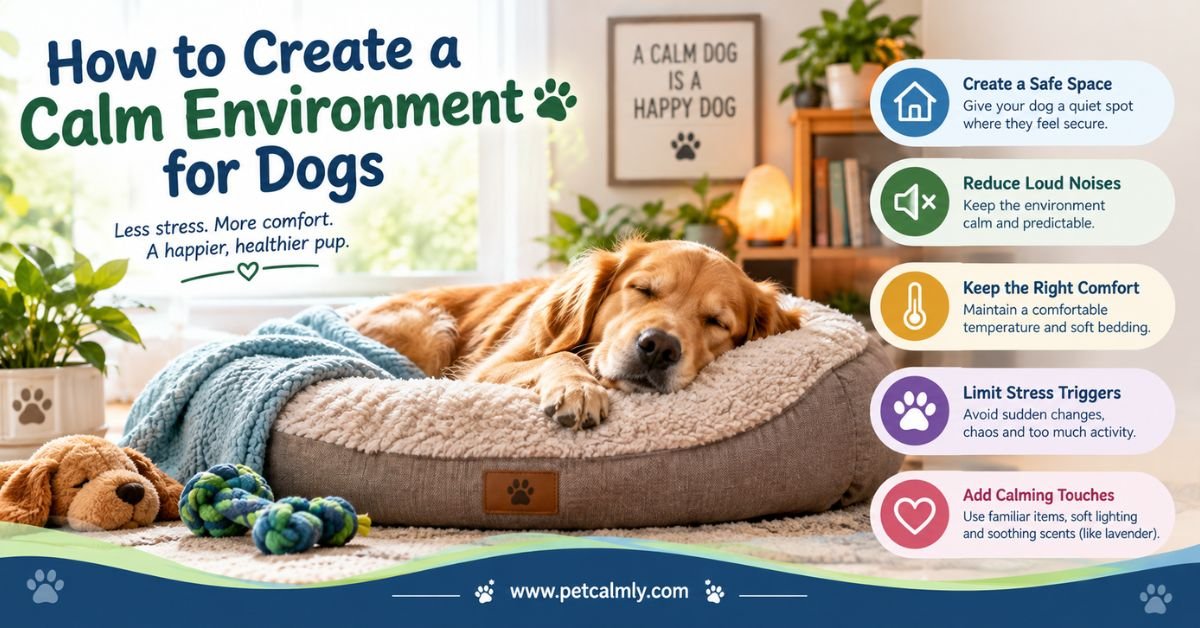
Create a Safe and Calm Space
Every dog needs a place to relax.
- Choose a quiet corner
- Add a comfortable bed
- Include favorite toys
This becomes your dog’s comfort zone.
Stick to a Routine
Dogs feel secure when life is predictable.
- Feed at the same time daily
- Walk regularly
- Maintain a sleep schedule
Routine reduces uncertainty and stress.
Use Positive Reinforcement
Reward calm behavior.
- Give treats when your dog is relaxed
- Praise gently
- Encourage good habits
Avoid punishment it increases anxiety.
Increase Exercise and Play
Physical activity reduces stress.
- Daily walks
- Fetch or interactive games
- Puzzle toys
A mentally and physically tired dog is calmer.
Practice Gradual Separation
If your dog struggles when alone:
- Leave for short periods first
- Slowly increase time away
- Reward calm behavior when you return
This builds confidence.
Use Calming Aids
Helpful tools include:
- Calming music
- Anxiety wraps
- Chew toys
- Natural calming scents
These support relaxation but are not a full solution alone.
Stay Calm Yourself
Dogs pick up your emotions.
If you act stressed, your dog may feel more anxious.
Avoid Common Mistakes
Many owners unintentionally worsen anxiety.
Avoid:
- Yelling or punishment
- Ignoring early signs
- Forcing interaction
- Sudden routine changes
Seek Professional Help When Needed
If anxiety is severe:
- Consult a veterinarian
- Work with a dog behaviorist
Professional guidance can speed up improvement.
Preventing Anxiety in Dogs
Prevention is easier than treatment.
Early Socialization
Expose your dog to:
- Different environments
- People
- Sounds
This builds confidence and reduces fear.
Consistent Training
Basic commands give structure.
Dogs feel safer when they understand expectations.
Encourage Independence
Teach your dog to be comfortable alone.
Start early to prevent separation anxiety.
Healthy Lifestyle
Good diet, exercise, and sleep support emotional well-being.
4 Common Mistakes to Avoid
Even caring owners can make mistakes.
Ignoring Small Changes
Early signs are often subtle but important.
Punishing Fearful Behavior
This increases anxiety instead of fixing it.
Inconsistency
Mixed signals confuse dogs and create stress.
Lack of Mental Stimulation
Boredom can turn into anxiety.
Long-Term Effects of Untreated Dog Anxiety
If left unmanaged, anxiety can lead to:
- Chronic stress
- Aggression
- Digestive issues
- Sleep problems
- Weakened immune system
This shows why early action is so important.
Conclusion
Early signs of dog anxiety are your dog’s way of communicating discomfort.
Whether it’s pacing, barking, hiding, or refusing food, these behaviors are signals—not problems.
The key steps are simple:
- Notice changes early
- Stay patient and calm
- Provide structure and safety
- Use positive, gentle methods
With the right approach, most dogs can overcome anxiety and live a happy, relaxed life.
More Information About Pets, Please Visit Our Website: Why Do Dogs Get Anxiety at Home?
Frequently Asked Questions
1. What are the first signs of anxiety in dogs?
Early signs include pacing, whining, clinginess, hiding, and changes in appetite. These behaviors often appear before severe symptoms.
2. Can dog anxiety be cured completely?
Many dogs improve significantly with training and care. Some may always be slightly sensitive but can live comfortably.
3. Is separation anxiety common?
Yes, it’s one of the most common types of anxiety in dogs, especially in highly attached pets.
4. Should I ignore my dog when it is anxious?
No. Provide calm support, but avoid overreacting. Help your dog feel safe without reinforcing fear.
5. How long does dog anxiety last?
It depends on the cause. Mild anxiety may improve quickly, while deeper issues take time and consistency.
6. When should I take my dog to a vet?
If symptoms are severe, sudden, or affecting eating, sleeping, or safety, consult a vet immediately.