Short direct answer
Dog Anxiety Behavior Explanation where a dog feels fear, unease, or worry often triggered by separation, loud noises, new environments, or unfamiliar people. Common signs include barking, trembling, destructive behavior, and hiding. Most anxious dogs can be helped through routine, training, and in some cases, veterinary support.
Why Understanding Dog Anxiety Matters
You come home after a short errand and find your couch cushions chewed apart. Or your dog starts panting and pacing every time you reach for your keys. You’re not imagining it and your dog isn’t “being bad.”
Dog anxiety is one of the most misunderstood behavioral issues pet owners face. What looks like disobedience or stubbornness is often your dog trying to cope with genuine emotional distress.
The good news? Once you understand why your dog acts this way, you can actually help. This guide breaks down dog anxiety behavior in plain language no jargon, just real answers.
What Is Dog Anxiety, Exactly?
Anxiety in dogs works similarly to how it works in people. When a dog perceives a threat real or imagined their brain triggers a stress response. Hormones like cortisol flood the body. The heart beats faster. The muscles tense up. The dog is preparing to fight, flee, or freeze.
The difference is that dogs can’t talk. They communicate their anxiety through behavior. And if you don’t know what to look for, those behaviors can seem random, frustrating, or even aggressive.
Think of it this way: imagine being stuck in a room with no explanation, no control, and no way out. That’s often how an anxious dog experiences the world during a trigger event.
The Most 4 Common Types of Dog Anxiety
Separation Anxiety
This is the most frequently diagnosed type. It happens when a dog becomes overly attached to their owner and panics when left alone even for a few minutes.
Dogs with separation anxiety often bark continuously, destroy furniture, or have accidents indoors even though they’re house-trained. It’s not spite. It’s panic.
A Labrador named Buddy, for example, would scratch through two layers of drywall every time his owner left for work. Once his owner learned the root cause, they gradually trained him to be comfortable alone and the destruction stopped completely.
Noise Anxiety
Thunder, fireworks, construction sounds, and even vacuum cleaners can send some dogs into a spiral. This type of anxiety is very common, especially in herding and working breeds that are highly alert by nature.
Signs often include trembling, hiding under beds, drooling, or clinging to their owner during storms.
Social Anxiety
Some dogs are deeply uncomfortable around strangers, other dogs, or busy places like dog parks. This often traces back to a lack of early socialization or a traumatic experience.
These dogs may growl, snap, or shut down entirely in social situations. It’s not aggression born from dominance; it’s fear.
Generalized Anxiety
Some dogs seem anxious almost all the time, without one clear trigger. They may be restless, clingy, or on edge regardless of what’s happening around them. This type is more complex and often benefits from professional evaluation.
Signs of Anxiety in Dogs: A Behavioral Breakdown
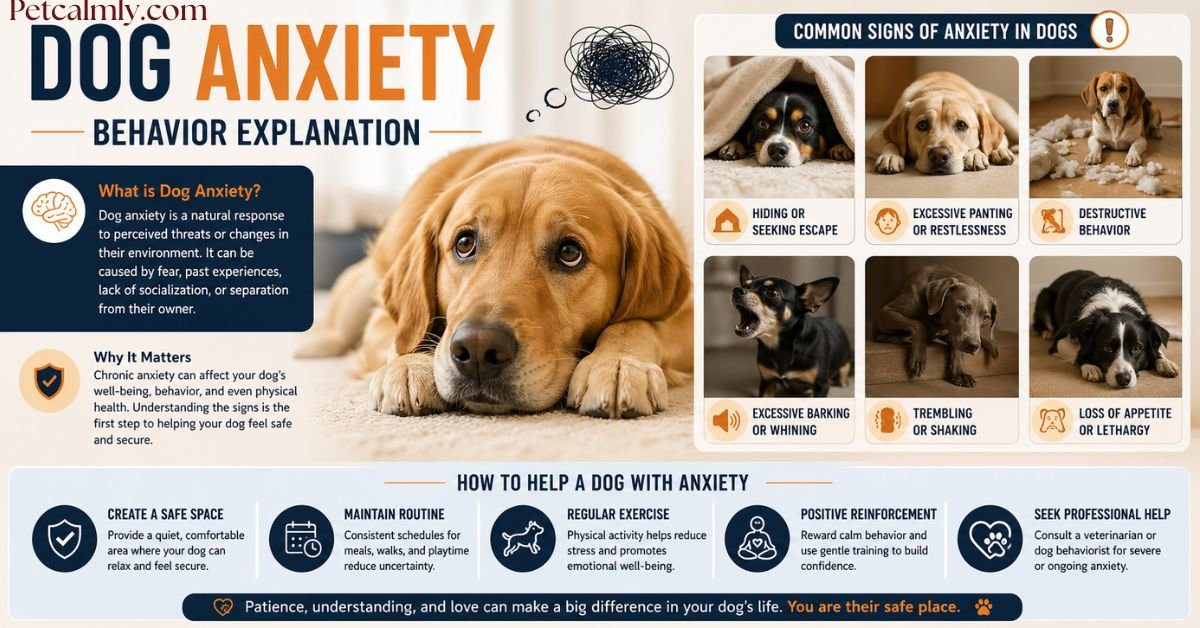
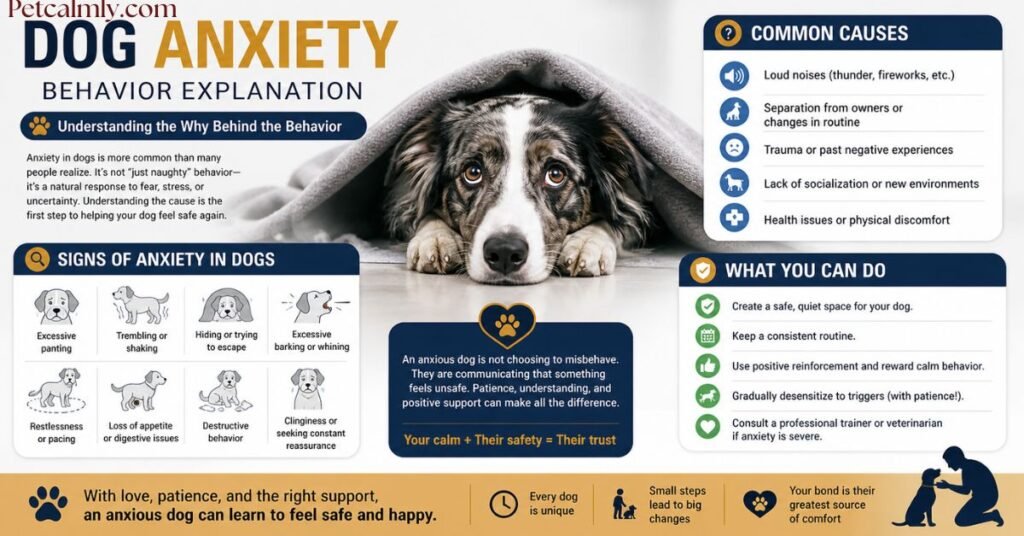
Recognizing anxious behavior is the first step to helping your dog. Here are the most common signs, organized from mild to severe:
Subtle Early Signs (Easy to Miss)
- Yawning when not tired
- Licking their lips repeatedly
- Turning their head away or avoiding eye contact
- Whale eye (showing the whites of their eyes)
- A tucked tail or low body posture
These are your dog’s early stress signals. Many owners miss them and then wonder why their dog “suddenly” snapped or melted down.
Moderate Signs
- Panting without being hot
- Pacing or inability to settle
- Whining or barking without a clear reason
- Loss of appetite
- Excessive grooming or licking at one spot
- Clinginess or following you from room to room
Severe Signs
- Destructive chewing (furniture, doors, shoes)
- Escape attempts that result in injury
- Aggression when cornered or overwhelmed
- House soiling despite being trained
- Continuous barking or howling when alone
- Full-body trembling
One important note: these signs don’t always mean anxiety. Some can overlap with medical issues. A vet visit is always worth it if you’re unsure.
What Causes Anxiety in Dogs?
Understanding the root cause helps you address the problem not just manage the symptoms.
Early Life Experiences
Puppies that missed proper socialization between 3 and 14 weeks of age are significantly more likely to develop anxiety later. This window is when puppies learn what is safe and normal in the world.
Rescue dogs, or those who spent time in shelters, may carry anxiety from past trauma, neglect, or instability.
Genetics and Breed Tendencies
Some breeds are simply wired to be more sensitive. Border Collies, German Shepherds, Chihuahuas, and Vizslas tend to score higher on anxiety scales compared to breeds like Basset Hounds or Bulldogs.
This doesn’t mean anxious breeds can’t thrive it just means they need more intentional management.
Changes in Environment or Routine
Dogs are creatures of habit. A new baby, moving to a new home, a change in your work schedule, or the loss of a family member (human or animal) can all trigger anxiety.
Even something as simple as rearranging furniture has unsettled sensitive dogs.
Past Trauma
Dogs who experienced abuse, abandonment, or traumatic accidents may carry lasting anxiety responses. These dogs often react strongly to seemingly harmless triggers a raised hand, a certain tone of voice, or being confined.
Medical Conditions
Pain, thyroid issues, neurological problems, and cognitive dysfunction in older dogs can all look like behavioral anxiety. Always rule out physical causes first.
When Should You Be Concerned?
Not every nervous moment means your dog has an anxiety disorder. Dogs get scared. That’s normal. The concern rises when:
- The anxiety is frequent or constant, not just situational
- Your dog is injuring themselves trying to escape or through repetitive behaviors
- The anxiety is getting worse over time, not better
- Your dog cannot settle down or relax in any environment
- The behavior is affecting their quality of life they won’t eat, play, or engage
If any of these apply, it’s time to consult a veterinarian. They may refer you to a veterinary behaviorist a specialist trained specifically in animal mental health.
Don’t wait too long. Anxiety tends to escalate without proper support.
What Should Pet Owners Do?
Here’s where you take control. The following strategies are practical, evidence-based, and can start today.
1. Build a Predictable Routine
Anxious dogs thrive on predictability. Feed, walk, and play at the same times every day. Routine communicates safety. It tells your dog: this is stable, you can relax.
Even five minutes of predictable morning play can significantly reduce baseline anxiety for many dogs.
2. Create a Safe Space
Give your dog a quiet spot that is theirs a crate with a cozy blanket, a corner with their bed, or a low-traffic room. Never use this space as punishment.
When they’re anxious, direct them there instead of trying to comfort them excessively (which can accidentally reinforce the anxiety).
3. Desensitize Gradually
For specific triggers like car rides, doorbells, or strangers expose your dog in tiny, controlled doses paired with something positive like treats or play.
For example, if your dog panics during thunderstorms, start playing a recording of very quiet thunder while giving them their favorite treat. Over weeks, very slowly increase the volume. This method called systematic desensitization genuinely rewires the fear response.
4. Exercise More Than You Think You Need To
A tired dog is a calmer dog. Anxiety is stored energy looking for an outlet. Regular physical exercise especially before a known trigger event like guests arriving can dramatically reduce anxious behavior.
Aim for at least 30–60 minutes of real movement per day for most breeds.
5. Avoid Punishment
Punishing an anxious dog makes anxiety worse not better. Scolding a dog that’s barking from fear teaches them the world is even more unpredictable and threatening.
Instead, redirect. Reward calm. Ignore the anxious behavior when safe to do so.
6. Consider Calming Aids
Several tools can help in the short term:
- Thundershirts — a snug wrap that applies gentle pressure, shown to help many anxious dogs
- Calming sprays and diffusers — synthetic pheromone products like Adaptil mimic the calming signals a mother dog emits
- Calming supplements — ingredients like L-theanine, melatonin, and valerian root have mild evidence for reducing anxiety
- CBD products — some owners report success, but evidence is still limited; consult your vet before using
7. Ask Your Vet About Medication
For moderate to severe anxiety, medication is a legitimate and effective option. This doesn’t mean your dog will be sedated forever.
Medications like fluoxetine (Prozac) or clomipramine are commonly prescribed for dogs with chronic anxiety. They work best alongside behavioral training not as a substitute for it.
Situational medications like trazodone or alprazolam can help with specific events like vet visits or fireworks.
Your vet can help you find the right approach for your specific dog.
A Word on Anxious Rescue Dogs
Rescue dogs deserve special mention. Many come from situations of neglect, trauma, or repeated abandonment. Their anxiety is not a defect it’s a survival mechanism that helped them cope.
The key with rescue dogs is patience. Don’t rush socialization. Don’t flood them with visitors or stimulation early on. Give them a quiet, stable environment for the first few weeks and let them adjust at their pace.
Some rescue dogs show dramatic improvement within weeks. Others need months of gentle work. Both timelines are okay.
Conclusion
Dog anxiety behavior is your dog’s way of saying I’m scared and I don’t know how to cope. It’s not stubbornness. It’s not bad training. It’s a real emotional experience that deserves real attention.
By learning to recognize the early signs, understanding the likely causes, and taking consistent, compassionate action you can make an enormous difference in your dog’s quality of life.
The most anxious dog can learn to feel safe. It takes time, consistency, and sometimes professional help. But it is absolutely possible.
More Information About Pets, Please Visit Our Website: Is Dog Anxiety Normal?
Frequently Asked Questions
1: What are the first signs of anxiety in dogs?
Early signs include yawning when not tired, lip licking, avoiding eye contact, and a low or tucked tail. These are your dog’s way of signaling stress before it escalates. Catching them early makes management much easier.
2: Can dogs develop anxiety suddenly?
Yes. A sudden onset of anxiety can be triggered by a traumatic event, a major life change, or even an underlying medical condition. If your dog becomes anxious seemingly out of nowhere, a vet visit is the right first step to rule out physical causes.
3: Is dog anxiety the same as aggression?
Not exactly, but they’re closely linked. Many cases of dog aggression are actually driven by fear and anxiety. A dog that snaps when cornered is usually acting from a place of panic, not dominance. Treating the anxiety often resolves the aggression.
4: How long does it take to treat dog anxiety?
It depends on the severity and type of anxiety. Mild situational anxiety may improve within a few weeks of consistent work. Severe separation anxiety or generalized anxiety can take several months of dedicated training and sometimes ongoing medication support.
5: Can puppies have anxiety, or is it just adult dogs?
Puppies can absolutely show anxiety behaviors. In fact, how a puppy is socialized between 3 and 14 weeks of age has a profound impact on how anxious or confident they’ll be as adults. Early, positive exposure to different people, sounds, and environments is one of the best anxiety prevention tools available.
6: Should I comfort my anxious dog or ignore them?
A middle path works best. Excessive coddling can reinforce the anxiety. But complete dismissal can increase stress. Stay calm, speak in a low and steady voice, and redirect your dog toward their safe space or a familiar activity. Your calm energy is genuinely contagious to them.