Short direct answer
A baby corn snake tank setup is a safe, secure enclosure with proper heating, humidity, hiding spots, and substrate that mimics a natural environment. A 10–20 gallon tank with a warm basking area, cool side, secure lid, and multiple hides is ideal for healthy growth and stress-free care.
Baby Corn Snake Tank Setup: Complete Beginner Guide for Safe & Happy Care
Setting up a proper tank for a baby corn snake is one of the most important steps in responsible reptile care. A well-designed enclosure directly affects your snake’s health, feeding response, stress levels, and long-term growth.
If you are a first-time snake owner, don’t worry. Creating the right environment is easier than it looks when you understand what your baby corn snake really needs.
A baby corn snake (Corn Snake) is small, shy, and sensitive to its surroundings. In nature, it spends most of its time hiding under leaves, burrowing, or staying hidden from predators. Your job is to recreate that safe world inside a glass tank.
This guide will walk you step by step through everything tank size, heating, substrate, humidity, decorations, mistakes to avoid, and expert tips that make your snake feel secure from day one.
Why Proper Tank Setup Matters So Much
A baby corn snake is not just a pet it is a stress-sensitive reptile that depends completely on its environment.
If the setup is wrong, your snake may:
- Refuse food
- Hide constantly (or never feel safe)
- Show stress behaviors like constant movement
- Develop breathing or shedding issues
On the other hand, a proper setup helps your snake:
- Eat regularly
- Grow faster and healthier
- Shed cleanly
- Stay calm and easy to handle
Think of the tank as your snake’s entire world. If that world feels safe, everything else becomes easy.
Ideal Baby Corn Snake Tank Size
One of the most common beginner mistakes is choosing the wrong tank size.
Best size for baby corn snakes:
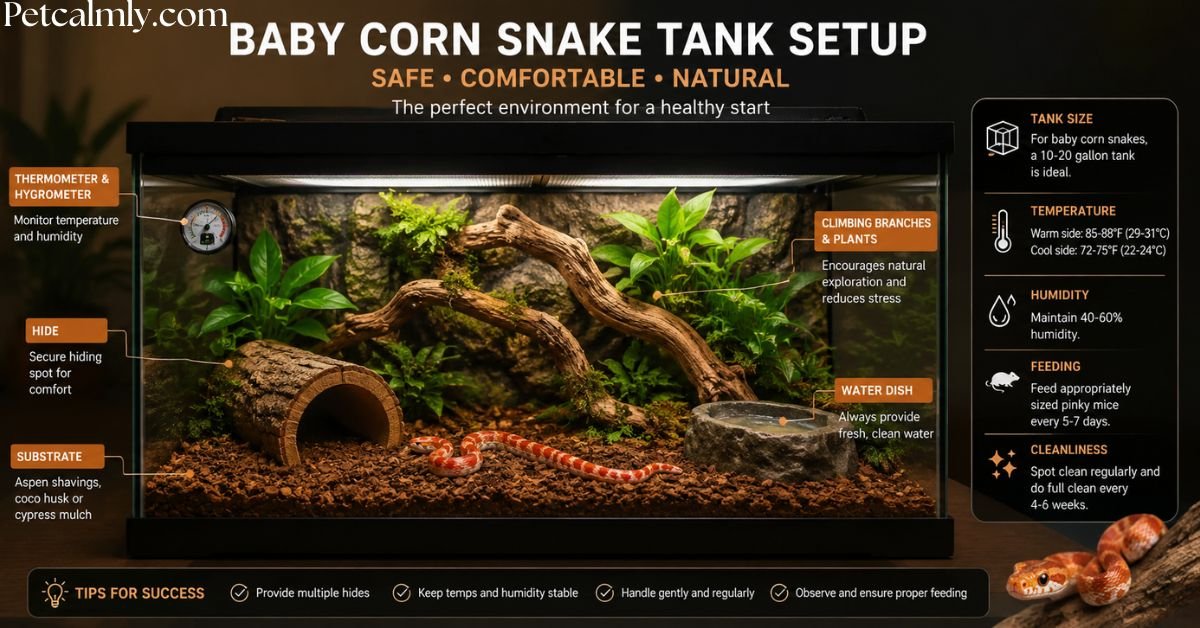
- 10 to 20 gallons (ideal range)
- Length over height (corn snakes are ground movers)
- Secure lid is absolutely necessary
Why not too big?
A baby snake in a huge tank may feel exposed and unsafe. This leads to stress and feeding problems. Start small and upgrade later.
Growth plan:
- Baby: 10–20 gallons
- Juvenile: 20–30 gallons
- Adult: 40 gallons or more
A simple rule: “Secure and cozy beats big and empty.”
Choosing the Right Tank Type
You can use different enclosure types depending on budget and preference.
1. Glass tanks
- Most common
- Easy to observe snake
- Needs secure locking lid
2. Plastic reptile enclosures
- Better humidity control
- Lightweight and durable
- Often preferred by experienced keepers
3. DIY wooden vivariums
- Excellent insulation
- Good for maintaining heat
- Requires proper ventilation design
For beginners, glass tanks are usually the easiest choice.
Heating Setup (Most Important Part)
Temperature control is critical. Snakes are cold-blooded, so they depend on external heat.
Temperature zones:
- Warm side: 85–88°F (29–31°C)
- Cool side: 72–78°F (22–26°C)
- Night drop: slightly cooler (not below 70°F)
Heating equipment:
- Under-tank heat mat (recommended)
- Thermostat (absolutely required)
- Digital thermometer (not stick-on type)
Why thermostat matters:
Without a thermostat, heat mats can overheat and burn your snake. Think of it as a “temperature brain” controlling safety.
Humidity Requirements
Corn snakes are not tropical reptiles, but they still need proper humidity.
Ideal humidity:
- 40% to 60%
How to maintain it:
- Light misting (not daily flooding)
- Humidity hide (moist moss box)
- Proper substrate choice
Too much humidity can cause respiratory issues, while too little can cause shedding problems.
Best Substrate for Baby Corn Snakes
Substrate is the bedding at the bottom of the tank. It affects hygiene, comfort, and humidity.
Best options:
- Aspen bedding (very popular)
- Coconut fiber (good humidity control)
- Reptile-safe paper towels (best for beginners)
Avoid:
- Cedar or pine (toxic oils)
- Dusty sand
- Sharp wood chips
For baby snakes, paper towels are often the safest choice because they make cleaning and monitoring health easier.
Essential Hiding Spots (Very Important!)
A baby corn snake must feel hidden to feel safe.
You need at least 2 hides:
- Warm side hide
- Cool side hide
Hide types:
- Plastic reptile caves
- Cork bark
- Small boxes with entry hole
If your snake cannot hide properly, it will become stressed and refuse food.
Imagine living in a glass room with no privacy that’s how a snake feels without hides.
Water Bowl Setup
A clean water source is essential for hydration and shedding.
Requirements:
- Heavy bowl (so it doesn’t tip over)
- Large enough for soaking if needed
- Fresh water changed every day or every other day
Place it on the cool side to avoid evaporation.
Lighting Requirements
Corn snakes do not need UVB lighting like some reptiles, but lighting still matters.
What you need:
- Natural day/night cycle
- Optional low-watt LED for visibility
Avoid strong heat lamps that dry out the tank or overheat the enclosure.
Decorations and Enrichment
Even baby snakes benefit from enrichment. A plain tank can cause stress.
Good decorations:
- Fake plants
- Branches for climbing
- Rocks (smooth, safe edges)
- Cork tunnels
Benefits:
- Reduces stress
- Encourages natural behavior
- Improves confidence
Just ensure there are no sharp edges or tight gaps where the snake could get stuck.
5 Common Mistakes in Baby Corn Snake Tank Setup
Many beginners make similar errors. Avoid these:
1. Too large tank too early
The snake feels exposed and scared.
2. No temperature control
Leads to health issues or burns.
3. Only one hide
Creates stress and poor feeding response.
4. Wrong substrate
Can cause toxicity or respiratory problems.
5. Handling too soon
Baby snakes need time to adjust first.
When Should You Be Concerned?
Watch your baby corn snake closely during the first weeks.
Warning signs:
- Refusing food for long periods
- Constant hiding with no movement
- Heavy breathing or wheezing
- Difficulty shedding
- Excessive escape attempts
If these signs continue, something in the setup may be wrong.
Usually, temperature or stress is the main cause.
What Should Pet Owners Do? (Step-by-Step Care Plan)
Here is a simple setup checklist:
Step 1: Set up the tank first
Make sure heating, substrate, and hides are ready before bringing the snake home.
Step 2: Stabilize temperatures
Let the tank run for 24 hours before introducing your snake.
Step 3: Introduce your snake gently
Place it inside and leave it alone for 48–72 hours.
Step 4: First feeding
Offer food only after the snake feels settled.
Step 5: Minimal handling
Wait at least 1–2 weeks before regular handling.
Patience is the key to success with baby corn snakes.
Expert Tips for a Perfect Setup
Here are some professional-level tips:
- Always check temperatures twice daily
- Use digital thermometers on both sides of the tank
- Clean waste immediately to prevent bacteria
- Keep the environment quiet (no loud TVs or vibrations nearby)
- Feed inside the enclosure to reduce stress
- Upgrade tank size gradually, not suddenly
Small details make a huge difference in reptile care.
Conclusion
A proper baby corn snake tank setup is all about safety, stability, and simplicity. When you provide correct heating, secure hides, proper substrate, and a calm environment, your snake will thrive naturally.
Remember, the goal is not to decorate a beautiful tank it is to create a secure and stress-free home. A happy snake eats well, grows well, and becomes easy to handle over time.
Take your time setting it up correctly, and your baby corn snake will reward you with calm behavior and healthy growth.
More Information About Pets, Please Visit Our Website: Corn Snake Tank Setup Ideas
Frequently Asked Questions
1. What size tank does a baby corn snake need?
A 10–20 gallon tank is ideal for baby corn snakes. It keeps them secure and reduces stress while they adjust to their new environment.
2. Do baby corn snakes need heat lamps?
Not necessarily. Under-tank heat mats with a thermostat are safer and more stable than heat lamps for beginners.
3. How many hides does a baby corn snake need?
At least two hides one on the warm side and one on the cool side. This helps the snake feel safe and reduces stress.
4. What is the best substrate for baby corn snakes?
Paper towels are best for beginners. Aspen or coconut fiber can also be used once you gain experience.
5. How often should I clean the tank?
Spot clean daily and do a full deep clean every 3–4 weeks, depending on tank condition.
6. Why is my baby corn snake always hiding?
This is normal behavior. Baby snakes naturally hide to feel safe. Ensure proper hides, correct temperature, and low disturbance.