Short direct answer
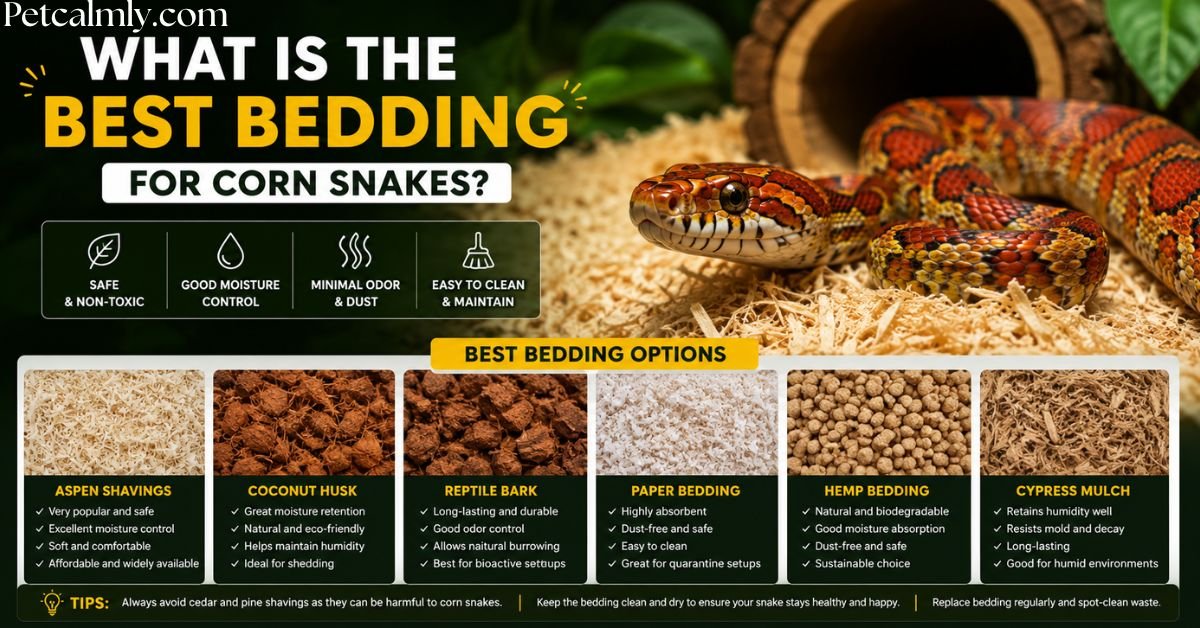
The best bedding for corn snakes is aspen shavings, cypress mulch, or coconut husk because they are safe, hold humidity well, and allow natural burrowing behavior. Paper towels and reptile carpet are also good for beginners or quarantine setups, but they are less natural for long-term enrichment.
What Is the Best Bedding for Corn Snakes?
If you keep a corn snake, choosing the right bedding is one of the most important decisions you will make. The substrate affects your snake’s health, comfort, humidity levels, and even behavior.
The good news is that corn snakes are adaptable, but they still need a clean, safe, and natural-feeling environment to thrive.
In this guide, you’ll learn exactly what is the best bedding for corn snakes, what to avoid, and how to set up a healthy enclosure that supports natural behavior like burrowing and hiding.
We’ll keep everything simple, practical, and based on real reptile care standards so you can confidently care for your snake.
Understanding Corn Snake Habitat Needs
To choose the right bedding, you first need to understand your snake’s natural behavior.
Corn snakes (Corn Snake) come from the southeastern United States. In the wild, they live in:
- Forest edges
- Grasslands
- Rocky areas
- Farmlands and barns
They often hide under leaves, loose soil, and logs. This means they naturally enjoy:
- Soft, diggable surfaces
- Moderate humidity
- Warm but not wet environments
- Secure hiding spots
So when we talk about “bedding,” we are really talking about recreating a safe version of nature inside a tank.
If the substrate is wrong, it can cause stress, poor shedding, or breathing issues. If it is right, your snake will feel secure and behave naturally.
5 Best Bedding Options for Corn Snakes
Let’s break down the safest and most recommended bedding types.
1. Aspen Shavings (Top Popular Choice)
Aspen is one of the most widely used substrates for corn snakes.
Why it works well:
- Excellent for burrowing
- Dry and clean
- Low dust (if good quality)
- Easy to replace
- Affordable
Ideal for:
- Dry environments
- Owners who want easy cleaning
- Beginners
Important note:
Aspen should NOT be used in very humid setups because it can mold if soaked.
Think of it like soft forest bedding light, fluffy, and perfect for digging tunnels.
2. Cypress Mulch (Best Natural Look)
Cypress mulch is another excellent option and very popular among experienced reptile keepers.
Benefits:
- Holds humidity well
- Natural forest appearance
- Resistant to mold
- Comfortable texture for snakes
Best for:
- Slightly humid environments
- Naturalistic terrariums
- Bioactive setups
This bedding mimics a forest floor, making your snake feel more “at home.”
3. Coconut Husk / Coco Fiber
Coconut-based substrates are made from coconut shells and fibers.
Why reptile owners love it:
- Excellent moisture control
- Good for shedding support
- Natural smell and texture
- Eco-friendly
Best use:
- Mixed humidity setups
- Snakes that shed often
- Bioactive tanks
However, it can be dusty if low quality, so always choose a trusted reptile brand.
4. Reptile Carpet (Simple but Limited)
Reptile carpet is a reusable mat.
Pros:
- Easy to clean
- No risk of ingestion
- Good for quarantine tanks
Cons:
- Not natural
- Doesn’t allow burrowing
- Can trap bacteria if not cleaned often
This is more of a “temporary solution” than a long-term bedding option.
5. Paper Towels / Newspaper (Best for Beginners & Sick Snakes)
This is the simplest bedding option.
Advantages:
- Very cheap
- Easy to replace
- Helps monitor health (urates, feces)
- Safe for injured snakes
Disadvantages:
- No enrichment
- Not visually natural
- Needs frequent changes
This is often used for baby corn snakes or quarantine setups.
Bedding Options You Should AVOID
Not all bedding is safe. Some materials can seriously harm your snake.
1. Cedar and Pine Wood Shavings (Dangerous)
These woods release aromatic oils that can cause:
- Respiratory problems
- Skin irritation
- Toxic reactions
Never use cedar or untreated pine.
2. Sand (Not Recommended)
Sand may look natural, but it is risky.
Problems include:
- Impaction (blocked intestines)
- Eye irritation
- Poor humidity control
3. Gravel or Rocks
These are too hard and unnatural.
They can:
- Injure your snake
- Prevent burrowing
- Stress the animal
4. Cat Litter or Clay-Based Substrates
These absorb moisture too strongly and can:
- Dust the enclosure
- Cause impaction if eaten
- Dry out the habitat too much
What Makes a Good Corn Snake Bedding?
When choosing bedding, always check for these qualities:
Safe to Ingest Accidentally
Snakes sometimes swallow substrate while feeding. Safe bedding reduces risk.
Supports Burrowing Behavior
Corn snakes love to hide and dig.
Controls Humidity Properly
Too dry = shedding problems
Too wet = respiratory infections
Easy to Clean
Good hygiene prevents bacterial growth.
Non-Toxic Materials
Always avoid chemically treated or aromatic woods.
4 Signs Your Bedding Is NOT Working
Your snake will show signs if something is wrong.
1. Frequent Hiding or Stress Behavior
If your snake hides constantly and refuses food, it may feel unsafe.
2. Difficulty Shedding
Dry or dusty bedding can cause incomplete sheds.
3. Respiratory Issues
Wheezing or open-mouth breathing can mean poor substrate choice.
4. Skin Irritation
Red patches or scale damage can be caused by rough or dusty bedding.
When Should You Be Concerned?
You should immediately review your bedding if you notice:
- Snake constantly rubbing its nose on glass
- Refusing food for long periods
- Unusual breathing sounds
- Sticky or incomplete shed skin
- Strong odor inside tank
These signs often mean the environment is not properly balanced.
In many cases, simply switching substrate can improve your snake’s health quickly.
How to Set Up the Perfect Bedding Environment
Here is a simple step-by-step guide:
Step 1: Choose the Right Substrate
Pick one:
- Aspen (dry setup)
- Cypress mulch (humid setup)
- Coconut husk (balanced setup)
Step 2: Add Proper Depth
Use:
- 2–3 inches for juveniles
- 3–4 inches for adults
This allows digging behavior.
Step 3: Maintain Humidity
Ideal humidity:
- 40%–60%
Use a hygrometer to track it.
Step 4: Spot Clean Daily
Remove:
- Waste
- Wet patches
- Shed skin
Step 5: Deep Clean Monthly
Replace all bedding and disinfect enclosure.
5 Common Mistakes Corn Snake Owners Make
Mistake 1: Using Wrong Wood Chips
Cheap pet store wood chips are often unsafe.
Mistake 2: Too Little Bedding
Flat tanks stress snakes because they cannot hide.
Mistake 3: Overly Wet Environment
Too much moisture leads to mold and illness.
Mistake 4: Not Cleaning Regularly
Dirty bedding causes bacteria growth.
Mistake 5: Ignoring Snake Behavior
Your snake’s behavior is your best guide.
Expert Tips for Better Corn Snake Care
- Mix aspen + coco fiber for balanced environments
- Add leaf litter for enrichment
- Use hides on both warm and cool sides
- Always provide fresh water bowl
- Keep lighting natural and stress-free
Think of bedding as your snake’s “floor, bed, and security blanket” all in one.
Conclusion
Choosing the right bedding for corn snakes is not just about appearance it directly affects their health, comfort, and behavior.
The best choices are aspen shavings, cypress mulch, and coconut husk because they are safe, natural, and support burrowing behavior. Paper towels and reptile carpet are useful for temporary setups but not ideal long-term.
Avoid toxic woods, sand, and rough materials that can harm your snake.
If you get the substrate right, your corn snake will be more active, eat better, shed smoothly, and live a healthier life.
More Information About Pets, Please Visit Our Website: Corn Snake Tank Setup Ideas
Frequently Asked Questions
1. What is the safest bedding for corn snakes?
Aspen shavings and cypress mulch are considered the safest options because they are non-toxic and support natural behavior like burrowing.
2. Can corn snakes live on paper towels permanently?
They can survive, but it is not ideal long-term. Paper towels are best for quarantine or medical monitoring, not enrichment.
3. Is sand safe for corn snakes?
No, sand is not recommended. It can cause impaction and does not hold humidity properly.
4. How often should I change corn snake bedding?
Spot clean daily and fully replace bedding every 3–4 weeks depending on cleanliness and tank size.
5. Do corn snakes need deep bedding?
Yes, at least 2–4 inches is recommended so they can burrow and feel secure.
6. Can I mix different bedding types?
Yes, many keepers mix coco fiber with cypress mulch to balance humidity and improve comfort.