Short direct answer
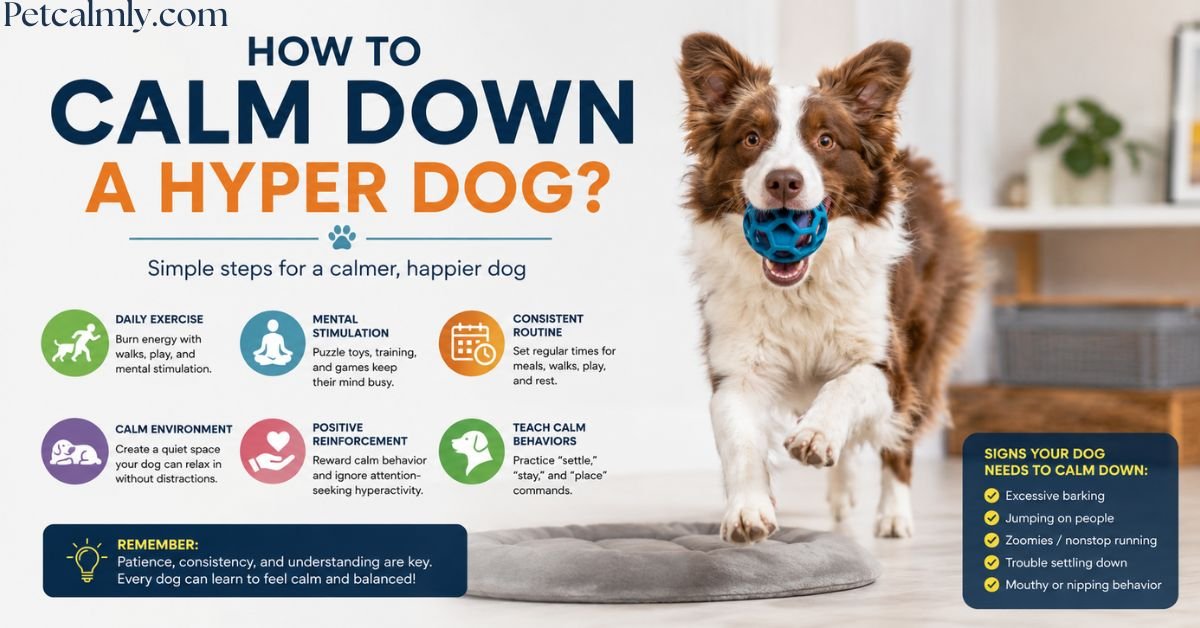
To calm down a hyper dog, focus on a mix of physical exercise, mental stimulation, consistent routines, and calm training techniques. Avoid yelling or rough punishment, since excitement often increases hyper behavior. Most energetic dogs respond well to structured walks, puzzle toys, short training sessions, quiet rest time, and clear boundaries throughout the day.
Living with a hyper dog can feel exhausting sometimes. One minute your dog is zooming through the house, and the next they are jumping on guests, barking nonstop, or grabbing random objects just to release energy.
Many pet owners wonder if their dog is simply playful or if something deeper is causing the behavior. The good news is that most hyperactivity in dogs can improve with the right approach.
In many cases, dogs are not trying to misbehave. They are often overstimulated, under-exercised, bored, anxious, or accidentally rewarded for excitable behavior.
This guide explains how to calm down a hyper dog safely and effectively. You will learn:
- Why dogs become overly hyper
- The most common mistakes owners make
- Fast calming methods that actually help
- Long-term training strategies
- When hyper behavior may signal a bigger problem
- Practical routines that help energetic dogs relax naturally
Whether you have a hyper puppy, an energetic adult dog, or a rescue dog adjusting to a new environment, these tips can make daily life much calmer for both of you.
Why Is My Dog So Hyper?
Dogs become hyper for many different reasons. Understanding the cause helps you choose the right solution instead of guessing.
5 Common Reasons Dogs Become Overexcited
1. Not Enough Physical Exercise
Many dogs simply have excess energy.
High-energy breeds like Border Collies, Huskies, Labrador Retrievers, Australian Shepherds, and Jack Russell Terriers often need much more activity than owners expect.
A short potty walk may not be enough for these dogs.
Signs of under-exercise include:
- Constant pacing
- Zoomies indoors
- Chewing furniture
- Excessive barking
- Jumping on people
- Restlessness at night
2. Lack of Mental Stimulation
Mental boredom can create hyper behavior just as much as physical boredom.
Dogs were bred to work, solve problems, and stay engaged. When their minds are inactive, they may create their own excitement.
Mental enrichment examples include:
- Puzzle feeders
- Snuffle mats
- Training games
- Scent work
- Hide-and-seek games
- Food-dispensing toys
A dog that spends all day lying around may suddenly explode with energy in the evening.
3. Overstimulation
Sometimes dogs become hyper because they are too excited, not because they need more activity.
This often happens when:
- Guests arrive
- Children run around
- Multiple dogs play together
- Loud noises occur
- Owners unintentionally hype the dog up
You may notice your dog struggles to “turn off” even after exciting activities.
4. Inconsistent Rules
Dogs learn patterns quickly.
If jumping is allowed sometimes but punished other times, dogs become confused. Confusion can create frustration and hyper reactions.
Consistency matters more than strictness.
5. Anxiety or Stress
Some dogs look hyper when they are actually anxious.
Stress-related hyperactivity may include:
- Constant panting
- Pacing
- Whining
- Inability to settle
- Shadowing the owner
- Excessive licking
This is especially common in rescue dogs or dogs left alone for long periods.
Signs Your Dog Is Overly Hyper
Some excitement is normal. Dogs naturally play, run, and get energetic.
However, hyperactivity becomes a problem when dogs struggle to calm down regularly.
Common Signs
- Constant jumping
- Excessive barking
- Zoomies multiple times daily
- Inability to relax indoors
- Mouthiness or nipping
- Pulling hard on walks
- Ignoring commands when excited
- Knocking over people or objects
- Difficulty sleeping or settling
- Destructive chewing
A healthy energetic dog should still be able to relax after exercise and guidance.
How to Calm Down a Hyper Dog Naturally
1. Increase Daily Exercise the Right Way
Exercise is important, but not all exercise works equally well.
Some owners accidentally create an “athlete dog” by relying only on intense activity.
For example, constant ball throwing may increase endurance without teaching calmness.
Better Exercise Ideas
- Structured walks
- Sniff walks
- Hiking
- Swimming
- Tug games with rules
- Controlled fetch sessions
- Obstacle courses
- Flirt pole play
Sniffing activities are especially calming because they mentally tire dogs.
A 20-minute sniff walk can sometimes calm a dog more effectively than a fast jog.
2. Teach Calm Behavior
Many owners reward excitement without realizing it.
For example:
- Petting dogs while they jump
- Giving attention during barking
- Playing when dogs demand it
- Greeting dogs with loud excitement
Dogs repeat behaviors that get attention.
Reward Calmness Instead
Notice and reward moments when your dog is relaxed.
You can quietly say:
“Good calm.”
Then offer:
- Gentle praise
- A treat
- Calm petting
- Quiet affection
This teaches dogs that calm behavior works.
3. Use Short Training Sessions
Hyper dogs often struggle with focus.
Instead of long sessions, try:
- 5–10 minute training periods
- Multiple sessions daily
- Reward-based methods
Helpful commands include:
- Sit
- Down
- Place
- Stay
- Leave it
- Settle
The “place” command is especially useful for excitable dogs.
4. Create a Predictable Daily Routine
Dogs feel calmer when life feels predictable.
Try keeping consistent:
- Meal times
- Walk times
- Bedtime
- Play sessions
- Quiet periods
Dogs that never know what happens next may stay in a heightened state of excitement.
5. Give Your Dog a Calm Space
Some dogs need help learning how to rest.
Create a quiet area with:
- A comfortable bed
- Minimal noise
- Chew toys
- Soft lighting
- Limited distractions
Crates can also help some dogs relax when introduced positively.
Quick Ways to Calm a Hyper Dog Immediately
Sometimes you need fast solutions, especially when guests arrive or your dog becomes uncontrollable.
Fast Calming Techniques
Use Sniffing Activities
Scatter treats on the floor or use a snuffle mat.
Sniffing naturally lowers excitement in many dogs.
Offer a Long-Lasting Chew
Chewing can reduce stress and redirect energy.
Safe options may include:
- Vet-approved dental chews
- Frozen stuffed KONG toys
- Durable chew toys
Always supervise chewing sessions.
Lower Your Own Energy
Dogs often mirror human emotions.
Speaking loudly or moving quickly can increase excitement.
Instead:
- Speak softly
- Move slowly
- Avoid sudden reactions
- Stay calm and steady
Many dogs calm down faster when owners remain relaxed.
Use a Leash Indoors Temporarily
If your dog becomes wildly overstimulated around guests, a lightweight leash indoors can help maintain control safely.
This prevents:
- Jumping
- Chasing
- Zoomies through the house
5 Common Mistakes That Make Hyper Dogs Worse
Mistake 1: Yelling
Yelling often sounds like excitement to dogs.
Instead of calming them, it may increase stimulation.
Mistake 2: Punishing Excitement Harshly
Dogs do not always understand why they are being punished.
Harsh corrections can create fear, frustration, or anxiety.
Positive guidance usually works better long term.
Mistake 3: Skipping Mental Enrichment
Some owners focus only on physical activity.
A dog can still feel mentally frustrated after long walks if their brain is under-stimulated.
Mistake 4: Encouraging Rough Play Constantly
Constant wrestling or high-intensity play may keep dogs in “overdrive mode.”
Balance excitement with calm activities.
Mistake 5: Ignoring Rest Time
Overtired dogs can become even more hyper, especially puppies.
Just like toddlers, some dogs struggle to settle themselves.
Best Daily Routine for a Hyper Dog
Here is a simple example routine many energetic dogs benefit from.
| Time | Activity |
|---|---|
| Morning | Structured walk with sniffing |
| Breakfast | Puzzle feeder or slow feeder |
| Midday | Short training session |
| Afternoon | Quiet chew or nap |
| Evening | Play session or exercise |
| Night | Calm walk and wind-down routine |
Consistency usually matters more than perfection.
Mental Stimulation Ideas That Calm Dogs
Brain Games for Hyper Dogs
Food Puzzle Toys
Dogs work for their meals instead of eating instantly.
Hide-and-Seek
Hide treats or toys around the house.
This encourages natural scent work.
Basic Obedience Training
Training mentally tires dogs surprisingly fast.
Scent Games
Let your dog find hidden scents or treats.
Nose work is calming for many breeds.
Frozen Food Toys
Frozen enrichment toys encourage licking and chewing, both of which can help dogs relax.
How to Calm a Hyper Puppy
Puppies are naturally energetic, but they also become overtired easily.
Puppy Calming Tips
- Keep training sessions very short
- Use scheduled naps
- Avoid overwhelming environments
- Focus on routine
- Reward calm behavior early
- Prevent excessive biting with redirection
Many puppy owners accidentally overstimulate puppies with nonstop play.
Young puppies often need more sleep than people realize.
Does Diet Affect Hyperactivity in Dogs?
Sometimes, yes.
Certain dogs may react poorly to:
- Excess treats
- Too many calories
- Poor-quality diets
- Sudden diet changes
However, food is usually not the main cause of hyperactivity.
If you suspect a dietary issue, speak with your veterinarian before making major changes.
Calming Products for Hyper Dogs
Some products may help support calmer behavior when combined with training.
Helpful Options May Include
| Product Type | Potential Benefit |
|---|---|
| Puzzle toys | Mental stimulation |
| Slow feeders | Reduce fast eating excitement |
| Snuffle mats | Encourage calming sniffing |
| Calming beds | Create secure resting spaces |
| White noise machines | Reduce environmental triggers |
| Calming chews | Mild relaxation support |
Avoid relying only on products without addressing exercise, routine, and training.
When Should You Be Concerned?
Sometimes hyperactivity can signal a medical or behavioral issue.
Contact a Veterinarian If Your Dog:
- Cannot settle at all
- Suddenly becomes hyper unexpectedly
- Shows signs of anxiety or panic
- Has compulsive behaviors
- Becomes aggressive
- Seems distressed frequently
- Pants excessively indoors
- Experiences sleep problems
- Shows destructive behavior daily
A veterinarian can rule out medical issues and may recommend a certified dog trainer or veterinary behaviorist if needed.
What Should Pet Owners Do?
If your dog is overly hyper, focus on small consistent improvements instead of expecting instant change.
Practical Action Steps
- Increase structured exercise
- Add daily mental enrichment
- Reward calm behavior
- Keep routines predictable
- Avoid yelling or chaotic reactions
- Teach basic settling commands
- Create quiet rest periods
- Watch for anxiety triggers
- Stay patient and consistent
- Seek professional help if behavior worsens
Many dogs improve significantly once owners combine exercise, structure, and calm leadership consistently.
Dos and Don’ts for Hyper Dogs
Do
- Use positive reinforcement
- Stay calm yourself
- Provide enrichment daily
- Teach relaxation skills
- Give regular exercise
- Reward quiet behavior
Don’t
- Encourage nonstop excitement
- Punish harshly
- Ignore boredom
- Skip training
- Expect instant results
- Overstimulate tired puppies
Real-Life Example: Why Some Dogs Stay Hyper at Night
A common situation many owners notice is the “evening crazy hour.”
For example, a young Labrador may seem calm during the day while the family works, then suddenly sprint around the house after dinner.
This often happens because:
- The dog rested most of the day
- Mental stimulation was limited
- Evening family activity increased excitement
- The dog needs structured exercise earlier
Adding a morning sniff walk, puzzle feeder, and short evening training session often helps reduce nighttime hyperactivity.
Conclusion
Learning how to calm down a hyper dog takes patience, consistency, and understanding. Most overly energetic dogs are not being “bad.” They are often bored, overstimulated, anxious, or unsure how to relax.
The best results usually come from combining:
- Daily physical activity
- Mental stimulation
- Calm training
- Predictable routines
- Positive reinforcement
Small daily habits matter more than dramatic changes.
Over time, many hyper dogs learn how to settle naturally once their physical and emotional needs are met properly. If your dog’s behavior feels extreme or difficult to manage, reaching out to a veterinarian or professional trainer is always a smart step.
More Information About Pets, Please Visit Our Website: Best Calming Music for Dogs
Frequently Asked Questions
1: How do I calm my dog down fast?
Try calm activities like sniffing games, chew toys, gentle leash control, or moving your dog to a quiet area. Staying calm yourself also helps reduce excitement.
2: Why is my dog hyper all the time?
Common reasons include lack of exercise, boredom, overstimulation, inconsistent training, anxiety, or breed-related energy levels.
3: Will my hyper dog calm down with age?
Many dogs naturally become calmer as they mature, but training, routine, and enrichment still play a major role in behavior.
4: Is it okay to ignore a hyper dog?
Ignoring attention-seeking excitement can help sometimes, especially jumping or barking behaviors. However, dogs still need guidance, exercise, and mental stimulation.
5: Can anxiety make dogs seem hyper?
Yes. Some anxious dogs pace, pant, bark excessively, or struggle to settle, which may look like hyperactivity.
6: What dog breeds are naturally high-energy?
Breeds like Border Collies, Huskies, Belgian Malinois, Australian Shepherds, Labrador Retrievers, and Jack Russell Terriers are often naturally energetic and need regular stimulation.