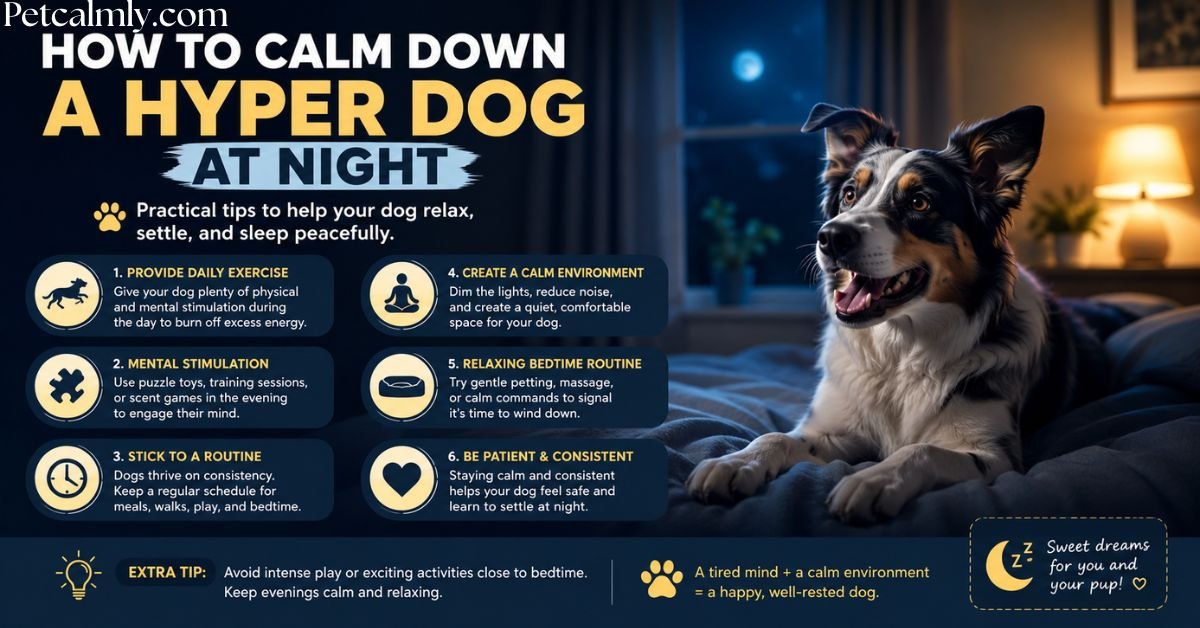
Short direct answer
To calm down a hyper dog at night, focus on giving your dog enough physical exercise, mental stimulation, a predictable bedtime routine, and a calm sleeping environment. Avoid late-night excitement, use relaxing activities like licking mats or gentle training, and make sure your dog’s energy needs are fully met during the day. If nighttime hyperactivity suddenly appears or becomes extreme, consult a veterinarian.
How to Calm Down a Hyper Dog at Night
A dog zooming through the house at 11 PM can leave pet owners exhausted and frustrated. Many dogs become overly excited at night because they still have unused energy, poor sleep habits, anxiety, overstimulation, or inconsistent routines.
The good news is that nighttime hyperactivity is usually manageable with the right approach.
Some dogs calm down after a few small routine changes. Others need more structured exercise, mental enrichment, or training. Puppies and high-energy breeds often struggle the most, especially if they spend long hours indoors during the day.
In this guide, you’ll learn:
- Why dogs become hyper at night
- Common mistakes owners accidentally make
- Step-by-step calming techniques
- Safe bedtime routines
- Signs that may require veterinary help
- Simple ways to help your dog sleep better naturally
Why Dogs Get Hyper at Night
Dogs do not usually become energetic “for no reason.” There is almost always a trigger behind nighttime zoomies or restlessness.
1. Pent-Up Energy
This is one of the biggest causes.
If a dog spends most of the day resting, waiting indoors, or lacking physical activity, energy builds up. By nighttime, that energy often explodes into:
- Running around the house
- Barking
- Jumping
- Chewing
- Play biting
- Attention-seeking behavior
Working breeds like Border Collies, Huskies, Labradors, and German Shepherds especially struggle without enough activity.
Common signs of excess energy:
- Constant pacing
- Zoomies before bedtime
- Stealing objects to start play
- Refusing to settle down
- Whining for attention
2. Lack of Mental Stimulation
A physically tired dog can still be mentally bored.
Dogs need brain work too. Without it, they may become restless at night even after a walk.
Mental stimulation includes:
- Sniffing activities
- Puzzle feeders
- Training games
- Scent work
- Food enrichment toys
Many owners notice their dog calms down faster after 15 minutes of brain games than after another short walk.
3. Overtired Puppies
This surprises many first-time dog owners.
Puppies sometimes become hyper because they are actually too tired. Just like overtired children, puppies may struggle to settle and become wild in the evening.
This often happens after:
- Busy social days
- Visitors at home
- Long outings
- Too much stimulation
- Missed naps
An overtired puppy may:
- Bite more
- Bark excessively
- Ignore commands
- Run in circles
- Become unable to relax
4. Evening Excitement
Some families accidentally create nighttime excitement without realizing it.
Examples include:
- Rough play before bed
- Loud TV noise
- Children running around
- Late-night fetch games
- Guests arriving late
- High-energy dog park visits at night
Dogs can stay emotionally “activated” long after the activity ends.
5. Anxiety or Stress
Not every hyper dog is simply energetic.
Some dogs become restless at night because they feel anxious. This is especially common in rescue dogs, dogs with separation anxiety, or pets experiencing environmental stress.
Signs may include:
- Pacing
- Panting
- Barking at noises
- Constant attention-seeking
- Refusing to lie down
- Following owners everywhere
Storms, fireworks, neighborhood sounds, or changes in routine can make nighttime behavior worse.
Signs Your Dog Is Overtired vs Under-Exercised
| Behavior | Overtired Dog | Under-Exercised Dog |
|---|---|---|
| Zoomies | Short bursts | Constant energy |
| Biting | Often mouthy and cranky | Playful but persistent |
| Sleep | Struggles to settle | Sleeps once tired |
| Attention span | Poor and emotional | Still trainable |
| Energy level | Chaotic | Consistently high |
Understanding the difference helps you respond correctly.
How to Calm a Hyper Dog at Night
Create a Predictable Evening Routine
Dogs thrive on consistency.
A structured evening routine helps your dog understand that bedtime is approaching.
Simple calming bedtime routine:
- Evening walk
- Quiet indoor activity
- Calm enrichment toy
- Potty break
- Lights dimmed
- Bedtime cue
Repeating this nightly can significantly improve settling behavior.
Dogs often relax faster when they know what comes next.
Increase Daytime Exercise
Many nighttime behavior problems start earlier in the day.
A quick potty walk usually is not enough for active dogs.
Good exercise options:
- Long sniff walks
- Fetch sessions
- Tug games with rules
- Hiking
- Swimming
- Structured playdates
- Agility activities
Different dogs need different activity levels.
For example:
- A senior Bulldog may need two gentle walks
- A young Australian Shepherd may need intense mental and physical exercise daily
Use Mental Enrichment Before Bed
Mental work helps dogs decompress.
About 30–60 minutes before bedtime, try calming enrichment activities instead of exciting games.
Helpful calming activities:
- Frozen lick mats
- Stuffed food toys
- Snuffle mats
- Basic obedience training
- Scent games
- Slow feeder bowls
Licking and sniffing naturally help many dogs relax.
A simple frozen Kong with dog-safe peanut butter can keep some dogs calm for 20–30 minutes.
Avoid High-Energy Play Late at Night
This is a very common mistake.
Many owners try to “wear out” their dog with rough play before bed, but this sometimes increases adrenaline instead.
Avoid right before bedtime:
- Intense fetch
- Wrestling games
- Chasing games
- Dog park visits
- Loud excitement
Instead, transition gradually into calmer activities.
Think of bedtime as a slow cooldown period.
Teach a “Settle” Command
Some dogs need help learning how to relax.
A settle command teaches your dog to calmly stay on a bed or mat.
Basic settle training:
- Place a mat or dog bed nearby
- Reward your dog for lying down calmly
- Speak softly
- Reward relaxed behavior
- Practice daily for short periods
Over time, your dog begins associating the mat with calmness.
This works especially well for excitable young dogs.
Keep the Sleeping Area Comfortable
Sometimes dogs simply struggle to relax in an uncomfortable environment.
Helpful sleep environment tips:
- Keep the room cool
- Reduce loud noises
- Use blackout curtains if needed
- Provide a supportive dog bed
- Avoid bright lights
- Use white noise if outside sounds trigger barking
Some dogs also sleep better when their crate is partially covered with breathable fabric.
Best Calming Activities for Hyper Dogs at Night
Gentle Sniff Walks
Sniffing is mentally tiring for dogs.
A slow evening walk where your dog is allowed to explore scents calmly can be more effective than a rushed power walk.
Many owners notice calmer behavior afterward.
Food Puzzle Toys
Food puzzles engage the brain and encourage slower behavior.
Good options include:
- Stuffed rubber toys
- Snuffle mats
- Puzzle feeders
- Frozen treats
Avoid using them too close to bedtime if your dog becomes excited around food.
Massage and Calm Touch
Some dogs respond well to gentle touch.
Slow chest rubs, shoulder massage, or calm petting may help anxious dogs relax.
Avoid fast, stimulating petting if your dog becomes more excited from physical attention.
Calming Music or White Noise
Soft music can reduce environmental triggers for some dogs.
This may help dogs bothered by:
- Traffic sounds
- Neighbors
- Fireworks
- Other barking dogs
Some owners leave low-volume calming music on overnight with good results.
4 Common Mistakes That Make Nighttime Hyperactivity Worse
1: Inconsistent Schedules
Dogs adapt better when feeding, walks, playtime, and bedtime happen around the same times daily.
Constant schedule changes can increase restlessness.
2: Rewarding Hyper Behavior
Owners sometimes accidentally encourage nighttime excitement.
Examples include:
- Giving attention during barking
- Starting play during zoomies
- Laughing at chaotic behavior
- Chasing the dog around the house
Even negative attention can reinforce behavior.
3: Too Much Crate Time During the Day
Dogs that spend long periods confined often release built-up energy later.
Balanced exercise and enrichment are essential.
4: Not Providing Enough Sleep
Dogs need more sleep than many people realize.
Approximate sleep needs:
- Puppies: 18–20 hours
- Adult dogs: 12–14 hours
- Senior dogs: 14–18 hours
Overstimulated dogs may actually need more structured rest.
A Simple Nighttime Calm-Down Routine
Here is a beginner-friendly example.
| Time | Activity |
|---|---|
| 6:00 PM | Walk or exercise |
| 7:00 PM | Dinner using puzzle feeder |
| 8:00 PM | Calm family time |
| 8:30 PM | Sniff game or lick mat |
| 9:00 PM | Potty break |
| 9:15 PM | Lights dimmed |
| 9:30 PM | Bedtime |
Consistency matters more than perfection.
What Should Pet Owners Do?
If your dog becomes hyper every night, focus on building a calm daily structure instead of searching for a quick fix.
Practical Steps to Start Today
1. Increase Mental Exercise
Add:
- Puzzle toys
- Sniff games
- Short training sessions
Mental fatigue often improves behavior faster than extra excitement.
2. Avoid Stimulation Before Bed
Reduce:
- Rough play
- Loud environments
- Exciting interactions
Transition into quiet activities instead.
3. Practice Calm Rewards
Reward calm lying down, quiet behavior, and relaxed body language.
Dogs repeat behaviors that consistently earn rewards.
4. Build Predictability
Feed, walk, and settle your dog around the same times each day.
Routine helps dogs feel secure.
5. Observe Behavior Patterns
Notice:
- What triggers hyperactivity
- What helps your dog relax
- Whether anxiety may be involved
Small observations often reveal the real cause.
When Should You Be Concerned?
Sometimes nighttime hyperactivity signals a deeper issue.
You should contact a veterinarian or qualified dog behavior professional if your dog:
- Suddenly becomes hyper at night
- Seems distressed or panicked
- Pants excessively without exercise
- Cannot settle for hours
- Shows aggression
- Whines constantly
- Has sleep disruption alongside medical symptoms
- Injures themselves during frantic behavior
Medical conditions, pain, anxiety disorders, cognitive dysfunction, or hormonal issues can sometimes affect nighttime behavior.
Older dogs experiencing confusion at night may require veterinary evaluation.
Can Certain Dog Breeds Be More Hyper at Night?
Yes. Some breeds naturally have higher energy levels and stronger activity needs.
Common high-energy breeds include:
- Border Collies
- Australian Shepherds
- Belgian Malinois
- Jack Russell Terriers
- Siberian Huskies
- Labrador Retrievers
These dogs often require:
- More exercise
- More training
- More enrichment
- More structure
Without enough stimulation, nighttime restlessness is common.
Natural Ways to Help Dogs Relax at Night
Some owners prefer gentle, non-medical calming methods first.
Helpful natural approaches:
- Consistent routines
- Calm lighting
- White noise
- Sniffing activities
- Relaxation training
- Comfortable bedding
- Increased daytime exercise
Avoid using supplements or calming products without veterinary guidance, especially for puppies or dogs with health conditions.
Do Puppies Grow Out of Nighttime Hyperactivity?
Often, yes but training still matters.
Most puppies gradually improve as they mature and learn routines.
However, habits formed early can continue into adulthood if not managed properly.
Puppies benefit most from:
- Structured naps
- Gentle training
- Predictable schedules
- Calm bedtime routines
- Safe chewing outlets
Patience is important. Many young dogs improve significantly between 1–2 years of age.
Frequently Asked Questions
1: Why is my dog suddenly hyper at night?
Sudden nighttime hyperactivity can happen because of excess energy, stress, boredom, schedule changes, or anxiety. If the behavior appears suddenly or seems extreme, consult a veterinarian.
2: Should I ignore my dog’s nighttime zoomies?
Brief zoomies are usually normal, especially in puppies and young dogs. However, constant hyper behavior may indicate unmet exercise or mental stimulation needs.
3: Does walking a dog before bed help?
Yes. A calm evening walk can help many dogs relax, especially if the walk allows sniffing and exploration rather than intense activity.
4: Can anxiety make dogs hyper at night?
Yes. Some anxious dogs pace, bark, pant, or struggle to settle during nighttime hours. Environmental sounds and separation stress may contribute.
5: Is it bad to play fetch before bedtime?
Intense fetch right before bed may overstimulate some dogs. Gentle enrichment or calm activities are often more effective at helping dogs settle.
6: How long does it take to calm a hyper dog at night?
Some dogs improve within days after routine changes, while others may need several weeks of consistent exercise, training, and calming habits.
More Information About Pets, Please Visit Our Website: How to Calm Down a Hyper Dog?
Conclusion
Learning how to calm down a hyper dog at night often comes down to understanding what your dog truly needs.
Some dogs need more exercise. Others need better mental stimulation, calmer evenings, or more predictable routines. Puppies may simply be overtired and overstimulated.
Small daily changes usually work better than drastic solutions.
Focus on:
- Consistency
- Calm routines
- Mental enrichment
- Balanced exercise
- Rewarding relaxed behavior
Most importantly, stay patient. Dogs do not naturally understand bedtime routines overnight. With structure and gentle guidance, many hyper dogs gradually learn how to settle peacefully and sleep better at night.