Short Direct Answer
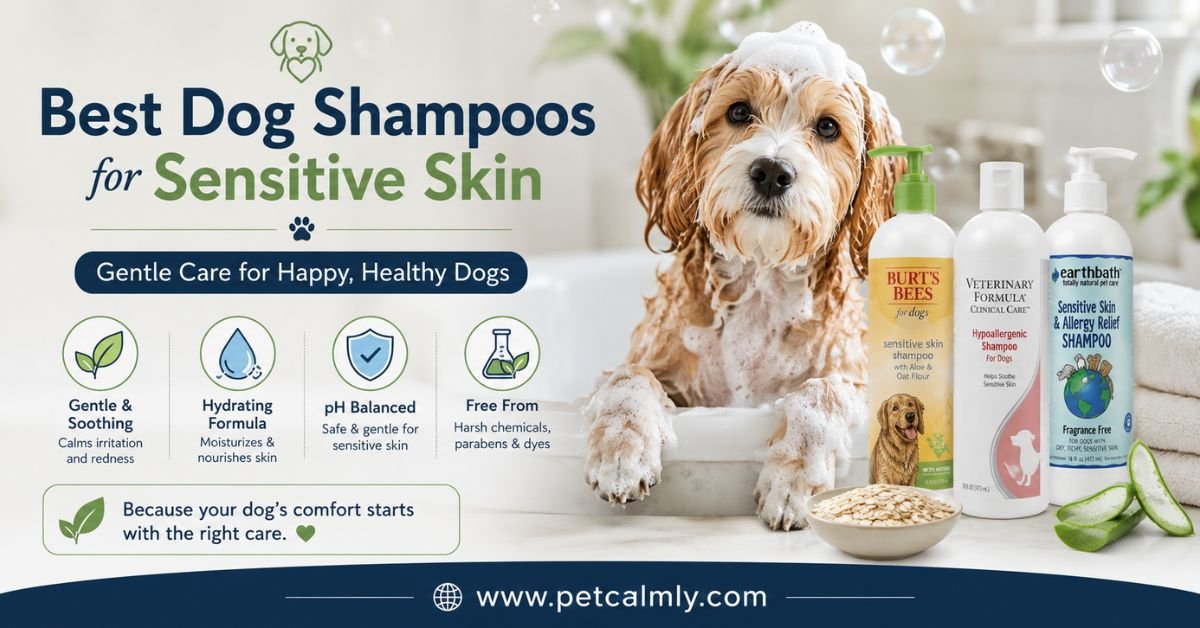
The best dog shampoos for sensitive skin are gentle, fragrance-free, moisturizing formulas that clean without stripping the skin’s natural protective barrier. Look for ingredients like oatmeal, aloe vera, chamomile, coconut-based cleansers, and ceramides. Avoid harsh detergents, artificial fragrances, dyes, and unnecessary additives that may worsen irritation. The right shampoo can help reduce itching, dryness, redness, and discomfort while supporting healthy skin and a shinier coat.
Best Dog Shampoos for Sensitive Skin: A Complete Guide for Concerned Pet Owners
If your dog scratches constantly after baths, develops dry flakes, or seems uncomfortable whenever grooming day arrives, you’re not alone.
Sensitive skin is one of the most common issues dog owners face. Sometimes it’s mild dryness. Other times it’s persistent itching, redness, or irritation that leaves both dogs and owners frustrated.
Choosing a shampoo may seem simple, but the wrong product can make skin problems worse. Many shampoos contain ingredients that clean effectively yet remove the natural oils dogs need to maintain healthy skin.
The good news is that gentle, well-formulated shampoos can make a noticeable difference.
In this guide, you’ll learn:
- What causes sensitive skin in dogs
- Which shampoo ingredients help and which to avoid
- The best types of shampoos for different skin concerns
- Common bathing mistakes
- How often sensitive-skinned dogs should be bathed
- When skin problems require veterinary attention
By the end, you’ll know exactly what to look for when shopping for a dog shampoo and how to make bath time more comfortable for your pup.
Why Do Some Dogs Have Sensitive Skin?
Quick answer
Sensitive skin develops when the skin barrier becomes irritated, weakened, or inflamed.
This can happen for many reasons, including allergies, environmental triggers, genetics, parasites, weather conditions, or overbathing.
A dog’s skin serves as a protective shield. When that shield becomes damaged, moisture escapes more easily and irritants can enter more readily.
Common causes include:
- Environmental allergies
- Food sensitivities
- Seasonal pollen exposure
- Dry indoor air
- Frequent bathing
- Flea allergies
- Certain medications
- Harsh grooming products
- Breed-related skin conditions
Signs Your Dog May Need a Sensitive Skin Shampoo
Many owners assume scratching automatically means fleas. While parasites can be responsible, skin sensitivity often shows up in other ways too.
Watch for:
- Frequent scratching
- Excessive licking
- Paw chewing
- Dry flakes or dandruff
- Red patches
- Mild skin inflammation
- Hot spots
- Dull coat
- Hair thinning
- Strong skin odor
- Discomfort during grooming
Some dogs become restless after baths because conventional shampoos leave their skin feeling dry or tight.
If symptoms repeatedly appear after bathing, the shampoo itself may be contributing to the problem.
What Makes a Dog Shampoo Good for Sensitive Skin?
The best dog shampoos for sensitive skin focus on protecting and restoring the skin barrier rather than aggressively removing oils.
Look for these helpful ingredients
Colloidal Oatmeal
Oatmeal is widely recommended for itchy, irritated skin.
Benefits include:
- Soothes inflammation
- Reduces itching
- Helps retain moisture
- Supports skin barrier function
Many veterinarians recommend oatmeal-based shampoos for mild skin irritation.
Aloe Vera
Aloe can help calm irritated skin and provide gentle hydration.
Benefits:
- Cooling sensation
- Moisturizing effects
- Supports skin recovery
- Helps reduce dryness
Coconut-Based Cleansers
Gentler than many synthetic detergents, coconut-derived cleansers remove dirt without excessive stripping.
Chamomile
Chamomile is often included in calming skin formulas because of its soothing properties.
Ceramides
Ceramides help strengthen the skin barrier and reduce moisture loss.
These ingredients are particularly useful for dogs with chronic dry skin.
Vitamin E
Vitamin E supports healthy skin and helps maintain hydration.
Ingredients to Avoid in Sensitive Skin Shampoos
Sometimes what a shampoo doesn’t contain is just as important as what it does.
Artificial Fragrances
Strong scents are a common trigger for skin irritation.
Dogs don’t need heavily perfumed products.
Artificial Dyes
Colorful shampoos may look appealing but offer no benefit to your dog’s skin.
Sulfates
Some sulfates can be overly drying, especially for dogs already prone to irritation.
Alcohol-Based Formulas
Certain alcohols can contribute to skin dryness.
Harsh Detergents
Aggressive cleansing agents may remove natural oils and worsen itching.
Best Types of Dog Shampoos for Sensitive Skin
Not every dog has the same skin issue. Matching the shampoo to the underlying problem often produces better results.
1. Oatmeal Shampoos
Best for:
- Mild itching
- Seasonal irritation
- Dry skin
- Routine bathing
These are often the safest starting point for many dogs.
Pros
- Widely available
- Gentle
- Moisturizing
- Suitable for frequent use
Cons
- May not help severe skin conditions
2. Hypoallergenic Shampoos
Best for:
- Allergy-prone dogs
- Dogs with fragrance sensitivities
- Puppies with delicate skin
Hypoallergenic formulas typically contain fewer potential irritants.
3. Medicated Sensitive Skin Shampoos
Best for:
- Persistent itching
- Skin infections
- Veterinary-directed treatment plans
These shampoos often contain active ingredients targeting specific skin conditions.
Always follow veterinary guidance when using medicated products.
4. Moisturizing Shampoos
Best for:
- Dry climates
- Winter skin problems
- Flaky skin
These formulas focus on hydration and barrier support.
5. Puppy-Safe Sensitive Skin Shampoos
Young puppies have particularly delicate skin.
Choose products specifically labeled for puppies whenever possible.
Comparison Table: Choosing the Right Shampoo
| Skin Concern | Best Shampoo Type | Key Ingredients |
|---|---|---|
| Dry skin | Moisturizing shampoo | Aloe, oatmeal, vitamin E |
| Mild itching | Oatmeal shampoo | Colloidal oatmeal |
| Allergies | Hypoallergenic shampoo | Fragrance-free ingredients |
| Frequent bathing | Gentle moisturizing shampoo | Coconut cleansers |
| Sensitive puppies | Puppy-safe shampoo | Mild natural ingredients |
| Chronic irritation | Veterinary shampoo | Depends on diagnosis |
How Often Should You Bathe a Dog With Sensitive Skin?
In short
More bathing is not always better.
Many owners accidentally worsen skin irritation by bathing too frequently.
For most dogs with sensitive skin:
- Every 4–6 weeks works well
- Active outdoor dogs may need more frequent baths
- Veterinary treatment plans may require special schedules
The ideal frequency depends on:
- Coat type
- Activity level
- Allergies
- Underlying medical conditions
- Climate
When in doubt, ask your veterinarian for guidance.
5 Common Bathing Mistakes That Make Sensitive Skin Worse
Even excellent shampoos can’t compensate for poor bathing habits.
1: Using Human Shampoo
Human skin has a different pH than canine skin.
Using human products can disrupt your dog’s skin barrier.
2: Water That Is Too Hot
Hot water may increase dryness and irritation.
Use lukewarm water instead.
3: Incomplete Rinsing
Leftover shampoo residue is a common cause of post-bath itching.
Take extra time to rinse thoroughly.
4: Excessive Scrubbing
Sensitive skin benefits from gentle washing.
Aggressive scrubbing can cause irritation.
5: Frequent Product Switching
Constantly changing products makes it difficult to identify what works.
A Gentle Bath Routine for Dogs With Sensitive Skin
Step 1: Brush Before Bathing
Remove loose hair and debris before getting the coat wet.
Step 2: Use Lukewarm Water
Avoid hot water.
Aim for comfortably warm water.
Step 3: Apply Shampoo Gently
Massage the shampoo into the coat without vigorous scrubbing.
Step 4: Let It Sit Briefly
Many sensitive-skin shampoos work best when left on for several minutes.
Always follow label instructions.
Step 5: Rinse Thoroughly
Continue rinsing until the water runs completely clear.
Step 6: Dry Carefully
Use a soft towel.
Avoid excessive heat from dryers.
Breeds More Likely to Experience Sensitive Skin
Some breeds are naturally more prone to skin problems.
These may include:
- Labrador Retrievers
- Golden Retrievers
- French Bulldogs
- Boxers
- West Highland White Terriers
- Bulldogs
- German Shepherds
- Cocker Spaniels
- Shar-Peis
This doesn’t mean every dog of these breeds will develop skin issues, but owners should pay close attention to grooming products.
Can Diet Affect Sensitive Skin?
Absolutely.
The skin reflects overall health, and nutrition plays a major role.
Poor-quality diets may contribute to:
- Dry skin
- Dull coats
- Increased inflammation
Many veterinarians recommend ensuring adequate:
- Omega-3 fatty acids
- Protein quality
- Hydration
- Essential vitamins and minerals
Some dogs with recurring skin problems may benefit from a veterinary evaluation for food sensitivities.
What Else Can Help Sensitive Skin Besides Shampoo?
A good shampoo is only one piece of the puzzle.
Helpful strategies include:
Regular Flea Prevention
Even a single flea bite can trigger intense itching in sensitive dogs.
Humidity Control
Dry indoor air can worsen skin problems.
Gentle Grooming Tools
Harsh brushes may irritate inflamed skin.
Healthy Nutrition
Skin health starts from within.
Routine Veterinary Care
Persistent symptoms deserve professional evaluation.
When Should You Worry?
Occasional mild itching isn’t always alarming.
However, certain symptoms warrant veterinary attention.
Contact your veterinarian if your dog has:
- Open sores
- Bleeding skin
- Severe redness
- Hair loss patches
- Pus or discharge
- Strong odor
- Constant scratching
- Sleep disruption from itching
- Repeated ear infections
- Sudden widespread rash
The main reason is that these signs may indicate allergies, infections, parasites, hormonal conditions, or other medical issues requiring treatment.
What Should Pet Owners Do?
If you’re trying to find the best dog shampoo for sensitive skin, start with a simple plan:
- Choose a fragrance-free, gentle formula.
- Look for soothing ingredients like oatmeal and aloe.
- Avoid harsh detergents and dyes.
- Bathe only as often as necessary.
- Rinse thoroughly after every bath.
- Monitor your dog’s skin response.
- Seek veterinary guidance if symptoms continue.
Remember, even excellent shampoos cannot fix underlying allergies or medical conditions by themselves.
Dos and Don’ts for Sensitive Skin Care
Do
Use dog-specific shampoos
Brush regularly
Keep flea prevention current
Check skin weekly
Follow veterinary advice
Introduce new products gradually
Don’t
Use human shampoo
Bathe excessively
Ignore persistent itching
Use strongly scented products
Scrub irritated skin aggressively
Assume all skin problems are caused by allergies
Frequently Asked Questions
What is the best dog shampoo for extremely sensitive skin?
A fragrance-free oatmeal or hypoallergenic shampoo is often the safest starting point. Dogs with severe skin issues may require a veterinarian-recommended medicated shampoo.
Can dog shampoo help stop itching?
Yes, the right shampoo can reduce itching caused by dryness and mild irritation. However, allergies, infections, or parasites may require additional treatment.
How do I know if my dog’s shampoo is causing irritation?
Watch for increased scratching, redness, licking, or discomfort after baths. Symptoms that consistently appear after bathing may indicate sensitivity to the product.
Is oatmeal shampoo safe for puppies?
Most oatmeal shampoos formulated specifically for dogs are safe for puppies. Always check the label for age recommendations.
Can I bathe my itchy dog every week?
Weekly baths may be appropriate in some cases, but frequent bathing can worsen dryness in others. The ideal schedule depends on your dog’s skin condition and veterinary recommendations.
Why does my dog scratch more after a bath?
Common causes include shampoo residue, overly hot water, harsh ingredients, or existing skin conditions that become more noticeable after bathing.
More Information About Pets, Please Visit Our Website: What Are the Worst Dental Chews for Dogs?
Conclusion
Finding the best dog shampoo for sensitive skin isn’t about choosing the most expensive bottle on the shelf. It’s about understanding your dog’s specific needs and selecting a product that supports healthy skin rather than stripping it.
For many dogs, a gentle oatmeal or hypoallergenic shampoo can significantly improve comfort, reduce irritation, and make bath time less stressful. Small changes using milder ingredients, bathing less frequently, and rinsing more thoroughly—often have a bigger impact than owners expect.
Most importantly, pay attention to what your dog’s skin is telling you. Persistent itching, redness, or discomfort deserves investigation. When combined with good grooming habits, proper nutrition, and veterinary guidance when needed, the right shampoo can become an important part of keeping your dog comfortable, healthy, and happy.