
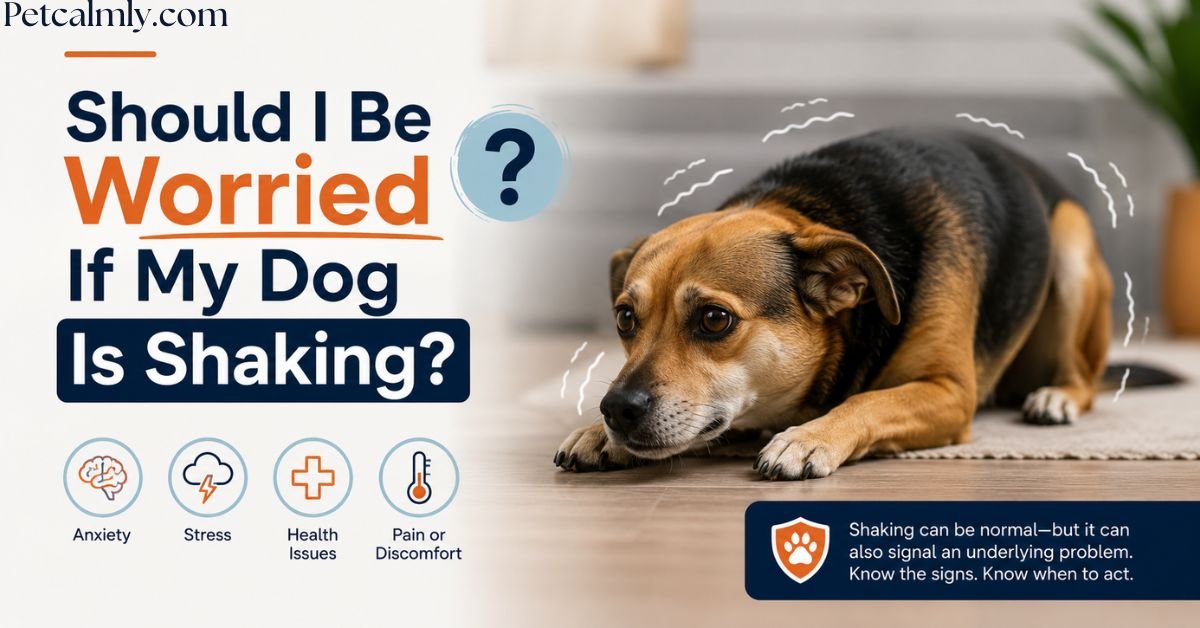
Short direct answer
A dog shaking is not always an emergency. It can be harmless like being cold, excited, or anxious but it may also signal pain, poisoning, low blood sugar, or a medical condition. You should worry if shaking is sudden, severe, ongoing, or paired with other symptoms like vomiting, weakness, or confusion.
Why Your Dog Is Shaking Matters More Than It Seems
Seeing your dog shaking can feel unsettling. One moment they’re fine, the next they’re trembling like something is wrong and as a pet owner, it’s natural to worry.
The truth is, shaking in dogs is a symptom, not a diagnosis. It can range from something simple like emotional excitement to something more serious like pain or illness.
What matters most is context:
- When did it start?
- How long does it last?
- Is your dog acting normal otherwise?
- Are there any other symptoms?
In this guide, you’ll learn the most common reasons dogs shake, how to tell the difference between harmless and dangerous causes, and exactly what steps to take if it happens again.
9 Common Reasons Why Dogs Shake or Tremble
Dogs shake for many different reasons, and not all of them are medical emergencies. Let’s break them down in a simple, real-world way.
1. Cold Weather or Temperature Changes
Just like humans, dogs can shiver when they’re cold. Small breeds, short-haired dogs, and puppies are especially sensitive.
Signs it’s just cold:
- Shaking stops when they warm up
- Curling up tightly or seeking blankets
- No other symptoms
Example: A Chihuahua or French Bulldog shaking after a winter walk is often just reacting to temperature.
2. Anxiety, Fear, or Stress
Emotional shaking is one of the most common reasons dogs tremble.
Triggers include:
- Thunderstorms or fireworks
- Vet visits
- Separation anxiety
- New environments or strangers
You may also notice:
- Panting
- Tail tucked
- Hiding or clingy behavior
- Restlessness
This type of shaking usually stops when the stressor is removed.
3. Excitement or Overstimulation
Some dogs shake when they’re overly excited like before a walk, meal, or greeting their favorite person.
This is especially common in:
- High-energy breeds
- Young dogs
- Dogs with strong emotional attachment to routines
It usually fades quickly once they calm down.
4. Pain or Injury
Shaking can be a dog’s way of showing discomfort. Dogs often hide pain, so trembling may be one of the few visible signs.
Possible causes:
- Sprains or injuries
- Arthritis in older dogs
- Internal pain (stomach, back, joints)
Warning signs include:
- Limping
- Reluctance to move
- Whining or sensitivity when touched
5. Low Blood Sugar (Hypoglycemia)
This is more common in:
- Small breed dogs
- Puppies
- Dogs that haven’t eaten properly
Symptoms may include:
- Weakness
- Confusion
- Trembling or shaking
- Collapse in severe cases
This can become serious quickly and may need urgent attention.
6. Poisoning or Toxic Exposure
Shaking can be an early warning sign of poisoning.
Common toxins include:
- Chocolate
- Xylitol (found in sugar-free gum)
- Certain plants
- Household cleaners
- Human medications
Other symptoms:
- Vomiting or diarrhea
- Drooling
- Seizures
- Rapid heartbeat
If poisoning is suspected, this is an emergency situation.
7. Neurological Conditions or Tremor Disorders
Some dogs experience involuntary tremors due to neurological issues.
These may appear as:
- Rhythmic shaking
- Head tremors
- Loss of coordination
In some cases, conditions like tremor syndromes or spinal issues may be involved.
8. Fever or Illness
Dogs may shake when they feel unwell, especially if they have a fever or infection.
Possible causes:
- Viral infections
- Bacterial illness
- Inflammatory conditions
You might also notice:
- Lethargy
- Loss of appetite
- Warm ears or body
9. Old Age and Muscle Weakness
Senior dogs may develop mild tremors due to:
- Muscle loss
- Joint stiffness
- Nervous system changes
This type of shaking is usually slow, mild, and more noticeable when standing or walking.
Quick Reference Table: When Shaking Is Harmless vs Serious
| Cause | Level of Concern | What to Observe |
|---|---|---|
| Cold | Low | Stops when warmed |
| Excitement | Low | Short-lived behavior |
| Anxiety | Low–Moderate | Trigger-based shaking |
| Pain | Moderate–High | Limping, sensitivity |
| Low blood sugar | High | Weakness, collapse |
| Poisoning | Emergency | Vomiting, seizures |
| Neurological issue | High | Repeated tremors |
| Illness/fever | Moderate–High | Lethargy, poor appetite |
How to Assess Your Dog at Home (Step-by-Step)
If your dog starts shaking, stay calm and observe carefully:
Step 1: Check the environment
- Is it cold?
- Was there a loud noise or stress trigger?
Step 2: Look for other symptoms
- Vomiting?
- Weakness?
- Breathing changes?
- Loss of balance?
Step 3: Observe behavior
- Still responsive?
- Eating normally?
- Walking okay?
Step 4: Try gentle comfort measures
- Warm blanket
- Quiet room
- Soft voice reassurance
If shaking continues or worsens, move to veterinary advice.
When Should You Be Concerned?
You should take your dog’s shaking seriously if you notice:
- Shaking lasting more than 30–60 minutes without stopping
- Sudden, intense tremors with no clear cause
- Vomiting, diarrhea, or drooling
- Loss of coordination or collapse
- Refusal to eat or drink
- Signs of pain (crying, stiffness, guarding body)
- Possible toxin exposure
Important: If you suspect poisoning or neurological issues, do not wait. Contact a vet immediately.
What Should Pet Owners Do?
Here’s a simple, practical response plan:
Step-by-step action plan
- Stay calm and observe
- Remove possible stress or toxins
- Keep your dog warm and comfortable
- Offer water (but don’t force it)
- Check for injuries or pain
- Monitor for 30–60 minutes
Call a vet if:
- Symptoms are severe or worsening
- Shaking is paired with vomiting or collapse
- You suspect poisoning
- Your dog seems disoriented or weak
Common Mistakes Pet Owners Make
Many dog owners panic (understandably) and make mistakes like:
- Ignoring subtle symptoms early on
- Assuming all shaking is anxiety
- Delaying vet visits too long
- Giving human medication (dangerous)
- Over-handling a stressed or painful dog
Being observant not reactive is key.
How to Prevent Shaking Episodes
You can reduce shaking episodes with simple care habits:
Daily prevention tips:
- Maintain a consistent feeding schedule
- Keep your dog warm in cold weather
- Reduce exposure to loud stress triggers
- Ensure regular exercise
- Avoid toxic foods and household chemicals
- Provide mental stimulation (to prevent anxiety)
Emotional wellbeing matters:
Dogs that feel secure and predictable in their environment are less likely to experience stress-related trembling.
Conclusion
A shaking dog is not automatically an emergency but it is always a signal worth paying attention to.
In many cases, the cause is simple: cold, excitement, or anxiety. But when shaking is sudden, persistent, or paired with other symptoms, it can point to something more serious.
The safest approach is to:
- Observe carefully
- Look for additional symptoms
- Act quickly when something feels “off”
You know your dog’s normal behavior better than anyone. Trust that instinct and when in doubt, a vet check is always the safest choice.
More Information About Pets, Please Visit Our Website: How to Calm Down a Hyper Dog at Night
Frequently Asked Questions
1. Why is my dog shaking but acting normal?
If your dog is otherwise fine, it’s often due to excitement, mild anxiety, or temperature changes. Monitor them, but it’s usually not serious if behavior stays normal.
2. Is shaking a sign of pain in dogs?
Yes, dogs often shake when they’re uncomfortable or in pain. Look for limping, stiffness, or sensitivity when touched to confirm.
3. Why does my dog shake when lying down?
It could be relaxation tremors, dreaming, or mild muscle fatigue. If it happens often or looks intense, it may need veterinary evaluation.
4. Can anxiety make a dog shake?
Absolutely. Anxiety from loud noises, separation, or new environments is one of the most common causes of trembling in dogs.
5. When is dog shaking an emergency?
If shaking comes with vomiting, collapse, confusion, seizures, or suspected poisoning, it should be treated as an emergency.
6. Should I take my dog to the vet for shaking?
If it’s mild, short, and clearly linked to stress or cold, you can monitor at home. If it persists or worsens, a vet visit is strongly recommended.