Short Direct Answer
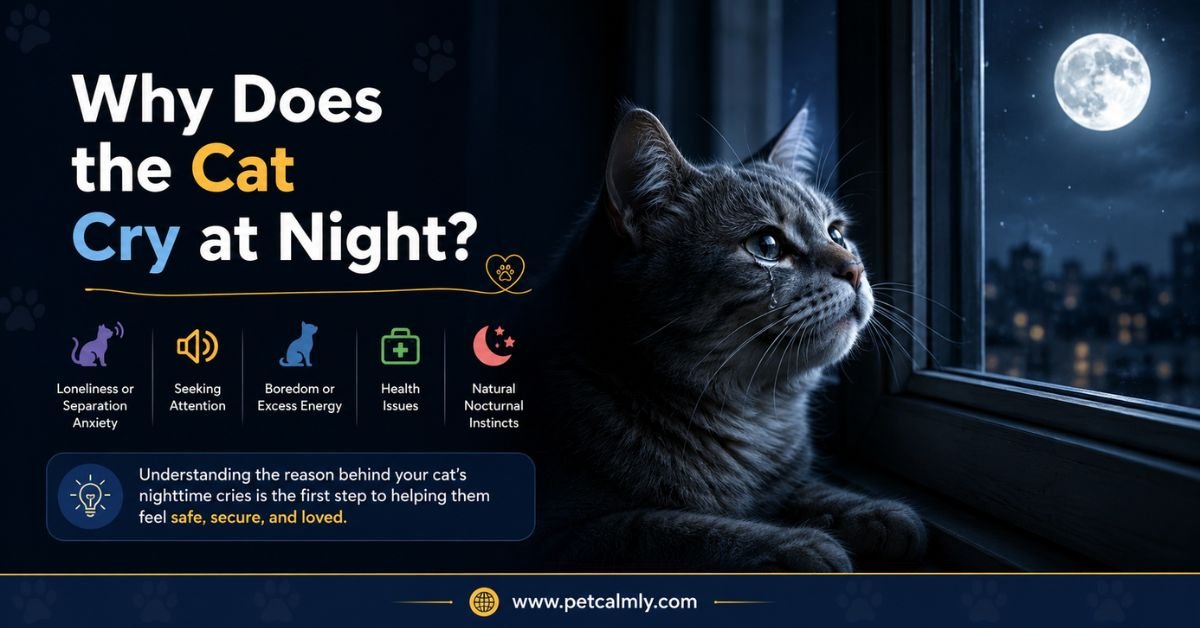
If you’re wondering why does the cat cry at night, the most common reasons include hunger, boredom, loneliness, attention-seeking, aging-related confusion, stress, mating behavior, or an underlying health issue. Some cats become more active after dark because their natural instincts make them alert during dawn and dusk hours. While occasional nighttime vocalization is normal, persistent crying deserves attention, especially if it is new, intense, or accompanied by other behavioral changes.
Why Your Cat’s Nighttime Crying Can Be So Concerning
It’s 2 a.m. The house is quiet, and suddenly your cat starts meowing loudly in another room.
Maybe they’re pacing down the hallway. Maybe they’re sitting by the bedroom door crying. Some cats even seem to howl for no obvious reason.
Many cat owners immediately worry:
- Is my cat in pain?
- Is something wrong?
- Are they lonely?
- Why does this happen every night?
The good news is that nighttime crying is often explainable. In many cases, it reflects a cat’s natural behavior rather than a serious problem.
That said, persistent nighttime vocalization can sometimes signal emotional distress, age-related changes, or medical concerns that shouldn’t be ignored.
This guide will help you understand exactly why your cat may be crying at night, how to identify the cause, what you can do to help, and when it’s time to call your veterinarian.
Understanding Nighttime Cat Behavior
Before looking at specific causes, it helps to understand how cats naturally operate.
Cats are often described as nocturnal, but they are actually crepuscular. This means they are most active around:
- Dawn
- Dusk
- Early morning hours
- Evening hours
These activity patterns developed from their hunting instincts.
While humans are settling into bed, many cats are just beginning their active period. For indoor cats, this can sometimes translate into:
- Running around the house
- Meowing
- Playing
- Seeking interaction
- Exploring
A certain amount of nighttime activity is completely normal.
5 Common Reasons Why Cats Cry at Night
1. Your Cat Wants Attention
Quick answer
One of the most common reasons cats cry at night is because they want interaction from their favorite humans.
Many cats learn that meowing gets results.
If you respond by:
- Talking to them
- Petting them
- Feeding them
- Getting out of bed
They quickly discover that nighttime vocalization works.
Signs attention-seeking is the cause
- Crying stops when you interact
- Cat follows you around
- Vocalization occurs near your bedroom
- Cat appears otherwise healthy
This is especially common in:
- Single-cat households
- Highly social cats
- Recently adopted cats
2. Hunger or Food Expectations
Some cats develop surprisingly accurate internal clocks.
If breakfast normally arrives at 6 a.m., your cat may begin reminding you at 4 a.m.
Evening feeding schedules can also influence nighttime behavior.
Clues hunger may be responsible
- Crying occurs near food bowls
- Cat leads you toward feeding areas
- Behavior happens at the same time every night
In some cases, a small bedtime meal can help reduce early-morning wake-up calls.
3. Boredom and Lack of Mental Stimulation
Indoor cats need outlets for their energy.
Without enough:
- Play sessions
- Climbing opportunities
- Puzzle toys
- Exploration
That energy often emerges after dark.
Think of a cat that spent most of the day sleeping while the family was at work.
By nighttime, they’re fully rested and ready for activity.
Common boredom behaviors
- Meowing
- Zoomies
- Knocking objects over
- Scratching furniture
- Running through hallways
Many owners notice dramatic improvement after increasing daytime enrichment.
4. Loneliness and Social Needs
Some cats are far more social than people realize.
A cat that feels isolated may vocalize during quiet nighttime hours when the home feels empty.
This can happen after:
- A family member moves away
- Another pet dies
- Schedule changes
- Moving homes
Signs loneliness may be involved
- Increased clinginess
- Following people constantly
- Sleeping less alone
- Crying when separated
The emotional component is often overlooked, but cats can experience stress from social changes.
5. Stress or Anxiety
Changes in a cat’s environment frequently trigger nighttime vocalization.
Common stressors include:
- New pets
- New baby
- House guests
- Moving
- Renovations
- Outdoor cats near windows
A stressed cat may feel more vulnerable at night.
Other signs of anxiety
- Hiding
- Excessive grooming
- Appetite changes
- Litter box issues
- Increased vigilance
Nighttime crying may be one symptom of a broader stress response.
Why Does an Older Cat Cry at Night?
Cognitive Dysfunction in Senior Cats
As cats age, some develop cognitive decline similar to dementia in humans.
Senior cats may become confused and disoriented, especially at night.
Common signs
- Wandering aimlessly
- Staring at walls
- Forgetting routines
- Increased vocalization
- Appearing lost in familiar areas
Nighttime confusion is one of the most frequently reported signs.
Owners often describe it as their cat suddenly calling out as though searching for someone.
Age group most affected
Usually:
- 10 years and older
- More common in senior and geriatric cats
Veterinary evaluation is important if these changes appear suddenly.
Vision or Hearing Loss
Older cats may cry more because they feel uncertain about their surroundings.
Reduced vision or hearing can increase anxiety after dark.
Imagine waking up unable to fully interpret your environment.
Many senior cats vocalize because they seek reassurance.
Medical Reasons Cats Cry at Night
Pain or Discomfort
The main reason to rule out first
Cats are experts at hiding pain.
Sometimes nighttime is when discomfort becomes most noticeable.
Conditions that may contribute include:
- Arthritis
- Dental disease
- Injury
- Joint pain
- Neurological disorders
A cat in discomfort may:
- Vocalize unexpectedly
- Avoid movement
- Become irritable
- Change sleeping locations
Hyperthyroidism
Hyperthyroidism is common in older cats.
Symptoms may include:
- Increased appetite
- Weight loss
- Restlessness
- Increased activity
- Excessive vocalization
Many owners first notice unusual nighttime behavior.
High Blood Pressure
Hypertension can occur alongside other diseases in senior cats.
Possible signs include:
- Confusion
- Restlessness
- Vocalization
- Behavioral changes
Veterinary testing is needed for diagnosis.
Kidney Disease
Kidney disease is another common issue in aging cats.
Cats may become uncomfortable due to:
- Increased thirst
- Frequent urination
- Nausea
- General malaise
Nighttime crying can occasionally accompany these symptoms.
Urinary Problems
A cat experiencing urinary discomfort may cry because urination is painful.
Watch for:
- Frequent litter box visits
- Straining
- Blood in urine
- Accidents outside the box
This situation requires prompt veterinary attention.
Why Unspayed or Unneutered Cats Cry at Night
Mating Behavior
Cats in heat often become dramatically more vocal.
Female cats may:
- Yowl loudly
- Roll on the floor
- Become restless
- Seek exits
Male cats may also vocalize in response to nearby females.
These sounds are often much louder and more intense than normal meowing.
Typical clues
- Repeated yowling
- Increased affection
- Escaping attempts
- Restlessness
Spaying or neutering usually resolves hormone-driven nighttime crying.
Does Breed Affect Nighttime Vocalization?
Yes.
Some breeds are naturally more vocal.
Examples include:
| Breed | Vocal Tendency |
|---|---|
| Siamese | Very high |
| Oriental Shorthair | Very high |
| Tonkinese | High |
| Burmese | Moderate to high |
| Balinese | High |
Cats from vocal breeds often “talk” more throughout the day and night.
If your cat belongs to one of these breeds, some nighttime communication may simply be part of their personality.
How to Figure Out Why Your Cat Is Crying
Instead of guessing, look for patterns.
Ask yourself:
When does the crying happen?
- Midnight?
- Early morning?
- Right before feeding?
Where does it happen?
- Near food bowl?
- Bedroom door?
- Windows?
What stops it?
- Food?
- Attention?
- Playtime?
Has anything changed recently?
- New home?
- New pet?
- Schedule changes?
Patterns often reveal the root cause.
4 Common Mistakes Owners Make
1: Immediately Feeding the Cat
If hunger isn’t the actual problem, feeding can accidentally reinforce the behavior.
The cat learns:
“I cry. Human responds. Success.”
The cycle repeats nightly.
2: Ignoring Medical Possibilities
Many owners assume crying is purely behavioral.
New vocalization should always prompt consideration of health issues, especially in older cats.
3: Not Providing Enough Evening Activity
A cat that sleeps all day may have plenty of energy at midnight.
Exercise matters.
4: Punishing the Cat
Never punish nighttime vocalization.
Yelling, spraying water, or scolding typically increases stress and anxiety.
This can worsen the problem rather than solve it.
What Should Pet Owners Do?
Step 1: Rule Out Health Problems
Schedule a veterinary visit if:
- Crying starts suddenly
- Cat is elderly
- Other symptoms appear
- Behavior changes significantly
Medical causes should always be excluded first.
Step 2: Increase Daytime Enrichment
Try:
- Interactive toys
- Climbing trees
- Puzzle feeders
- Window perches
- Hunting-style games
Mental stimulation often reduces nighttime activity.
Step 3: Create an Evening Play Routine
A helpful schedule might look like:
- Interactive play for 15–20 minutes
- Small meal afterward
- Quiet settling period
- Bedtime
This mimics the natural hunt-eat-groom-sleep cycle.
Step 4: Maintain Consistent Feeding Times
Cats appreciate predictability.
Consistent meal schedules can reduce nighttime frustration.
Automatic feeders can also help early-morning vocalizers.
Step 5: Reduce Stress Triggers
Look for:
- Outdoor cat conflicts
- Household disruptions
- Resource competition
- Environmental changes
Small adjustments can make a significant difference.
Nighttime Crying Prevention Checklist
Use this simple checklist:
Daily
Interactive play session
Fresh water available
Clean litter box
Predictable feeding schedule
Quiet sleeping area
Mental enrichment
Comfortable resting spots
Weekly
Rotate toys
Inspect for health changes
Monitor appetite and bathroom habits
Evaluate stress levels
What to Avoid
Don’t
- Punish your cat
- Assume it’s just attention-seeking
- Ignore sudden behavior changes
- Feed every time they cry
- Force interaction
Do
- Observe patterns
- Increase enrichment
- Keep routines stable
- Address stressors
- Consult a veterinarian when needed
When Should You Worry?
Most nighttime crying is not an emergency.
However, veterinary attention is recommended if your cat:
- Suddenly begins crying at night
- Appears disoriented
- Stops eating
- Loses weight
- Shows signs of pain
- Has litter box difficulties
- Becomes unusually aggressive
- Experiences excessive thirst
- Has difficulty walking
Seek urgent veterinary care if
- Your cat cannot urinate
- Crying is accompanied by severe distress
- There are signs of injury
- Breathing appears abnormal
These situations may indicate a serious medical issue.
Real-Life Examples of Nighttime Cat Crying
Example 1: The Early Breakfast Demander
A healthy 3-year-old cat begins meowing every morning at 5 a.m.
The cause?
Owners consistently feed breakfast immediately after waking.
An automatic feeder often resolves this issue by removing the human reward connection.
Example 2: The Bored Indoor Cat
A young indoor cat spends most of the day alone.
At night, he races through the house and cries loudly.
Adding climbing structures, puzzle toys, and evening play sessions significantly reduces the behavior.
Example 3: The Senior Cat
A 14-year-old cat suddenly begins wandering and vocalizing overnight.
Veterinary examination reveals age-related cognitive changes.
Management strategies help improve comfort and reduce nighttime confusion.
Frequently Asked Questions
1: Why does my cat cry at the same time every night?
Cats thrive on routines and internal schedules. If crying occurs at the same time nightly, hunger, attention-seeking, boredom, or habit are common explanations.
2: Why does my cat walk around the house meowing at night?
This may happen because your cat is seeking interaction, exploring, feeling lonely, or experiencing age-related confusion. Context and accompanying behaviors provide important clues.
3: Is it normal for indoor cats to cry at night?
Occasional nighttime vocalization is normal, especially in active indoor cats. Persistent or sudden crying deserves closer investigation.
4: Why is my older cat crying loudly at night?
Senior cats may vocalize due to cognitive dysfunction, hearing loss, vision changes, pain, hyperthyroidism, or other age-related health conditions.
5: Should I ignore my cat when it cries at night?
Not immediately. First determine whether the cause is medical, emotional, or behavioral. Once health issues are ruled out, selective ignoring may help attention-seeking behavior that has become a habit.
6: Can anxiety cause cats to cry at night?
Yes. Stress, environmental changes, loneliness, and anxiety can all contribute to nighttime vocalization. Many cats become more vocal when they feel uncertain or unsettled.
More Information About Pets, Please Visit Our Website: Why Does My Cat Cry at the Same Time Every Night?
Conclusion
If you’ve been asking yourself, “why does the cat cry at night?”, the answer often comes down to a combination of natural feline instincts, unmet needs, learned habits, stress, aging, or health concerns.
The key is to look beyond the meowing itself and focus on the bigger picture. Consider your cat’s age, routine, environment, activity level, and overall health. A young cat may simply need more play and enrichment, while an older cat could be experiencing age-related changes that require veterinary support.
Most importantly, don’t assume your cat is being difficult. Nighttime crying is a form of communication. Your cat is trying to tell you something, and understanding the reason is the first step toward helping them feel more comfortable, secure, and content.
For more feline wellness and behavior guides, consider exploring related topics such as cat anxiety, nighttime activity patterns, environmental enrichment for indoor cats, senior cat care, and healthy feeding routines. These subjects often connect closely with nighttime vocalization and can help create a calmer home for both you and your cat.