Short direct answer
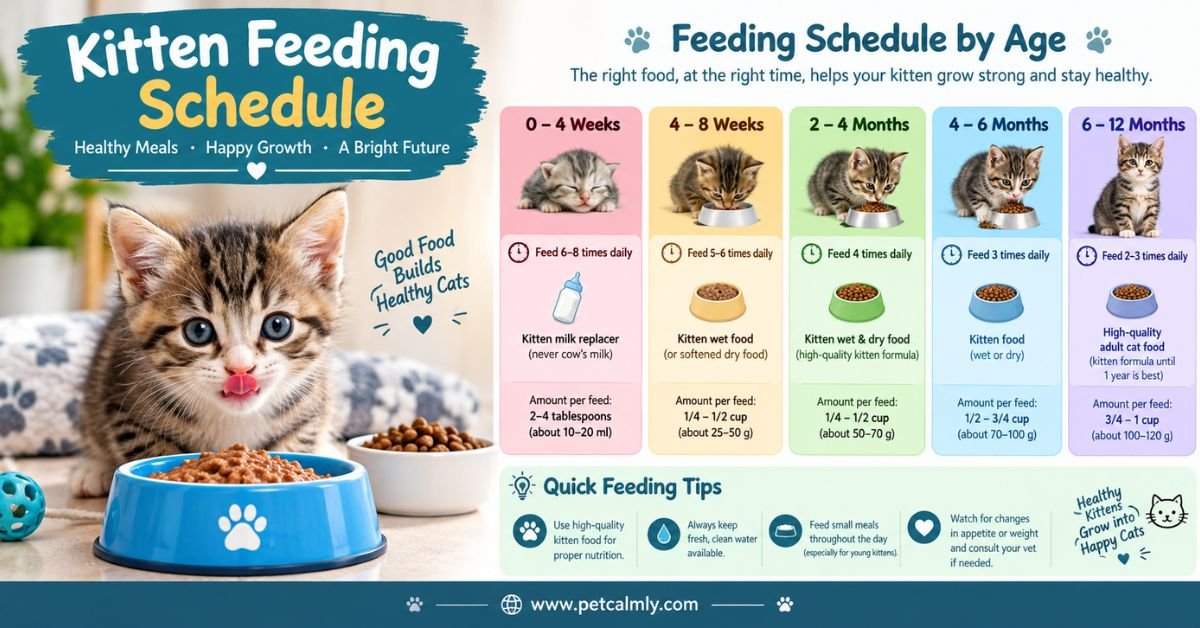
New kitten owners often feel uncertain about feeding frequency and portion sizes and that’s completely normal. Here’s the straightforward answer: Kittens under 4 weeks old need bottle feeding every 2–3 hours; 4–8 week-old kittens should eat 4 times daily; 8–12 week-old kittens need 3 meals per day; and kittens 12 weeks to 6 months old thrive on 2–3 meals daily. Most kittens transition to adult feeding (once or twice daily) around 12 months old. The exact schedule depends on your kitten’s age, weight, activity level, and the type of food you’re offering. We’ll walk through every phase and help you customize a plan that works for your household.
Why Kitten Feeding Schedules Matter So Much
Before we dive into the specific numbers, it’s worth understanding the “why” behind structured feeding. A kitten’s body is developing incredibly fast during their first year their bones, organs, immune system, and brain are all forming. Unlike adult cats, kittens can’t store energy reserves the same way, which means they need regular nutrition to fuel this growth.
When you establish a consistent feeding schedule, you’re doing more than just filling their belly. You’re:
- Supporting physical development: Kittens need more calories per pound of body weight than adult cats. A growing kitten might need 3–4 times the calories of an adult cat.
- Creating predictable bathroom habits: Regular feeding leads to regular bathroom schedules, which makes litter box training and house management much easier.
- Building digestive health: Spacing meals appropriately prevents overeating and digestive upset.
- Establishing trust and routine: Predictable feeding times help kittens feel secure and can reduce anxiety.
- Monitoring their health: A consistent feeding routine makes it easier to spot changes in appetite or behavior that might signal a health issue.
This is why veterinarians and feline behaviorists emphasize structured schedules, especially during those crucial first months.
Kitten Feeding by Age: The Complete Timeline
Newborn to 4 Weeks Old: Bottle Feeding and Mother’s Milk
If you’ve taken in a kitten younger than 4 weeks perhaps orphaned or rejected by the mother you’re looking at around-the-clock care. These tiny kittens depend entirely on frequent feedings.
Feeding frequency: Every 2–3 hours, around the clock (this includes overnight).
What to feed: Kitten formula specifically designed for felines (never cow’s milk or dog formula). Products like KMR (Kitten Milk Replacer) or Enfamil A+ are designed to match a mother cat’s milk composition.
How much: Approximately 6–8 milliliters per feeding for a newborn, scaling up as the kitten grows. Follow the formula can’s guidelines based on the kitten’s weight.
Feeding method: Use a bottle with a kitten-sized nipple, held at a slight angle. Never squeeze the bottle or force-feed.
Pro tip: This stage is genuinely exhausting. If you’re bottle-feeding, consider reaching out to local rescue groups or veterinarians who might connect you with other experienced bottle-feeders or suggest a rotation schedule. You’re not expected to do this alone, and asking for help is the right call.
If the mother cat is present but the kitten isn’t nursing well, contact a veterinarian. Sometimes kittens need supplemental feeding while still nursing, or the mother needs support.
4 to 8 Weeks Old: Weaning and Wet Food Introduction
This is the golden window where kittens begin transitioning from mother’s milk (or formula) to solid food. Most kittens are developmentally ready to eat kitten formula mixed with wet food around 3–4 weeks old, and by 4–5 weeks, many are eating primarily soft food with less formula.
Feeding frequency: 4 meals per day, spaced roughly 4–6 hours apart.
Sample schedule:
- 7:00 AM – Meal 1
- 12:00 PM – Meal 2
- 4:00 PM – Meal 3
- 8:00 PM – Meal 4
What to feed: High-quality kitten wet food (specifically formulated for kittens under 1 year old) mixed with kitten formula to create a porridge-like consistency. Gradually reduce the formula as weeks progress. By 8 weeks, kittens can usually eat wet food alone.
How much per meal: Start with 3–4 tablespoons per meal (about 1.5–2 ounces), increasing to 4–6 tablespoons by 8 weeks as the kitten grows.
Why wet food at this stage?: Wet kitten food is more digestible, has higher moisture content, and is easier for developing teeth to manage. Many high-quality wet foods for kittens contain the right balance of taurine, calcium, and phosphorus—nutrients critical for bone and heart development.
Introducing dry food: You can begin offering high-quality kitten dry food (kibble) around 5–6 weeks alongside the wet food. Many kittens are curious and will start nibbling. Moisten the kibble slightly with warm water or kitten formula to soften it initially.
Real-world scenario: Emma adopted a 5-week-old kitten named Milo. She mixed high-quality kitten wet food with KMR formula, offering 4 meals daily. By week 6, Milo was eating mostly wet food. By 8 weeks, she introduced moistened kitten kibble. He naturally gravitated toward the softer food still, so she kept offering both wet and dry options, letting him choose.
8 to 12 Weeks Old: Building Consistency with Three Meals Daily
By 8 weeks, most kittens are fully weaned and eating solid kitten food. Their digestive systems are more developed, and they can go slightly longer between meals. This is typically when veterinarians clear kittens for adoption, so this phase coincides with many kittens arriving in their forever homes.
Feeding frequency: 3 meals per day, spaced roughly 6–8 hours apart.
Sample schedule:
- 8:00 AM – Meal 1
- 12:30 PM – Meal 2
- 5:00 PM – Meal 3
(Adjust based on your household rhythm there’s flexibility here.)
What to feed: High-quality kitten food, wet, dry, or a combination of both.
How much per meal: Kittens at this age typically eat 3–6 ounces per day total, so roughly 1–2 ounces per meal. Check your kitten food can for age-specific guidelines; they vary by brand and calorie density.
A note on portion sizes: Follow the feeding guidelines on your kitten food packaging as a starting point, but adjust based on your individual kitten’s body condition. You should be able to feel their ribs with gentle pressure, but not see them prominently. If you’re uncertain, ask your vet during the 8-week checkup to assess your kitten’s weight and condition.
Wet vs. dry at this age: Many veterinarians recommend a combination. Wet food provides hydration (kittens don’t always drink enough water), while dry food can help with gentle dental cleaning. Some owners alternate meals; others offer both at once.
12 Weeks to 6 Months Old: Transitioning to Two Meals
Around 12 weeks, kittens’ digestive capacity increases further. Many owners transition to twice-daily feeding, which is often more practical for working households.
Feeding frequency: 2–3 meals per day. If you drop to 2 meals, the third meal isn’t necessary, but some owners keep it for flexibility or if their kitten seems hungry.
Sample 2-meal schedule:
- 7:00 AM – Breakfast
- 6:00 PM – Dinner
(Add a midday meal around 1:00 PM if you prefer 3 meals.)
What to feed: Continue kitten-specific formula. Don’t switch to adult cat food yet—kittens have different nutritional needs.
How much per meal: Typically 2–3 ounces per meal at this age, totaling around 4–6 ounces daily. Again, your kitten food packaging is your best guide.
Activity and appetite: By this age, kittens are noticeably more active, playful, and energetic. They burn calories quickly, so adequate feeding is important. Some kittens seem ravenous; others are pickier. Both are normal.
Growth rate: Kittens grow rapidly during this phase. You might notice your kitten’s weight increasing by several ounces per month. Monthly vet checkups during this period help ensure healthy, steady growth.
6 Months to 1 Year Old: Preparing for Adulthood
From 6 months onward, growth slows considerably, but your kitten still needs kitten-formula food to ensure proper development of bones and organs.
Feeding frequency: 2 meals per day is standard. Most owners stick with a breakfast and dinner routine.
Sample schedule:
- 7:00 AM – Breakfast
- 7:00 PM – Dinner
What to feed: Continue kitten-specific food. Resist the urge to switch to adult formula early—kittens under 12 months need the extra calories, protein, and specific nutrient ratios found in kitten formulas.
How much per meal: 2.5–3.5 ounces per meal, depending on the brand and your kitten’s size. Premium kitten foods tend to be more nutrient-dense, so portions are often smaller than budget brands.
Behavioral changes: Around 6 months, some kittens become less food-motivated and pickier about flavors. This is often related to hormonal changes (especially if your kitten hasn’t been spayed or neutered yet). Once they’re spayed or neutered (typically around 5–6 months), appetite sometimes normalizes.
Kitten Nutritional Needs: What Makes Kitten Food Different
Kittens aren’t just small cats eating small portions of cat food. They have genuinely different nutritional requirements, and choosing the right food matters more than many first-time owners realize.
Why Kitten-Specific Food Matters
Protein content: Kittens need higher protein levels (typically 30–40% on a dry matter basis) compared to adult cats (26–30%). Protein supports muscle development and growth.
Taurine: Cats can’t synthesize taurine (an amino acid) on their own—they must get it from food. Kittens have higher taurine requirements than adults because they’re building heart and eye tissue. All quality kitten foods include taurine, but it’s worth checking the label.
Calcium and phosphorus: The ratio of calcium to phosphorus is critical for healthy bone development. Kitten formulas are carefully balanced; adult cat foods aren’t designed for growing skeletons.
Fat and calories: Kittens need more calories per pound of body weight than adults. Premium kitten foods are more calorie-dense, supporting the energy demands of play, growth, and thermoregulation.
DHA (omega-3 fatty acid): Some quality kitten foods include DHA, which supports brain and eye development.
Quality markers: Look for kitten foods listing a named protein source (like “chicken” or “fish”) as the first ingredient, rather than by-products or generic “meat meal.” Brands like Royal Canin, Hill’s Science Diet, Purina Pro Plan, and Iams make science-backed kitten formulas; many are available through veterinarians.
Wet Food vs. Dry Food: Pros and Cons
Many owners wonder whether to feed wet, dry, or a combination. The honest answer is that both can support healthy kitten development it depends on your priorities and your kitten’s individual needs.
Wet food advantages:
- Higher moisture content supports hydration
- Generally more palatable (kittens often prefer the taste and smell)
- Easier for young kittens with developing teeth
- Sometimes easier to monitor intake with picky eaters
- More realistic to a kitten’s natural diet (wild prey is moisture-rich)
Wet food considerations:
- More expensive per calorie
- Spoils quickly once opened
- Requires refrigeration
- Some owners find it messier
Dry food advantages:
- More convenient and cost-effective
- Stays fresh longer
- Easier to measure and monitor portions
- May provide gentle cleaning action on teeth
- Simpler for multi-cat households
Dry food considerations:
- Lower moisture content; kittens may not drink enough water to compensate
- Some kittens find it less palatable
- Quality varies widely; budget brands often contain more fillers
- Can contribute to urinary issues if hydration is insufficient
The hybrid approach: Many veterinarians recommend a combination offering wet food as the primary meal with dry food available for grazing or as a secondary option. This gives you the benefits of both while letting your kitten graze on kibble between structured meals.
Creating Your Personalized Kitten Feeding Schedule
While the age-based guidelines above are solid starting points, every kitten is unique. Here’s how to customize a schedule that works for your specific situation.
Step 1: Determine Your Kitten’s Current Age and Stage
If you adopted from a shelter or rescue, ask for the most accurate birth date possible. If you found a kitten, your veterinarian can estimate age based on tooth development and size. Being as accurate as possible ensures you’re feeding appropriately.
Step 2: Choose Your Food
Decide whether you’ll feed wet, dry, or both. Consult your veterinarian or the kitten’s previous caregiver about what they’ve been eating sudden diet changes can cause digestive upset, so transition gradually if you want to switch foods.
Gradual transition process (if switching foods):
- Days 1–2: Mix 75% old food with 25% new food
- Days 3–4: Mix 50% old food with 50% new food
- Days 5–6: Mix 25% old food with 75% new food
- Day 7 onward: 100% new food
This 7–10 day process reduces the risk of vomiting, diarrhea, or loss of appetite.
Step 3: Establish Your Meal Times
Look at your household’s daily rhythm. When are you naturally awake and able to feed your kitten? If you work, can you come home at lunch, or would you prefer a schedule that works with your commute? If you have children, do they want to help with feeding?
Write out your proposed schedule. Here’s a template:
Sample 3-Meal Schedule (for 8–12 week-old kitten):
- 7:30 AM – Before work/school
- 12:30 PM – Lunch break or midday check-in
- 6:00 PM – After work/school
Sample 2-Meal Schedule (for 3–6+ month-old kitten):
- 8:00 AM – Morning
- 6:00 PM – Evening
Consistency matters more than perfection. If breakfast is typically 7:00 AM but occasionally 8:00 AM, that’s fine. Try to keep dinnertime consistent.
Step 4: Determine Portion Sizes
Use your kitten food’s feeding guidelines as a baseline, then adjust based on:
Body condition: Feel along your kitten’s ribs. You should feel them easily but not see them protruding. If ribs are invisible under fat, your kitten is overeating. If ribs are very prominent, increase portions.
Activity level: Highly active, playful kittens need more calories than calmer kittens.
Growth rate: Growing kittens naturally eat more. If your kitten seems hungry after meals (consistently asking for food), you might increase portions slightly. If your kitten leaves food uneaten regularly, decrease portions.
Age and size: Larger kitten breeds (like Maine Coons) will naturally eat more than smaller breeds (like Singapuras) at the same age.
Health considerations: If your kitten has diarrhea, you might feed smaller portions more frequently. If your kitten has been sick, your vet might recommend specific portion adjustments.
Step 5: Monitor and Adjust
For the first 2–4 weeks with your kitten, track:
- How much food you’re offering
- How much your kitten is eating (do they finish meals? Leave food?)
- Body condition (are ribs visible? Can you feel them easily?)
- Energy level and behavior (is your kitten playful and alert?)
- Litter box habits (are stools healthy?)
- Weight (weigh your kitten weekly; they should gain steadily)
Keep a simple log or notes. At your next vet appointment, discuss what you’re observing. Adjustments are normal and expected—feeding isn’t “set it and forget it.”
6 Common Feeding Mistakes and How to Avoid Them
Even with good intentions, kitten owners sometimes make feeding mistakes that cause problems. Here are the most common ones and how to prevent them.
Mistake 1: Feeding Adult Cat Food Too Early
I understand the appeal one food for the whole household, and sometimes it’s cheaper. But feeding adult formula before 12 months can actually harm your kitten’s development.
Why it’s risky: Adult cat foods don’t contain the nutrient ratios kittens need for bone development and organ growth. Over time, this can lead to skeletal issues, poor tooth development, and potentially heart problems (from insufficient taurine).
The fix: Stick with kitten formula through month 12, even if your kitten seems fully grown by month 8 or 9. Growth is still happening internally.
Mistake 2: Overfeeding (Free-Feeding Without Limits)
Some owners leave food out all day, allowing kittens to eat whenever they want. While some kittens self-regulate, many don’t.
Why it’s risky: Overfed kittens develop into overweight cats, and obesity creates a cascade of health problems—joint stress, diabetes, urinary issues, and reduced lifespan. Overfeeding also makes it harder to monitor your kitten’s health since appetite changes go unnoticed.
The fix: Offer structured meals at set times. Uneaten food should be removed after 15–30 minutes (for wet food) or left available (for dry food), depending on your preference. If your kitten seems genuinely hungry between meals, discuss portion sizes with your vet rather than adding extra snacks.
Mistake 3: Mixing Multiple Brands Randomly
Changing foods constantly especially without gradual transitions causes digestive upset and makes it hard to identify which food your kitten tolerates best.
Why it’s risky: Frequent vomiting or diarrhea can indicate an allergy or sensitivity, but if you’re changing foods constantly, you can’t identify the culprit. Plus, digestive upset is uncomfortable for your kitten.
The fix: Choose one high-quality kitten food and stick with it for at least 2–4 weeks before deciding if it’s working. If you do want to try a different food, transition gradually over 7–10 days.
Mistake 4: Feeding Table Scraps or “People Food”
It’s tempting to share bites of your dinner, especially when your kitten looks adorable. But many human foods are problematic for cats.
Why it’s risky: Some human foods are toxic (onions, garlic, chocolate, grapes, xylitol-containing products). Others cause digestive upset or nutritional imbalances. Plus, feeding scraps can lead to begging behavior and makes structured feeding harder to maintain.
The fix: Reserve all human food. If you want to offer treats, use cat-appropriate treats designed for kittens, keeping them under 10% of daily calories.
Mistake 5: Ignoring Appetite or Behavior Changes
Kittens can develop health issues quickly. Sudden loss of appetite, lethargy, or behavioral changes often signal problems.
Why it matters: Conditions like gastrointestinal parasites, upper respiratory infections, urinary blockages, and hypoglycemia can worsen rapidly if missed. Early intervention makes a huge difference.
The fix: If your kitten’s appetite changes dramatically, they seem lethargic, have diarrhea lasting more than a day, or show any other concerning signs, contact your veterinarian. Don’t wait to see if it resolves on its own.
Mistake 6: Inconsistent Feeding Times
Feeding at wildly different times each day makes it harder to establish routines and can stress your kitten.
Why it matters: Kittens thrive on predictability. Consistent feeding times support litter box training, reduce anxiety, and help you spot health changes more easily.
The fix: Aim for the same feeding times daily. If your schedule varies, that’s okay keep times within a 1–2 hour window rather than feeding at 7:00 AM one day and 10:00 AM the next.
Managing Multi-Kitten Feeding and Mixed-Age Households
If you’re raising multiple kittens or have both kittens and adult cats, feeding gets more complicated.
Feeding Multiple Kittens of the Same Age
This is often straightforward just multiply portion sizes and offer meals together. Most littermates or similarly-aged kittens eat peacefully side by side.
Practical tips:
- Offer separate bowls spaced a few feet apart to prevent resource competition
- If one kitten consistently eats another’s food, you might feed in separate rooms temporarily
- Monitor each kitten’s intake; some are more enthusiastic eaters than others. If one kitten seems to be outpacing the other, discuss with your vet
Mixing Kittens of Different Ages
If you’re raising kittens at different developmental stages, feeding becomes more involved.
The challenge: A 5-week-old needs wet food mixed with formula; a 12-week-old needs full meals of kitten food. Offering different foods can confuse younger kittens who want what the older kitten is eating.
Solutions:
- Feed in separate spaces if possible (one kitten in the kitchen, another in a bedroom)
- Feed younger kittens on a higher surface the older kitten can’t easily access
- Supervise mealtimes and remove food promptly
- As younger kittens age and catch up to older kittens, transition gradually to the same food
Kittens Living with Adult Cats
Adult cats often want to eat kitten food (it’s typically more palatable and calorie-dense). Meanwhile, you don’t want your kitten eating adult food.
Best practices:
- Create separate feeding zones using baby gates or closed doors. Feed your kitten in one room, adults in another
- If you can’t separate spaces, try feeding at different times kitten breakfast at 7 AM, adult breakfast at 8 AM
- Use microchip-activated feeders if your budget allows (some open only for specific cats based on collar chip)
- Elevate the adult cat’s bowls above the kitten’s reach, or vice versa
The key is preventing cross-feeding while ensuring both kittens and adults get appropriate nutrition.
Transitioning from Kitten Food to Adult Cat Food
Around 12 months old, your kitten is ready to transition to adult formula. This is an exciting milestone but requires a thoughtful approach.
When to Transition
Most veterinarians recommend switching around 12 months. Some large-breed cats (Maine Coons, Ragdolls) might benefit from staying on kitten food slightly longer ask your vet about your specific breed.
How to Transition
Use the same 7–10 day gradual process mentioned earlier:
- Days 1–2: 75% kitten food, 25% adult food
- Days 3–4: 50% kitten food, 50% adult food
- Days 5–6: 25% kitten food, 75% adult food
- Day 7 onward: 100% adult food
Choosing Adult Cat Food
Apply the same standards you used for kitten food: named protein sources, appropriate nutrient balance, and ideally a formula endorsed by your veterinarian.
Many cats thrive on the same brand they’ve been eating (just switching from kitten to adult formula), but it’s fine to try new brands during this transition if you prefer.
Expected Changes Post-Transition
After switching to adult food, you might notice:
- Slightly less food overall: Adult cats need fewer calories per pound of body weight than kittens
- More stable weight: Kittens’ weights fluctuate as they grow; adult cats stabilize
- Possible appetite changes: Some cats are less excited about adult formulas initially (they’re less flavor-rich). If your cat seems uninterested, ensure the brand and flavor are appealing, or consider mixing formulas for a few extra days
- Different bathroom habits: Fiber content and calorie density shift, which can affect digestion and litter box frequency
If you notice any concerning changes (vomiting, diarrhea, lethargy), contact your vet. It could be the new food, or it could be coincidental timing of a health issue.
When Your Kitten Isn’t Eating: Troubleshooting Appetite Loss
Sometimes kittens refuse meals or eat less than expected. This is always worth investigating.
Possible Causes of Appetite Loss
Stress or environmental change: Moving to a new home, loud noises, or changes in routine can suppress appetite. Kittens are small and vulnerable—anxiety is natural.
Food aversion: Your kitten might dislike the flavor, texture, or temperature of the food. Some kittens prefer warm food; others like it room temperature.
Digestive upset: Parasites, food sensitivities, or gastroenteritis can reduce appetite.
Teething discomfort (around 12–16 weeks): Sore gums might make crunchy food uncomfortable.
Health issues: Fever, upper respiratory infection, dental problems, or other illnesses reduce appetite.
Overeating or snacking: If your kitten is getting treats or table scraps between meals, they might be too full for scheduled meals.
What You Can Do
First steps:
- Ensure your kitten has access to fresh water
- Offer food in a quiet space free from stress or competition
- Check that food bowls are clean and placed away from litter areas
- Consider the food temperature some kittens prefer slightly warmed wet food
If your kitten hasn’t eaten in 6–8 hours:
- Contact your veterinarian. Kittens are small and can develop health problems quickly. It’s better to call and describe the situation than to wait and hope the kitten recovers on its own.
If your kitten shows additional signs (lethargy, diarrhea, vomiting, discharge from eyes/nose):
- This is your signal to contact a vet immediately. These signs, combined with appetite loss, suggest something needs prompt attention.
If your kitten seems fine otherwise (playful, alert, using litter box):
- Try a different food flavor or brand (after gradual transition if switching)
- Ensure portions aren’t too large (kittens can be intimidated by enormous bowls)
- Offer food more frequently in smaller portions
- Monitor closely over 24 hours, and call your vet if the pattern continues
Hydration: The Often-Overlooked Part of Feeding
Feeding isn’t just about food water intake matters enormously, especially for kittens raised on dry food.
Why Kitten Hydration Matters
Cats are notoriously poor drinkers compared to other species. In the wild, they get most hydration from prey. Domestic cats eating dry kibble can easily become chronically dehydrated, which contributes to urinary tract issues, kidney problems, and constipation.
Encouraging Better Hydration
Fresh water always available: Place water bowls in multiple locations around your home. Change water daily.
Water bowl placement: Place water away from food bowls. Cats prefer drinking water separate from eating areas (this is an instinct about avoiding contamination of water sources near dead prey).
Water fountain: Many cats prefer running water. A cat water fountain can encourage more drinking. Brands like Catit and PetSafe offer models designed for cats.
Wet food contribution: Wet food contains 70–80% moisture, which is why many vets recommend including wet food even if you feed primarily dry kibble. This helps offset lower water intake.
Monitor output: Healthy kittens should urinate regularly (you should see multiple clumps in the litter box daily). Reduced urination or straining suggests inadequate hydration or urinary issuescall your vet.
Frequently Asked Questions
1. How Do I Know If My Kitten Is Eating Enough?
Look for these healthy signs:
- Body condition: Ribs feel easily without pressing hard; you can’t see them prominently
- Energy level: Kitten is playful, alert, and interactive most of the time
- Growth: Kitten gains weight steadily week to week (typically 3–7 ounces per week depending on age)
- Litter box health: Regular bowel movements, normal urine output, firm stools
- Coat and eyes: Shiny coat, bright eyes, alert expression
If your kitten seems lethargic, isn’t gaining weight, or has digestive issues despite eating, discuss with your vet. They can confirm your kitten is receiving adequate nutrition.
2. Can I Switch My Kitten Between Wet and Dry Food at Different Meals?
Absolutely. Many kittens do well with a combination wet food for one meal, dry food for another, or wet and dry offered together. Some kittens prefer wet food when they’re sleepy and dry food when they’re active. Watch your kitten’s preferences and adjust accordingly.
The only rule is consistency with which brand and formula you’re using (stay with kitten-specific formulas until 12 months). You can vary the texture and type without disrupting their digestion, as long as the nutritional quality is consistent.
3. What’s the Difference Between Kitten Food and Adult Cat Food, Really?
The main differences are protein percentage (higher in kitten food), taurine levels, calcium-to-phosphorus ratio, and calorie density. Kittens’ bodies are literally under construction; adult cats’ bodies are maintaining what’s already built. That’s why the nutrition needs to differ.
Feeding adult food to a developing kitten is like giving a growing child vitamins formulated for adults it might seem close enough, but it’s not optimized. Stick with kitten formulas through 12 months.
4. My Kitten Seems to Always Be Hungry. Should I Feed More?
Kittens naturally seem hungry often their stomachs are small, and they burn calories quickly through play and growth. Before increasing portions, assess:
- Body condition: Does your kitten actually need more food, or are they begging for attention or play?
- Portion accuracy: Are you measuring correctly according to the food’s guidelines?
- Food quality: Higher-quality, more nutrient-dense foods might satisfy your kitten with smaller portions
- Feeding frequency: Some kittens do better with an extra small meal rather than larger meals
- Enrichment: Sometimes “hunger” is actually boredom. Increase play and mental stimulation
If your kitten is underweight despite adequate portions, discuss with your vet. Parasites or other health issues can cause constant hunger.
5. How Do I Know If My Kitten Has a Food Allergy or Sensitivity?
True food allergies in kittens are less common than many owners think, but sensitivities do happen. Signs include:
- Chronic diarrhea or vomiting (not just one-off episodes)
- Excessive itching or skin irritation
- Ear inflammation or discharge
- Reluctance to eat (if the food causes discomfort)
If you suspect a sensitivity, work with your vet before switching foods randomly. Your vet might recommend:
- An elimination diet (removing suspected ingredients and reintroducing them one by one)
- A limited-ingredient diet
- Food formulated for sensitive digestion
- Testing for parasites or other causes first (these are more common than true sensitivities)
Switching foods constantly without structure won’t help identify the issue consistency is key for proper diagnosis.
6. Is It Normal for My Kitten to Refuse Meals Occasionally?
Occasional meal skipping is usually fine, especially if your kitten seems healthy otherwise. Possible reasons:
- Your kitten snacked on a toy mouse or bug
- Your kitten is focused on play rather than eating
- Your kitten is stressed or distracted
- Your kitten simply isn’t hungry at that moment
What’s NOT normal:
- Repeated refusal of meals over multiple feedings
- Meal refusal combined with other signs (lethargy, diarrhea, discharge from eyes/nose)
- Sudden dramatic appetite change
If your kitten skips one meal but seems fine otherwise and eats enthusiastically at the next feeding, no worries. If the pattern continues or your kitten seems unwell, contact your vet.
More Information About Pets, Please Visit Our Website: How to Litter Train a Kitten Without Mother
Can Cats Eat Tuna?
How to Help a Constipated Kitten Naturally
Do Cats Need More Food in Winter?
Can Cats Drink Milk Safely Veterinary Advice
Why Does My Cat Meow So Much?
Why Is My Cat Drooling So Much?
Why Does My Cat Bite Me Gently Out of Nowhere?
Conclusion
If you’re reading this, you clearly care about getting your kitten’s nutrition right. That awareness alone puts you ahead. Feeding doesn’t have to be complicated, and mistakes won’t derail your kitten’s health consistency and willingness to adjust based on your individual kitten matter far more than perfection.
Start with the age-appropriate schedule that matches your household, choose high-quality kitten-specific food, monitor your kitten’s body condition and energy, and trust your veterinarian as your partner. Within a few weeks, you’ll settle into a rhythm that works for both of you.