Short Direct Answer
If your kitten is mildly constipated, you can often help naturally by increasing water intake, feeding moisture-rich food, encouraging gentle movement, reducing stress, and ensuring the litter box is clean and easy to access. Some kittens also benefit from small amounts of veterinarian-approved fiber sources. However, if your kitten has not passed stool for more than 48 hours, is vomiting, appears lethargic, has a swollen abdomen, or seems painful, veterinary care is important.
The safest approach is to identify the cause while supporting healthy digestion and hydration.
Introduction
Few things make a cat owner worry faster than seeing a kitten repeatedly visit the litter box without producing stool.
Maybe your kitten squats and strains. Maybe only tiny, dry pellets appear. Or perhaps there has been no bowel movement at all for a day or two.
Constipation is fairly common in young kittens, especially during transitions such as weaning, diet changes, adoption, travel, or recovery from illness. The good news is that many mild cases improve with simple supportive care at home.
The challenge is knowing the difference between temporary constipation and a situation that requires veterinary attention.
In this guide, you’ll learn:
- Why kittens become constipated
- Signs to watch for
- Natural ways to help a constipated kitten
- Common mistakes owners make
- When constipation becomes dangerous
- How to prevent future digestive problems
Most importantly, you’ll understand how to support your kitten safely without accidentally making the problem worse.
What Is Constipation in Kittens?
Constipation occurs when stool moves too slowly through the intestines and becomes dry, hard, and difficult to pass.
In healthy kittens, bowel movements are usually:
- Regular
- Soft but formed
- Easy to pass
- Free from excessive straining
A constipated kitten may have stool that is:
- Hard and dry
- Small and pellet-like
- Infrequent
- Difficult or painful to pass
The longer stool remains in the colon, the more water is absorbed from it, making the stool even harder and creating a frustrating cycle.
Signs Your Kitten May Be Constipated
Quick Answer
The most common signs include straining in the litter box, reduced stool production, hard feces, abdominal discomfort, and decreased appetite.
Watch for these symptoms:
- Frequent litter box visits
- Straining while trying to poop
- Crying or vocalizing during elimination
- Hard, dry stools
- Tiny pellet-like feces
- Reduced appetite
- Mild bloating
- Restlessness
- Reduced activity levels
- Grooming around the rear excessively
Some owners mistake constipation for difficulty urinating.
This distinction matters because urinary blockages can become life-threatening very quickly. If you’re unsure whether your kitten is trying to urinate or defecate, contact a veterinarian immediately.
Why Do Kittens Become Constipated?
Understanding the cause often makes treatment easier.
Dehydration
This is one of the most common reasons.
Kittens have small bodies and can become dehydrated surprisingly fast.
Contributing factors include:
- Not drinking enough water
- Dry-food-only diets
- Hot weather
- Illness
- Diarrhea recovery
Without adequate hydration, the body pulls water from stool inside the colon.
The result is harder feces.
Dietary Changes
Many kittens experience constipation shortly after:
- Adoption
- Weaning
- Switching foods
- Introducing treats
The digestive system may need time to adjust to new ingredients.
Sudden food changes can temporarily disrupt normal bowel function.
Insufficient Fiber Balance
Fiber helps regulate bowel movements.
Too little fiber can contribute to sluggish digestion.
Too much fiber can also cause problems if water intake is inadequate.
This balance is especially important in growing kittens.
Hair Ingestion During Grooming
Even young kittens swallow some hair while grooming.
Hair passing through the digestive tract is normal.
However, excess hair may contribute to stool becoming difficult to pass.
Long-haired breeds can be more prone to this issue.
Examples include:
- Maine Coons
- Persians
- Ragdolls
- Norwegian Forest Cats
Stress and Environmental Changes
Many people underestimate how strongly stress affects digestion.
A kitten may become constipated after:
- Moving homes
- Shelter adoption
- Introduction to new pets
- Travel
- Major household changes
Stress can alter normal gastrointestinal movement.
Lack of Activity
Movement helps stimulate intestinal contractions.
Very sedentary kittens may experience slower digestive function than active, playful kittens.
This is especially noticeable during illness recovery.
Medical Conditions
Sometimes constipation signals an underlying problem.
Possible causes include:
- Intestinal abnormalities
- Parasites
- Neurological issues
- Congenital defects
- Pelvic injuries
- Certain medications
These situations require veterinary diagnosis rather than home treatment.
How to Help a Constipated Kitten Naturally
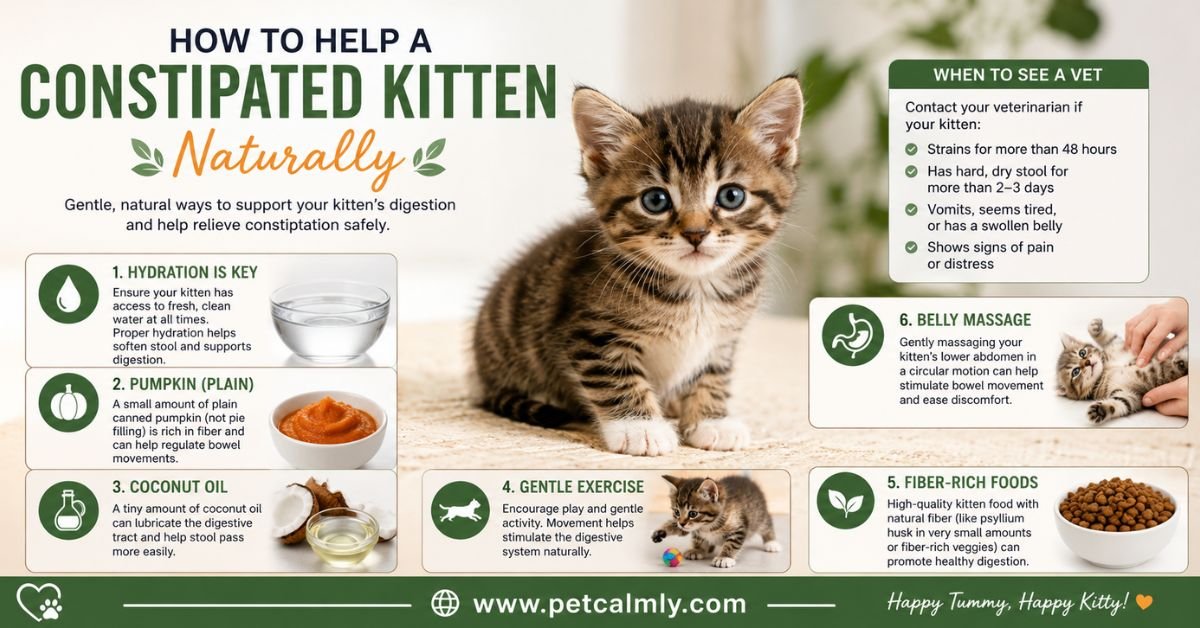
Most Important First Step: Increase Hydration
Water is often the simplest and most effective natural remedy.
Ways to encourage drinking:
- Provide multiple water bowls
- Use wide, shallow dishes
- Refresh water frequently
- Offer pet fountains if your kitten enjoys moving water
- Feed moisture-rich canned food
Many cats naturally consume more water through food than from bowls.
For mildly constipated kittens, increasing moisture intake can sometimes produce improvement within a day.
Feed Wet Food Instead of Dry Food Temporarily
Wet food contains substantially more moisture than dry kibble.
For kittens experiencing mild constipation:
- Prioritize complete and balanced kitten wet food
- Divide meals into smaller portions throughout the day
- Avoid abrupt diet overhauls
Additional moisture supports softer stool consistency.
Encourage Gentle Exercise
Physical movement helps stimulate intestinal activity.
Simple ideas include:
- Wand toys
- Soft balls
- Interactive play sessions
- Climbing structures
- Short play bursts throughout the day
Even 10–15 minutes of active play several times daily can help support digestive movement.
Create a Low-Stress Environment
Stress and digestion are closely connected.
Helpful strategies include:
- Maintain consistent feeding times
- Keep routines predictable
- Provide quiet resting spaces
- Avoid sudden environmental changes
- Offer hiding areas where the kitten feels secure
Many newly adopted kittens begin having more regular bowel movements once they feel safe and settled.
Gentle Belly Massage
Some owners find mild abdominal massage helpful.
Use extremely light pressure.
Gently stroke the abdomen from chest toward hindquarters.
Stop immediately if:
- The kitten resists
- Pain is obvious
- The abdomen feels unusually firm
Massage should never force stool movement.
Think of it as supportive comfort rather than treatment.
Keep the Litter Box Appealing
Kittens may avoid eliminating if they dislike the litter setup.
Check that:
- The box is clean
- Entry is easy
- The location is quiet
- There is no competition from other pets
A stressed kitten may delay using the litter box, which can worsen constipation.
Natural Fiber Options: Are They Safe?
Some mild constipation cases respond to small amounts of veterinarian-approved fiber.
Examples sometimes recommended by veterinarians include:
- Plain canned pumpkin
- Certain fiber supplements
- Specialized gastrointestinal diets
However, kittens have unique nutritional requirements.
What works for an adult cat may not be appropriate for a young kitten.
Before adding fiber supplements, consult your veterinarian regarding:
- Age
- Weight
- Health status
- Appropriate dosage
Never assume more fiber is better.
A Simple Daily Routine for a Mildly Constipated Kitten
Morning
- Offer fresh water
- Feed wet kitten food
- Encourage active play
Midday
- Check litter box output
- Refresh water
- Allow exercise and exploration
Evening
- Feed another moisture-rich meal
- Engage in interactive play
- Monitor comfort level
Before Bed
- Clean litter box
- Observe for bowel movement attempts
- Watch for signs of discomfort
Consistency often helps digestion normalize.
4 Common Mistakes Owners Make
Giving Human Laxatives
This is one of the biggest mistakes.
Many human constipation products can be dangerous for cats.
Never administer:
- Human laxatives
- Enemas
- Mineral oil
- Herbal remedies
- Over-the-counter digestive products
Unless specifically instructed by a veterinarian.
Waiting Too Long
Mild constipation can become severe.
If stool continues accumulating, treatment becomes more difficult.
Early intervention is generally easier and safer.
Assuming Every Straining Episode Is Constipation
A kitten may strain because of:
- Urinary issues
- Intestinal blockage
- Parasites
- Pain
- Digestive disease
Not every litter box problem is constipation.
Making Sudden Diet Changes
Owners sometimes switch foods repeatedly while trying to solve the problem.
Rapid changes may worsen digestive upset.
Introduce dietary adjustments gradually whenever possible.
What Stool Should Look Like After Improvement
A recovering kitten usually shows:
- Easier bowel movements
- Less straining
- Softer stool
- Better appetite
- Improved energy levels
- Reduced litter box frustration
Improvement may occur within 24 to 72 hours depending on the cause.
When Should You Worry?
Quick Answer
Constipation becomes concerning when it lasts more than a couple of days, causes significant discomfort, or is accompanied by other symptoms.
Contact a veterinarian promptly if your kitten has:
- No stool for 48 hours or more
- Repeated unsuccessful straining
- Vomiting
- Significant lethargy
- Swollen abdomen
- Refusal to eat
- Weight loss
- Blood in stool
- Signs of pain
- Collapse or weakness
Young kittens can deteriorate faster than adult cats.
It’s always better to seek guidance early if you’re uncertain.
Could It Be Something More Serious?
Sometimes constipation is only part of a larger issue.
Potential concerns include:
Intestinal Obstruction
Kittens often chew and swallow inappropriate objects.
Possible items include:
- String
- Ribbon
- Plastic
- Fabric
- Small toys
A blockage requires immediate veterinary care.
Megacolon
This condition occurs when the colon becomes enlarged and loses normal function.
Although more common in adults, it can occasionally affect younger cats.
Congenital Abnormalities
Some kittens are born with structural problems affecting bowel movements.
These cases require veterinary evaluation and treatment.
What Should Pet Owners Do?
If your kitten seems mildly constipated but otherwise acts normal:
- Increase hydration immediately.
- Feed moisture-rich kitten food.
- Encourage active play.
- Maintain a calm environment.
- Monitor litter box habits closely.
- Track bowel movements.
- Contact your veterinarian if symptoms persist.
The goal is to support normal digestion while ensuring serious problems are not overlooked.
Preventing Constipation in the Future
Prevention is often easier than treatment.
Focus on Hydration
Healthy hydration remains the foundation of digestive health.
Try:
- Multiple water stations
- Wet food meals
- Clean bowls
- Cat fountains
Encourage Daily Exercise
Play is more than entertainment.
It supports:
- Digestion
- Weight management
- Mental stimulation
- Overall health
Groom Regularly
Regular brushing helps reduce swallowed hair.
This can be particularly helpful for long-haired kittens.
Maintain Routine Veterinary Care
Regular wellness visits help identify:
- Parasites
- Digestive issues
- Growth concerns
- Developing medical conditions
Early detection prevents many complications.
Constipation Prevention Checklist
Use this quick checklist:
✓ Fresh water available daily
✓ Wet food included regularly
✓ Daily interactive play
✓ Clean litter box
✓ Routine grooming
✓ Monitor stool consistency
✓ Avoid sudden diet changes
✓ Schedule veterinary checkups
Natural Remedies vs. Veterinary Care
| Situation | Natural Support May Help | Veterinary Care Needed |
|---|---|---|
| Mild constipation under 24 hours | Yes | Usually not immediately |
| Slightly hard stool | Yes | Monitor |
| Reduced water intake | Yes | If persistent |
| Vomiting present | No | Yes |
| Swollen abdomen | No | Yes |
| Severe pain | No | Yes |
| No stool for 48+ hours | Limited | Yes |
| Suspected blockage | No | Emergency |
This distinction can help owners make safer decisions.
Frequently Asked Questions
1: How long can a kitten go without pooping?
Most kittens should pass stool regularly. If your kitten has not produced stool for more than 48 hours, contact a veterinarian for guidance.
2: Can dehydration cause constipation in kittens?
Yes. Dehydration is one of the most common causes. When the body lacks water, stool becomes drier and harder to pass.
3: Is pumpkin safe for constipated kittens?
Plain pumpkin is sometimes recommended by veterinarians, but dosage depends on age, weight, and health status. Always ask your veterinarian before adding it.
4: Can wet food help a constipated kitten?
Often, yes. Wet food provides additional moisture that may help soften stool and support normal digestion.
5: Why is my kitten straining but nothing comes out?
This may indicate constipation, but it can also signal urinary problems or an obstruction. Persistent straining requires prompt veterinary evaluation.
6: Should I give my kitten a laxative?
No. Human laxatives and home remedies can be dangerous for kittens. Only use products specifically recommended by a veterinarian.
More Information About Pets, Please Visit Our Website: How Often Should I Brush My Cat Teeth?
Conclusion
Seeing a constipated kitten can be stressful, especially when you’re unsure whether the problem is minor or something more serious.
In many cases, mild constipation improves with better hydration, moisture-rich nutrition, regular activity, stress reduction, and careful monitoring. These natural approaches support the digestive system without exposing a young kitten to unnecessary risks.
The key is paying attention to the bigger picture. A kitten that remains playful, alert, eating normally, and passing at least some stool may simply need supportive care. A kitten that stops eating, becomes lethargic, vomits, or cannot pass stool at all deserves veterinary attention sooner rather than later.
With prompt observation and appropriate care, most kittens return to normal bowel habits and continue growing into healthy, active cats.