Short direct answer
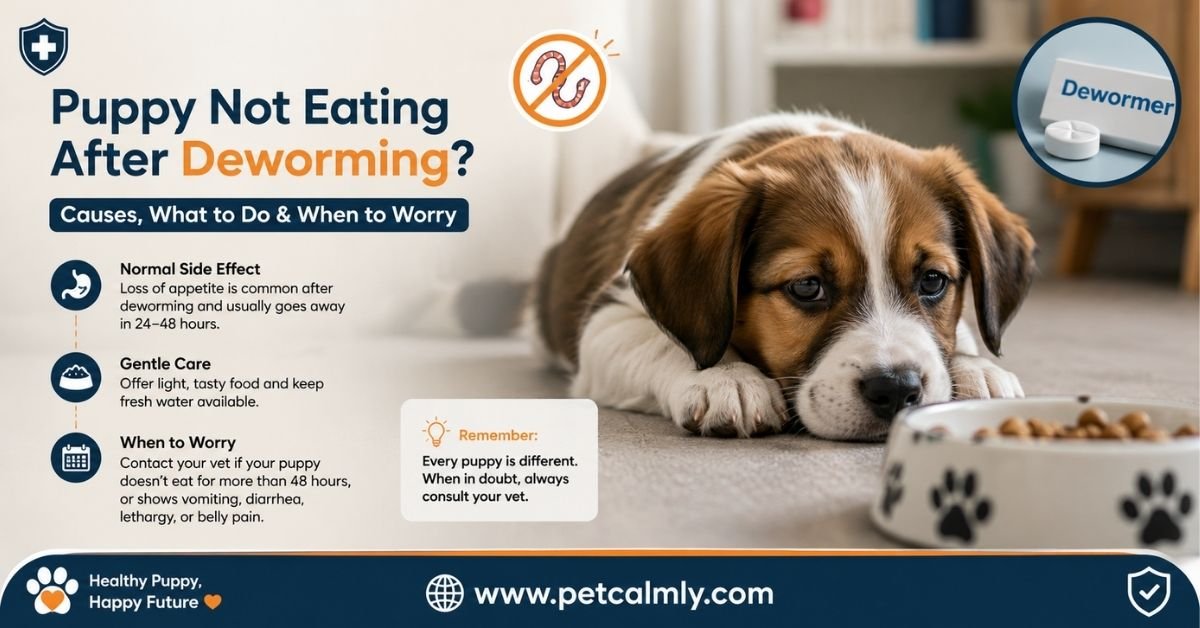
If your puppy isn’t eating after deworming, there’s a good chance it’s a temporary side effect of the medication not a cause for panic. Most puppies return to normal eating within 24 to 48 hours. Deworming medications can cause mild digestive upset, nausea, or a temporary loss of appetite as the puppy’s body processes the medication and eliminates parasites. While monitoring closely is smart, this reaction is typically normal and self-resolving.
Why Your Puppy Stopped Eating (And Why It Usually Comes Back)
Getting your puppy dewormed is one of the most important steps in their early health care. Parasites whether roundworms, hookworms, or other intestinal worms can seriously damage a growing puppy’s health and nutrition. Deworming medication works by killing these parasites, which your puppy’s body then eliminates.
But here’s what often surprises new puppy owners: that same medication that’s saving your puppy’s health can also make them feel a little rough for a day or two afterward.
Think of it this way. Your puppy’s digestive system has been hosting parasites. The deworming medication doesn’t just kill the worms it also triggers their breakdown and elimination. Add that to the fact that many deworming medications can irritate the stomach lining, and you get a puppy that might not feel like eating. It’s uncomfortable, but it’s temporary and almost always manageable at home.
The Medication Effect on Your Puppy’s Appetite
Deworming medications whether they’re oral liquids, tablets, or injections—work by interfering with the nervous system of parasites, causing paralysis and death. This mechanism is highly targeted to affect parasites, but the medication still passes through your puppy’s stomach and intestines as it does its job.
When this happens, some puppies experience:
- Mild nausea (just like humans sometimes feel queasy after taking antibiotics)
- Stomach sensitivity (the medication can irritate the digestive tract)
- Temporary appetite suppression (nausea naturally makes eating less appealing)
- Changes in digestion (you might notice loose stools or even vomiting)
None of these are permanent, and they’re often a sign the medication is working. The parasites are being killed, and your puppy’s system is just adjusting.
Different Deworming Medications, Similar Side Effects
The type of deworming medication your vet prescribed can influence how your puppy responds. Some common options include:
- Pyrantel pamoate (common for roundworms and hookworms)
- Fenbendazole (broad-spectrum option)
- Praziquantel (often for tapeworms)
- Ivermectin (used in some formulations)
While these medications work differently on specific parasite types, they share a common thread: they can all cause temporary loss of appetite in some puppies. The medication your vet chose is based on which parasites your puppy likely has, but appetite loss is a known side effect across the board.
Normal Post-Deworming Signs vs. Real Red Flags
As a concerned puppy owner, knowing the difference between “this is normal recovery” and “I need to call the vet right now” is crucial.
What’s Typically Normal (No Need to Panic)
- No interest in food for 24–48 hours after deworming
- Loose stools or diarrhea for 1–2 days
- Mild lethargy (your puppy seems a bit tired or less playful)
- Decreased enthusiasm for treats even when food is offered
- Vomiting once or twice shortly after receiving the medication
- Slight drooling or lip smacking (sign of mild nausea)
These signs typically resolve within 48 hours without intervention. Many puppies bounce back faster some within 12 hours.
Red Flags That Require Immediate Veterinary Attention
Call your vet right away (or an emergency clinic if it’s after hours) if your puppy shows:
- Repeated vomiting that lasts more than a few hours
- Persistent, severe diarrhea with blood in the stool
- Complete refusal to drink water
- Extreme lethargy or inability to stand
- Abdominal pain (excessive panting, distended belly, whining)
- Seizures or unusual neurological signs
- Allergic reaction signs (facial swelling, difficulty breathing, hives)
- Loss of appetite extending beyond 48 hours with no improvement
These symptoms could indicate an allergic reaction, an underlying condition, or a more serious response that needs professional evaluation.
How Long Does Appetite Loss Last After Deworming?
The timeline matters to worried pet owners, so here’s what you can realistically expect:
First 6–12 hours: This is often the peak of nausea. Your puppy might completely ignore food and water. This is completely normal.
12–24 hours: Appetite might start returning, or your puppy might still show disinterest. Some puppies bounce back in this window; others take a bit longer.
24–48 hours: Most puppies are back to normal eating by this point. Even if they weren’t excited about food earlier, they’re usually ready to eat by day two.
Beyond 48 hours: If your puppy is still not eating and shows no improvement, contact your vet. This isn’t typical and warrants professional evaluation.
Keep in mind that individual puppies respond differently. Smaller breeds, sensitive puppies, or those with previous digestive issues might have a slightly longer recovery period.
What to Feed Your Puppy After Deworming (And What to Avoid)
Feeding your puppy during this recovery period requires some strategy. You’re not trying to force-feed a recovering animal—you’re offering options that are easy on the stomach and likely to appeal to a nauseous puppy.
Best Foods to Offer During Recovery
Bland, easily digestible options:
- Plain boiled chicken (no seasoning, bones, or skin)
- Plain white rice (cooled to room temperature)
- Plain pumpkin puree (a spoonful or two—it’s soothing and helps digestion)
- Bone broth (low-sodium, no added ingredients)
- Plain scrambled eggs (no butter or oil)
- Wet dog food formulated for sensitive stomachs
How to offer them:
- Start with small amounts a few tablespoons rather than a full bowl
- Offer food in small, frequent meals (every 2–3 hours) rather than two large meals
- Let the food cool to room temperature before serving
- Hand-feed a few pieces if your puppy is hesitant
- Mix a little of the bland food with their regular food once appetite returns
What to Avoid
- High-fat treats (too hard on the recovering digestive system)
- Dairy (many puppies are lactose sensitive, especially during recovery)
- Spicy or seasoned foods (anything that irritates the stomach)
- New foods (stick to what’s familiar or proven gentle options)
- Excessive amounts (small, frequent meals work better than large ones)
- Treats and chews (wait until appetite is fully back)
The Role of Deworming in Your Puppy’s Recovery
Here’s something that might actually reassure you: appetite loss after deworming often means the medication is doing its job. When parasites die, your puppy’s body has to process and eliminate them. This creates a temporary burden on the digestive system.
Before deworming, your puppy’s parasites were:
- Stealing nutrients (which means your puppy was getting less nutrition despite eating)
- Potentially irritating the intestinal walls
- Possibly triggering loose stools or other digestive issues
After deworming, yes, there’s temporary discomfort. But very soon, your puppy will be healthier better absorbing nutrients, gaining weight properly, and thriving. A day or two of not eating is a small price for returning to health.
6 Common Mistakes Pet Owners Make During This Time
If you’re worried about your puppy’s appetite, you might be tempted to make some well-intentioned but counterproductive moves.
Offering too many different foods at once: When your puppy isn’t eating, it’s natural to think, “Maybe they just don’t like this food—let me try five other options.” Resist this urge. Switching foods frequently can actually upset the stomach more. Stick with one bland option for 24 hours.
Force-feeding or hand-feeding too aggressively: If your puppy doesn’t want to eat, forcing it down won’t help and might increase nausea. Offer food gently, then remove it if they’re not interested. They’ll eat when they’re ready.
Skipping water: If your puppy is drinking water normally, great. If not, offer small, frequent sips from a dropper or shallow bowl. Dehydration is a real concern; lack of appetite is less so as long as they’re hydrating.
Giving additional medications or supplements without vet approval: Don’t add probiotics, digestive enzymes, or other supplements thinking they’ll help. Check with your vet first. The goal right now is simplicity.
Waiting too long before contacting your vet: If appetite hasn’t improved by 48 hours or if your puppy shows any red flag symptoms, call. Don’t assume it will resolve on its own.
Assuming it’s something you did wrong: Here’s the important thing: you didn’t cause this. Deworming is essential for your puppy’s health. A temporary loss of appetite is a known side effect, not a sign you made a mistake.
When to Contact Your Veterinarian
You’ve already made the right choice by getting your puppy dewormed. Now the question is: when is veterinary follow-up needed?
Contact your vet during business hours if:
- Your puppy hasn’t eaten anything for more than 48 hours
- Diarrhea or vomiting is continuing beyond the second day
- Your puppy is becoming more lethargic rather than improving
- You notice any signs of allergic reaction (facial swelling, itching)
- Your puppy is straining to urinate or defecate
- You’re simply uncertain and want professional reassurance
Seek emergency care if:
- Your puppy is showing signs of severe allergic reaction (difficulty breathing, facial swelling)
- There’s repeated vomiting with no relief
- Your puppy is unresponsive or seizing
- You notice blood in vomit or stool
- Your puppy is not drinking water and showing signs of dehydration
- Your puppy is in visible abdominal pain
Your vet knows your puppy’s health history and the specific medication used. They’re your best resource if you’re ever in doubt.
Prevention and Preparation for Future Deworming
Since puppies typically need multiple deworming treatments during their first few months, preparing for the next round can help you feel more confident.
Before the Next Deworming Appointment
- Schedule deworming for a day when you can monitor your puppy (not before you leave for work)
- Have bland food on hand before the appointment (boiled chicken, rice, canned pumpkin)
- Clear your schedule for the following 24 hours if possible
- Ask your vet about timing with meals (some vets recommend deworming on an empty stomach, others don’t—follow your vet’s specific instructions)
Ask Your Vet These Questions
- “Is appetite loss common with this specific medication?”
- “What’s the timeline for my puppy to return to normal?”
- “Are there any foods I should avoid during recovery?”
- “When should I be concerned enough to call you back?”
- “Is this deworming dose correct for my puppy’s current weight?”
Understanding Your Puppy’s Digestive System During Recovery
Puppies have delicate digestive systems that are still maturing. Understanding what’s happening during recovery can help you feel more confident.
When your puppy is dewormed:
- The medication enters the stomach and small intestine where it targets parasites
- Dead parasites are broken down by your puppy’s digestive system
- The body reabsorbs what it can and eliminates the rest through stool
- The digestive tract recovers from the medication’s irritating effects
This process triggers temporary inflammation in the gut, which reduces appetite. It’s similar to how humans feel after taking certain medications—nauseous, not hungry, but recovering naturally.
Your puppy’s healthy gut bacteria are still present and working, which helps them recover naturally. You don’t need to “fix” the digestive system you just need to give it time and offer gentle nutrition.
Real Stories: What Other Puppy Owners Have Experienced
Every puppy is different, but hearing how others have navigated this common situation can help normalize what you’re going through.
The quick recovery: “Our 8-week-old golden retriever got dewormed on a Tuesday morning. He turned his nose up at lunch and wasn’t interested in dinner. By Wednesday morning, he was back to his wild self, eating everything. We panicked for nothing, but I’m glad I called the vet just to hear that it was normal.”
The slow improver: “Our miniature poodle took almost 48 hours to really get back to eating. By the second evening, we hand-fed her a few pieces of boiled chicken, and she started showing interest again. Three days later, you wouldn’t know anything had happened.”
The sensitive stomach: “Our vet warned us that our puppy had a sensitive stomach, so we prepared by having bland food ready. We didn’t push anything just offered small amounts every few hours. Recovery took a few days, but having a plan made me feel so much less worried.”
These stories share one common theme: most puppies recover fully without intervention. The worry is usually worse than the actual situation.
Frequently Asked Questions
1: Is it normal for a puppy to not eat after deworming?
A: Yes, it’s quite normal. Many puppies experience a temporary loss of appetite due to mild nausea or stomach sensitivity from the deworming medication. This typically resolves within 24 to 48 hours without treatment. However, if your puppy isn’t eating after 48 hours or shows other concerning symptoms, contact your vet.
2: How long should I wait before offering food again?
A: You don’t need to wait to offer food just be strategic about it. If your puppy doesn’t want to eat immediately after deworming, that’s fine. Offer small, bland meals every 2 to 3 hours. Let your puppy eat when they’re ready rather than forcing meals.
3: Can I give my puppy their regular food after deworming?
A: Usually, yes, but starting with bland food for 24 hours is gentler on the recovering digestive system. After your puppy’s appetite returns, you can gradually mix their regular food back in. If your puppy had diarrhea, stick with bland food a bit longer to let the digestive system settle.
4: What if my puppy vomits after deworming?
A: A single episode of vomiting shortly after deworming can be normal it’s their body’s reaction to the medication or the parasites being eliminated. However, repeated vomiting (more than once or twice) lasting several hours, or vomiting that continues into the next day, warrants a vet call.
5: Should I be worried if my puppy is sleeping more after deworming?
A: A little extra sleepiness is normal your puppy’s body is working hard to process the medication and eliminate parasites. Expect some mild lethargy. However, extreme lethargy (not responding to you, unable to stand, or unresponsiveness that gets worse rather than better) is a sign to contact your vet.
6: When is loss of appetite after deworming actually a problem?
A: It becomes a concern if it extends beyond 48 hours with no improvement, if your puppy is refusing water, or if it’s accompanied by other symptoms like repeated vomiting, severe diarrhea, or signs of pain. Trust your instincts if something feels seriously wrong, call your vet.
More Information About Pets, Please Visit Our Website: Why Is My Dog Suddenly Not Eating His Food?
Dog Poop Color Chart
What to Feed Dogs With Gastrointestinal Problems?
Early Signs of Worms in Dogs
Puppy Sleeping After Vaccination
Dog Allergy Symptoms Eyes
Why Deworming Is Worth the Temporary Discomfort
Before ending on a note of reassurance, it’s worth understanding why you chose to deworm your puppy in the first place because it does matter.
Intestinal parasites in puppies can cause:
- Poor growth and weight gain
- Nutritional deficiencies
- Chronic diarrhea
- Anemia
- In severe cases, serious health complications or even life-threatening conditions
A day or two of reduced appetite is genuinely worth the protection and health improvement your puppy gains. The temporary discomfort means your puppy is on the path to optimal health.
Conclusion
Your puppy’s loss of appetite after deworming is almost certainly temporary and expected. Most puppies return to normal eating within 24 to 48 hours.
Here’s your action plan:
- Don’t panic. This is a common, manageable side effect, not a sign something went wrong.
- Offer bland, easy-to-digest foods in small, frequent meals.
- Stay alert for red flags (persistent vomiting, refusal to drink, extreme lethargy).
- Contact your vet if appetite hasn’t improved after 48 hours or if concerning symptoms develop.
- Monitor closely but don’t intervene excessively. Your puppy’s digestive system will recover on its own.
You’re doing everything right by deworming your puppy and staying informed about what’s normal. A few days of reduced appetite is a small bump in your puppy’s journey to health. In a week, this will be a distant memory, and your puppy will be thriving.