Short direct answer
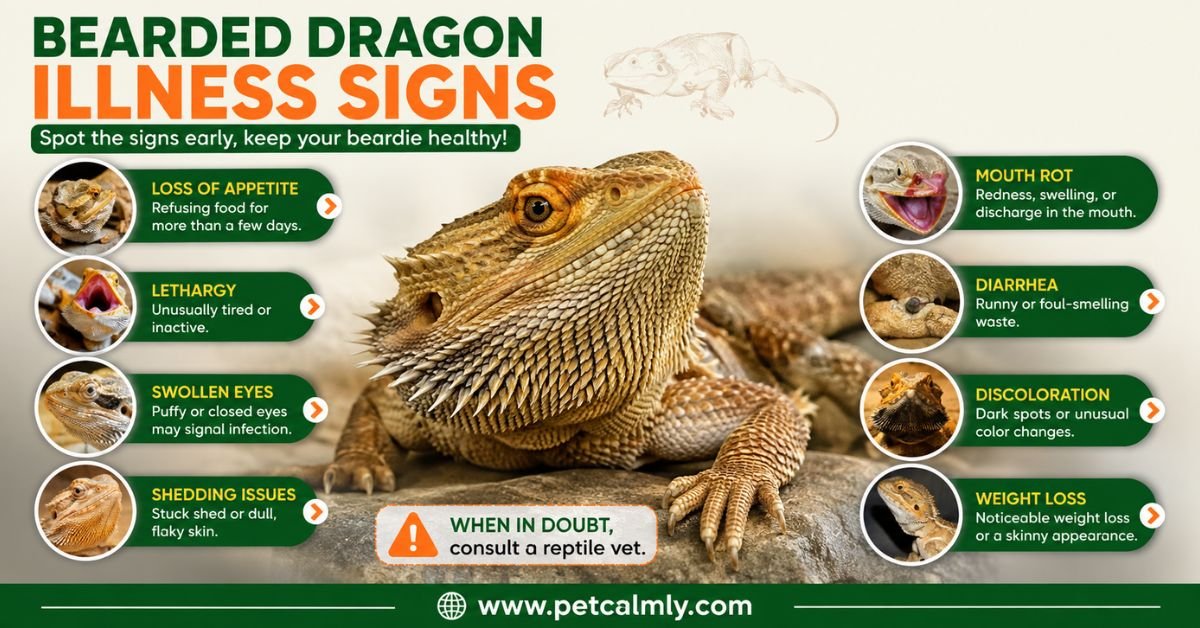
The most common bearded dragon illness signs are loss of appetite, lethargy, open-mouth breathing, sunken or discharging eyes, dull or discolored skin, diarrhea or unusual stool, swollen limbs or jaw, difficulty walking, and unusual black coloring at the tip of the tail. Some of these overlap with normal brumation, so the real skill is learning your dragon’s baseline behavior well enough to notice when something shifts. If more than one sign shows up at once, or a single sign lasts more than a day or two, it’s time to call a reptile-experienced vet.
Why It’s So Easy to Miss a Sick Bearded Dragon
Bearded dragons don’t act sick the way a dog or cat does. There’s no whimpering, no obvious limping toward you for comfort, no dramatic change in how they greet you at the door. In the wild, looking weak is an invitation for a predator, so reptiles have evolved to hide illness for as long as their bodies can manage it. By the time a bearded dragon is visibly unwell, the underlying problem has often been building for days or weeks.
That’s the uncomfortable truth most first-time owners learn the hard way. A dragon that was basking normally on Tuesday can seem “suddenly” lethargic by Friday but the change was probably never sudden at all. It was just quiet, until it wasn’t.
This guide walks through the illness signs that actually matter, explains what’s likely causing each one, and just as importantly helps you tell the difference between a dragon that’s sick and one that’s simply brumating, shedding, or having an off day. You’ll also find a clear checklist for when a symptom means “keep watching” versus “call the vet today.”
What a Healthy Bearded Dragon Looks Like Day to Day
Before you can spot illness, it helps to know what “normal” actually looks like for your specific animal every dragon has its own personality and baseline energy level.
Typical signs of a healthy bearded dragon include:
- Alert, round, fully open eyes with no crusting
- Regular basking behavior, usually within the first hour or two of lights turning on
- Consistent appetite, though this naturally slows with age and season
- Firm, well-formed stool passed every 1–3 days for adults (more often in juveniles)
- Smooth movement with all four limbs bearing weight evenly
- Curious, responsive behavior tracking movement, exploring the enclosure, tongue-flicking at food
- Skin that looks even in color, not blotchy, dull, or unusually dark
Once you’ve watched your dragon long enough to know its normal rhythm, deviations from that rhythm become much easier to catch early which is exactly when treatment tends to work best.
Early Signs Your Bearded Dragon May Be Getting Sick
Sudden or Ongoing Appetite Loss
An occasional skipped meal isn’t automatically a red flag dragons go through natural dips in appetite during shedding, brumation, or simple pickiness about food variety. What matters is the pattern. A juvenile refusing food for more than two to three days, or an adult refusing food for a week or more outside of a known brumation period, deserves attention.
Pay attention to how the refusal happens, too. A dragon that shows interest in food but can’t seem to grab or chew it properly may have a mouth injury, an abscess, or dental issue rather than a simple lack of hunger.
Lethargy and Low Energy
Lethargy is one of the most consistent illness signs across nearly every reptile disease, and it’s often the first thing owners notice. A lethargic dragon may sleep through basking time, stop responding to hand movement near the enclosure, or seem “flat” and uninterested in things that normally trigger curiosity.
The tricky part is that brumation causes near-identical lethargy. The difference usually comes down to season, age, and whether other symptoms are present alongside it more on that distinction below.
Changes in Stool
Your dragon’s droppings are one of the best early-warning systems you have, and checking them regularly costs nothing. Watch for:
- Diarrhea or unusually loose, watery stool
- Foul odor beyond the normal smell
- Mucus or visible blood
- Undigested food repeatedly appearing in stool
- No bowel movement for more than a week in an adult that’s still eating
Loose stool that shows up once isn’t necessarily alarming diet changes, stress, or a new feeder insect can cause a one-off. Persistent changes over several days point toward parasites, an intestinal infection, or digestive upset that needs a vet’s fecal exam to diagnose.
Weight Loss or Poor Growth
Because a beard of loose skin can visually hide weight loss, it’s worth doing a hands-on check occasionally gently feeling along the spine and hips. A dragon that feels bony along the backbone, or a juvenile that isn’t growing at a normal pace for its age, may be dealing with parasites, malnutrition, or an underlying illness that’s burning through its energy reserves faster than food can replace them.
Respiratory Illness Signs in Bearded Dragons
Respiratory infections are among the most common health problems in captive bearded dragons, and they’re almost always tied back to husbandry specifically, temperatures that run too cool or humidity that runs too high for the enclosure’s ventilation.
Open-Mouth Breathing, Wheezing, and Clicking Sounds
A dragon that’s gaping simply to cool off during peak basking time is normal. A dragon that’s gaping at rest, breathing audibly, wheezing, or making clicking or popping sounds when it inhales is showing a genuine warning sign. Watch the chest and throat area labored, exaggerated breathing movements are another indicator that something is restricting normal airflow.
Nasal or Mouth Discharge, Bubbles
Bubbling at the nose or mouth, along with any mucus discharge, points fairly directly toward a respiratory infection. This is one of the clearer cases where home care isn’t enough — respiratory infections in reptiles typically need antibiotics prescribed by a vet, since they rarely resolve fully on their own once symptoms are visible.
What Usually Causes It
Respiratory infections are most often triggered by a basking or ambient temperature that’s too low for proper immune function, combined with humidity that’s higher than a bearded dragon’s arid native environment calls for. Reviewing your temperature gradient and humidity levels is a reasonable first step while you’re waiting for a vet appointment — but it doesn’t replace veterinary treatment once symptoms have started.
Eye, Skin, and Shedding-Related Warning Signs
Eye Discharge, Swelling, or Sunken Eyes
Bright, clear, fully open eyes are one of the clearest indicators of a healthy dragon. Sunken eyes usually point to dehydration, which is common but fixable through regular soaking and misting. Discharge, crusting, or swelling around the eyes is more often linked to infection and warrants a vet visit, especially if it’s affecting only one eye or getting worse over a couple of days.
Dull, Blotchy, or Discolored Skin
Skin that looks unusually dark, dull, or patchy outside of a normal pre-shed dulling can reflect stress, poor husbandry, or an underlying illness affecting circulation or organ function. Darkening that also comes with lethargy and appetite loss is a combination worth taking seriously rather than waiting out.
Shedding Problems
Difficulty shedding, retained skin (especially around toes, the tail tip, or eye ridges), or skin that seems to be shedding in unusually small, ragged pieces can all indicate low humidity, dehydration, or a nutritional gap. Retained shed around the toes is particularly important to catch early, since tight skin can cut off circulation to the toe over time if it’s never fully removed.
Signs of Metabolic Bone Disease (MBD)
Metabolic bone disease is one of the most common — and most preventable — illnesses in pet bearded dragons, particularly in dragons under two years old. It develops when a dragon’s diet lacks enough calcium or vitamin D3, or when UVB lighting isn’t strong enough (or close enough, or replaced often enough) for the dragon’s body to actually use the calcium it’s getting.
Physical Signs to Watch For
- Swelling or softening along the lower jaw, sometimes called “rubber jaw”
- Swelling in the hind limbs
- Tremors or shaking in the legs, especially when trying to walk
- Difficulty pushing the body up into a normal standing posture — dragons with advanced MBD often lie flat instead
- A visibly curved or kinked spine or tail in longer-term cases
Why MBD Happens
Think of calcium and vitamin D3 as working as a pair vitamin D3, produced through UVB exposure, is what allows the body to actually absorb and use dietary calcium. A dragon can be eating a calcium-rich diet and still develop MBD if its UVB bulb is old, too far from the basking spot, or blocked by glass or mesh that filters out the UVB wavelength. This is why routine UVB bulb replacement (most need swapping every 6–12 months, even if the bulb still lights up) matters just as much as dusting feeder insects with calcium powder.
Signs of Parasites and Digestive Trouble
Internal parasites including pinworms, coccidia, and other protozoa are common in pet bearded dragons and are usually picked up through contaminated feeder insects, substrate, or contact with other reptiles. Many dragons carry a low parasite load without obvious symptoms, which is exactly why annual fecal exams are worth doing even when your dragon seems fine.
When Parasites Become a Problem
Signs that a parasite load has grown beyond what your dragon’s body can manage on its own include persistent diarrhea, a strong foul odor to the stool, visible weight loss despite normal eating, and general lethargy. A vet can confirm parasites with a simple fecal float test and prescribe an appropriate dewormer trying to guess and self-treat with over-the-counter products isn’t recommended, since dosing errors in reptiles can be dangerous.
Impaction: A Different Kind of Blockage
Impaction happens when something indigestible loose substrate, an oversized feeder insect, or hard-shelled prey gets stuck in the digestive tract. Watch for straining without producing stool, a firm swelling along the lower belly, reduced appetite, and lethargy that develops alongside these signs. Mild cases sometimes respond to warm soaks and gentle belly massage, but a dragon that hasn’t passed stool in over a week needs veterinary imaging to rule out a true blockage.
Behavioral Red Flags: Stargazing, Tremors, and Neurological Signs
Some of the most serious bearded dragon illnesses show up as neurological changes rather than obvious physical ones. “Stargazing” where a dragon holds its head back and stares upward at an unnatural angle along with seizures, uncoordinated limb movement, or full-body tremors are signs that need same-day veterinary attention.
These symptoms are associated with a few possible causes, including severe calcium imbalances (an extension of MBD), toxin exposure, or viral infections such as adenovirus, which spreads through direct contact or contaminated surfaces and currently has no cure only supportive care to manage symptoms. Not every dragon carrying adenovirus shows symptoms, which is part of why quarantining any new reptile for at least 30–60 days before introducing it near existing pets is a standard precaution worth following.
Tail Rot and Physical Injuries
Tail rot describes tissue death at the tip of the tail, usually starting as a subtle darkening that most owners initially mistake for normal coloring. As it progresses, the tissue turns fully black, feels soft or mushy rather than firm, and the discoloration wraps all the way around the tail rather than staying on just the top surface. Left untreated, tail rot can spread and may eventually require amputation of the affected portion so catching it in the early, subtle stage makes a real difference.
Burns from basking lamps that sit too close, injuries from rough handling, or cuts from sharp decor are also common physical causes of distress. Any wound that isn’t healing within a few days, looks swollen, or has discharge should be checked by a vet rather than treated indefinitely at home.
5 Common Mistakes That Delay Getting Help
A few patterns show up again and again in owner forums and vet visits:
- Assuming lethargy is “just brumation” without checking the calendar, age, or accompanying symptoms
- Waiting to see if it resolves on its own for symptoms — like open-mouth breathing or neurological signs — that genuinely can’t wait
- Adjusting the diet or supplements repeatedly without ever getting a vet’s diagnosis, which can mask or worsen the real issue
- Not having an exotic vet identified in advance, which turns an already stressful situation into a scramble to find someone who will even see a reptile
- Skipping the hands-on weekly check — weighing, feeling along the spine, checking the vent area — that would have caught a subtle change sooner
Brumation vs. Illness: How to Tell the Difference
This is the single biggest source of confusion for bearded dragon owners, since brumation genuinely does mimic several illness signs.
| Factor | Brumation (Normal) | Illness (Needs Attention) |
|---|---|---|
| Season | Usually fall or winter | Can happen any time of year |
| Age | More common in dragons over 1 year | Any age, especially juveniles |
| Appetite | Reduced or absent, gradual decline | Sudden drop, often with other signs |
| Weight | Stable or very slight loss | Noticeable, ongoing loss |
| Breathing | Normal, quiet | Open-mouth, wheezing, clicking |
| Stool | Minimal or none | Diarrhea, foul odor, blood, or straining |
| Behavior | Sleeps more, still responsive if woken | Unresponsive even when handled or warmed |
| Skin/eyes | Normal color, clear eyes | Discoloration, discharge, sunken eyes |
If a dragon fits cleanly into the brumation column across the board, monitoring at home is usually reasonable. If even one factor lines up with the illness column, that’s the deciding vote — get it checked rather than assuming brumation explains everything.
When Should You Worry? Signs That Need a Same-Day Vet Visit
Some symptoms shouldn’t wait for a “let’s see how tomorrow goes” approach. Contact an exotic or reptile-experienced vet right away if your dragon shows:
- Open-mouth breathing at rest, wheezing, or audible clicking
- Seizures, tremors, or stargazing posture
- No stool for more than a week despite normal eating
- A firm, swollen abdomen
- Complete appetite refusal lasting more than a week (adult) or three days (juvenile)
- Inability to stand, walk, or bear weight on all four legs
- Discharge from the eyes, nose, or mouth
- Tail discoloration that wraps fully around the tip
- Any sudden collapse, limpness, or unresponsiveness
None of these are “wait and monitor” situations. Reptiles decline slowly and then suddenly by the time these signs appear, supportive care from a vet is usually necessary rather than optional.
What to Do If You Suspect Your Bearded Dragon Is Sick
- Check the basics first. Confirm basking and ambient temperatures, UVB bulb age, and humidity levels are within the correct range for your setup. A quick husbandry fix sometimes resolves mild symptoms within a day or two.
- Isolate feeding concerns. If appetite loss is the main symptom, try a smaller, more enticing food option once but don’t keep experimenting for more than a couple of days.
- Photograph and log symptoms. Note when each sign started, take a photo of stool or discoloration, and track appetite day by day. This makes the vet visit far more productive.
- Call an exotic vet, not a general small-animal clinic, if possible. Reptile physiology is different enough that not all vets are equipped to diagnose reptile-specific illness accurately.
- Keep your dragon warm and hydrated while you wait for the appointment. Offer a shallow, lukewarm soak and make sure basking temperatures are correct but don’t force-feed or medicate without professional guidance.
- Follow through on the full treatment plan, even after symptoms improve. Parasite and respiratory treatments in particular often need a completed course to fully resolve.
How to Prevent Illness Before It Starts
Most of the health issues covered in this guide trace back to husbandry, not bad luck. A few habits go a long way:
- Replace UVB bulbs every 6–12 months, even if they’re still producing visible light
- Keep a digital thermometer and hygrometer in the enclosure and check them weekly, not just at setup
- Dust feeder insects with calcium powder regularly, and a calcium-D3/multivitamin blend on a lighter schedule
- Quarantine new reptiles for 30–60 days before any contact with existing pets
- Wash hands thoroughly after handling or cleaning, since bearded dragons can carry Salmonella without showing symptoms themselves
- Weigh your dragon weekly and keep a simple log small trends are much easier to catch than sudden jumps
- Schedule an annual wellness exam and fecal check with an exotic vet, even when nothing seems wrong
Conclusion
Bearded dragons are built to hide weakness, which means the owners who catch problems early are usually the ones who’ve made a habit of watching closely checking the enclosure numbers, handling their dragon regularly enough to notice subtle changes, and knowing their pet’s normal routine well enough that anything “off” actually stands out. None of that requires expert-level knowledge. It just requires attention, consistency, and a willingness to call a vet rather than wait things out when a symptom looks serious.
If you’re setting up a new enclosure or reviewing your current one, our guide to bearded dragon habitat and UVB setup covers the husbandry side of prevention in more depth, and our bearded dragon diet and feeding guide walks through calcium and D3 balance in more detail than we could fit here.
More Information About Pets, Please Visit Our Website: Bearded Dragon Eye Problems
Heat Pad for Bearded Dragon at Night
Bearded Dragon Brumation or Dead?
Bearded Dragon Black Beard Meaning
Can Bearded Dragons Eat Strawberries?
How to Clean Bearded Dragon Tank
Best Substrate for Bearded Dragon Dig Box
Bearded Dragon Humidity Level
Frequently Asked Questions
1: How can I tell if my bearded dragon is dying or just brumating?
Brumating dragons are still responsive if warmed up or handled, maintain a stable weight, and breathe normally. A dragon that’s unresponsive even when warmed, breathing abnormally, or losing noticeable weight needs urgent veterinary care rather than time to “sleep it off.”
2: Why is my bearded dragon not eating but acting normal otherwise?
Short-term appetite loss with otherwise normal behavior can come from shedding, a slight temperature issue, brumation approaching, or simple pickiness about food variety. If normal behavior continues and appetite returns within a few days, it’s usually not urgent but track it in case other symptoms appear.
3: What does a sick bearded dragon’s poop look like?
Watch for diarrhea, watery consistency, unusually strong odor, mucus, visible blood, or undigested food appearing repeatedly. A healthy stool is generally firm with a smaller white urate portion attached.
4: Can bearded dragons recover from metabolic bone disease?
Mild to moderate MBD often improves significantly with corrected UVB lighting, calcium supplementation, and veterinary-guided treatment, though bone deformities that have already formed may not fully reverse. Early detection makes a substantial difference in long-term mobility.
5: Is open-mouth breathing always a sign of illness?
Not always dragons gape to cool down during basking. It becomes concerning when it happens at rest, is accompanied by wheezing or clicking sounds, or comes with lethargy and appetite loss.
6: How often should a healthy bearded dragon see a vet?
An annual wellness exam with a fecal parasite check is a reasonable baseline for a healthy adult, with additional visits any time symptoms from this guide appear rather than waiting for the yearly appointment.