Short direct answer
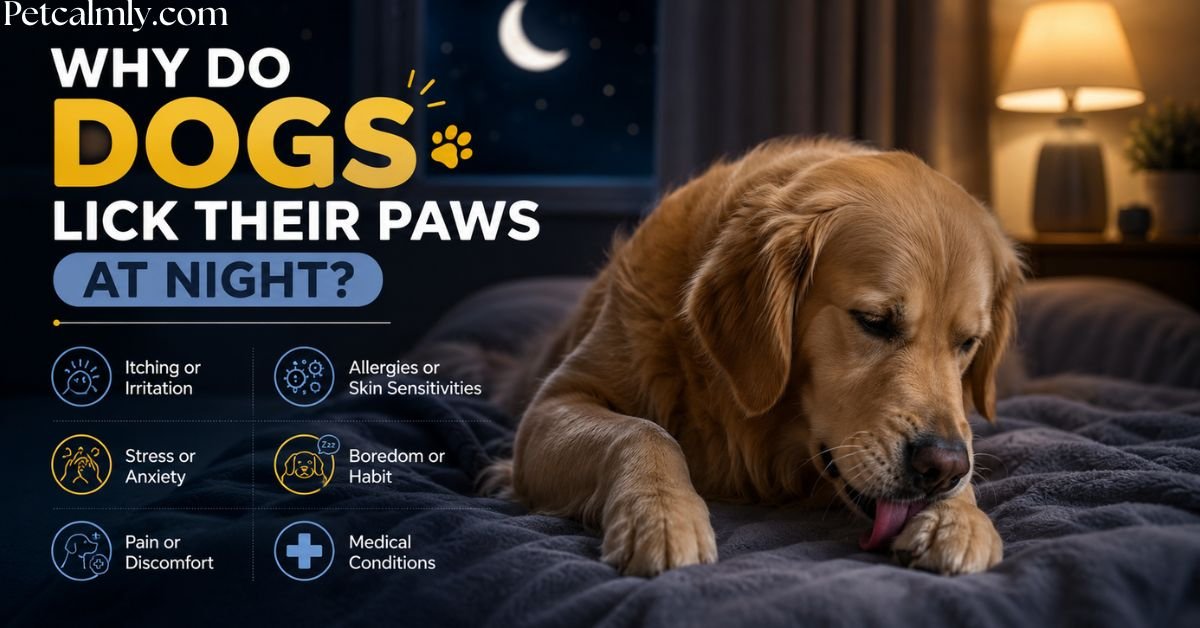
Dogs often lick their paws at night because they are finally relaxed and less distracted. Common reasons include allergies, dry skin, irritation, anxiety, boredom, pain, or something stuck between the paw pads. Occasional licking is usually normal, but frequent, intense, or obsessive licking may signal a medical or behavioral problem that needs attention.
Many dog owners notice the same pattern: the house gets quiet, everyone settles down, and suddenly their dog starts licking its paws nonstop.
At first, it may seem harmless. Dogs naturally groom themselves sometimes. But when nighttime paw licking becomes frequent, noisy, or obsessive, it can leave owners wondering whether something is wrong.
In many cases, the behavior is linked to allergies, itchy skin, stress, discomfort, or even habits formed over time. Some dogs lick only occasionally before sleeping, while others keep themselves awake doing it.
Understanding why your dog licks its paws at night can help you spot small problems before they become bigger ones. In this guide, you’ll learn the most common causes, warning signs to watch for, safe ways to help at home, and when it’s time to contact a veterinarian.
Is It Normal for Dogs to Lick Their Paws?
Yes, occasional paw licking is completely normal.
Dogs groom themselves similarly to cats, although usually less often. A few licks after a walk, before bedtime, or while relaxing is not usually a concern.
Nighttime licking becomes more important when it is:
- Constant or obsessive
- Focused on one paw
- Loud enough to wake you up
- Causing redness or hair loss
- Accompanied by limping or chewing
- Happening every single night
Many pet owners first notice the issue at bedtime because the environment becomes quiet and the licking sounds suddenly stand out.
Why Dogs Lick Their Paws More at Night
Less Distraction During Quiet Hours
During the day, dogs are busy watching people, playing, walking, eating, or exploring. At night, there is less stimulation.
That means small discomforts become more noticeable.
A dog with mild itchy skin may ignore it during the day but focus on it while lying quietly before sleep.
This is very similar to people noticing itchy skin, sore muscles, or stress more at bedtime.
Stress and Anxiety Often Peak at Night
Some dogs lick their paws as a self-soothing behavior.
Licking releases calming chemicals in the brain, which can temporarily help anxious dogs feel relaxed. Dogs experiencing separation anxiety, routine changes, loneliness, or stress may develop nighttime licking habits.
Common emotional triggers include:
- A new home
- Changes in family routine
- Loud noises earlier in the day
- Lack of exercise
- Sleeping alone
- Owner absence
- New pets or visitors
You may notice anxious dogs pacing, whining, or repeatedly licking the same paw before falling asleep.
8 Common Causes of Nighttime Paw Licking
1. Environmental Allergies
Allergies are one of the most common reasons dogs lick their paws.
Grass, pollen, dust, mold, and household irritants can make paws itchy after outdoor walks. Since allergens collect between paw pads, dogs often focus on licking them clean.
Signs of allergies may include:
- Red paws
- Brown saliva stains
- Ear infections
- Frequent scratching
- Face rubbing
- Seasonal flare-ups
Many dogs worsen during spring and fall allergy seasons.
2. Food Sensitivities
Some dogs react to ingredients in their food.
Food-related skin irritation often affects:
- Paws
- Ears
- Belly
- Armpits
Chicken, beef, dairy, wheat, and certain fillers can trigger sensitivity in some dogs.
Unlike seasonal allergies, food allergies may continue year-round.
3. Dry or Irritated Paw Pads
Dry paws can crack and become uncomfortable, especially in:
- Hot climates
- Winter weather
- Homes with dry indoor air
- Dogs walking on hot pavement
- Dogs exposed to cleaning chemicals
Cracked paw pads may sting more when dogs finally rest at night.
You might notice:
- Rough texture
- Flaking skin
- Small cracks
- Sensitivity while walking
4. Something Stuck in the Paw
Tiny objects can irritate paws for hours before owners notice.
Examples include:
- Grass seeds
- Small stones
- Splinters
- Burrs
- Sand
- Thorns
Some dogs hide discomfort surprisingly well during the day and only obsessively lick the area at night.
Always check between the toes carefully.
5. Pain or Joint Discomfort
Dogs do not always lick because of skin problems.
Sometimes they lick painful joints or areas nearby.
Older dogs with arthritis may lick their paws because:
- Their joints ache at night
- Inflammation worsens after activity
- Licking temporarily distracts from discomfort
Pain-related licking often affects the same paw repeatedly.
Watch for:
- Stiffness
- Limping
- Trouble standing
- Hesitation on stairs
- Slower movement
6. Yeast or Bacterial Infections
Constant moisture from licking can create infections, and infections can cause even more licking.
This creates a frustrating cycle.
Signs of infection may include:
| Symptom | Possible Meaning |
|---|---|
| Red inflamed skin | Irritation or infection |
| Strong odor | Yeast overgrowth |
| Brown staining | Chronic licking |
| Swelling | Infection or inflammation |
| Oozing skin | Bacterial infection |
Yeast infections especially tend to smell musty or cheesy.
7. Anxiety or Compulsive Behavior
Some dogs develop compulsive licking habits over time.
This can happen when licking repeatedly comforts the dog emotionally. Eventually, the behavior becomes automatic, especially during quiet nighttime hours.
Dogs at higher risk include:
- Highly anxious breeds
- Under-stimulated dogs
- Dogs left alone often
- Dogs with previous trauma
- Dogs lacking mental enrichment
In severe cases, dogs may lick until sores form.
8. Parasites
Fleas and mites sometimes trigger intense paw irritation.
Even indoor dogs can occasionally develop flea-related allergies.
Signs can include:
- Sudden itching
- Biting at paws
- Tail-area scratching
- Skin irritation
Because dogs rest quietly at night, itching may feel more intense then.
Signs Your Dog’s Paw Licking May Be a Problem
Watch for These Warning Signs
Occasional licking is normal. Persistent licking deserves attention.
Be concerned if you notice:
- Raw or bleeding skin
- Limping
- Swollen paws
- Hair loss
- Strong odor
- Constant nighttime licking
- Chewing between toes
- Red or pink saliva stains
- Sleep disruption
- Sudden behavior changes
These signs suggest irritation, pain, allergies, or infection rather than simple grooming.
A Quick Comparison: Normal vs Problematic Paw Licking
| Normal Behavior | Possible Problem |
|---|---|
| Brief grooming | Constant licking |
| Happens occasionally | Happens every night |
| No redness | Red or swollen skin |
| Dog stops easily | Dog seems obsessed |
| No limping | Pain or discomfort |
| Quiet self-cleaning | Aggressive chewing |
Why Some Dogs Lick Only One Paw
If your dog focuses on a single paw, look carefully for a localized issue.
Possible causes include:
- Injury
- Thorn or splinter
- Insect sting
- Nail problem
- Arthritis
- Infection
- Small cut
- Foreign object
One-sided licking usually points to discomfort in that specific area.
Why Puppies Sometimes Lick Their Paws at Night
Puppies may lick their paws for harmless reasons such as:
- Exploration
- Mild teething stress
- Tiredness
- Self-soothing before sleep
However, excessive licking in puppies should still be checked, especially if redness or swelling appears.
Young dogs can also develop allergies surprisingly early.
4 Common Mistakes Pet Owners Make
Ignoring the Behavior Too Long
Many owners assume paw licking is “just a habit.”
Unfortunately, allergies and infections often worsen gradually.
Using Human Creams Without Veterinary Advice
Some human products are unsafe for dogs because dogs lick everything applied to their skin.
Avoid random creams or medicated products unless approved by your veterinarian.
Punishing the Dog
Dogs usually lick because they feel itchy, uncomfortable, anxious, or stressed.
Punishment increases stress and can actually worsen compulsive licking.
Skipping Paw Checks
Tiny grass seeds or cuts are easy to miss.
Regular paw inspections can catch problems early.
What Should Pet Owners Do?
1. Inspect the Paws Carefully
Look for:
- Cuts
- Redness
- Swelling
- Foreign objects
- Broken nails
- Dry skin
- Odor
Check between all toes and under the paw pads.
2. Clean the Paws After Walks
This simple habit helps many dogs with environmental allergies.
Use:
- A damp cloth
- Pet-safe wipes
- Lukewarm water
Cleaning removes pollen, chemicals, and dirt that irritate the skin.
3. Improve Your Dog’s Evening Routine
An under-stimulated dog may focus on licking.
Helpful activities include:
- Evening walks
- Puzzle toys
- Snuffle mats
- Gentle play
- Training games
Mental stimulation often reduces stress-related behaviors.
4. Keep Paw Pads Moisturized
Pet-safe paw balms may help dry or cracked paws.
Avoid heavily scented products.
Apply balm before bedtime so paws stay hydrated overnight.
5. Reduce Stress and Anxiety
Some dogs benefit from:
- Consistent bedtime routines
- Calming music
- Comfortable sleeping spaces
- More daytime exercise
- Extra reassurance
Dogs thrive on predictability.
6. Prevent Over-Licking
If the skin becomes damaged, temporary prevention may help healing.
Veterinarians sometimes recommend:
- Protective cones
- Paw socks
- Bandaging
- Anti-lick sprays
Do not tightly wrap paws at home without guidance.
Step-by-Step Paw Check Checklist
Quick Evening Paw Inspection
Before bed:
- Check between toes
- Look under paw pads
- Feel for swelling or heat
- Inspect nails
- Smell the paws for infection odors
- Watch your dog walk normally
This takes only a few minutes and can prevent larger problems later.
When Should You Be Concerned?
Contact a Veterinarian If:
- Licking becomes obsessive
- Skin looks infected
- Your dog limps
- There is bleeding
- The paw smells bad
- Symptoms keep returning
- Your dog seems uncomfortable or restless
- Home care does not help within a few days
Veterinarians may check for:
- Allergies
- Skin infections
- Injuries
- Parasites
- Joint pain
- Anxiety-related behaviors
Sometimes multiple causes exist at the same time.
Can Nighttime Paw Licking Affect Sleep?
Yes, both dogs and owners can lose sleep from excessive licking.
Dogs with chronic itching or discomfort may:
- Wake repeatedly
- Struggle to settle
- Become restless
- Feel more irritable during the day
Poor sleep may increase stress, creating another cycle of licking and discomfort.
Breeds More Prone to Paw Licking
Some breeds are more likely to develop allergies or anxiety-related licking behaviors.
Examples include:
- Labrador Retrievers
- Golden Retrievers
- French Bulldogs
- Bulldogs
- Cocker Spaniels
- German Shepherds
- Terriers
That does not mean every dog in these breeds will develop problems, but they may have higher sensitivity.
Could Your Dog Be Bored?
Sometimes, yes.
Dogs need both physical and mental activity.
A dog that spends long hours inactive may create repetitive habits, including paw licking.
Signs boredom may contribute:
- Licking mostly at night
- Excess energy indoors
- Destructive behavior
- Attention-seeking
- Restlessness
Adding enrichment often helps surprisingly quickly.
Helpful Daily Habits for Healthy Paws
Simple Prevention Tips
Do:
- Wipe paws after walks
- Keep nails trimmed
- Check paws weekly
- Use pet-safe products
- Provide exercise and enrichment
Don’t:
- Ignore persistent licking
- Use harsh cleaners
- Walk on extremely hot pavement
- Punish anxious behaviors
- Leave infections untreated
Real-Life Example
A dog owner may notice their Labrador licking its front paws every night around bedtime.
At first, it seems harmless.
After a few weeks, the fur turns reddish-brown and the licking becomes louder and more frequent. A veterinary visit reveals seasonal allergies causing itchy paws after evening walks through grass.
Once the paws are cleaned regularly and allergy treatment begins, the nighttime licking improves significantly.
Situations like this are extremely common.
Conclusion
Dogs lick their paws at night for many reasons, ranging from simple grooming to allergies, irritation, stress, boredom, or pain.
Occasional licking is usually harmless, especially before sleep. But persistent, obsessive, or aggressive licking deserves closer attention.
The good news is that many cases improve once the underlying cause is identified. Simple habits like paw cleaning, regular inspections, better routines, and early veterinary care can make a major difference.
If your dog’s nighttime licking suddenly increases or starts damaging the skin, it is always safest to have the paws checked professionally.
More Information About Pets, Please Visit Our Website: How to Stop Dog Barking in Seconds
Frequently Asked Questions
1: Why does my dog lick his paws only at bedtime?
Dogs often notice itchiness or discomfort more at night because the environment is quiet and relaxing. Stress and boredom may also contribute.
2: Should I stop my dog from licking his paws?
Occasional licking is normal. Constant licking should be addressed because it can worsen irritation and lead to infections.
3: Can anxiety cause dogs to lick their paws at night?
Yes. Some dogs use licking as a self-soothing behavior when anxious, stressed, lonely, or under-stimulated.
4: Why are my dog’s paws red from licking?
Redness usually happens from irritation, allergies, saliva staining, or infection caused by repeated licking.
5: Is nighttime paw licking a sign of allergies?
Very often, yes. Environmental allergies commonly affect the paws and may become more noticeable after evening walks.
6: When should I take my dog to the vet for paw licking?
You should contact a veterinarian if the licking becomes obsessive, causes sores, produces odor, or is paired with limping or swelling.