Short direct answer
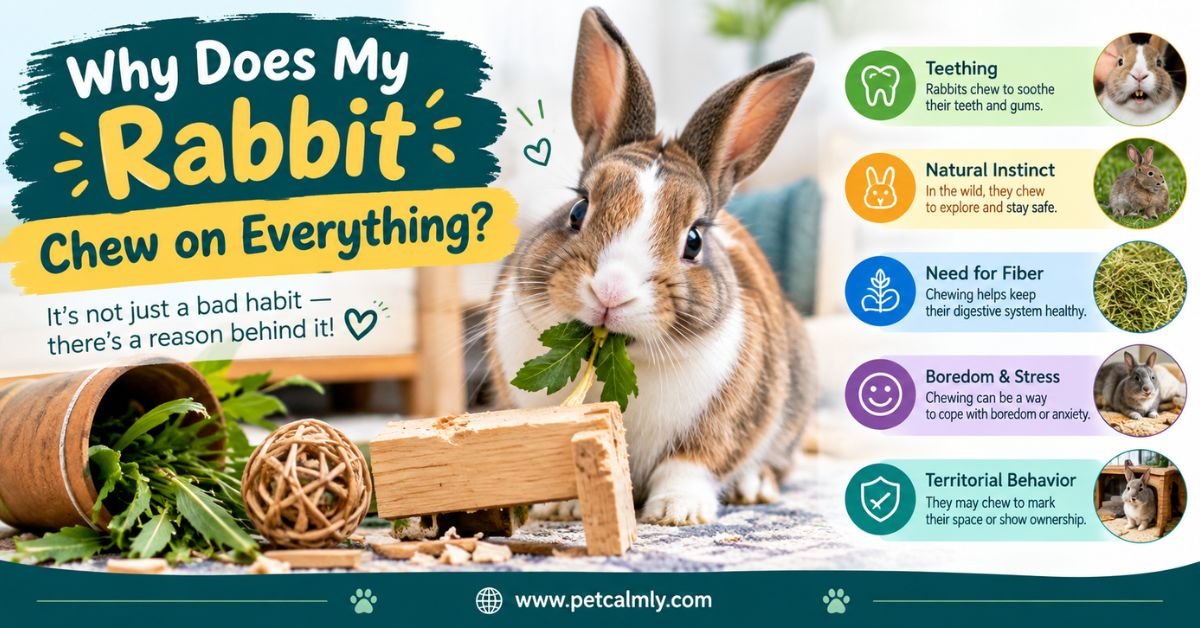
Rabbits chew on everything because it’s a natural, instinctive behavior tied to their survival, dental health, and emotional well-being. Unlike rodents, rabbits chew primarily to maintain their ever-growing teeth, relieve stress, create nesting materials, and explore their environment through their mouths. This behavior is completely normal but it does mean your rabbit needs plenty of appropriate chewing outlets and a properly enriched habitat to stay healthy and happy.
Why Rabbits Chew: It’s More Than Just a Habit
When you first bring a rabbit home and watch them gnaw through your baseboards, furniture, or the corner of your bedroom door, it’s easy to assume something’s wrong. Most new rabbit owners panic. But here’s the reassuring truth: your rabbit isn’t being destructive out of spite or boredom alone. They’re following millions of years of evolution and several critical biological needs.
Rabbits chew for three primary reasons: dental maintenance, psychological well-being, and environmental exploration. Understanding this distinction changes how you approach the behavior entirely.
The Dental Reality: Why Rabbit Teeth Never Stop Growing
This is the foundation you need to understand everything else.
Unlike human teeth, rabbit incisors never stop growing. Throughout a rabbit’s entire life—whether they live 8, 10, or 12+ years—their front teeth grow continuously, sometimes up to 2 millimeters per week. Without constant chewing, those teeth become overgrown, misaligned, and eventually painful. Overgrown teeth can make it impossible for your rabbit to eat, leading to weight loss, malnutrition, and serious health complications.
Here’s what most people miss: chewing isn’t optional for rabbits. It’s a physiological necessity. When your rabbit chews on hay, cardboard, wood, and appropriate toys, they’re naturally filing down their teeth to a manageable length. This is exactly what happens in the wild rabbits constantly chew on grasses, bark, roots, and woody plants. Your living room furniture is simply the modern substitute when a proper chewing environment isn’t available.
Emotional and Behavioral Chewing: Stress Relief and Comfort
Beyond the dental need, rabbits use chewing as an emotional outlet. Research into rabbit behavior shows that rabbits in stressful environments engage in more destructive chewing patterns, while rabbits with appropriate enrichment and a calm, predictable environment show significantly less furniture damage.
When your rabbit chews, they’re also:
- Relieving stress and anxiety – Chewing releases endorphins, the same calming neurochemicals that soothe humans when we eat comfort food
- Creating nesting materials – Even domestic rabbits retain the instinct to shred paper and soft materials for nesting, which is especially pronounced in unspayed females
- Exploring their territory – Rabbits use their teeth like humans use their hands, testing textures and learning about their environment
- Asserting comfort – Chewing familiar objects can be a self-soothing behavior, similar to how humans fidget or pace
The Foraging and Exploration Component
Wild rabbits spend most of their day foraging, using their teeth and mouths to investigate plants, dig, and sample different vegetation. Your domestic rabbit still has these instincts. They’re not being destructive; they’re being rabbit. The living room is simply their landscape, and your furniture represents unexplored vegetation.
Normal Rabbit Chewing vs. Destructive Chewing: What You Should Know
Not all chewing is created equal. It’s important to distinguish between normal, healthy chewing behavior and chewing that might indicate a problem.
What Healthy Chewing Looks Like
Normal rabbit chewing includes:
- Enthusiastically chewing on hay, timothy hay, and grass-based materials multiple times daily
- Gnawing on wooden toys, untreated wood blocks, and cardboard for 10–30 minutes at a time
- Chewing on paper-based materials like paper bags, newspaper, and unprinted cardboard
- Occasionally testing new objects in their environment (furniture corners, baseboards, blankets)
- Chewing more during spring-like conditions or when feeling particularly energetic
- Increased chewing before settling down to rest
This is your rabbit being healthy and following their instincts correctly.
When Chewing Might Signal a Problem
Excessive or unusual chewing can sometimes indicate an underlying issue. Watch for these warning signs:
- Sudden increase in chewing intensity – If your well-behaved rabbit suddenly becomes destructive, something has changed
- Chewing accompanied by drooling, difficulty eating, or tooth grinding – These suggest dental problems or pain
- Aggressive chewing with visible frustration – Could indicate stress, fear, or insufficient enrichment
- Over-focused chewing on non-food items – Obsessive chewing on plastic, metal, or indigestible materials might signal nutrient deficiency or psychological distress
- Accompanying weight loss or behavior changes – Often indicates dental disease or illness
If you notice these warning signs, especially the dental indicators, consult your veterinarian. Rabbit dental disease progresses quickly and can become serious within days.
The Top Reasons Rabbits Chew on Everything at Home
Understanding the specific triggers helps you address the root cause rather than just managing the symptoms.
1. Insufficient Hay and Fiber Intake
The number one reason rabbits chew destructively at home is simple: they’re not getting enough hay.
Rabbits should eat a diet composed of approximately 80% high-quality hay (timothy, orchard grass, or meadow hay, depending on their age). This isn’t just nutritional it’s behavioral. Chewing hay all day long is what rabbits are meant to do. It’s how their teeth stay healthy, their digestive system stays active, and their minds stay engaged.
When rabbits don’t have enough quality hay available, they substitute by chewing everything else in their environment. They’re not being bad; they’re meeting a biological need with whatever’s available.
2. Boredom and Insufficient Enrichment
Rabbits are intelligent, curious animals. They need mental stimulation, varied environments, and interesting objects to explore. A bare cage or hutch with nothing but food and water is a recipe for destructive chewing.
Rabbits in enriched environments with toys, foraging opportunities, digging boxes, and varied textures—show significantly less problem chewing. They’re occupied, mentally stimulated, and their natural behaviors are being channeled appropriately.
3. Stress, Fear, or Anxiety
Rabbits are prey animals. They’re naturally anxious and respond strongly to:
- Sudden loud noises
- Unfamiliar people or pets
- Sudden changes to their environment
- Overcrowding or lack of hiding spaces
- Unpredictable handling or interaction
- Inconsistent routines
When stressed, rabbits often engage in compulsive chewing behavior. It’s a self-soothing mechanism. If your rabbit suddenly becomes destructive, consider whether something in their environment has changed. Even small changes—a new pet, someone visiting frequently, rearranged furniture, or a change in your schedule—can stress rabbits enough to trigger behavioral changes.
4. Sexual Maturity and Hormonal Changes
Unspayed female rabbits and unneutered male rabbits often become significantly more destructive around 3–6 months of age. This is when sexual maturity kicks in, and hormone-driven behaviors emerge.
Unspayed females become obsessed with nesting, shredding anything available (blankets, cardboard, paper, carpet fibers) to create a nest. Unneutered males become territorial, aggressive, and destructive as they seek to mark territory and establish dominance.
Spaying and neutering typically resolve these behaviors within weeks. This is one of the most practical arguments for early spaying and neutering beyond reproduction prevention.
5. Dental Disease or Misaligned Teeth
If your rabbit’s chewing has increased alongside other changes drooling, difficulty eating, weight loss, wet chin or paws, or behavioral withdrawal dental disease might be the culprit.
Rabbit dental disease is serious and progresses quickly. Overgrown teeth, abscesses, or misalignment cause pain that actually increases chewing behavior (they chew trying to relieve pressure), and it becomes a dangerous cycle. Untreated dental disease can become life-threatening within weeks.
6. Dietary Deficiencies or Nutritional Imbalances
While less common in rabbits on appropriate diets, mineral or vitamin deficiencies (particularly calcium or phosphorus imbalances) can trigger unusual chewing behavior. Rabbits sometimes chew on inappropriate materials when their nutrition isn’t complete.
This is rare in rabbits eating quality timothy hay and appropriate pellets, but it’s worth considering if nothing else explains the behavior.
How to Stop Your Rabbit from Chewing Everything: Practical Solutions That Work
The goal isn’t to stop your rabbit from chewing that’s impossible and unhealthy. The goal is to redirect that chewing energy toward appropriate materials and create an environment where your rabbit’s natural instincts are satisfied.
Step 1: Maximize Hay Availability and Quality
This is the foundation. Start here.
What to do:
- Provide unlimited timothy hay, orchard grass, or meadow hay at all times
- Use a hay rack or hay box to make hay accessible and reduce waste
- Refresh hay daily; rabbits often ignore old, dusty hay
- Offer variety—different grass hays have different textures and appeal
- For younger rabbits (under 1 year), include some alfalfa hay (10–20% of total hay intake) for calcium, but transition to timothy hay as the primary hay by adulthood
When hay is abundant and appealing, most rabbits naturally spend hours chewing it, which:
- Maintains their teeth properly
- Keeps their digestive system healthy
- Provides mental stimulation
- Leaves them less motivated to chew furniture
Step 2: Create a Rabbit-Proof Environment
Make it physically impossible (or at least difficult) for your rabbit to access the things you don’t want chewed.
Practical strategies:
- Block access to baseboards – Use PVC pipes, furniture, or wire guards along walls where rabbits can reach
- Protect furniture – Move or cover the legs and corners of tables, chairs, and sofas with cardboard or plastic corner guards
- Close off dangerous areas – Use baby gates or cardboard barriers to restrict your rabbit to rabbit-proofed spaces during unsupervised time
- Secure electrical cords – Bundle or enclose any cords in PVC tubes; chewing live electrical cords is a serious electrocution risk
- Remove tempting materials – Put away blankets, throw pillows, and cushions that invite nesting behavior if your rabbit is unspayed
- Cover or remove houseplants – Many common plants are toxic to rabbits anyway, and they make tempting chewing targets
Think of rabbit-proofing like childproofing. You’re not punishing your rabbit; you’re creating a safe space where they can’t get into trouble.
Step 3: Provide Abundant Appropriate Chewing Toys and Materials
Rabbits need variety. They appreciate different textures, hardness levels, and types of materials. Rotation keeps things interesting.
Excellent chewing options:
- Hay-based products – Hay cubes, compressed timothy cubes, hay balls, and grass mats
- Untreated wood – Apple wood sticks, willow branches, aspen wood blocks, untreated wooden chew toys
- Cardboard and paper – Toilet paper tubes, paper egg cartons, brown paper bags, shredded paper
- Seagrass and woven materials – Seagrass mats, hyacinth mats, woven baskets and balls
- Bamboo items – Bamboo chew toys, bamboo sticks (pesticide-free)
- Specific commercial toys – Bunny crackers, timothy cookies (chewable treats), willow balls, cardboard tunnels
What to AVOID:
- Plastic toys (choking hazard, not digestible)
- Treated or painted wood
- Cedar or pine (toxic to rabbits)
- Anything with small parts that can be chewed off
- Glossy paper or printed cardboard (inks can be problematic)
Rotate toys every few days. A toy that loses interest becomes interesting again after a week away. This keeps your rabbit engaged and mentally stimulated.
Step 4: Build in Daily Foraging and Enrichment Time
Create activities that mimic what wild rabbits do naturally dig, forage, explore, and problem-solve.
Simple enrichment ideas:
- Digging boxes – Fill a box with hay, blankets, or paper strips; let your rabbit dig and burrow freely
- Foraging mats – Hide small pieces of hay or vegetables under a blanket or towel; let your rabbit dig and search
- Obstacle courses – Arrange cardboard boxes, tunnels, and ramps to create an environment to explore
- Varied terrain – Provide different levels, textures (carpet, tile, grass mats), and obstacles
- Interactive toys – Puzzle feeders, treat-dispensing balls, and toys that require interaction
- Supervised exploration – Let your rabbit explore (rabbit-proofed) new areas daily
- Pair bonding – If possible, a compatible rabbit friend provides social enrichment and play that reduces stress
Enrichment isn’t a luxury; it’s necessary for psychological health. Rabbits in enriched environments are happier, calmer, and show fewer behavioral problems.
Step 5: Address Stress and Anxiety
If your rabbit’s chewing is stress-related, enrichment alone won’t solve it. You need to identify and reduce the stressors.
Create a calm environment:
- Maintain a consistent routine (rabbits thrive on predictability)
- Provide multiple hiding spots where your rabbit feels safe
- Keep noise levels reasonable (no sudden loud sounds)
- Avoid frequent handling if your rabbit finds it stressful
- Minimize introductions of new pets or people (do it gradually)
- Ensure your rabbit has quiet time away from household activity
- Create a cool (65–75°F), quiet space for sleeping
If your rabbit is genuinely anxious or showing signs of stress beyond normal rabbit nervousness, consulting with a rabbit-savvy veterinarian or behaviorist might reveal solutions. In rare cases, anxiety medication prescribed by a vet can help.
Step 6: Spay or Neuter (If Not Already Done)
If your rabbit is unspayed or unneutered and showing increased destructive behavior around 3–6 months of age, spaying or neutering is transformative.
The behavior change is usually significant within 2–4 weeks post-surgery. This is one of the most effective solutions for hormone-driven chewing and aggression, with the added benefit of reducing cancer risk and improving litter box habits.
Find an exotic-animal veterinarian experienced with rabbits for the procedure. Rabbit spaying and neutering are specialized surgeries that require specific anesthetic protocols.
Step 7: Rule Out Medical Issues
If your rabbit’s chewing has suddenly increased or changed in character, and it’s accompanied by other signs (drooling, eating difficulties, behavioral changes, weight loss), consult your veterinarian.
Dental disease, gastrointestinal issues, and nutritional imbalances can all trigger unusual chewing behavior. A vet can rule out these possibilities.
7 Common Mistakes Rabbit Owners Make
Learning from others’ mistakes saves time, money, and frustration.
Mistake 1: Punishing Chewing Behavior
This doesn’t work and often makes things worse.
Rabbits don’t chew to spite you or test boundaries. Punishment causes fear and stress, which increases destructive chewing. Yelling, spraying with water, or other corrective measures damage your relationship with your rabbit and don’t address the underlying cause.
What works instead: Remove your rabbit from the chewing situation calmly and redirect them to appropriate chewing materials. No drama, no punishment just matter-of-fact redirection.
Mistake 2: Inadequate or Poor-Quality Hay
Many owners provide hay but not enough hay, or they choose hay that’s lost nutritional value (old hay, hay that’s been stored in sunlight, dusty hay).
Fresh, aromatic timothy hay is what appeals to rabbits. If your hay smells like grass and feels fresh, your rabbit is more likely to choose it over furniture. If it’s dusty or smells musty, they’ll ignore it.
Solution: Buy hay in smaller quantities more frequently to ensure freshness. Store it in a cool, dry place away from sunlight. Your rabbit should think hay is the most exciting thing available.
Mistake 3: Caging Instead of Free-Roaming (Or Limited Roaming)
Rabbits confined to small cages or hutches become bored and stressed, leading to obsessive chewing when they do get out.
Modern rabbit care recommends at least 32 square feet of continuous space for a single rabbit (more for bonded pairs). Time-limited “playtime” isn’t enough. Rabbits need ongoing access to space, enrichment, and the ability to exercise their natural behaviors throughout the day.
If free-roaming isn’t possible due to space or household circumstances, provide the largest possible enclosure with abundant enrichment and significant supervised free time daily.
Mistake 4: Choosing the Wrong Toys
Plastic toys, tiny rubber balls with bells, and toys with small parts don’t appeal to rabbits and often create safety hazards. They also don’t satisfy the chewing instinct because they’re not meant to be chewed.
Invest in quality:
- Natural wood chews that are actually appealing to chew
- Grass and hay-based materials
- Woven and seagrass products
- Cardboard (free, disposable, and beloved by rabbits)
Cheap toys often end up in the trash. Quality chewables get used and provide real value.
Mistake 5: Not Spaying or Neutering Early Enough
Many rabbit owners wait until behavioral problems emerge to consider spaying or neutering. By then, hormonal behaviors are entrenched.
The ideal time for spaying or neutering is 3–4 months of age, before sexual maturity and behavioral issues develop. If you haven’t already, do it sooner rather than later. The behavior change is remarkable.
Mistake 6: Inconsistent Management and Environmental Changes
Rabbits thrive on consistency. Changing enrichment materials frequently, rearranging their space often, or inconsistent access to different areas creates stress.
Establish a stable environment with consistent routines, but refresh enrichment materials regularly within that structure. Your rabbit should know what to expect.
Mistake 7: Ignoring Signs of Dental Disease
Brushing off increased chewing, drooling, or eating difficulties as “just a phase” can be dangerous. Dental disease progresses quickly in rabbits and becomes serious fast.
If something seems wrong, have it checked. Early intervention prevents serious complications.
Safety Concerns: Protecting Your Rabbit While They Chew
Chewing is normal, but some things are genuinely dangerous for rabbits to chew on.
Toxic Materials and Substances
Never allow your rabbit to chew on:
- Treated wood – Pressure-treated lumber, painted wood, stained wood, or varnished furniture
- Cedar and pine – These woods contain volatile oils that are toxic to rabbits and can cause respiratory and liver damage
- Plastic – Not only is it indigestible, but it poses choking and intestinal blockage risks
- Certain plants – Lilies, foxgloves, dieffenbachias, oleanders, and many common houseplants are toxic
- Foam and insulation – These expand in the digestive tract and can cause fatal blockages
- Adhesives and inks – Many glues and print inks contain toxins; avoid glossy magazines and color-printed cardboard
- Electrical cords – Electrocution risk; always secure and protect cords
- Chemically treated fabrics – Blankets, rugs, or furniture treated with flame retardants or pesticides
When in doubt, assume your rabbit shouldn’t chew it.
Choking and Blockage Risks
Rabbits can choke on or develop gastrointestinal blockages from:
- Small toy parts that break off
- Plastic components
- Large pieces of anything they’ve torn off furniture
- String, yarn, or fabric fibers
- Non-food items they’ve become obsessed with
Blockages are life-threatening emergencies in rabbits. Prevention is critical.
Protect your rabbit by:
- Choosing safe, appropriate toys exclusively
- Removing toys with loose parts
- Avoiding toys smaller than a matchbox
- Removing pieces of furniture your rabbit has started destroying
- Watching for signs of blockage (decreased appetite, no droppings, lethargy, abdominal pain) and seeking immediate vet care if these appear
Supervising Dangerous Situations
When your rabbit is loose in areas you haven’t fully rabbit-proofed, supervise actively. You can’t prevent all chewing, but you can prevent access to the most dangerous things.
When to Contact a Veterinarian: Red Flags
Some chewing-related situations require professional help.
Contact your vet immediately if:
- Your rabbit is drooling excessively
- Your rabbit shows difficulty eating, dropping food, or eating only on one side
- Your rabbit’s chewing has been accompanied by significant appetite loss or weight loss
- You notice swelling around the jaw or face
- Your rabbit is grinding their teeth audibly or constantly
- Your rabbit has suddenly stopped eating hay or pellets but is chewing other things obsessively
- Your rabbit seems to be in pain (hunched posture, reluctance to move, vocalization)
- Your rabbit hasn’t produced normal droppings for more than a few hours
- Your rabbit has ingested something potentially toxic
These signs often indicate dental disease, gastrointestinal issues, or blockage—all serious in rabbits.
Schedule a non-emergency vet visit if:
- Your rabbit’s chewing behavior has changed noticeably but is otherwise eating and acting normally
- You want to confirm your rabbit’s dental health is good
- You’re considering spaying or neutering and want to discuss timing and risks
- Your rabbit seems stressed or anxious and behavioral changes don’t resolve with environmental adjustments
Dental Health Checkups
Rabbits benefit from annual dental exams, and some owners schedule them more frequently (every 6 months). Your vet can catch early signs of dental problems before they become serious.
The Rabbit-Friendly Checklist: Setting Up Your Home for Healthy Chewing
Use this checklist to ensure your rabbit has everything they need to chew safely and appropriately.
Hay and Diet:
- ☐ Unlimited fresh, quality timothy or grass hay available daily
- ☐ Hay refreshed at least once daily
- ☐ Good-quality pellets offered in appropriate portions (1 tablespoon per pound of body weight daily)
- ☐ Fresh vegetables offered daily
- ☐ Consistent feeding schedule established
Safe Chewing Materials:
- ☐ Multiple types of wood chews available (apple, willow, aspen)
- ☐ Hay-based chewing products stocked
- ☐ Cardboard and paper materials rotated regularly
- ☐ Natural woven toys and seagrass mats provided
- ☐ All toys rotated every few days
Rabbit-Proofing:
- ☐ Baseboards protected or blocked off
- ☐ Furniture corners guarded
- ☐ Electrical cords bundled and enclosed
- ☐ Toxic plants removed
- ☐ Access to dangerous areas restricted
- ☐ Small choking hazards removed
Enrichment and Exercise:
- ☐ At least 32 square feet of continuous living space (or daily access to larger free-roam areas)
- ☐ Multiple hiding spots available
- ☐ Varied terrain and textures provided
- ☐ Digging opportunities available
- ☐ Foraging activities built into daily routine
- ☐ Toys rotated regularly
Stress Reduction:
- ☐ Consistent daily routine established
- ☐ Quiet resting areas designated
- ☐ Excessive noise minimized
- ☐ Handling kept to what the rabbit tolerates
- ☐ New situations introduced gradually
Health:
- ☐ Spaying/neutering completed (or scheduled if not already done)
- ☐ Annual dental exam scheduled with rabbit-savvy vet
- ☐ Any signs of dental problems addressed promptly
- ☐ Diet supporting good dental health
Real-Life Rabbit Owner Stories
Sometimes, real examples help. Here are common scenarios and how owners addressed them.
Story 1: The Carpet Destroyer (Destructive Chewing from Boredom)
Situation: Sarah brought home a rabbit and confined her to a medium-sized cage due to space constraints. When Sarah let her out for a few hours on weekends, the rabbit immediately attacked the carpet, destroying entire sections.
What was happening: The rabbit had spent days in a cage with minimal enrichment. When finally released, she had pent-up energy and a desperate need to dig and forage. The carpet was irresistible.
The solution: Sarah expanded the rabbit’s living space to include a 4×8-foot pen setup with multiple levels, and she created a digging box filled with hay and paper. She provided daily supervised time outside the pen in a fully rabbit-proofed area. Most importantly, she filled the pen with hay-based materials, toys, and foraging opportunities.
The result: Within two weeks, the carpet-destroying behavior stopped entirely. The rabbit now spends hours in her digging box and with her chewing toys. The change came from adequate space and enrichment, not punishment.
Story 2: The Furniture Shredder (Hormonal Behavior)
Situation: Marcus had a 5-month-old female rabbit that suddenly became obsessed with shredding blankets, attacking the couch, and destroying anything soft. She had been fine for the first few months.
What was happening: Sexual maturity hit. The nesting instinct kicked in, and the rabbit’s behavior became driven by hormones.
The solution: Marcus had her spayed by a rabbit-experienced veterinarian at 5.5 months old.
The result: Within three weeks, the destructive behavior had almost completely disappeared. She still chewed on appropriate materials, but the obsessive blanket-shredding and furniture destruction stopped. Marcus also noted that her temperament became calmer and more affectionate overall.
Story 3: The Stress Chewer (Environmental Anxiety)
Situation: When Jessica’s family adopted her rabbit, he was calm and well-behaved at the shelter. Within weeks at home, he became destructive, particularly when Jessica or her partner left for work. He would shred blankets, attack the doorframe, and chew on the baseboard.
What was happening: The rabbit was anxious and stressed by the new environment, the unpredictability of when his humans were home, and the change in routine. The chewing was a stress-response behavior.
The solution: Jessica created a calmer environment: she established a strict routine (same feeding times, same out-of-pen times), she created multiple hiding spots, she reduced sudden loud noises, and she stopped the frequent handling that made the rabbit nervous. She also added more enrichment.
The result: Over several weeks, the destructive chewing gradually decreased. The rabbit learned to trust the routine and became noticeably more relaxed. The chewing shifted from stress-driven to normal exploratory behavior.
Frequently Asked Questions
1: Is It Normal for Rabbits to Chew on Their Litter Box?
Yes, it’s completely normal. Rabbits often chew on cardboard litter boxes, and many owners actually provide disposable cardboard litter boxes specifically because rabbits will chew them and owners expect replacement. Plastic litter boxes are less likely to be chewed, but some rabbits will still attack them.
If litter box chewing is becoming a problem, ensure your rabbit has plenty of other appropriate chewing outlets. The litter box chewing usually isn’t an issue unless plastic pieces are being ingested. Ceramic or metal litter boxes are alternatives if plastic breakage becomes a concern.
2: Why Does My Rabbit Chew When I’m Trying to Hold or Pet Them?
Rabbits don’t like being held, and excessive petting can be stressful. What you’re interpreting as “chewing behavior” might actually be the rabbit trying to escape your grasp or communicate discomfort.
Some rabbits will nibble on hands, clothing, or arms when they’re trying to tell you to stop handling them. It’s not aggressive; it’s communicative. Respect your rabbit’s body language and tolerance for touch. Most rabbits prefer to interact on their own terms—sitting nearby, being petted briefly in preferred spots, and then moving away when they’re done.
Allow your rabbit to come to you rather than pursuing them for interaction.
3: Can I Train a Rabbit to Stop Chewing Furniture?
You can’t stop your rabbit from chewing—that’s a biological necessity. But you can redirect that chewing toward appropriate materials and make furniture inaccessible.
“Training” a rabbit to stop chewing furniture works by (1) making furniture unavailable, (2) providing incredibly appealing alternative chewing materials, and (3) addressing any underlying causes (boredom, stress, inadequate hay, hormonal behavior).
It’s not about training your rabbit to refuse to chew; it’s about removing temptation and providing better options.
4: What’s the Best Type of Hay for Reducing Destructive Chewing?
Timothy hay is the gold standard for adult rabbits because it’s high in fiber, moderate in protein, and has a pleasant texture that rabbits find naturally appealing. The act of chewing timothy hay all day long satisfies the chewing instinct and keeps teeth worn down properly.
Orchard grass, meadow hay, and other grass-based hays are excellent alternatives. Alfalfa hay should be limited in adult rabbits (too much calcium and protein) but can be part of the mix for younger rabbits.
Fresh, fragrant hay is what appeals to rabbits. If your hay doesn’t smell like fresh grass, your rabbit won’t be interested.
5: How Much Space Does a Rabbit Actually Need?
The general recommendation is at least 32 square feet of continuous living space for a single rabbit, with more for bonded pairs. This means a rabbit shouldn’t spend significant time confined to a small cage.
Space matters tremendously for reducing destructive chewing. Rabbits in adequate space can move, stretch, run, and engage with enrichment throughout the day. Boredom from confinement is a major driver of destructive behavior.
If free-roaming throughout your home isn’t possible, at minimum create a large pen or room setup and ensure your rabbit has several hours of supervised additional space daily.
6: Why Is My Rabbit Obsessed with Chewing One Specific Spot?
Obsessive chewing of one particular area (a corner of the baseboards, the same piece of furniture, the same spot on carpet) often signals:
- Stress or anxiety – The repetitive behavior is self-soothing; your rabbit returns to this spot when anxious
- Dental discomfort – The rabbit is chewing to relieve pressure or pain from misaligned teeth
- Successful past access – The rabbit knows this spot sometimes has something to chew; it’s reinforcing
- Nesting instinct – If your rabbit is female and unspayed, obsessive chewing in one spot might be nesting behavior
Address the underlying cause rather than just trying to prevent access. If it’s stress-related, work on reducing stressors. If it’s dental-related, see a vet. If it’s an unspayed female, spaying might resolve it.
More Information About Pets, Please Visit Our Website: Indoor Rabbit Setup Ideas
Signs of a Happy Rabbit
Rabbit Safe Vegetables List
Why Is My Rabbit Not Eating?
What Are the Best Pellets for Rabbits
Can Rabbits Eat Bananas?
How Long Do Pet Rabbits Live Indoors?
How to Care for a Pet Rabbit Indoors
Best Dog Food for Skin Allergies
Conclusion
Your rabbit chews on everything because they’re a healthy, normal rabbit with essential biological and behavioral needs. The behavior isn’t something to prevent; it’s something to properly direct and accommodate.
When your rabbit has unlimited quality hay, abundant appropriate chewing materials, a properly enriched environment, and a calm, predictable space, destructive chewing dramatically decreases. Your rabbit isn’t any less of a rabbit; they’re just expressing their natural behaviors in socially acceptable ways.
The goal isn’t a rabbit that doesn’t chew. The goal is a happy, healthy rabbit who chews on the right things leaving your furniture intact and your bunny thriving.
Start with the fundamentals: maximize hay, rabbit-proof your space, provide excellent chewing alternatives, and ensure your rabbit has enrichment and exercise opportunities. Then watch your rabbit’s behavior transform from frustrating and destructive to normal and natural.
Your rabbit is doing exactly what evolution designed them to do. Your job is simply to make sure they can do it safely and appropriately in your home.