Short direct answer
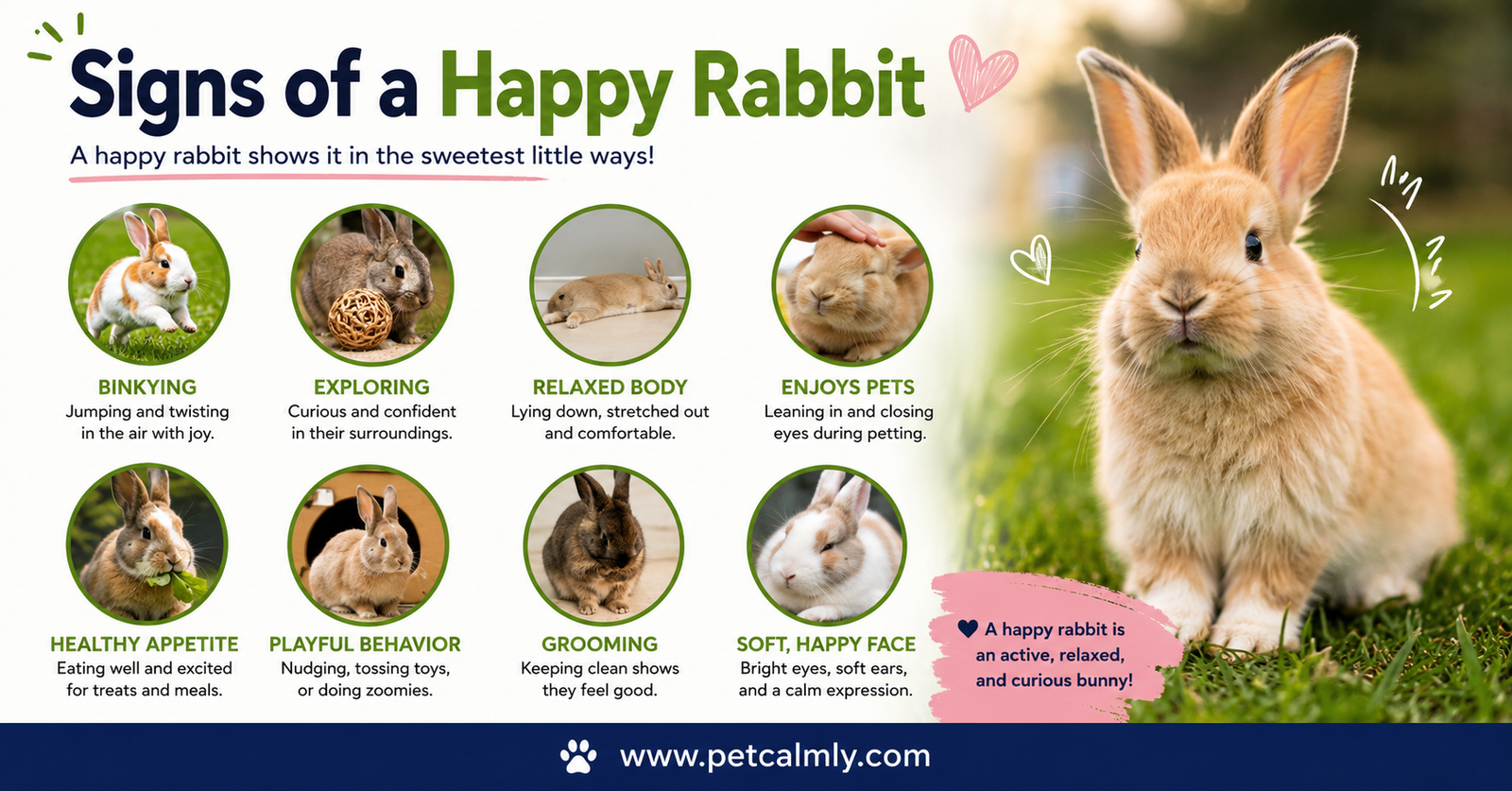
The clearest signs of a happy rabbit include binkying (jumping and twisting in the air), flopping onto their side for a nap, relaxed “loaf” or stretched-out lying positions, soft teeth purring, ears held loosely rather than pinned back, a healthy appetite, and curiosity about their surroundings. A content rabbit moves confidently around its space, grooms itself regularly, and seeks out contact with its owner or bonded companion rather than avoiding it. These behaviors together paint a reliable picture of a rabbit that feels safe, comfortable, and mentally stimulated.
That’s the short version but rabbit body language has a lot more nuance than a single checklist can capture, and misreading it is one of the most common mistakes new owners make. Let’s break it down properly.
Why Rabbit Happiness Is Easy to Miss
Rabbits are prey animals. In the wild, showing pain, fear, or vulnerability can make them a target, so their instincts push them to mask distress and keep body language subtle. This is the opposite of dogs, who tend to broadcast their feelings loudly. A rabbit that seems “fine” on the surface could actually be stressed, and one that seems standoffish might just be a naturally reserved individual who’s perfectly content.
This is why understanding happy rabbit behavior isn’t about spotting one dramatic sign it’s about recognizing patterns over time and comparing them to your own rabbit’s normal baseline.
The Core Physical Signs of a Happy Rabbit
Relaxed Body Posture
A content rabbit’s muscles are loose, not tense. You’ll often see them in one of a few classic relaxed positions:
- The loaf position — sitting with legs tucked under the body, resembling a loaf of bread. This is a rabbit’s version of settling in comfortably.
- The flop — suddenly rolling onto their side, sometimes with a leg kicked out. This can look alarming the first time you see it, but it’s actually one of the strongest indicators of trust and relaxation a rabbit can show.
- The stretch — lying fully extended on their belly or side with legs stretched out behind them, often in a cool spot on the floor.
If your rabbit is willing to flop or stretch out in front of you, it means they feel safe enough to be momentarily defenseless — something a stressed or fearful rabbit will almost never do.
Soft, Mobile Ears
Ear position is one of the most reliable emotional indicators in rabbits. A relaxed rabbit’s ears are held loosely, either upright and slightly turned outward or resting naturally against the body (in lop breeds). Ears that are pinned flat and rigid against the back, combined with a hunched posture, usually signal fear rather than contentment.
A Healthy, Glossy Coat
Rabbits that feel well and are grooming normally tend to have a smooth, glossy coat without bald patches, matting, or excessive shedding beyond normal seasonal changes. Since stressed or unwell rabbits often groom less, coat condition is a useful secondary clue though it should never be your only measure, since diet and health issues can also affect coat quality.
Behavioral Signs That Show a Rabbit Is Content
Binkying
If you’ve never seen a rabbit binky, it’s unmistakable once you do: a sudden joyful leap into the air with a mid-air twist of the body and kicking legs. Binkying is pure, uncomplicated joy rabbits do this when they feel physically great and emotionally secure in their space. It’s most common in young, energetic rabbits but can happen at any age.
Teeth Purring
Rabbits communicate contentment through a subtle behavior called “tooth purring” a soft, gentle grinding of the teeth, often while being petted. It sounds almost like a light chattering and is typically accompanied by relaxed body language. This is different from loud, harsh teeth grinding, which can indicate pain, so context matters.
Exploratory Curiosity
A happy rabbit is an inquisitive rabbit. They’ll investigate new objects, sniff around the edges of their enclosure, dig at blankets, or approach unfamiliar smells rather than freezing or bolting. Curiosity is a strong sign that a rabbit isn’t operating from a place of chronic stress, since fear tends to suppress exploratory behavior in prey animals.
Seeking Out Contact
Rabbits that trust their owners often show it through small, quiet gestures rather than overt affection: nudging your hand for attention, lying down near you, resting their chin on your foot, or grooming you back (a behavior called allogrooming, which rabbits also use to bond with each other). A rabbit that voluntarily approaches you, rather than retreating to a corner, is telling you something important about how safe it feels.
Normal Eating and Litter Habits
Appetite is one of the most practical welfare indicators in rabbits. A happy, healthy rabbit eats hay steadily throughout the day, shows enthusiasm at mealtimes, and produces regular, well-formed droppings. Because rabbits are prone to serious digestive issues when stressed, changes in eating or litter box habits should never be dismissed as “just a mood” they deserve closer attention.
How Age, Breed, and Personality Change These Signals
Not every rabbit expresses happiness the same way, and expecting identical behavior across all rabbits is one of the quickest ways to misread a perfectly content pet.
Young rabbits (under a year old) tend to binky more often and more dramatically. Their energy levels are naturally higher, and it’s common for a young rabbit to zoom around a room in bursts before suddenly flopping down to rest. If your rabbit is younger, frequent bursts of energy followed by deep, sudden naps is completely normal and often a sign of good health rather than restlessness.
Senior rabbits (roughly five years and older) often show contentment more quietly. A slower binky, a gentle stretch instead of a full flop, or simply choosing to sit near you rather than sprint across the room can carry the same emotional weight in an older rabbit that a dramatic zoomie session carries in a younger one. Owners of senior rabbits sometimes worry that reduced activity means unhappiness, when it’s often just a natural, age-appropriate shift in energy.
Breed and coat type can also shape how visible certain signals are. Lop-eared breeds, for example, can’t hold their ears fully upright, so “relaxed ears” looks different than it would on a rabbit with erect ears the key is softness and looseness rather than a specific angle. Long-haired breeds like Angoras may mask subtle body tension under a thick coat, making posture and movement more reliable indicators than appearance alone.
Individual personality matters just as much as age or breed. Some rabbits are naturally bold and food-motivated, greeting owners at the front of the enclosure every time. Others are shy by nature and show contentment through calm tolerance rather than active engagement sitting nearby without bolting, for instance, might be that particular rabbit’s version of a warm greeting. Getting to know your own rabbit’s baseline personality is ultimately more useful than comparing them to a generic checklist.
A Real-World Example
Consider two rabbits living in the same household. One, a young Netherland Dwarf, spends much of the evening racing laps around the living room, binkying near the couch, and flopping dramatically the moment playtime ends. The other, an older lop mix, prefers to sit quietly beside her owner’s feet, occasionally leaning into a gentle chin scratch. Both rabbits are demonstrating genuine happiness they’re simply expressing it through very different behavioral styles shaped by age, breed, and temperament. An owner who only looked for the dramatic signs might wrongly assume the older rabbit was unhappy, when in reality she was showing some of the clearest trust signals a rabbit can give.
Rabbit Body Language Decoded: A Quick Reference
| Behavior | Likely Meaning |
|---|---|
| Binkying (jumping and twisting) | Pure joy and excitement |
| Flopping onto their side | Deep relaxation and trust |
| Loaf position, ears relaxed | Calm contentment |
| Tooth purring while petted | Enjoying affection |
| Nudging your hand | Seeking attention or affection |
| Ears pinned flat, body hunched | Fear or anxiety |
| Thumping a hind leg | Alarm or perceived danger |
| Growling or lunging | Territorial stress or discomfort |
| Hiding and refusing food | Possible illness or high stress |
Use this table as a starting point, not a strict rulebook every rabbit has an individual personality, and some naturally quieter rabbits may show contentment more subtly than others.
Signs Your Rabbit Might NOT Be Happy
Recognizing unhappy or stressed behavior is just as important as recognizing joy, since it gives you the full picture. Watch for:
- Hiding for extended periods, especially combined with reduced appetite
- Excessive chewing on cage bars or repetitive pacing
- Aggressive thumping, lunging, or growling when approached
- Overgrooming or fur pulling (sometimes linked to boredom or stress)
- A hunched, tense posture with ears pinned back for long stretches
- Reduced interest in toys, food, or interaction that was previously normal
A single instance of any of these isn’t necessarily a red flag — rabbits have off days too — but a consistent pattern over several days suggests something in their environment, diet, or health needs attention.
5 Common Mistakes Owners Make When Reading Rabbit Emotions
Mistake 1: Assuming stillness means contentment. A frozen, wide-eyed rabbit that isn’t moving may actually be in a fear response, not calmly resting. Context ear position, muscle tension, breathing rate matters more than stillness alone.
Mistake 2: Expecting dog-like affection. Many new owners feel discouraged when their rabbit doesn’t seek constant cuddles. Rabbits often show love through proximity and quiet companionship rather than physical affection, and forcing interaction can actually reduce trust over time.
Mistake 3: Ignoring subtle changes in routine. Because rabbits mask discomfort well, a slightly smaller appetite or one skipped play session is often the first and sometimes only early warning sign before a larger health issue develops.
Mistake 4: Housing a rabbit alone without enrichment. Rabbits are highly social animals, and a single rabbit in an under-stimulating environment can appear “fine” while quietly experiencing chronic boredom or loneliness.
How to Help Your Rabbit Feel Happier Every Day
Give Them Enough Space to Move Freely
Rabbits need room to hop, stretch out fully, and perform a proper binky without hitting the sides of an enclosure. A cramped hutch limits natural behavior and can contribute to frustration over time. Daily supervised time outside the enclosure often called “free-range” or exercise time — makes a noticeable difference in overall demeanor.
Provide Mental Enrichment
Boredom is a major, often overlooked contributor to poor rabbit welfare. Rotating chew toys, cardboard tunnels, foraging boxes, and dig boxes filled with shredded paper give rabbits an outlet for natural digging and chewing instincts. Hiding small amounts of food inside cardboard tubes or scattering pellets across a towel to encourage foraging can also turn an ordinary mealtime into a mentally engaging activity, closer to how a wild rabbit would naturally spend its day searching for food. Rotating which toys are available every week or two — rather than leaving the same three items in the enclosure indefinitely — keeps novelty high and prevents the kind of low-grade boredom that can build up unnoticed.
Prioritize a Hay-Based Diet
Unlimited access to good-quality grass hay supports both digestive health and natural grazing behavior, which keeps rabbits occupied and content for much of the day. Pellets and fresh vegetables should complement, not replace, hay as the foundation of the diet.
Respect Their Social Needs
Where possible, a bonded rabbit companion can dramatically improve a rabbit’s quality of life, since rabbits are naturally social in the wild. For single rabbits, daily interaction with their human caregiver becomes even more important in meeting that social need.
Build Trust at Their Pace
Let your rabbit approach you rather than reaching in to pick them up unexpectedly. Sitting quietly at their level, offering treats by hand, and allowing them to initiate contact builds the kind of trust that leads to genuine affection over time, rather than tolerated handling.
Setting Up an Environment That Supports Happiness
The physical setup of a rabbit’s living space plays a bigger role in day-to-day contentment than many new owners expect. A few practical adjustments can make a noticeable difference:
Flooring matters more than it seems. Wire-bottom cages can be uncomfortable and, over time, contribute to sore hocks on a rabbit’s feet, which can make them reluctant to move around freely. Solid flooring with soft bedding or fleece encourages more natural movement, including the loafing and stretching postures associated with relaxation.
Hideaways reduce baseline stress. Even confident, well-adjusted rabbits benefit from having at least one enclosed hiding spot — a cardboard box with an entrance cut out works well where they can retreat if something startles them. Having this option available, even if it’s rarely used, tends to lower a rabbit’s overall stress level simply because the choice exists.
Consistent routines build security. Rabbits are creatures of habit, and predictable feeding times, cleaning schedules, and exercise windows help them feel more settled than an environment where everything happens at random. A rabbit that knows roughly when its owner will appear with fresh hay or an exercise session tends to display more confident, relaxed behavior throughout the day.
Noise and location matter too. Placing an enclosure in a high-traffic, loud area of the home near a television, front door, or washing machine, for example can keep a rabbit in a low-level state of alertness that limits how relaxed they’re able to get. A calmer, moderately quiet location where the rabbit can still see and hear household activity from a safe distance tends to strike the right balance between social engagement and security.
When Should You Worry? Signs That Need Veterinary Attention
Most fluctuations in mood are normal, but certain signs cross the line from “having an off day” into a genuine health concern that warrants a veterinary visit:
- Not eating or drinking for more than 12 hours
- No droppings, or noticeably smaller/fewer droppings than usual
- Labored breathing, drooling, or a hunched posture that doesn’t resolve
- Sudden aggression or withdrawal with no clear environmental trigger
- Visible weight loss or a dull, unkempt coat despite normal grooming access
Rabbits are especially vulnerable to gastrointestinal stasis, a serious condition where digestion slows or stops, and it can escalate quickly. Because of this, any sudden drop in appetite or activity should be treated as a priority rather than something to “wait and see” on, according to general veterinary guidance from sources like the Merck Veterinary Manual and VCA Animal Hospitals. When in doubt, a same-day call to an exotic or rabbit-savvy vet is always the safer choice.
What Pet Owners Should Do Day to Day
- Observe your rabbit at the same times each day so you learn their personal baseline
- Keep a mental (or written) note of appetite, energy, and litter habits
- Offer daily supervised exercise time outside the enclosure
- Rotate enrichment items weekly to prevent boredom
- Handle gently and only when necessary, letting the rabbit set the pace for affection
- Schedule regular check-ups with a rabbit-experienced veterinarian, even when nothing seems wrong
Small, consistent habits like these make it far easier to notice subtle shifts in behavior before they become serious problems.
Conclusion
Learning to recognize the signs of a happy rabbit comes down to watching for relaxed posture, playful energy like binkying and flopping, soft ear position, steady eating habits, and genuine curiosity about the world around them. None of these signs work in isolation it’s the overall pattern, compared against your own rabbit’s normal behavior, that tells the real story. The more time you spend simply observing your rabbit without expectation, the easier it becomes to read their emotional world, and the better equipped you’ll be to give them the calm, enriched life they thrive on.
More Information About Pets, Please Visit Our Website: Rabbit Teeth Trimming Cost
How to Trim Rabbit Nails
Rabbit Poop Normal vs Unhealthy
Can Rabbits Eat Lettuce?
How Much Does a Rabbit Vaccination Cost?
How to Calm a Scared Rabbit
Frequently Asked Questions
1. How can I tell if my rabbit is happy or just calm?
Look for active signs of enjoyment, not just stillness binkying, flopping, tooth purring, and curious exploration all indicate genuine happiness, whereas frozen stillness with tense muscles or pinned ears may actually signal fear.
2. Do rabbits show affection like dogs and cats?
Rabbits show affection in quieter, more subtle ways, such as lying near you, nudging for attention, or grooming you. It’s rarely as overt as a dog’s greeting, but it’s just as genuine.
3. Why does my rabbit flop onto its side suddenly?
Flopping is a strong sign of relaxation and trust. It can look dramatic the first time, but it simply means your rabbit feels safe enough to fully let its guard down.
4. Is it normal for rabbits to grind their teeth?
Soft, gentle teeth grinding (tooth purring) during petting is a positive sign of contentment. Loud, harsh grinding paired with a hunched posture, however, can indicate pain and should be checked by a vet.
5. Can a single rabbit be happy without another rabbit companion?
Yes, though it requires more effort from the owner. A single rabbit can live a content life with daily interaction, enrichment, and attention, since human companionship can partially fill the social role another rabbit would.
6. What’s the fastest way to tell if something is wrong with my rabbit?
Changes in appetite, energy, or litter habits are usually the earliest and most reliable indicators. A rabbit that suddenly stops eating or becomes withdrawn should be checked promptly, since rabbits can decline quickly when unwell.