Short direct answer
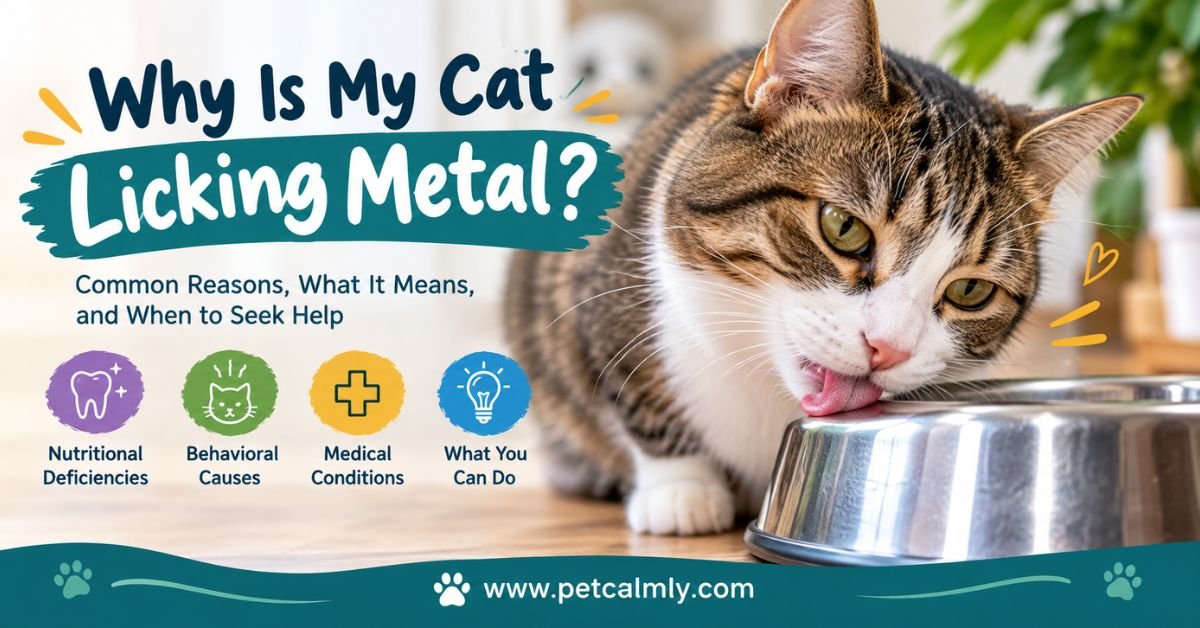
Why Is My Cat Licking Metal, because of the cool smooth texture, a leftover salty or metallic taste from food or hands, mineral deficiencies, stress-related compulsive habits, or a medical condition called pica. Occasional licking of a clean metal bowl or faucet is usually harmless, but frequent, obsessive licking especially of rusty, painted, or unfamiliar metal should be checked by a vet, since it can point to nutritional gaps, nausea, anemia, or dental pain.
If you’ve caught your cat dragging its tongue across the kitchen faucet, the legs of a chair, a doorknob, or the bars of a carrier, you’re not imagining it. It’s a genuinely common behavior, and most of the time it’s more curious than dangerous. But “most of the time” isn’t “always,” so it’s worth understanding what’s actually going on before you decide whether to shrug it off or book a vet visit.
This guide walks through every realistic reason a cat licks metal, how to tell the difference between quirky and concerning, and what to actually do about it without the guesswork.
Why Do Cats Lick Metal Surfaces?
There isn’t one single cause. In practice, it’s usually one (or a combination) of these:
- The metal is cold and smooth, which some cats find soothing on the tongue
- Trace amounts of salt from sweat, cooking, or handling linger on the surface
- Food or gravy residue is stuck on a bowl, spoon, or can lid
- The cat is anxious, bored, or under-stimulated and has developed a repetitive habit
- An underlying mineral or nutrient deficiency is driving unusual cravings
- A condition called pica is causing the cat to seek out non-food objects
- Nausea or an upset stomach is making the cat seek cool surfaces to soothe its mouth
- Dental discomfort is prompting the cat to explore textures with its tongue
Each of these has a different fix, so let’s go through them one by one.
The Taste and Texture Explanation: Salt, Residue, and Cool Surfaces
Cats have a strong sense of smell and a tongue covered in tiny hook-like papillae that pick up flavor and texture far more sensitively than ours do. Metal itself doesn’t have a flavor in the way food does, but it does carry a faint mineral or “electric” taste when saliva reacts with it and cats are curious enough to investigate that.
More often, though, it’s not really about the metal at all. It’s about what’s on the metal:
- Salt from human hands. If you’ve touched a doorknob or faucet after eating or sweating, there’s a light salty film your cat can detect.
- Food residue. Stainless steel bowls, can lids, and cutlery hold onto oils and juices long after they look clean to us.
- Temperature. Metal stays cooler than most household surfaces, and some cats are drawn to that coolness the same way they seek out bathroom tile or sinks on a warm day.
If your cat’s metal-licking is limited to the food bowl, the sink, or spots near the kitchen, this is very likely the explanation and it’s not something to worry about.
Could It Be a Mineral or Nutrient Deficiency?
This is the question most owners land on eventually, and it’s a fair one. Unusual cravings for non-food items are sometimes linked to the body trying to correct an imbalance, similar to how some people crave ice or chalk when they’re low in iron.
In cats, licking metal has occasionally been associated with:
- Anemia, where the body is low on red blood cells or iron
- Low mineral levels, particularly if a cat is on an unbalanced homemade diet
- Deficiencies from a poor-quality or incomplete commercial diet
It’s important to be careful here: there’s no solid research proving that licking metal specifically means a cat is anemic or mineral-deficient. It’s a pattern some vets have noticed alongside other cases of pica, not a confirmed cause-and-effect. If your cat is eating a complete, balanced commercial diet and otherwise seems healthy, a deficiency is less likely to be the reason. But if the licking is frequent, paired with lethargy, pale gums, or a change in appetite, it’s worth mentioning to your vet and ruling out with bloodwork rather than guessing.
Pica in Cats: When Licking Becomes a Compulsive Behavior
Pica is the medical term for eating or persistently mouthing non-food items fabric, plastic, rubber, cardboard, and yes, metal. Licking metal can be a milder version of the same underlying drive, even if your cat isn’t swallowing anything.
Pica is more common in:
- Cats that were weaned too early or separated from their mother young
- Certain breeds, including Siamese and Oriental breeds, which seem to show it more often
- Cats with underlying anxiety, boredom, or a lack of environmental enrichment
- Cats with gastrointestinal issues or dental pain
If your cat’s licking has escalated from occasional to constant, or if it’s started chewing or attempting to swallow metal objects like bottle caps, foil, or jewelry, that’s a meaningful shift from curiosity into compulsive territory and deserves a vet visit.
Stress, Boredom, and Repetitive Habits
Cats are creatures of routine, and when that routine is disrupted — a move, a new pet, a schedule change, not enough playtime — some cats develop repetitive behaviors as a coping mechanism. Licking metal can become one of those self-soothing habits, similar to overgrooming fur or chewing at fabric.
Signs this might be the driver:
- The licking happens at predictable times, like right before bed or when you leave the house
- It started around a specific change in the household
- Your cat seems otherwise understimulated — limited toys, little vertical space, few play sessions
- The behavior increases when the cat is alone
The encouraging part is that this cause is usually the most fixable, often improving significantly once enrichment and routine are addressed (more on that below).
When Metal Licking Signals a Medical Issue
Sometimes the explanation isn’t behavioral at all. A few medical conditions can show up first as unusual licking behavior:
| Possible Condition | What Else You Might Notice |
|---|---|
| Nausea or GI upset | Lip-licking, drooling, reduced appetite, occasional vomiting |
| Dental disease or mouth pain | Pawing at the face, bad breath, dropping food, reluctance to chew |
| Anemia | Pale gums, lethargy, weakness |
| Feline hyperesthesia syndrome | Skin rippling, sudden bursts of licking or biting at the body |
| Early kidney or metabolic issues | Increased thirst, weight changes, appetite shifts |
None of these are meant to alarm you most cats licking a faucet are simply curious. But this table is a useful mental checklist: if metal-licking shows up alongside any of these signs, it’s a reason to call your vet rather than wait it out.
Is Licking Metal Actually Dangerous for Cats?
Licking a clean stainless steel bowl or a faucet handle is essentially harmless. The concern isn’t licking itself it’s what can come with it.
Lower risk:
- Stainless steel food and water bowls
- Chrome faucets and clean fixtures
- Smooth, non-rusted furniture legs
Higher risk:
- Rusted or corroded metal, which can carry bacteria and sharp flaking edges
- Painted metal, especially older paint that may contain lead
- Galvanized metal, which is treated with zinc and can cause zinc toxicity if ingested in enough quantity
- Small metal objects like coins, screws, or jewelry, which pose a choking or swallowing hazard if the licking turns into chewing or mouthing
- Batteries or electronics with exposed metal contacts
If your cat is only ever licking clean, everyday metal like a bowl or faucet, there’s little to worry about. If it’s drawn to rusty patio furniture, old paint, or small hardware, that’s where real risk comes in not from the licking, but from what’s on or in the metal.
Practical Guide: What To Do If Your Cat Keeps Licking Metal
Here’s a simple approach to work through at home before assuming the worst:
- Rinse and dry the bowl after every meal. Residue buildup is the single most common trigger, and it’s the easiest to rule out.
- Track when and where it happens. A quick note in your phone time, location, what preceded it helps you and your vet spot a pattern.
- Rule out access to risky metal. Move rusted items, small hardware, or anything painted out of reach.
- Boost enrichment. Add a few short play sessions a day, puzzle feeders, scratching posts, and window perches. Understimulated cats often redirect that energy into repetitive habits.
- Check the diet. Confirm your cat is on a complete and balanced commercial food appropriate for its life stage this rules out one of the more common underlying triggers.
- Watch for other symptoms. Appetite changes, lethargy, pale gums, or vomiting alongside the licking are your signal to stop watching and start calling.
- Book a vet visit if it’s frequent or compulsive. Bloodwork can rule out anemia and mineral imbalances, and a dental check can rule out mouth pain, both quickly and affordably.
A Realistic Example
A cat that only licks the water bowl right after it’s refilled is almost certainly just after the taste of fresh water or trace minerals in it completely normal. A cat that’s started licking the bars of its carrier every time it’s stressed, on the other hand, is showing a stress response, and the fix there is addressing the stressor, not the carrier.
When Should You Worry?
Contact your veterinarian if you notice any of the following alongside the metal-licking:
- The behavior happens daily or for extended stretches, not just occasionally
- Your cat is also chewing, mouthing, or attempting to swallow metal objects
- There’s a noticeable change in appetite, energy, or weight
- Gums look pale, white, or yellow instead of healthy pink
- Your cat is drooling excessively or pawing at its mouth
- The licking appeared suddenly, with no clear trigger like a new bowl or a house move
- You suspect your cat may have swallowed something metallic
None of these confirm a serious problem on their own, but they’re the difference between “keep an eye on it” and “get it checked.”
What Pet Owners Should Do Going Forward
Think of this less as a one-time fix and more as an ongoing habit:
- Clean food and water bowls daily to remove the most common trigger
- Keep a simple log if the behavior continues, so you have real information for your vet instead of a vague “sometimes”
- Add enrichment consistently, not just when the behavior flares up
- Cat-proof risky metal rusted furniture, small hardware, painted surfaces, batteries
- Schedule a wellness check if licking becomes frequent, even if your cat seems fine otherwise, since bloodwork can catch issues before symptoms do
Most cats that lick metal are simply cats being cats curious, tactile animals investigating their environment. But because a small number of cases point to something worth catching early, a little attention now saves a lot of guessing later.
Conclusion
Licking metal is usually nothing more than a cat chasing an interesting taste or a cool texture, and in the vast majority of cases, it’s not something to lose sleep over. Still, because it can occasionally be tied to stress, nutrient gaps, dental pain, or an underlying medical issue, it’s worth paying attention to how often it happens and what else comes with it. Clean the bowls, add some enrichment, watch for other symptoms, and when in doubt, let your vet rule things out rather than ruling them out yourself.
More Information About Pets, Please Visit Our Website: Why Does My Cat Bite Me Gently Out of Nowhere?
Why Is My Cat Aggressive All of a Sudden?
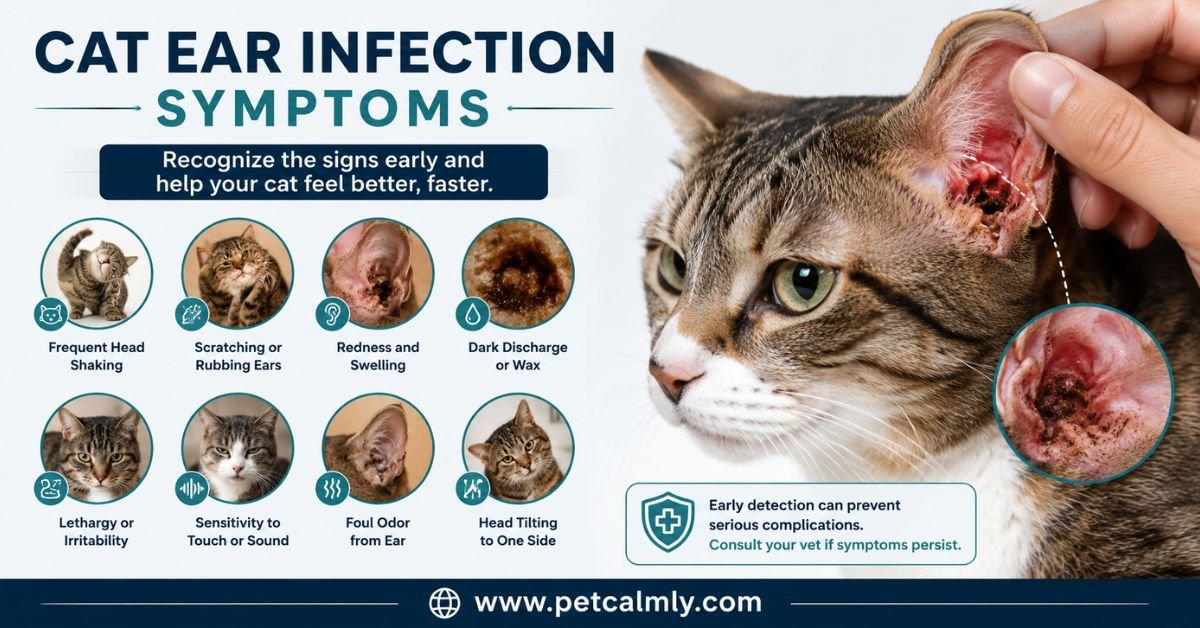
Cat Ear Infection Symptoms
Can Cats Drink Milk Safely Veterinary Advice
Do Dogs Understand Cat Body Language?
Why Is My Cat Chewing Plastic Bags?
Why Do Cats Vomit Hairballs?
Frequently Asked Questions
1: Is it normal for cats to lick metal bowls?
Yes. It’s one of the most common versions of this behavior, usually caused by leftover food residue, water minerals, or the cool texture of the bowl. It’s rarely a cause for concern on its own.
2: Can licking metal make my cat sick?
Licking clean metal generally won’t make a cat sick. The real risk comes from rusted, painted, or galvanized metal, or from licking turning into chewing and swallowing small metal objects.
3: Why does my cat lick the faucet specifically?
Faucets often carry a faint salty residue from hands and stay cooler than surrounding surfaces, which makes them appealing to a curious tongue. Fresh water dripping from the tap can also be part of the draw.
4: Does licking metal mean my cat has a mineral deficiency?
Not necessarily. It’s one possible explanation among several, including stress, boredom, and simple taste preference. A vet visit with bloodwork is the only reliable way to confirm or rule out a deficiency.
5: Should I stop my cat from licking metal?
You don’t need to stop occasional, casual licking of clean surfaces. It’s worth redirecting or interrupting the behavior if it becomes frequent, obsessive, or involves risky metal like rusted or painted objects.
6: When should I take my cat to the vet for licking metal?
See a vet if the licking is daily or compulsive, paired with appetite or energy changes, involves chewing or swallowing metal, or shows up alongside pale gums, drooling, or vomiting.