Short direct answer
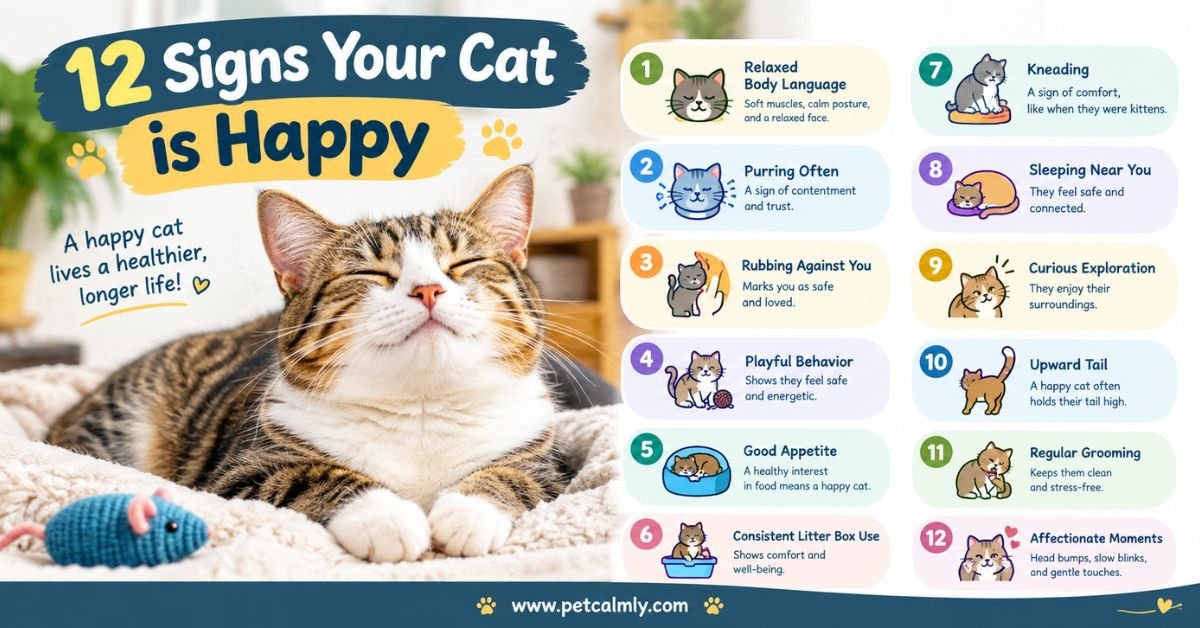
12 signs your cat is happy are: a relaxed body, an upright tail, slow blinking, soft purring, kneading, head-butting, forward ears with loose whiskers, a healthy appetite, playfulness, following you around, sleeping in the open, and tidy daily routines. No single sign proves happiness. Look for several together, and compare them with your own cat’s normal behavior.
Why Reading Your Cat’s Mood Is Harder Than It Sounds
Dogs wear their feelings on the outside. Cats don’t. A cat can be perfectly content and look completely unbothered. A cat can also be quietly stressed and look the same.
That is why so many owners ask whether their cat actually likes them, or whether it is simply putting up with them. It’s a fair worry. Cats evolved as solitary hunters, and they tend to hide discomfort. Their signals are subtle, and they are easy to miss if you don’t know where to look.
The good news is that happy cats are surprisingly readable once you learn their language. This guide walks through the 12 signs your cat is happy, explains why each behavior happens, and shows how to tell it apart from lookalike signals. You will also find a section on stress, a practical checklist, and clear guidance on when to call your vet.
One note before we start. Every cat is different. A shy rescue cat may show happiness very quietly, while a confident, chatty cat may announce it to the whole house. Use this list as a guide, not a test your cat has to pass.
What Does a Happy Cat Look Like?
A happy cat looks relaxed, curious, and comfortable in its own space. Its body is loose rather than tight. Its eyes are soft. It eats, plays, grooms, and sleeps in a steady pattern.
Think of it as a feeling of safety. Cats are small predators, but they are also prey for larger animals. A cat that feels truly safe will lower its guard, and the signs below are all different ways of showing that.
Veterinary behavior organizations describe this as meeting a cat’s core needs. A cat needs a safe place, reliable access to food and water, a clean litter area, chances to play and hunt, positive social contact, and room to scratch and climb. When those needs are met, the signs your cat is happy tend to appear on their own.
12 Signs Your Cat Is Happy: The Quick List
Here is the short version, in the order we will cover them:
- Relaxed body posture
- Tail held high
- Slow blinking
- Soft, steady purring
- Kneading
- Head-butting and cheek rubbing
- Forward ears and loose whiskers
- Healthy appetite and regular grooming
- Playfulness
- Following you and greeting you
- Sleeping in the open
- Normal litter box and scratching habits
Now let’s look at what each one means in real life.
The 12 Signs Your Cat Is Happy, Explained
1. A Relaxed, Loose Body
A content cat looks soft. Its shoulders are loose, its legs are tucked or stretched out, and its muscles are not tense. You may see the classic “loaf” position, with paws tucked under the body, or a long, lazy stretch on the floor.
Some cats also roll onto their backs and show their bellies. This is a sign of deep trust. However, it is not always an invitation to pet. Many cats love showing the belly but dislike having it touched. If you reach in and get a grab or a kick, your cat is not being rude. It is simply telling you that “I trust you” and “please rub my belly” are two different messages.
2. Tail Held High
A tail that sticks straight up, sometimes with a gentle curl at the tip, is a friendly greeting. Behaviorists often compare it to a question mark. Kittens do this when they approach their mothers, and adult cats keep the habit for people and other cats they like.
Context matters, though. A tail that is held high and bristled like a bottle brush is a sign of fear or arousal. A tail that thrashes back and forth is usually irritation. A calm, upright tail with a soft body is what you want to see.
3. Slow Blinking
If your cat looks at you and slowly closes its eyes, take it as a compliment. Many cat experts call this a “cat kiss.” A direct, wide-eyed stare can feel like a challenge in cat language. A slow blink does the opposite. It says, “I feel safe enough to close my eyes around you.”
One study published in Scientific Reports in 2020 found that cats were more likely to approach people who slow-blinked at them first. You can try it yourself. Look softly at your cat, close your eyes slowly, and open them again. Many cats blink back.
4. Soft, Steady Purring
Purring is the sound most people connect with a happy cat. It often appears when a cat is being petted, resting on a lap, or settling down for sleep.
Still, purring is not a guaranteed sign of happiness. Cats sometimes purr when they are in pain, frightened, or unwell, probably as a way to comfort themselves. So look at the whole picture. A purr paired with soft eyes, a loose body, and relaxed ears usually means contentment. A purr paired with hiding, a tense body, or a hunched posture deserves a closer look.
5. Kneading
Kneading means pushing the paws in and out against a soft surface, like a blanket, a pillow, or your stomach. People often call it “making biscuits.”
The habit starts in kittenhood. Nursing kittens knead their mother to help milk flow. Adult cats carry the behavior into later life as a comfort response. If your cat kneads you, it usually means the cat feels warm, safe, and attached to you. If the claws bother you, put a thick blanket on your lap rather than pushing the cat away.
6. Head-Butting and Cheek Rubbing
When your cat bumps its head into your hand or rubs its cheeks along your leg, it is doing more than asking for attention. Cats have scent glands on their cheeks, chin, and forehead. Rubbing spreads their scent onto people and objects.
In simple terms, your cat is marking you as part of its safe group. A cat that “bunts” you regularly sees you as family. It is one of the warmest signs your cat is happy and bonded to you.
7. Forward Ears and Loose Whiskers
Ears and whiskers tell you a lot. Ears that point forward or sit in a neutral, upright position suggest a cat that is relaxed and interested. Whiskers that rest to the sides in a natural position suggest the same.
Watch for the opposite signals. Ears flattened against the head, or turned sideways like “airplane wings,” suggest fear or irritation. Whiskers pulled tightly back against the face often show stress. A cat with soft ears, soft whiskers, and a soft gaze is generally a cat at ease.
8. Healthy Appetite and Regular Grooming
A steady appetite is one of the simplest health and happiness indicators. Cats that feel safe usually eat at predictable times and show normal interest in their food.
Grooming works the same way. A calm cat grooms itself in a relaxed, regular pattern. A sudden drop in grooming can signal illness, pain, or stress. So can over-grooming, such as licking until the fur thins or skin looks irritated. If either change lasts more than a day or two, it is worth a call to your vet.
9. Playfulness
Play is a luxury for a cat. A stressed or unwell cat rarely wants to chase a toy. A happy cat, on the other hand, often stalks, pounces, and bats at things with obvious enjoyment.
Play also lets your cat practice natural hunting behavior. Short sessions with a wand toy, a few times a day, are a great way to keep your cat mentally and physically satisfied. Older cats may play less, but they usually still show some interest in movement or a favorite toy.
10. Following You and Greeting You
Does your cat meet you at the door, trail you from room to room, or chirp and trill when you walk in? That is a social cat saying hello.
Trilling is a short, rising, bird-like sound that mother cats use to call their kittens. When your cat directs it at you, it is a friendly greeting. Following you into the kitchen or bathroom is not always about food. Many cats simply enjoy being near their person. Of course, cats vary. Some are naturally independent, and sitting in the same room counts as affection for them.
11. Sleeping in the Open
Cats are most vulnerable when they sleep. A cat that naps in the middle of the living room, on your bed, or curled against you is showing real trust.
Compare this with a cat that only sleeps in hidden spots, such as under the bed or behind furniture. Some cats simply like cozy hideouts, and that is perfectly fine. However, if a previously social cat suddenly starts hiding all day, that change is worth noticing.
12. Normal Litter Box and Scratching Habits
This one is easy to overlook. A happy cat uses its litter box consistently and scratches appropriate surfaces, like a scratching post, rather than your sofa.
Scratching is normal and healthy. It stretches the muscles, removes old claw sheaths, and leaves both a visual and scent mark. A cat that scratches in its own space is expressing natural behavior, and it is a sign of a confident cat.
Litter box problems often mean something is wrong. Stress, a dirty box, a medical issue, or a change at home can all cause a cat to go elsewhere. Do not treat this as bad behavior. It is usually communication.
Signs Your Cat Is Happy vs. Stressed: A Quick Comparison
Sometimes the easiest way to understand a happy cat is to compare it with a stressed one. Use this table as a quick reference.
| Body part or behavior | Happy cat | Stressed or uneasy cat |
|---|---|---|
| Body | Loose, stretched, or loafed | Crouched, tense, or tightly tucked |
| Tail | Upright or gently swaying | Tucked, puffed, or thrashing |
| Eyes | Soft, slow blinking | Wide, dilated, or fixed stare |
| Ears | Forward or neutral | Flat or rotated sideways |
| Voice | Trills, chirps, soft purr | Growling, hissing, yowling |
| Appetite | Regular and interested | Reduced or absent |
| Grooming | Calm and routine | Neglected or excessive |
| Hiding | Occasional, by choice | Frequent or new |
If most of what you see falls in the middle column, your cat is probably doing well. If several items fall in the right column, look at what may have changed.
Why Does My Cat Show Happy Behaviors Only Sometimes?
Most owners notice that their cat’s mood changes through the day. That is normal. Cats are crepuscular, which means they are naturally more active around dawn and dusk. Your cat may play like a lunatic at 5 a.m. and sleep through the afternoon.
A few other things affect how a cat behaves:
- Age. Kittens play constantly, while senior cats rest more.
- Personality. Some cats are social butterflies and others are quiet observers.
- Early experiences. Cats that were handled gently as kittens often show affection more openly.
- Environment. A noisy or unpredictable home can mute even a confident cat.
So do not compare your cat with a cat on social media. Compare your cat with itself. The question is not “Is my cat as affectionate as others?” The question is “Is my cat behaving like its normal, relaxed self?”
What Makes a Cat Happy? Everyday Things That Help
If you want to see more of the signs your cat is happy, focus on the basics. Small, consistent changes usually work better than big gestures.
Give Your Cat a Safe, Predictable Home
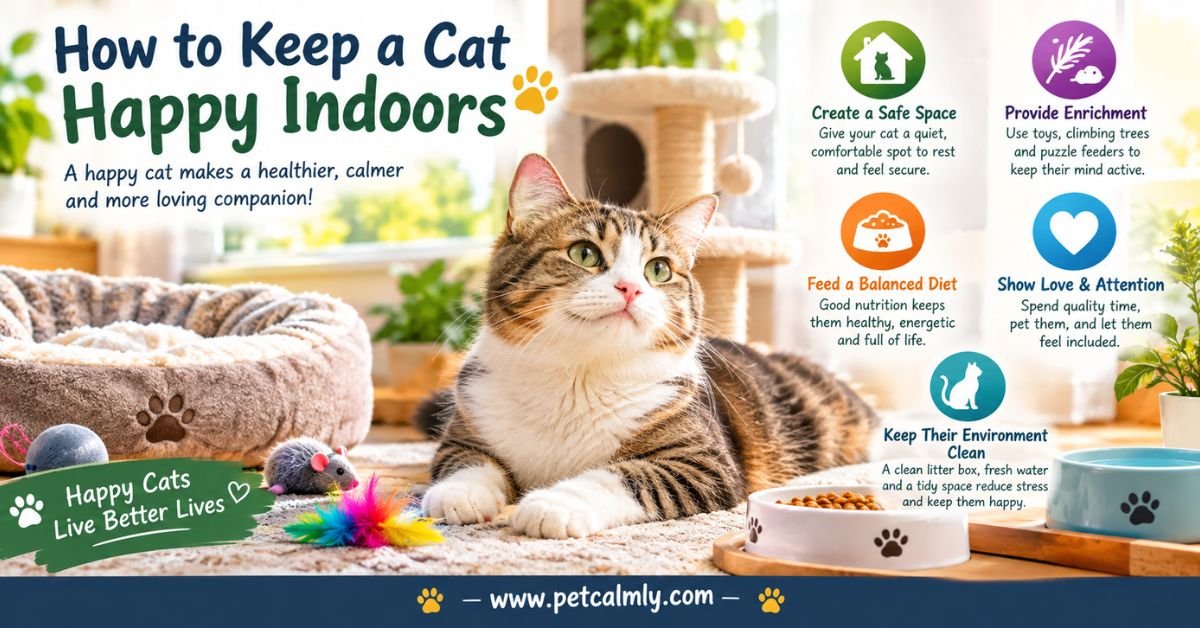
Cats like routine. Feed meals at about the same time each day, and keep the litter box in a quiet, easy-to-reach place. Provide at least one spot where your cat can retreat and feel completely secure, like a covered bed or a shelf.
A common household guideline is one litter box per cat, plus one extra. If you have two cats, aim for three boxes. This reduces conflict and helps prevent accidents.
Add Vertical Space and Scratching Options
Cats love height. A cat tree, a sturdy shelf, or a window perch lets your cat observe the room from above, which makes many cats feel safer. Offer scratching posts that are tall and stable enough for a full stretch. Place them near sleeping areas and near the spots your cat already likes to scratch.
Play Every Day
Aim for a few short play sessions daily. Use a wand toy or a small toy on a string so your cat can stalk, chase, and catch. End the session by letting your cat “catch” the toy, then offer a small meal or treat. This mimics the natural hunt, catch, eat cycle and leaves many cats deeply satisfied.
Respect Your Cat’s Boundaries
Let your cat approach you when possible. Pet where your cat likes it, which is often the cheeks, chin, and the base of the ears. Stop when you see warning signs like a twitching tail, flattened ears, or a skin ripple along the back. Cats that feel in control of contact usually become more affectionate over time.
Keep Your Cat’s Mind Busy
Indoor cats can get bored. Puzzle feeders, window views, rotating toys, and safe cat-friendly plants can all add interest. Even simple changes help, like putting a cardboard box on the floor. A bored cat may act out, while an engaged cat often looks relaxed and content.
Common Mistakes That Can Hide or Reduce a Cat’s Happiness
Owners usually mean well. Even so, a few habits can quietly stress a cat.
- Punishing a cat for scratching or litter box accidents. Punishment creates fear and rarely fixes the cause.
- Forcing cuddles. A cat that is held when it wants to leave may learn to avoid you.
- Making sudden changes. Moving furniture, changing food quickly, or adding a new pet without a slow introduction can unsettle a cat.
- Ignoring subtle signs. Many cats show stress through small changes, such as eating a little less or hiding a little more.
- Assuming purring always means happy. As noted earlier, purring can also be a self-soothing behavior.
- Skipping vet checkups. Cats hide illness well, so regular exams matter.
If you recognize one of these in your own home, do not feel guilty. Most of them are easy to adjust once you notice them.
When Should You Worry About Your Cat’s Behavior?
Most variations in mood are harmless. However, some changes deserve attention. A cat’s body language can shift because of pain or illness, not just emotion.
Contact your veterinarian promptly if you notice any of the following:
- Your cat stops eating for more than a day
- Repeated vomiting or diarrhea
- Straining to urinate, frequent trips to the litter box with little output, or crying while urinating
- Sudden hiding, especially if your cat is normally social
- Labored or open-mouth breathing
- Noticeable weight loss or gain
- A sudden change in grooming, either too much or too little
- Limping, difficulty jumping, or reluctance to be touched
- Increased aggression that is out of character
Some situations are emergencies. A male cat that is straining to urinate and producing little or no urine needs urgent veterinary care, because a urinary blockage can become life-threatening quickly. Open-mouth breathing in a cat also needs immediate attention. If you are unsure, call your vet or an emergency clinic. It is always better to ask than to wait.
This article offers general guidance and does not replace a veterinary exam. Only a vet can diagnose a medical problem.
What Should Pet Owners Do to Keep Their Cat Happy?
Here is a practical routine you can start today.
A Simple Daily Checklist
- Offer fresh water and measured meals at regular times
- Scoop the litter box at least once a day
- Schedule two or three short play sessions
- Spend a few minutes of calm, no-pressure time together
- Check your cat’s body language and appetite
- Make sure your cat has a safe hiding place and a high perch
A Simple Weekly Checklist
- Rotate a few toys to keep things interesting
- Brush your cat, especially if it has long fur
- Clean the litter box fully and wash it with mild, unscented soap
- Look over your cat’s eyes, ears, and coat for changes
- Trim claws if needed and your cat tolerates it
Build a Baseline
Take a week to simply observe. Note when your cat eats, plays, sleeps, and greets you. Once you know what normal looks like, small changes become much easier to spot. This is one of the most valuable habits a cat owner can build.
Schedule Regular Vet Visits
Cats are masters at hiding discomfort. An annual checkup, or more often for kittens and seniors, helps catch problems early. If you notice several of the signs your cat is happy fading at once, book an appointment rather than waiting.
Conclusion
Learning the 12 signs your cat is happy is really about learning to listen. A slow blink, an upright tail, a gentle head bump, or a quiet nap beside you are small gestures. Together, they tell you that your cat feels safe and loved.
Watch the full picture rather than any single behavior. Keep a steady routine, respect your cat’s boundaries, and stay alert to changes. When something seems off, trust your instincts and talk to your vet.
Most of all, remember that your cat does not need to be a cuddly lap cat to be happy. It just needs to feel safe, understood, and free to be itself. If you can offer that, you are already doing something right.
More Information About Pets, Please Visit Our Website: Why Does My Cat Sleep on Me?
Why Does My Cat Knock Things Over at Night
Why Is My Cat Sleeping Under Blankets?
How Often Should Cats Eat Wet Food?
How to Give a Cat a Bath for the First Time
Why Does My Cat Follow Me Everywhere?
How to Keep a Cat Happy Indoors
Frequently Asked Questions
1: How can I tell if my cat is happy with me?
Look for relaxed body language, slow blinks, head-butting, kneading, and sleeping near you. A cat that greets you, follows you, or shows its belly is also showing trust. No single sign is proof, so look for several together over time.
2: Does purring always mean my cat is happy?
No. Purring often signals contentment, but cats can also purr when they are stressed, hurt, or unwell. Check the rest of your cat’s body language. A relaxed body and soft eyes alongside a purr usually mean happiness. Hiding or a tense posture alongside a purr suggests a closer look is needed.
3: Why does my cat slow blink at me?
A slow blink is a sign of comfort and trust. Cats usually avoid closing their eyes around anything that could be a threat. When your cat does it with you, it is a friendly signal. You can slow blink back to show that you feel the same way.
4: Is it normal for a happy cat to be independent?
Yes. Some cats are naturally more independent and show affection in quiet ways, like sitting in the same room or sleeping nearby. Independence is not the same as unhappiness. What matters is that your cat eats well, plays, grooms, and acts like its usual self.
5: How do I know if my cat is unhappy or sick?
Warning signs include hiding, reduced appetite, changes in grooming, litter box accidents, flattened ears, hissing, and a sudden loss of interest in play. Because illness and stress can look alike, it is best to call your vet if the changes last more than a day or two.
6: Can I make my cat happier?
Yes, in most cases. Offer a predictable routine, daily play, safe hiding spots, vertical space, and plenty of scratching options. Respect your cat’s limits during petting and let your cat set the pace. Regular vet checkups also help you catch hidden health problems early.