Short direct answer
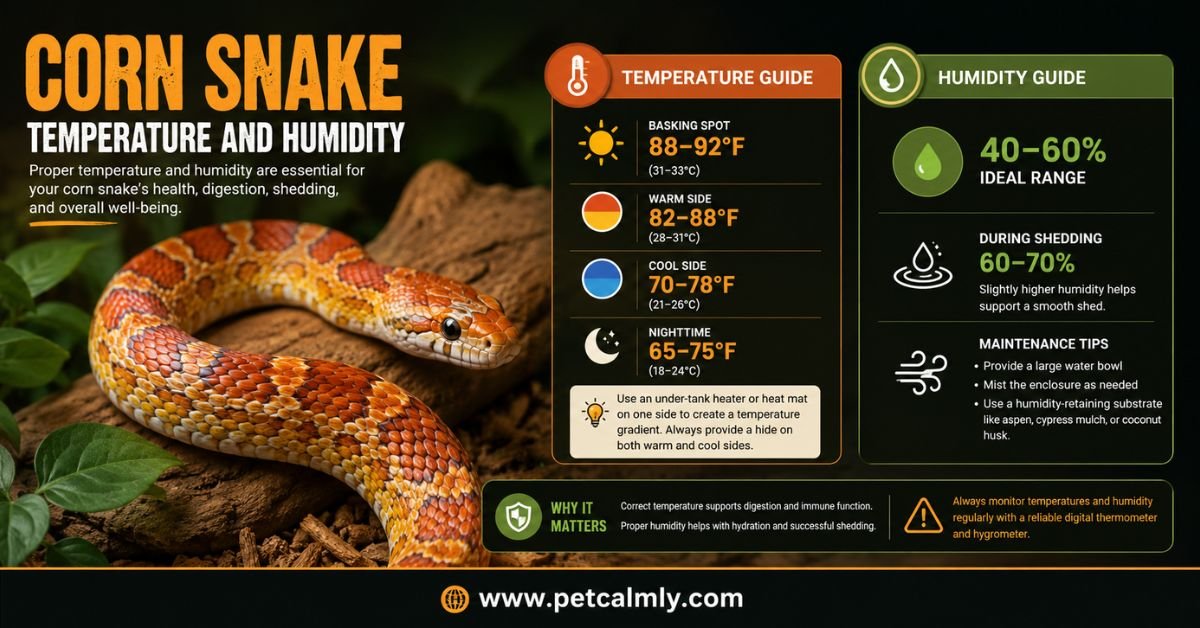
Corn snakes need a carefully controlled environment to stay healthy and active. The ideal temperature range is 75–82°F (24–28°C) on the cool side and 85–90°F (29–32°C) on the warm side, with a basking spot around 88–92°F (31–33°C). At night, a slight drop to 70–75°F (21–24°C) is safe. Humidity should generally stay around 40–50%, with brief increases up to 60% during shedding.
If temperature or humidity is consistently off, corn snakes may refuse food, become stressed, or have shedding problems. The key is stability, not extremes small, steady adjustments matter more than big fluctuations.
Why Temperature and Humidity Matter So Much for Corn Snakes
If you’ve recently brought home a corn snake or you’re trying to fix feeding or shedding issues, temperature and humidity are usually the first things to check. These snakes don’t show stress the way mammals do. Instead, they quietly stop eating, hide more, or develop skin problems.
Corn snakes (Pantherophis guttatus) are native to the southeastern United States, where the climate is warm but not extreme, with seasonal humidity changes. In captivity, replicating that balance is what keeps them healthy.
Many owners assume a slightly “warm room” is enough, but corn snakes rely completely on external heat to digest food and regulate their metabolism. Even a few degrees off can affect their behavior.
In this guide, we’ll break everything down in a practical way no confusing jargon, just real-world reptile care that actually works.
Understanding the Natural Climate of Corn Snakes
To care for a corn snake properly, it helps to understand where it comes from.
In the wild, corn snakes live in:
- Forest edges
- Grasslands
- Farmlands
- Old barns and warm hiding spots
This environment is warm, moderately humid, and highly variable between day and night.
That’s important because many beginners think reptiles need constant heat. In reality, corn snakes benefit from a temperature gradient, meaning they move between warm and cool areas depending on their needs.
This movement helps them:
- Digest food properly
- Regulate energy levels
- Shed skin efficiently
- Avoid stress
Without this gradient, even a well-fed snake can become unhealthy over time.
Ideal Corn Snake Temperature Range (Simple Breakdown)
Let’s make this extremely clear and practical.
Warm Side (Hot Zone)
- 85–90°F (29–32°C)
- Used for digestion and activity
- Should include basking area
Cool Side
- 75–82°F (24–28°C)
- Used for rest and cooling down
Basking Spot (Direct Heat Area)
- 88–92°F (31–33°C)
- Should be the warmest point in the enclosure
Night Temperature Drop
- 70–75°F (21–24°C)
- Natural and healthy if gradual
Why the Temperature Gradient Matters
A corn snake doesn’t just sit in one spot all day. It actively chooses where to go based on its needs:
- After eating → warm side for digestion
- After activity → cool side to rest
- During shedding → slightly higher humidity + warmth
- When stressed → often hides in cool areas
If the entire enclosure is the same temperature, the snake loses control over its body regulation. That’s when problems begin.
Ideal Humidity for Corn Snakes
Humidity is often misunderstood in corn snake care. They are not tropical snakes, but they also don’t do well in extremely dry air.
Recommended Humidity Range:
- Normal range: 40–50%
- Shedding period: 55–60%
- Avoid: consistently above 65%
Why Humidity Fluctuations Matter
Humidity affects:
- Shedding quality
- Skin health
- Hydration levels
- Respiratory health
Too low → stuck shed, dry skin, incomplete shedding
Too high → risk of respiratory infections and mold issues in enclosure
A stable, moderate level is far more important than chasing exact numbers daily.
How Temperature and Humidity Affect Behavior
A corn snake doesn’t complainit changes behavior. Here’s what you might notice when something is off.
If Temperature is Too Low:
- Refuses food
- Becomes inactive
- Stays hidden constantly
- Digestive issues (food regurgitation risk)
If Temperature is Too High:
- Constantly tries to escape heat
- Hides on cool side only
- Breathing may look faster than normal
If Humidity is Too Low:
- Dry, patchy shed
- Skin stuck on tail or eyes
- Reduced drinking behavior
If Humidity is Too High:
- Wheezing or respiratory signs
- Condensation in tank
- Unpleasant odor in substrate
These signs are your snake’s way of communicating without sound.
5 Common Owner Mistakes (And Why They Cause Problems)
Even experienced reptile owners make mistakes with corn snake environments. Here are the most common ones:
1. No Temperature Gradient
A single heat source for the whole tank removes choice, which leads to stress.
2. Guessing Instead of Measuring
Many people rely on “room feels warm,” but reptiles need accurate digital thermometers.
3. Incorrect Heat Sources
Heat rocks or uneven heating pads can create burns or cold zones.
4. Ignoring Night Temperature Drop
Constant heat 24/7 can actually stress corn snakes over time.
5. Over-Misting the Tank
Humidity spikes can cause more harm than benefit if not controlled.
Setting Up the Perfect Enclosure (Step-by-Step)
Creating a stable environment is easier than it sounds when done correctly.
Step 1: Choose the Right Tank
- Minimum 20-gallon for juveniles
- 40-gallon+ for adults
Step 2: Install Thermometers (Not Optional)
Use:
- One probe on warm side
- One probe on cool side
Step 3: Add Heat Source Properly
Best options:
- Under-tank heat mat (regulated with thermostat)
- Ceramic heat emitter (for ambient warmth)
Avoid:
- Heat rocks
- Unregulated heating devices
Step 4: Create Temperature Gradient
Place heat source on one side only.
Step 5: Maintain Humidity Zone
- Add moisture-retaining substrate (aspen or coconut husk blend)
- Provide a humid hide during shedding
Simple Daily Care Checklist
A quick routine keeps your snake stable and stress-free:
- Check warm and cool side temperatures
- Monitor humidity level
- Ensure water bowl is clean and full
- Look for shedding signs
- Observe behavior (activity vs hiding balance)
This takes only a few minutes but prevents long-term issues.
Seasonal Changes: Do You Need to Adjust Anything?
Yes, but only slightly.
Summer:
- Room temperatures may naturally rise
- Reduce artificial heating if needed
Winter:
- Rooms become dry and cooler
- You may need more consistent heating
- Humidity may drop, requiring light misting or a humid hide
The key is gradual adjustment, not sudden changes.
Feeding and Temperature Connection (Very Important)
One of the most overlooked facts about corn snake care is how strongly feeding depends on temperature.
If the enclosure is too cool:
- Digestion slows down
- Food may sit undigested
- Regurgitation risk increases
Best practice:
- Maintain warm side temperature for at least 24–48 hours after feeding
Think of heat as the “digestive engine” for your snake.
Shedding Problems and Environmental Fixes
Shedding is one of the clearest indicators of humidity balance.
Signs of a Healthy Shed:
- Skin comes off in one complete piece
- Eyes clear before shedding
- Active behavior resumes afterward
Signs of Poor Shedding:
- Skin stuck on tail or eyes
- Patchy shedding
- Frequent rubbing attempts
Fixes:
- Increase humidity to 55–60% temporarily
- Provide a damp hide box
- Avoid excessive misting of entire enclosure
When Should You Worry?
Most temperature or humidity issues are fixable at home, but some signs require attention.
Seek veterinary advice if:
- Snake refuses food for multiple weeks
- Wheezing or open-mouth breathing appears
- Severe incomplete shedding persists
- Lethargy continues despite correct setup
Respiratory issues in reptiles can escalate quickly if ignored.
What Should Corn Snake Owners Actually Do?
Here’s a simple action plan that works for beginners:
Daily:
- Check temperature gradient
- Ensure water is fresh
- Observe behavior briefly
Weekly:
- Clean enclosure spots
- Check humidity stability
- Inspect skin condition
Monthly:
- Deep clean enclosure
- Reassess heating accuracy
- Adjust setup if needed
Consistency matters more than perfection.
Common Myths About Corn Snake Temperature and Humidity
Myth 1: “They only need room temperature”
Not true. Room temperature is rarely stable or warm enough for digestion.
Myth 2: “Higher humidity is always better”
Excess humidity can cause respiratory issues.
Myth 3: “Snakes don’t feel stress from environment”
They absolutely do it just shows differently.
Simple Temperature & Humidity Reference Table
| Area | Ideal Range |
|---|---|
| Warm Side | 85–90°F |
| Cool Side | 75–82°F |
| Basking Spot | 88–92°F |
| Night Temp | 70–75°F |
| Humidity (Normal) | 40–50% |
| Humidity (Shedding) | 55–60% |
Conclusion
Getting corn snake temperature and humidity right isn’t about perfection it’s about consistency and balance. Once the enclosure is properly set up with a clear temperature gradient and stable humidity, most common problems like feeding refusal and shedding issues become far less frequent.
Think of your setup as a controlled environment, not a guesswork system. When your snake can choose between warm and cool areas and has access to moderate humidity, it naturally regulates itself.
A well-set habitat leads to a calm, active, and healthy snake that thrives quietly in your care.
More Information About Pets, Please Visit Our Website: Best Bedding for Corn Snakes
Corn Snake Handling Tips for Beginners
Frequently Asked Questions
1. What is the best temperature for a corn snake enclosure?
The warm side should be 85–90°F with a cooler side around 75–82°F. This gradient allows natural movement and proper digestion.
2. Do corn snakes need heat at night?
Yes, but it can be slightly lower. A safe night range is 70–75°F as long as it doesn’t drop suddenly.
3. What humidity level is too high for corn snakes?
Anything consistently above 65% can increase the risk of respiratory infections and enclosure mold issues.
4. How do I increase humidity safely?
Use a moisture-retaining substrate, add a humid hide, or lightly mist during shedding periods only.
5. Why is my corn snake not eating?
Incorrect temperature is one of the most common reasons. If the enclosure is too cool, digestion slows and feeding stops.
6. Can incorrect humidity cause shedding problems?
Yes. Low humidity often leads to stuck shed, especially around eyes and tail. A temporary humidity boost helps during shedding cycles.