Short Direct Answer
Yes, you can clean a puppy without giving them a full bath. In fact, many veterinarians and experienced dog owners recommend avoiding frequent baths for very young puppies unless they are genuinely dirty. You can safely freshen your puppy using pet-safe wipes, a damp washcloth, gentle brushing, spot cleaning, and dry shampoo products designed specifically for dogs.
The goal is to remove dirt, odors, and minor messes while protecting your puppy’s sensitive skin and natural coat oils. For most puppies, these gentle cleaning methods are enough between occasional baths.
Introduction
Bringing home a puppy is exciting, but it doesn’t take long before they discover mud puddles, spilled food, dusty corners, and mysterious things they’d rather roll in than avoid.
Many new puppy owners wonder whether they should bathe their puppy every time they get dirty. The answer is usually no.
Young puppies have delicate skin, developing immune systems, and coats that don’t always respond well to frequent washing. Over-bathing can strip natural oils, cause dryness, and sometimes make skin irritation worse.
The good news is that there are several safe and effective ways to clean a puppy without putting them through a full bath.
Whether your puppy has muddy paws, a dirty face, a slightly smelly coat, or just needs a quick refresh, this guide covers everything you need to know including what works, what to avoid, and when a bath or veterinary visit may actually be necessary.
Why You Might Want to Avoid Frequent Baths
A full bath isn’t always the best solution for every mess.
Puppies often need cleaning, but not necessarily bathing.
Common reasons owners prefer alternative cleaning methods include:
- The puppy is too young
- Cold weather conditions
- Fear of water
- Sensitive skin
- Minor dirt or odors
- Recent vaccinations
- Recovery after illness
- Limited time for drying
Most importantly, frequent bathing can remove the protective oils that help keep your puppy’s skin healthy.
A quick cleanup is often all that’s needed.
At What Age Can Puppies Have Regular Baths?
Most veterinarians suggest waiting until puppies are at least 8 weeks old before routine bathing, unless absolutely necessary.
Even after that age, frequent bathing is usually unnecessary.
A healthy puppy may only need:
| Puppy Age | Bath Frequency |
|---|---|
| Under 8 weeks | Only if necessary |
| 8–16 weeks | Every few weeks if dirty |
| 4–6 months | As needed |
| Adult dogs | Typically every 1–3 months depending on breed and lifestyle |
Every puppy is different. Long-haired breeds, outdoor adventurers, and puppies with skin conditions may have different grooming needs.
The Safest Ways to Clean a Puppy Without Bathing
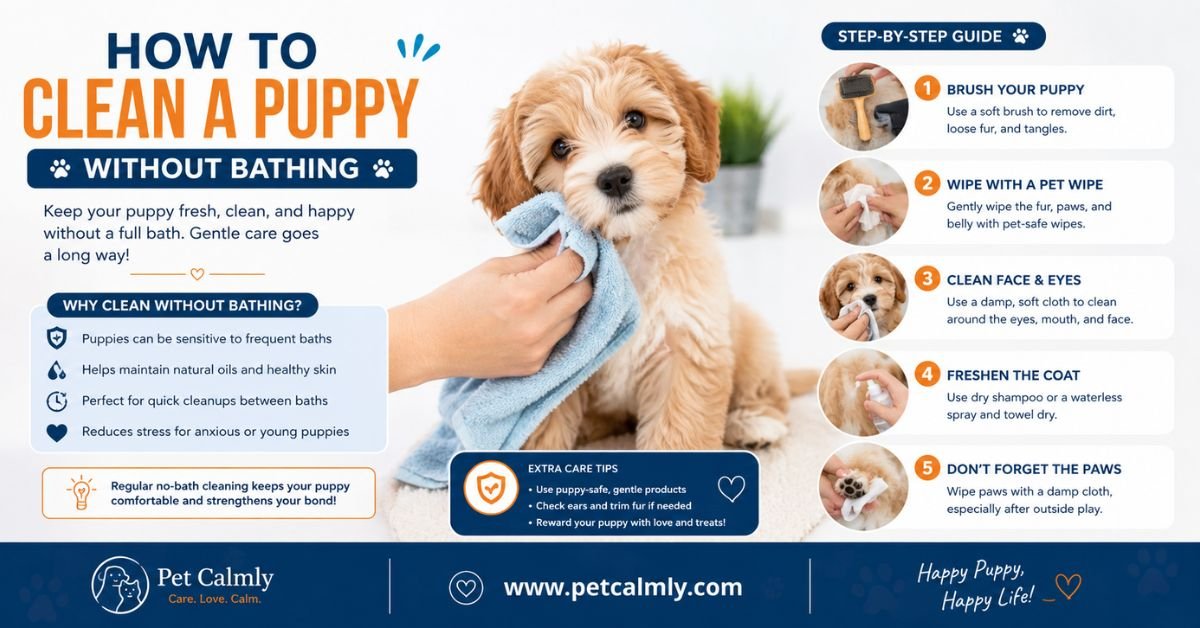
1. Use Puppy-Safe Pet Wipes
For most situations, pet wipes are the easiest solution.
They help remove:
- Dirt
- Dust
- Drool
- Food residue
- Mild odors
- Mud splashes
Focus on:
- Paws
- Belly
- Face
- Rear end
- Skin folds
Avoid using human baby wipes unless your veterinarian specifically approves them. Many contain ingredients that can irritate canine skin.
Quick Tip
Always wipe in the direction of hair growth to avoid tangles and discomfort.
2. Spot Clean With a Damp Washcloth
A soft cloth dampened with warm water can handle many puppy messes.
This method works especially well for:
- Food stains
- Milk residue
- Small muddy patches
- Tear stains around the eyes
- Dirty paws
Simply:
- Wet a clean cloth with warm water.
- Wring out excess moisture.
- Gently wipe the dirty area.
- Dry with a towel afterward.
This method is inexpensive, gentle, and effective.
3. Brush the Coat Thoroughly
Many puppy owners underestimate how much dirt brushing can remove.
Brushing helps:
- Remove loose fur
- Lift dirt particles
- Spread natural oils
- Reduce odors
- Prevent tangles
For puppies, choose a brush appropriate for their coat type.
Examples
| Coat Type | Recommended Brush |
| Short coat | Soft bristle brush |
| Medium coat | Pin brush |
| Long coat | Slicker brush used gently |
| Curly coat | Puppy grooming comb |
Regular brushing can dramatically reduce how often your puppy needs cleaning.
4. Clean Dirty Paws Separately
Paws are usually the dirtiest part of a puppy.
Instead of bathing the entire dog, clean only the feet.
You can use:
- Warm water
- Paw wipes
- Soft towel
- Paw-cleaning cups designed for dogs
Pay special attention between the paw pads where mud and debris often become trapped.
This simple habit can keep the rest of your home much cleaner too.
5. Try a Dog-Safe Dry Shampoo
Dry shampoo products formulated specifically for dogs can help freshen the coat.
These products typically:
- Absorb oils
- Reduce odors
- Freshen fur
- Require little or no rinsing
Follow label directions carefully.
Avoid products containing strong perfumes or ingredients not intended for puppies.
6. Cornstarch for Minor Odors and Oily Fur
Some groomers use small amounts of plain cornstarch to absorb excess oil.
Lightly sprinkle it on the coat, avoiding:
- Eyes
- Nose
- Mouth
Brush thoroughly afterward.
This can help temporarily freshen the coat between baths.
However, it should not replace proper grooming.
How to Clean a Puppy’s Face Without a Bath
The face requires extra care.
Areas That Commonly Get Dirty
- Around the mouth
- Under the eyes
- Chin area
- Wrinkles and folds
Safe Cleaning Steps
- Use a soft damp cloth.
- Wipe gently.
- Avoid getting water into eyes.
- Dry thoroughly.
- Reward your puppy afterward.
Many puppies resist facial cleaning at first, but gentle repetition helps them become comfortable.
How to Clean a Puppy After a Potty Accident
Accidents happen, especially during house training.
If your puppy gets urine or feces on their fur:
- Remove solid debris.
- Use warm water and a cloth.
- Wipe thoroughly.
- Use pet wipes if needed.
- Dry completely.
For larger messes, a bath may be the cleaner and safer option.
How to Remove Puppy Odor Without Bathing
Quick Answer
Most puppy odors come from dirt, saliva, bedding, outdoor debris, or trapped moisture—not necessarily from needing a bath.
Try addressing the source first.
Freshening Checklist
- Brush daily
- Wash bedding weekly
- Clean food bowls regularly
- Wipe paws after walks
- Dry fur after rain
- Clean ears when recommended
- Use puppy-safe wipes
Often the environment contributes more to odor than the puppy itself.
Common Reasons Puppies Smell Bad
Understanding the cause helps you choose the right solution.
Dirty Bedding
Puppies spend many hours sleeping.
Odors often transfer from:
- Blankets
- Crates
- Beds
- Towels
Regular washing helps.
Ear Issues
A strong smell from the ears may indicate:
- Wax buildup
- Moisture
- Infection
Healthy ears should not have a strong odor.
Skin Problems
Skin infections can create unpleasant smells.
Look for:
- Redness
- Flaking
- Hair loss
- Excessive scratching
Dental Issues
Bad breath isn’t always normal.
Persistent odor may require veterinary evaluation.
4 Common Mistakes Puppy Owners Make
1: Bathing Too Often
Many owners assume more bathing equals better hygiene.
In reality, excessive bathing can:
- Dry the skin
- Increase itching
- Damage coat quality
2: Using Human Products
Human shampoos are formulated for human skin pH.
Using them on puppies can lead to:
- Irritation
- Dryness
- Skin imbalance
Always choose dog-specific products.
3: Leaving Fur Damp
Moisture trapped in the coat may encourage:
- Skin irritation
- Odors
- Hot spots
Always dry your puppy thoroughly.
4: Ignoring Small Skin Changes
What looks like dirt may actually be:
- Skin irritation
- Allergies
- Parasites
- Infection
If something doesn’t wipe away or seems unusual, investigate further.
A Simple No-Bath Puppy Cleaning Routine
Here’s a practical routine many puppy owners find helpful.
Daily
- Check paws
- Wipe visible dirt
- Brush briefly
- Clean food residue around the mouth
Weekly
- Deep brush coat
- Wash bedding
- Inspect ears
- Check skin condition
Monthly
- Review grooming needs
- Trim nails if necessary
- Evaluate whether a bath is needed
Consistency often works better than frequent bathing.
Does Breed Matter?
Absolutely.
Different coat types collect dirt differently.
Breeds That Often Need More Grooming
- Shih Tzu
- Maltese
- Poodle
- Cocker Spaniel
Breeds That Often Need Less Grooming
- Beagle
- Boxer
- Labrador Retriever
Coat type generally matters more than breed alone.
What to Avoid When Cleaning a Puppy Without Bathing
Don’t Use
- Human shampoo
- Strong fragrances
- Alcohol-based wipes
- Essential oils
- Harsh cleaning sprays
- Household disinfectants
Puppies often lick themselves after grooming, so anything left on the coat should be safe if accidentally ingested in small amounts.
When Should You Worry?
Most dirt and mild odors are harmless.
However, certain signs deserve attention.
Contact a Veterinarian If Your Puppy Has:
- Persistent bad odor
- Red or inflamed skin
- Hair loss
- Open sores
- Excessive scratching
- Ear discharge
- Swelling
- Pain when touched
- Unexplained greasy coat
The main reason is that odor and dirt sometimes mask underlying medical issues.
Early treatment is always easier than waiting.
What Should Pet Owners Do?
If your puppy is only slightly dirty, skip the bath and focus on targeted cleaning.
A practical approach is:
- Wipe dirty areas.
- Brush the coat.
- Clean paws regularly.
- Wash bedding.
- Monitor skin health.
- Use puppy-safe grooming products.
- Bathe only when truly necessary.
This routine keeps puppies clean while protecting their developing skin and coat.
For additional grooming guidance, PetCalmly readers may also find value in related articles about puppy training routines, anxiety-free grooming sessions, calming techniques, and healthy coat care.
Frequently Asked Questions
1: Can I use baby wipes to clean my puppy?
It’s generally safer to use wipes made specifically for dogs. Some baby wipes contain ingredients that may irritate canine skin or cause problems if licked.
2: How often should I clean my puppy without bathing?
Light cleaning can be done whenever needed. Wiping paws, brushing, and spot cleaning are safe parts of a regular grooming routine.
3: What can I use instead of bathing my puppy?
Pet wipes, a damp washcloth, brushing, paw cleaning, and dog-safe dry shampoo are the most common alternatives.
4: Why does my puppy still smell after cleaning?
The odor may be coming from bedding, ears, skin problems, dental issues, or trapped moisture rather than surface dirt.
5: Is dry shampoo safe for puppies?
Many dog-specific dry shampoos are safe when used according to directions. Always check age recommendations and choose products formulated for puppies.
6: Can I clean a puppy every day?
Yes. Gentle methods such as brushing, paw wiping, and spot cleaning can be done daily without harming your puppy’s coat or skin.
More Information About Pets, Please Visit Our Website: Best Dog Shampoos for Sensitive Skin
Conclusion
Learning how to clean a puppy without bathing can make life easier for both you and your dog. Most everyday messes don’t require a full wash. A combination of brushing, spot cleaning, paw care, and puppy-safe wipes is often enough to keep your puppy comfortable, healthy, and fresh.
Perhaps the most reassuring thing for new owners is this: a little dirt is normal. Puppies explore the world with enthusiasm, and occasional messes are part of growing up. Focus on gentle cleaning, consistent grooming habits, and paying attention to your puppy’s skin and overall health.
When you combine those habits with patience and observation, you’ll keep your puppy clean without overdoing baths—and help them develop positive grooming experiences that last a lifetime.