Short Direct Answer
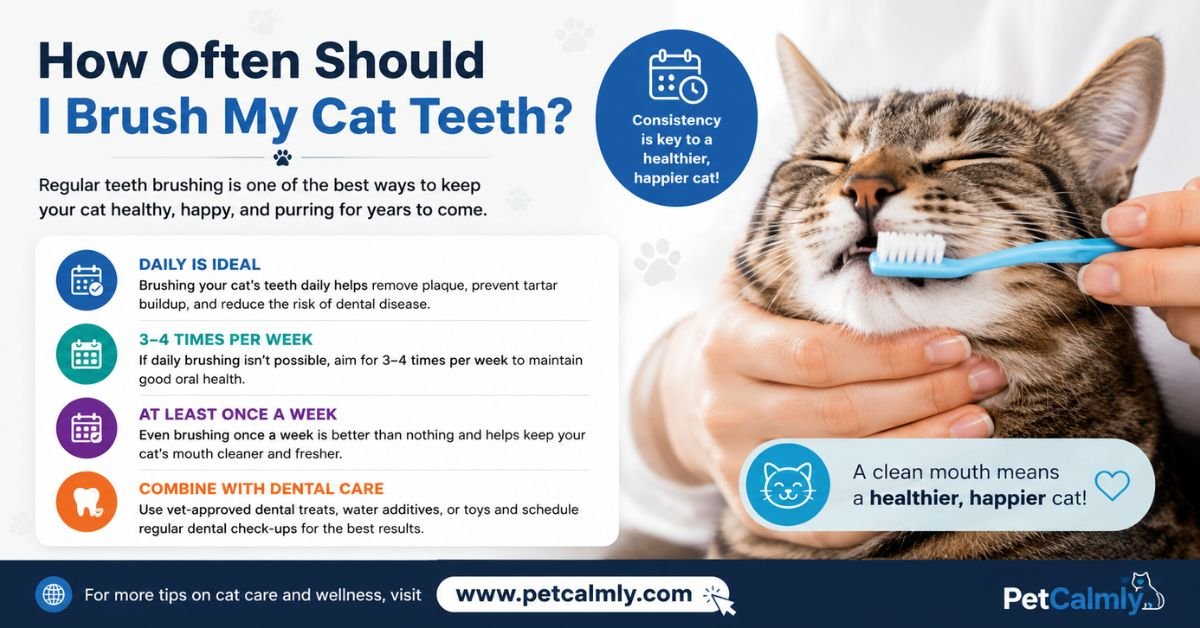
How often should you brush your cat’s teeth? Ideally, you should brush your cat’s teeth once every day. Daily brushing is considered the gold standard for preventing plaque buildup, tartar accumulation, gum disease, and bad breath.
If daily brushing isn’t realistic, aim for at least 3–4 times per week, which can still provide meaningful dental benefits. The sooner plaque is removed, the less likely it is to harden into tartar that requires professional veterinary cleaning.
The most important thing is consistency. Even a few successful brushing sessions each week are better than not brushing at all.
Introduction
Many cat owners are surprised to learn that dental disease is one of the most common health problems in cats. A cat may seem perfectly healthy eating, playing, and grooming normally while developing painful dental issues beneath the surface.
If you’ve been wondering how often you should brush your cat’s teeth, you’re already taking an important step toward protecting their long-term health.
Dental care can feel intimidating at first. Some cats resist having their mouths touched. Others seem impossible to train. Many owners worry they’ll hurt their pet or make the experience stressful.
The good news is that most cats can learn to tolerate tooth brushing when it’s introduced gradually and positively.
In this guide, you’ll learn:
- How often cats really need their teeth brushed
- Why dental care matters
- What happens if you don’t brush your cat’s teeth
- How to brush safely
- Common mistakes to avoid
- Helpful dental products
- Signs your cat may already have dental problems
- When it’s time to see a veterinarian
By the end, you’ll have a realistic plan that fits both your cat and your schedule.
Why Brushing Your Cat’s Teeth Matters
The main reason is plaque buildup
Just like humans, cats develop plaque on their teeth every day.
Plaque is a sticky film made of:
- Bacteria
- Food particles
- Saliva proteins
When plaque isn’t removed, it hardens into tartar.
Once tartar forms, brushing becomes much less effective because the hardened deposits usually require professional cleaning under veterinary supervision.
Over time, this can lead to:
- Gingivitis
- Gum inflammation
- Tooth loss
- Oral pain
- Bad breath
- Dental infections
- Difficulty eating
Many cats continue eating despite significant oral discomfort, which is why dental disease often goes unnoticed until it becomes advanced.
How Often Should Cats Have Their Teeth Brushed?
Daily brushing is best
Veterinary dental specialists generally recommend brushing your cat’s teeth every day.
Why daily?
Plaque begins forming quickly after eating. Removing it before it hardens dramatically reduces the risk of dental disease.
Benefits of daily brushing include:
- Less plaque accumulation
- Reduced tartar formation
- Fresher breath
- Healthier gums
- Lower risk of painful dental conditions
- Fewer professional cleanings over time
Think of brushing as preventive maintenance rather than treatment.
Is brushing 3 times a week enough?
Yes, if daily brushing isn’t possible.
Many owners successfully maintain their cat’s oral health by brushing:
- Three times weekly
- Four times weekly
- Every other day
While daily care remains ideal, consistent brushing several times per week is still significantly better than occasional brushing.
The biggest mistake isn’t brushing imperfectly.
The biggest mistake is giving up because you can’t do it every day.
Is once a week enough?
Usually not.
Brushing only once weekly often allows plaque to remain on the teeth long enough to harden into tartar.
While some dental benefit exists, once-a-week brushing generally won’t provide optimal protection against dental disease.
What Happens If You Never Brush Your Cat’s Teeth?
Many cats go years without dental care.
Unfortunately, this often leads to progressive oral disease.
Potential consequences include:
| Dental Issue | What Happens |
|---|---|
| Plaque buildup | Bacteria accumulate on teeth |
| Tartar formation | Hard mineral deposits develop |
| Gingivitis | Gums become red and inflamed |
| Periodontal disease | Structures supporting teeth become damaged |
| Tooth loss | Teeth loosen and fall out |
| Oral pain | Eating and grooming may become uncomfortable |
| Infection | Bacteria spread into deeper tissues |
Some cats hide dental pain remarkably well.
Owners are often shocked when a veterinarian discovers extensive disease during a routine examination.
Understanding Common Dental Problems in Cats
Gingivitis
Gingivitis is inflammation of the gums.
Signs include:
- Red gums
- Swollen gums
- Bleeding while eating
- Bad breath
When caught early, gingivitis can often be managed successfully with improved dental care.
Periodontal Disease
This is one of the most common dental diseases in cats.
It occurs when bacteria damage:
- Gums
- Ligaments
- Bone supporting the teeth
Without treatment, permanent damage may occur.
Tooth Resorption
Cats are uniquely prone to a painful condition called tooth resorption.
This occurs when parts of the tooth begin breaking down internally.
Symptoms may include:
- Chattering jaw
- Drooling
- Difficulty eating
- Mouth sensitivity
Brushing cannot prevent all cases of tooth resorption, but regular oral checks help owners identify problems earlier.
At What Age Should You Start Brushing Your Cat’s Teeth?
Earlier is easier
The best time to begin is during kittenhood.
Young cats generally adapt faster because oral handling becomes a normal part of life.
Many veterinarians recommend introducing brushing around:
- 8–12 weeks old
- After the kitten has settled into the home
Even if you adopt an adult cat, it’s never too late to start.
Older cats may simply require more patience and slower training.
How to Brush Your Cat’s Teeth Step by Step
Step 1: Let your cat get comfortable
For several days:
- Touch the cheeks gently
- Lift the lips briefly
- Reward calm behavior
Don’t rush.
The goal is acceptance, not brushing yet.
Step 2: Introduce cat toothpaste
Use toothpaste specifically formulated for cats.
Allow your cat to:
- Smell it
- Lick a small amount
- Associate it with rewards
Many feline toothpastes come in flavors such as:
- Poultry
- Seafood
- Malt
These often increase cooperation.
Step 3: Introduce the toothbrush
Options include:
- Cat toothbrushes
- Finger brushes
- Soft pediatric brushes approved by your veterinarian
Let your cat investigate the brush before using it.
Step 4: Start with a few teeth
Focus on:
- Outer surfaces
- Back teeth
These areas accumulate significant plaque.
You do not need to force the mouth open fully.
Step 5: Gradually increase brushing time
Successful sessions may initially last only:
- 10 seconds
- 20 seconds
- 30 seconds
Over time, work toward brushing most visible teeth.
The Best Time of Day to Brush Your Cat’s Teeth
There is no universally perfect time.
Choose a time when your cat is:
- Relaxed
- Calm
- Predictable
Many owners find success:
- Before bedtime
- After play sessions
- Following meals
Consistency often matters more than timing.
A Simple Weekly Dental Care Routine
Beginner-friendly schedule
Monday
Brush teeth.
Tuesday
Brush teeth.
Wednesday
Dental treat or oral-health chew.
Thursday
Brush teeth.
Friday
Brush teeth.
Saturday
Check gums and teeth.
Sunday
Brush teeth.
This routine creates good habits without overwhelming either you or your cat.
5 Common Mistakes Cat Owners Make
1: Using human toothpaste
This is one of the most common mistakes.
Human toothpaste may contain ingredients that are unsafe for cats to swallow.
Always use pet-specific toothpaste.
2: Starting too aggressively
Trying to brush every tooth during the first session often creates resistance.
Slow introductions build trust.
3: Holding the cat down
Physical restraint can create fear.
Instead:
- Keep sessions short
- Use rewards
- End positively
4: Waiting until problems appear
Dental disease is easier to prevent than treat.
Many cats already have significant disease before obvious symptoms develop.
5: Ignoring bad breath
Persistent bad breath is often a warning sign, not just a nuisance.
It may indicate:
- Gingivitis
- Infection
- Dental disease
Helpful Dental Products for Cats
Brushing remains the most effective home dental care method.
However, other products may support oral health.
Dental treats
Some treats are designed to:
- Reduce plaque
- Improve breath
- Encourage chewing
Look for products recommended by veterinary professionals.
Dental diets
Specialized dental foods may help reduce tartar accumulation through unique kibble texture and formulation.
They should complement—not replace—brushing.
Water additives
These products are added to drinking water.
Benefits may include:
- Fresher breath
- Reduced bacterial growth
Results vary among cats.
Dental gels
Dental gels may help reduce bacteria in the mouth.
Some cats tolerate gels better than brushing.
Cats That May Need Extra Dental Attention
Certain cats may face increased dental challenges.
These include:
Senior cats
Older cats are more likely to have:
- Existing tartar
- Gum disease
- Missing teeth
Regular oral monitoring becomes especially important.
Flat-faced breeds
Breeds such as:
- Persian Cat
- Exotic Shorthair
may have dental crowding that increases plaque retention.
Cats with previous dental disease
Once a cat develops dental problems, ongoing preventive care becomes even more valuable.
11 Signs Your Cat May Have Dental Problems
Watch for:
- Bad breath
- Drooling
- Pawing at the mouth
- Red gums
- Bleeding gums
- Yellow or brown tartar
- Difficulty chewing
- Reduced appetite
- Weight loss
- Facial swelling
- Preference for soft food
Some signs are subtle.
A cat may simply become quieter or less interested in grooming.
When Should You Worry?
Schedule a veterinary visit if you notice:
- Bleeding from the mouth
- Severe bad breath
- Loose teeth
- Missing teeth
- Swelling around the face
- Trouble eating
- Excessive drooling
- Sudden sensitivity around the mouth
These signs may indicate advanced dental disease requiring professional treatment.
Emergency situations
Seek prompt veterinary care if your cat:
- Cannot eat
- Has significant facial swelling
- Shows severe oral pain
- Experiences trauma to the mouth
- Has uncontrolled bleeding
These situations should not wait for routine appointments.
What Should Pet Owners Do?
If you’re unsure where to begin, keep things simple.
Start with these steps:
- Buy cat-safe toothpaste.
- Introduce mouth handling gradually.
- Reward calm behavior.
- Aim for daily brushing.
- Don’t worry about perfection.
- Schedule routine veterinary dental exams.
- Monitor for signs of oral disease.
Most importantly, build consistency.
A few successful minutes each week can make a meaningful difference over your cat’s lifetime.
Quick Do’s and Don’ts
Do
✔ Use cat-specific toothpaste
✔ Keep sessions short
✔ Reward cooperation
✔ Brush regularly
✔ Check your cat’s gums frequently
✔ Schedule veterinary dental examinations
Don’t
✘ Use human toothpaste
✘ Force your cat
✘ Ignore bad breath
✘ Wait for obvious symptoms
✘ Skip annual health checks
✘ Expect perfect cooperation immediately
Frequently Asked Questions
1: Can I brush my cat’s teeth every day?
Yes. Daily brushing is generally considered the best way to control plaque and maintain healthy gums. Most veterinarians recommend it whenever possible.
2: Is it too late to start brushing an older cat’s teeth?
No. Adult and senior cats can still benefit from tooth brushing. You may simply need a slower introduction and more patience.
3: What if my cat refuses tooth brushing?
Start gradually with lip touching, rewards, and flavored cat toothpaste. Some cats need weeks to become comfortable with the process.
4: Can dental treats replace brushing?
Not completely. Dental treats may help reduce plaque, but brushing remains the most effective home-care method for feline dental health.
5: How long should a tooth-brushing session take?
Most successful sessions last between 30 seconds and 2 minutes. Short, positive sessions are often more effective than long struggles.
6: Why does my cat have bad breath even after brushing?
Persistent bad breath can indicate underlying dental disease, infection, or other health issues. A veterinary examination is recommended if the odor continues.
More Information About Pets, Please Visit Our Website: What is the best cat litter for odor control
Conclusion
So, how often should you brush your cat’s teeth?
The ideal answer is every day. Daily brushing offers the best protection against plaque, tartar, gum disease, and oral discomfort. If daily care isn’t realistic, brushing several times a week is still a worthwhile goal and far better than doing nothing at all.
Dental disease is extremely common in cats, but it’s also one of the most preventable health issues when owners develop consistent habits early. Start slowly, keep sessions positive, and focus on progress rather than perfection.
Your cat may never love tooth brushing, but with patience and routine, most cats learn to accept it. Those few minutes of care can help support a healthier mouth, fresher breath, and greater comfort for years to come.
For additional oral-health content, consider linking readers to related PetCalmly guides on cat wellness, senior cat care, feeding habits, and preventive veterinary care.