
Short direct answer
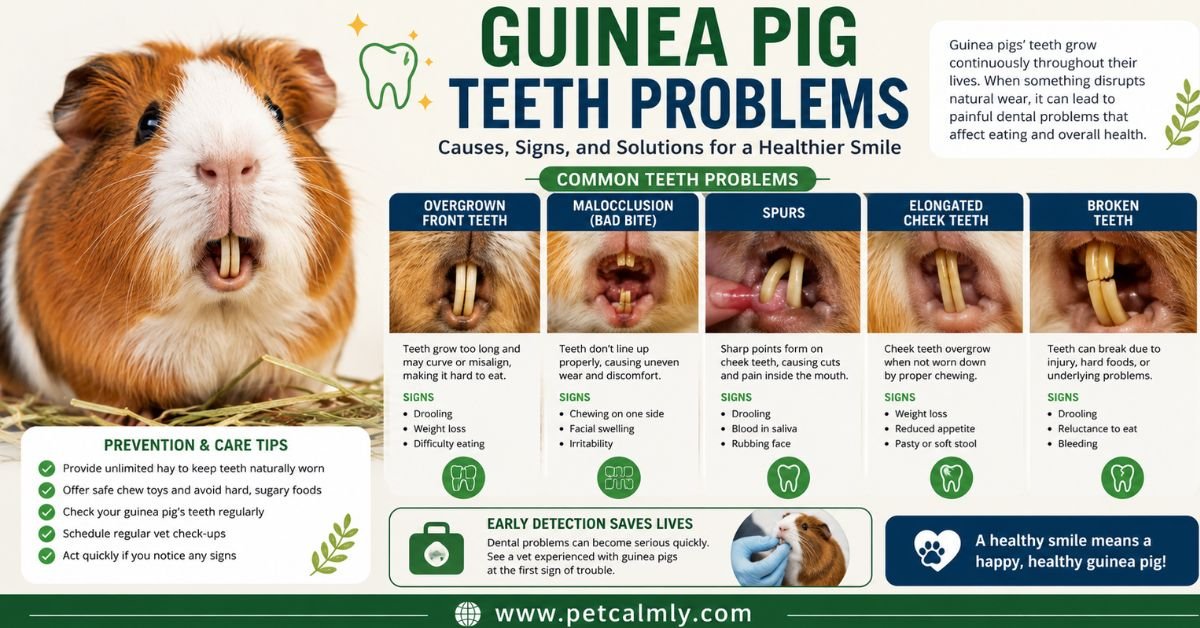
Guinea pig teeth problems occur when their teeth become overgrown, misaligned, broken, infected, or unable to wear down properly. Because guinea pig teeth grow continuously throughout life, dental issues can quickly affect eating, weight, behavior, and overall health. Common signs include drooling, difficulty chewing, weight loss, selective eating, and changes in behavior. Early detection and proper dietespecially unlimited hay are the best ways to prevent serious dental complications.
Introduction
Many guinea pig owners are surprised to learn that their pet’s teeth never stop growing. Unlike dogs or cats, guinea pigs depend on constant chewing to naturally wear down their teeth.
When everything is working correctly, this system is remarkably effective. However, even a small problem with tooth alignment or wear can develop into a painful condition that affects eating, grooming, and quality of life.
One of the challenges with guinea pig teeth problems is that these animals instinctively hide signs of illness. By the time obvious symptoms appear, the issue may already be causing significant discomfort.
The good news is that many dental problems can be prevented or managed successfully when caught early. Understanding what to look for can make a major difference in your guinea pig’s health and longevity.
Why Guinea Pig Teeth Need Special Attention
Guinea pigs have what veterinarians call “open-rooted” teeth. This means their teeth continue growing throughout their entire lives.
A healthy guinea pig has:
- Four incisors at the front
- Premolars and molars at the back
- Teeth that grow continuously
- A natural chewing pattern that keeps growth balanced
Wild guinea pigs spend much of their day chewing tough grasses and vegetation. Domestic guinea pigs require a similar chewing workload to maintain healthy tooth length.
Without adequate wear, teeth can become excessively long and begin causing problems.
Common Guinea Pig Teeth Problems
Several dental conditions affect guinea pigs.
Overgrown Teeth
Overgrown teeth are among the most common dental issues seen in guinea pigs.
This occurs when teeth grow faster than they wear down.
Affected guinea pigs may:
- Struggle to chew food
- Drop food while eating
- Take longer to finish meals
- Favor soft foods
- Lose weight gradually
Front incisors may visibly extend beyond normal length, while overgrown molars often remain hidden inside the mouth.
Malocclusion in Guinea Pigs
Malocclusion refers to improper tooth alignment.
When upper and lower teeth do not meet correctly, natural wear cannot occur.
As a result:
- Teeth continue growing unevenly
- Sharp edges develop
- Chewing becomes painful
- Mouth injuries may occur
Some guinea pigs are born with jaw alignment issues, while others develop them later due to injury or disease.
Sharp Spurs on Molars
Molar spurs are sharp points that form on the chewing surfaces of back teeth.
These points can:
- Cut the tongue
- Injure the cheeks
- Cause significant pain
- Reduce food intake
Because molars are located deep in the mouth, owners rarely notice spurs without a veterinary examination.
Broken Teeth
A guinea pig’s incisors can occasionally break.
Possible causes include:
- Falls
- Cage accidents
- Biting hard surfaces
- Nutritional deficiencies
A broken tooth may regrow normally if the root remains healthy. However, veterinary evaluation is important to ensure no underlying damage exists.
Tooth Root Problems
Some guinea pigs develop tooth root elongation.
Instead of growing only above the gum line, tooth roots extend deeper into the jawbone.
This can lead to:
- Chronic pain
- Eye problems
- Facial swelling
- Recurring infections
Root issues are often diagnosed using dental X-rays.
What Causes Guinea Pig Teeth Problems?
Dental disease usually develops due to multiple contributing factors.
Insufficient Hay Consumption
The leading cause of dental problems is inadequate hay intake.
Hay provides:
- Constant chewing activity
- Natural tooth wear
- Jaw exercise
- Digestive support
Guinea pigs that consume mostly pellets or treats may not wear their teeth effectively.
Genetics
Some guinea pigs inherit jaw structures that increase their risk of malocclusion.
Even with excellent care, genetically predisposed guinea pigs may require lifelong dental monitoring.
Injury and Trauma
Mouth injuries can alter tooth alignment.
Examples include:
- Falls from furniture
- Rough handling
- Cage accidents
- Biting metal objects
Trauma may affect tooth growth patterns long after the initial injury.
Poor Nutrition
Vitamin and mineral deficiencies may weaken tooth structures and supporting tissues.
A balanced guinea pig diet should include:
- Unlimited grass hay
- Fresh vegetables
- Quality guinea pig pellets
- Daily vitamin C sources
Chronic Illness
Underlying diseases can reduce appetite and chewing activity.
When a guinea pig chews less, teeth may begin overgrowing more quickly.
Symptoms of Guinea Pig Teeth Problems
Many owners first notice subtle behavior changes.
Watch for these warning signs:
- Weight loss
- Reduced appetite
- Difficulty chewing
- Drooling
- Wet chin
- Food dropping from the mouth
- Selective eating
- Smaller droppings
- Bad breath
- Eye discharge
- Facial swelling
- Reduced activity
Some guinea pigs approach food eagerly but seem unable to eat comfortably.
This behavior is often a significant red flag for dental disease.
How to Check Your Guinea Pig’s Teeth at Home
Routine observation can help identify problems early.
Examine the Front Teeth
Healthy incisors should:
- Meet evenly
- Appear smooth
- Have a normal yellowish-white color
- Not cross over one another
Minor color variation is usually normal.
Monitor Eating Habits
Observe your guinea pig during meals.
Look for:
- Difficulty grasping food
- Excessive chewing motions
- Head tilting
- Food falling out
- Avoidance of hay
These signs often appear before visible dental abnormalities.
Weigh Your Guinea Pig Weekly
Weight loss is frequently one of the earliest indicators of illness.
Using a kitchen scale weekly can reveal problems long before they become obvious.
Guinea Pig Teeth Problems and Eating Difficulties
Dental disease and nutrition are closely connected.
When chewing becomes painful, guinea pigs often stop eating enough hay.
This creates a dangerous cycle:
- Teeth hurt
- Guinea pig chews less
- Teeth wear down less
- Teeth become more overgrown
- Pain worsens
If not addressed quickly, gastrointestinal complications can develop.
Because guinea pigs require continuous food intake for digestive health, prolonged appetite reduction should always be treated seriously.
How Veterinarians Diagnose Guinea Pig Dental Problems
A veterinary examination may include:
- Oral examination
- Weight assessment
- Medical history review
- Sedated dental inspection
- Skull radiographs
- Dental X-rays
Many molar issues cannot be seen without specialized equipment.
This is why a guinea pig may appear normal from the front while significant disease exists deeper in the mouth.
Treatment Options for Guinea Pig Teeth Problems
Treatment depends on the underlying cause.
Professional Tooth Trimming
Veterinarians may carefully reduce overgrown teeth using specialized equipment.
This procedure restores normal chewing function while minimizing tooth damage.
Molar Spur Removal
Sharp molar points can be trimmed to reduce pain and improve eating ability.
Many guinea pigs show immediate improvement after treatment.
Pain Management
Dental disease can be painful.
Veterinarians may prescribe appropriate pain relief to improve comfort and encourage eating.
Nutritional Support
Some guinea pigs require assisted feeding during recovery.
Critical-care diets help maintain nutrition until normal chewing returns.
Ongoing Dental Maintenance
Certain guinea pigs require periodic dental procedures throughout life.
Regular monitoring can help prevent severe complications.
When Should You Worry About Guinea Pig Teeth Problems?
Seek veterinary care promptly if you notice:
- Complete refusal to eat
- Significant weight loss
- Heavy drooling
- Facial swelling
- Bleeding from the mouth
- Severe lethargy
- Eye bulging or discharge
- Difficulty swallowing
Guinea pigs can deteriorate rapidly when they stop eating.
Waiting several days to see if symptoms improve can allow a manageable problem to become an emergency.
What Should Pet Owners Do if They Suspect a Dental Problem?
If you suspect dental disease:
- Weigh your guinea pig immediately.
- Monitor food intake closely.
- Offer fresh hay and favorite vegetables.
- Check for drooling or wet fur around the mouth.
- Schedule a veterinary examination.
- Follow treatment recommendations carefully.
- Continue monitoring weight during recovery.
Avoid attempting to trim teeth at home.
Improper trimming can cause fractures, pain, infections, and permanent damage.
How to Prevent Guinea Pig Teeth Problems
Prevention is far easier than treatment.
Provide Unlimited High-Quality Hay
Hay should make up the majority of the diet.
Suitable options include:
- Timothy hay
- Orchard grass
- Meadow hay
Hay encourages natural chewing and healthy tooth wear.
Offer Daily Fresh Vegetables
Vegetables provide:
- Nutritional variety
- Vitamin C
- Additional chewing opportunities
Limit Sugary Treats
Excess treats may reduce hay consumption.
Less hay means less natural tooth wear.
Schedule Routine Health Checks
Regular veterinary visits can identify developing dental issues before symptoms become severe.
Track Body Weight
Weekly weighing remains one of the simplest and most effective health-monitoring tools.
Common Mistakes Owners Make
Many dental issues worsen because early warning signs are overlooked.
Common mistakes include:
- Assuming reduced appetite is normal aging
- Feeding too many pellets
- Offering insufficient hay
- Ignoring mild weight loss
- Delaying veterinary care
- Trimming teeth at home
- Failing to monitor eating behavior
Small changes often provide the earliest clues.
Guinea Pig Teeth Problems: Quick Reference Table
| Problem | Common Signs | Veterinary Attention Needed |
|---|---|---|
| Overgrown incisors | Long front teeth, eating issues | Yes |
| Overgrown molars | Drooling, weight loss | Yes |
| Malocclusion | Uneven teeth, chewing difficulty | Yes |
| Broken tooth | Missing tooth section | Usually |
| Molar spurs | Mouth pain, food dropping | Yes |
| Root elongation | Facial swelling, eye issues | Yes |
Frequently Asked Questions
1: How do I know if my guinea pig has teeth problems?
Common signs include drooling, weight loss, difficulty chewing, food dropping from the mouth, selective eating, and reduced hay consumption.
2: Can guinea pig teeth fix themselves?
Minor issues such as a small broken incisor may heal naturally. Most dental problems require veterinary evaluation and treatment.
3: What causes overgrown teeth in guinea pigs?
The most common causes include insufficient hay consumption, genetic malocclusion, injury, and chronic health conditions affecting chewing.
4: How often should guinea pig teeth be checked?
Owners should observe teeth and eating habits daily and perform a basic visual check weekly. Routine veterinary examinations are also important.
5: Can guinea pigs die from dental problems?
Severe untreated dental disease can lead to malnutrition, digestive complications, and serious health decline. Early treatment greatly improves outcomes.
6: What is the best food for healthy guinea pig teeth?
Unlimited grass hay is the most important food for dental health. Fresh vegetables and quality pellets also support overall nutrition.
More Information About Pets, Please Visit Our Website: Fleece vs Paper Bedding for Guinea Pigs
Conclusion
Guinea pig teeth problems are among the most common health concerns affecting these small pets, but they are also some of the most preventable. Because guinea pig teeth grow continuously, proper wear through unlimited hay consumption is essential. Early signs such as drooling, weight loss, food dropping, or reduced appetite should never be ignored.
The sooner a dental issue is identified, the easier it is usually to manage. By monitoring eating habits, checking body weight regularly, and providing a hay-based diet, owners can help their guinea pigs maintain healthy teeth throughout life.