Short direct answer
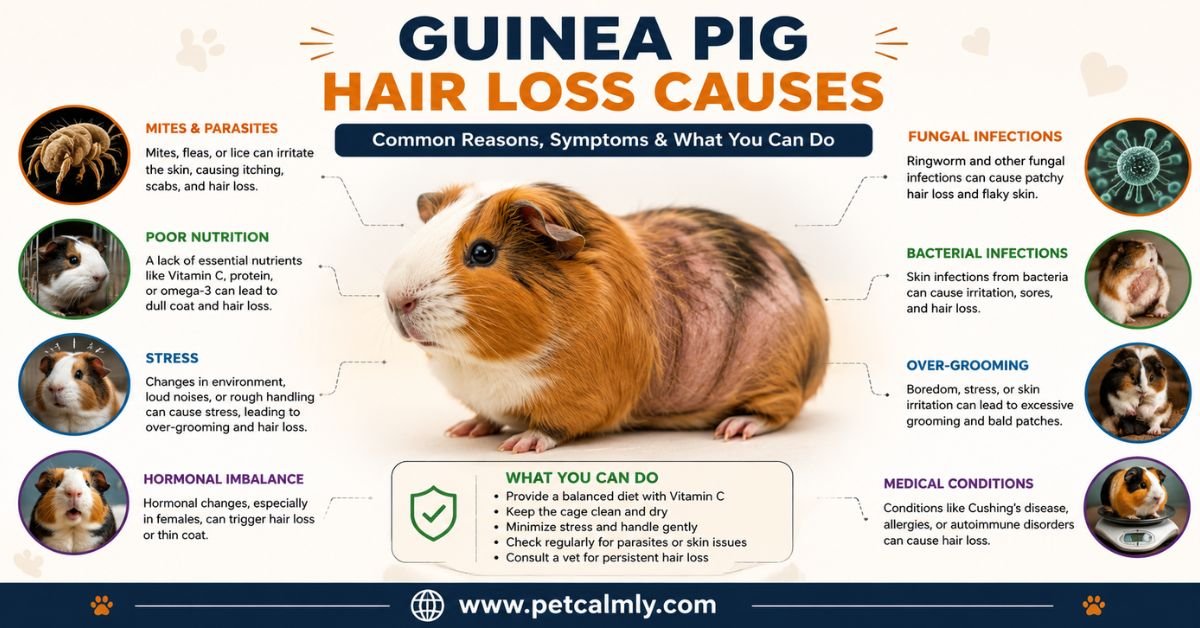
Hair loss in guinea pigs can happen for several reasons, including mites, fungal infections, barbering (fur chewing), poor nutrition, stress, hormonal disorders, and underlying illnesses. Some causes are relatively minor, while others require prompt veterinary treatment. If your guinea pig develops bald patches, itchy skin, redness, scabs, or rapid fur loss, identifying the cause early is important to prevent discomfort and further health problems.
Introduction
Few things worry guinea pig owners more than discovering a patch of missing fur on their pet. One day your guinea pig’s coat looks healthy and fluffy, and the next you notice thinning hair around the ears, bald spots on the back, or patches of missing fur near the sides.
The good news is that hair loss is a symptom rather than a disease itself. In many cases, the underlying cause can be identified and treated successfully.
Understanding the most common guinea pig hair loss causes helps you recognize warning signs early, provide proper care, and know when veterinary attention is necessary.
This guide explains why guinea pigs lose hair, what symptoms to watch for, and how to help your pet regain a healthy coat.
Understanding Normal Fur Loss in Guinea Pigs
Before assuming something is wrong, it’s important to understand that some fur shedding is normal.
Healthy guinea pigs naturally lose small amounts of hair throughout the year. This process is usually gradual and does not create obvious bald spots.
Normal shedding typically includes:
- A few loose hairs during handling
- Slight seasonal coat changes
- Even hair thinning without skin irritation
- No scratching or discomfort
Hair loss becomes concerning when you notice:
- Distinct bald patches
- Red or flaky skin
- Excessive scratching
- Scabs or wounds
- Sudden coat thinning
- Changes in behavior
If bald areas are clearly visible, an underlying issue is often involved.
Most Common Guinea Pig Hair Loss Causes
Parasites and Mites
Parasites are among the most common causes of fur loss in guinea pigs.
Microscopic mites can live on the skin and cause intense irritation. As the infestation worsens, guinea pigs scratch excessively, damaging their skin and pulling out fur.
Signs of mite infestations
- Severe itching
- Hair loss around shoulders and back
- Crusty skin
- Small wounds
- Pain when touched
- Restlessness
Some guinea pigs become so uncomfortable that they experience stress-related seizures from severe infestations.
Because mites are difficult to see without special equipment, veterinary diagnosis is usually necessary.
Ringworm and Fungal Infections
Despite its name, ringworm is not caused by worms. It is a fungal infection that commonly affects guinea pigs.
Ringworm often starts as small circular patches of hair loss and can spread quickly if untreated.
Symptoms of fungal infections
- Round bald patches
- Flaky skin
- Crusting around affected areas
- Hair loss around the face
- Mild itching
- White scales on the skin
Young guinea pigs, elderly guinea pigs, and stressed pets are particularly vulnerable.
Since ringworm can spread to humans and other animals, prompt treatment is important.
Barbering and Fur Chewing
Barbering occurs when a guinea pig chews its own fur or the fur of a cage mate.
Unlike disease-related hair loss, barbering often leaves rough, uneven patches where the hair appears clipped rather than completely missing.
Why barbering happens
- Boredom
- Stress
- Dominance behavior
- Lack of enrichment
- Crowded housing
- Nutritional deficiencies
Owners often notice shortened fur along the sides, back, or rump.
In multi-guinea pig households, one guinea pig may repeatedly chew another’s coat.
Poor Nutrition and Vitamin Deficiencies
Diet plays a major role in skin and coat health.
Guinea pigs cannot produce their own vitamin C. Without adequate vitamin C intake, they can develop a deficiency that affects multiple body systems.
Nutritional causes of hair loss
- Vitamin C deficiency
- Low-quality pellets
- Inadequate hay intake
- Poor overall diet
- Insufficient protein
- Lack of fresh vegetables
Hair loss caused by poor nutrition often develops gradually and may be accompanied by:
- Weight loss
- Weakness
- Poor wound healing
- Joint discomfort
- Reduced appetite
Providing a balanced guinea pig diet is one of the most effective ways to support healthy skin and fur.
Ovarian Cysts in Female Guinea Pigs
One of the most overlooked guinea pig hair loss causes is ovarian cysts.
Female guinea pigs, particularly those over one year old, may develop fluid-filled cysts on their ovaries.
Signs of ovarian cysts
- Symmetrical hair loss on both sides
- Enlarged abdomen
- Irritability
- Changes in behavior
- Hormonal fluctuations
The hair loss often appears evenly on both flanks, creating a very distinctive pattern.
A veterinarian can diagnose ovarian cysts through physical examination and imaging.
Hormonal Imbalances
Hormones influence hair growth and skin health.
When hormone levels become abnormal, guinea pigs may experience thinning fur, dry skin, and unusual coat changes.
Potential hormonal causes include:
- Ovarian cysts
- Reproductive disorders
- Adrenal abnormalities
- Age-related hormonal changes
Unlike parasite-related hair loss, hormonal fur loss usually causes little or no itching.
Stress and Anxiety
Stress affects more than behavior it can impact physical health as well.
Chronic stress may contribute to excessive grooming, fur chewing, weakened immunity, and poorer coat quality.
Common stress triggers
- Frequent environmental changes
- Loud noises
- Predator exposure
- Isolation
- Improper handling
- Inadequate hiding spaces
Guinea pigs are prey animals and can become stressed more easily than many owners realize.
Reducing stress often improves coat condition over time.
Skin Infections
Bacterial skin infections may develop after injuries, scratching, or underlying skin problems.
Symptoms can include:
- Hair loss
- Redness
- Swelling
- Pus
- Unpleasant odor
- Crusty lesions
These infections usually require veterinary diagnosis and treatment.
Allergic Reactions and Irritants
Although less common than parasites or fungal infections, some guinea pigs react to environmental irritants.
Potential triggers include:
- Dusty bedding
- Harsh cleaning products
- Fragranced sprays
- Certain fabrics
- Mold exposure
Skin irritation may cause scratching and secondary hair loss.
Switching to safer bedding and pet-friendly cleaning products often helps.
Guinea Pig Hair Loss Symptoms That Should Never Be Ignored
Certain signs suggest a more serious underlying problem.
Contact a veterinarian if your guinea pig has:
- Large bald patches
- Open wounds
- Bleeding skin
- Significant weight loss
- Refusal to eat
- Severe scratching
- Seizures
- Rapidly spreading hair loss
- Signs of pain
Guinea pigs can deteriorate quickly when serious illnesses go untreated.
Hair Loss Patterns and What They May Mean
| Hair Loss Pattern | Possible Cause |
|---|---|
| Around face and nose | Ringworm |
| Along sides of body | Ovarian cysts |
| Patchy with scratching | Mites |
| Uneven clipped appearance | Barbering |
| General thinning | Nutritional deficiency |
| Around wounds | Infection |
| Multiple circular patches | Fungal infection |
While these patterns can provide clues, a proper diagnosis often requires veterinary evaluation.
How Veterinarians Diagnose Guinea Pig Hair Loss
Physical Examination
The first step involves examining the skin, coat, and overall body condition.
Veterinarians often assess:
- Fur quality
- Skin condition
- Weight
- Behavior
- Symmetry of hair loss
Skin Scrapings
Skin scrapings help identify mites and other parasites.
Small skin samples are examined under a microscope to detect infestations.
Fungal Testing
When ringworm is suspected, fungal cultures or specialized testing may be performed.
This helps confirm infection and determine appropriate treatment.
Imaging for Ovarian Cysts
Ultrasound or X-rays may be recommended when hormonal disorders or ovarian cysts are suspected.
These tests allow veterinarians to examine internal structures safely.
What Should You Do if Your Guinea Pig Is Losing Hair?
Step 1: Check for Obvious Signs
Look for:
- Scratching
- Scabs
- Flaky skin
- Redness
- Fur chewing
- Weight changes
Take photos to track progression.
Step 2: Review the Diet
Ask yourself:
- Does my guinea pig receive unlimited hay?
- Are fresh vegetables offered daily?
- Is vitamin C provided consistently?
- Are pellets formulated specifically for guinea pigs?
Dietary improvements can support recovery and overall health.
Step 3: Inspect the Living Environment
Check for:
- Dirty bedding
- Excess moisture
- Overcrowding
- Lack of enrichment
- Sources of stress
A clean and stimulating environment promotes healthier skin and coat condition.
Step 4: Schedule a Veterinary Visit
Persistent or unexplained hair loss should always be evaluated by an experienced exotic animal veterinarian.
Early diagnosis often leads to faster recovery and less discomfort.
How to Prevent Hair Loss in Guinea Pigs
Prevention focuses on supporting overall health and minimizing common risk factors.
Provide a Proper Diet
A healthy guinea pig diet should include:
- Unlimited grass hay
- Fresh vegetables
- Quality guinea pig pellets
- Reliable vitamin C sources
- Clean water
Keep the Habitat Clean
Regular cleaning reduces exposure to parasites, fungi, and harmful bacteria.
A simple cleaning routine includes:
- Spot cleaning daily
- Replacing wet bedding promptly
- Full cage cleaning weekly
- Disinfecting accessories regularly
Reduce Stress
Stress reduction supports immune function and healthy grooming behavior.
Helpful strategies include:
- Consistent routines
- Quiet housing areas
- Adequate hiding spaces
- Gentle handling
- Appropriate social companionship
Perform Regular Health Checks
Spend a few minutes each week checking:
- Fur condition
- Skin appearance
- Body weight
- Nails
- Appetite
- Behavior
Early detection often prevents minor problems from becoming serious.
6 Common Mistakes Owners Make When Hair Loss Appears
Many owners unintentionally delay treatment because they assume hair loss is normal shedding.
Other common mistakes include:
- Waiting too long before seeking help
- Treating without a diagnosis
- Ignoring mild scratching
- Using medications intended for other pets
- Failing to quarantine infected guinea pigs
- Neglecting vitamin C intake
Addressing the root cause is always more effective than treating symptoms alone.
When Should You Worry About Guinea Pig Hair Loss?
Seek Veterinary Care Immediately If:
- Hair loss appears suddenly
- Your guinea pig stops eating
- Severe itching develops
- Open sores are present
- Weight loss occurs
- Bald patches spread rapidly
- You suspect ringworm
Prompt treatment can prevent complications and improve outcomes.
Real-Life Example: Why the Cause Matters
Consider two guinea pigs that both develop bald patches.
The first guinea pig has intense itching, scratching, and crusty skin. The underlying cause turns out to be mites.
The second guinea pig has smooth, symmetrical hair loss on both sides but no itching. Examination reveals ovarian cysts.
Although both pets are losing fur, the treatments are completely different.
This is why identifying the specific cause is far more important than simply trying to regrow the hair.
What Should Pet Owners Do Next?
If you notice unusual hair loss:
✓ Monitor the pattern of fur loss
✓ Check for itching, redness, or wounds
✓ Review diet and vitamin C intake
✓ Improve cage cleanliness
✓ Reduce stressors
✓ Arrange a veterinary examination
The sooner the cause is identified, the easier it is to protect your guinea pig’s comfort and health.
Frequently Asked Questions
1: Why is my guinea pig losing hair but not scratching?
Hair loss without itching may indicate hormonal problems, ovarian cysts, nutritional deficiencies, aging-related changes, or other underlying health conditions. A veterinary examination can help determine the exact cause.
2: Can stress cause hair loss in guinea pigs?
Yes. Chronic stress can contribute to fur chewing, excessive grooming, weakened immunity, and poor coat quality, which may lead to visible hair loss over time.
3: Is guinea pig hair loss always serious?
Not always. Minor shedding is normal. However, bald patches, skin irritation, or sudden fur loss should be investigated because they often indicate an underlying problem.
4: Can vitamin C deficiency cause hair loss in guinea pigs?
Yes. Inadequate vitamin C can affect skin health, wound healing, and coat quality. Long-term deficiency may contribute to thinning fur and other health issues.
5: What does ringworm look like on a guinea pig?
Ringworm often appears as circular bald patches with flaky, crusty skin. It commonly affects the face, ears, and nose area and can spread to humans and other pets.
6: How can I tell if my guinea pig has mites?
Common signs include intense scratching, hair loss, crusty skin, pain when touched, and restlessness. A veterinarian can confirm the diagnosis through examination and testing.
More Information About Pets, Please Visit Our Website: Guinea Pig Cage Setup Ideas
Conclusion
Understanding the various guinea pig hair loss causes can help you respond quickly when your pet develops bald patches or thinning fur. Parasites, fungal infections, barbering, nutritional deficiencies, stress, ovarian cysts, and skin disorders are among the most common reasons guinea pigs lose hair.
While some causes are relatively straightforward to address, others require veterinary care. Paying attention to hair loss patterns, skin condition, behavior changes, and diet can provide valuable clues about what is happening.
Most importantly, don’t ignore persistent fur loss. Early intervention often leads to faster treatment, a healthier coat, and a happier guinea pig.