Short direct answer
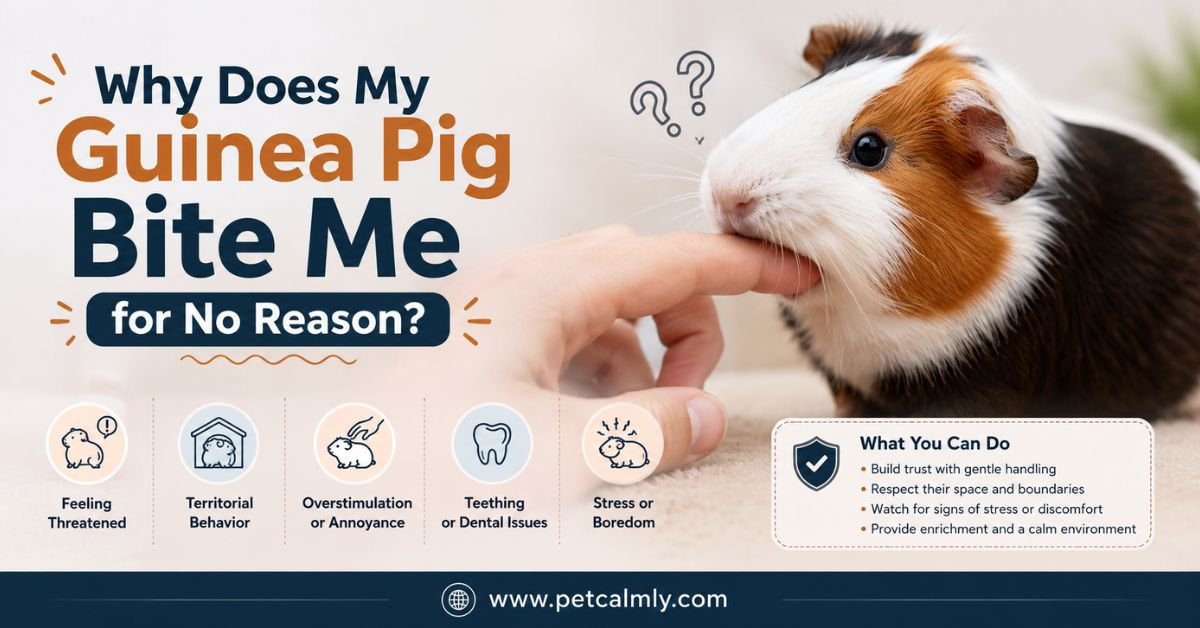
If you’re wondering, “why does my guinea pig bite me for no reason?”, the good news is that guinea pigs almost never bite without a reason. What seems like a random bite is usually your pet’s way of communicating discomfort, fear, pain, annoyance, overstimulation, hunger, or a desire to be left alone. By paying attention to body language, handling techniques, and your guinea pig’s environment, you can usually identify the cause and prevent future bites.
Introduction
Few things surprise guinea pig owners more than being bitten by a pet that is usually gentle and friendly.
One moment you’re holding your guinea pig, petting them, or offering a treat. The next moment, they nip your finger, hand, or arm seemingly out of nowhere.
Naturally, many owners ask:
- Why does my guinea pig bite me for no reason?
- Is my guinea pig angry at me?
- Does my guinea pig hate being handled?
- Should I be worried about aggressive behavior?
The truth is that guinea pigs are prey animals. They rely heavily on communication signals that humans often miss. What appears to be a random bite is usually the final warning after several subtle signs have gone unnoticed.
Understanding those signals can dramatically improve your relationship with your pet and make handling much safer and more enjoyable.
Do Guinea Pigs Bite Without Warning?
In most cases, no.
Guinea pigs rarely bite completely without warning. Before biting, many guinea pigs display signs such as:
- Freezing suddenly
- Tensing their body
- Chattering their teeth
- Pulling away
- Squirming excessively
- Raising their head sharply
- Trying to escape
- Pushing your hand away
Because these signs can be subtle, owners sometimes miss them and experience what feels like an unexpected bite.
Why Does My Guinea Pig Bite Me for No Reason? Common Causes Explained
Let’s look at the most common reasons guinea pigs bite.
Your Guinea Pig Is Scared
Fear is one of the leading causes of biting.
Remember that guinea pigs are naturally prey animals. Being picked up can feel similar to being caught by a predator in the wild.
Your guinea pig may bite if:
- You approach too quickly
- You grab them unexpectedly
- Loud noises startle them
- They are in a new environment
- They do not fully trust you yet
Signs Fear Is the Cause
- Wide eyes
- Frozen posture
- Rapid breathing
- Attempting to hide
- Constant squirming
A fearful guinea pig isn’t being aggressive. They’re trying to protect themselves.
Your Guinea Pig Wants To Be Put Down
Many owners get bitten after holding their guinea pig for too long.
Your pet may initially tolerate being held but eventually become uncomfortable.
Instead of remaining still, they may:
- Wiggle repeatedly
- Push against your hands
- Shift their weight
- Nip gently
Often this bite means:
“I want to go back to my cage.”
What To Do
When your guinea pig starts becoming restless:
- Return them to their enclosure
- Avoid forcing additional cuddle time
- Respect their comfort limits
Over time, trust often improves.
You Smell Like Food
This cause is surprisingly common.
Guinea pigs explore their environment using their sense of smell and mouth.
If your fingers smell like:
- Lettuce
- Carrots
- Fruit
- Vegetables
- Treats
Your guinea pig may mistake your finger for food.
Food-Related Bites Usually Feel Different
They are often:
- Quick
- Curious
- Gentle
- Followed by sniffing
These bites are usually accidental rather than aggressive.
Your Guinea Pig Is Annoyed By Overhandling
Just like people, guinea pigs have personal preferences.
Some enjoy frequent interaction.
Others prefer shorter sessions.
A guinea pig that feels overwhelmed may eventually use a nip to communicate:
“Please stop.”
Common Triggers
- Excessive petting
- Long handling sessions
- Repeated picking up
- Constant attention
Learning your pet’s limits can significantly reduce biting incidents.
Pain Or Illness May Be Making Your Guinea Pig Bite
A guinea pig experiencing pain may become more defensive than usual.
Pain changes behavior.
A normally sweet guinea pig may suddenly:
- Bite
- Hide more often
- Resist handling
- Vocalize differently
Health Problems That Can Cause Biting
- Dental issues
- Arthritis
- Injuries
- Urinary tract problems
- Skin infections
- Abscesses
If biting appears suddenly and is unusual for your guinea pig, a veterinary examination is a smart next step.
Your Guinea Pig Feels Trapped
Guinea pigs like having control over their movements.
If they feel cornered, restrained, or unable to escape, they may resort to biting.
This often occurs when:
- Being held too tightly
- Being cornered in the cage
- Being chased before pickup
- Having nowhere to hide
Creating a sense of security often reduces defensive behavior.
Hormonal Behavior In Young Guinea Pigs
Adolescent guinea pigs sometimes become more stubborn or territorial.
This phase often occurs between:
4 and 14 Months of Age
During this period you may notice:
- Increased attitude
- More vocal behavior
- Dominance displays
- Occasional nipping
Many guinea pigs become calmer as they mature.
Territorial Behavior Can Trigger Biting
Some guinea pigs become protective of:
- Food bowls
- Favorite hideouts
- Sleeping areas
- Cage entrances
A bite may occur when a hand enters their space unexpectedly.
How To Reduce Territorial Reactions
- Approach slowly
- Offer treats
- Avoid startling them
- Create multiple hiding areas
Understanding Different Types of Guinea Pig Bites
Not all bites mean the same thing.
| Type of Bite | Possible Meaning |
|---|---|
| Gentle nibble | Curiosity or exploration |
| Quick nip | Warning or annoyance |
| Repeated nipping | Wants attention or wants down |
| Hard bite | Fear, pain, or extreme stress |
| Food-related bite | Mistaken identity |
Recognizing the type of bite provides valuable clues about the cause.
How To Tell If Your Guinea Pig Is About To Bite
Learning warning signals helps prevent most bites.
Watch For These Behaviors
- Teeth chattering
- Body stiffening
- Raised head posture
- Pulling away
- Squirming intensely
- Sudden freezing
- Rapid breathing
- Ear flicking
When you notice these signs, give your guinea pig space.
What Should You Do After Your Guinea Pig Bites You?
Avoid reacting dramatically.
Sudden yelling or dropping your guinea pig can increase fear and damage trust.
Follow These Steps
- Stay calm.
- Place your guinea pig safely down.
- Wash the wound.
- Apply antiseptic if necessary.
- Consider what happened before the bite.
- Identify possible triggers.
The goal is understanding, not punishment.
Never Punish A Guinea Pig For Biting
Punishment does not teach guinea pigs what you want.
Instead, it teaches them that humans are scary.
Avoid:
- Yelling
- Tapping the nose
- Spraying water
- Hitting
- Forceful restraint
These methods often increase fear-based biting.
How To Build Trust With A Guinea Pig That Bites
Trust takes time.
Many biting issues improve significantly when guinea pigs feel safe.
Start With Hand Feeding
Offer healthy vegetables from your hand.
This helps your guinea pig associate you with positive experiences.
Good Options
- Bell pepper
- Romaine lettuce
- Cilantro
- Cucumber
Let Your Guinea Pig Approach You
Rather than constantly reaching for your pet, allow them to initiate interaction.
Sit near the enclosure and let curiosity do the work.
Use Gentle Handling Techniques
Support the entire body.
One hand should support the chest while the other supports the hindquarters.
A secure hold helps guinea pigs feel safer.
Respect Their Boundaries
Not every guinea pig enjoys extended cuddles.
Pay attention to individual preferences.
Respecting those preferences often reduces stress and biting.
Mistakes That Can Accidentally Encourage Biting
Owners sometimes unknowingly reinforce the behavior.
Common Mistakes
- Ignoring warning signs
- Picking up a frightened guinea pig
- Handling after stressful events
- Waking a sleeping guinea pig
- Allowing children to handle roughly
- Holding for too long
- Using scented lotion before handling
Correcting these habits can make a noticeable difference.
Can Guinea Pigs Bite Because They Are Lonely?
Sometimes.
Guinea pigs are highly social animals.
Loneliness may contribute to:
- Stress
- Anxiety
- Frustration
- Behavioral changes
While loneliness doesn’t directly cause most bites, it can increase overall irritability.
Providing appropriate companionship often improves emotional well-being.
Can Guinea Pig Bites Become Dangerous?
Most guinea pig bites are minor.
However, deeper bites can:
- Break the skin
- Cause bleeding
- Lead to infection if not cleaned properly
Seek Medical Advice If
- The wound is deep
- Redness spreads
- Swelling develops
- Signs of infection appear
Good hygiene is usually sufficient for minor bites.
When Should You Worry About Guinea Pig Biting?
Occasional nipping is normal.
Persistent or sudden aggression deserves closer attention.
Contact A Veterinarian If
- Biting starts suddenly
- Your guinea pig appears sick
- Appetite decreases
- Weight loss occurs
- Mobility changes appear
- You suspect pain
Behavior changes are sometimes the first sign of an underlying health problem.
Practical Checklist: How To Stop Guinea Pig Biting
Use this quick checklist:
Daily Habits
✔ Wash hands before handling
✔ Approach calmly
✔ Respect warning signals
✔ Avoid overhandling
✔ Offer treats for positive interactions
✔ Support the body correctly
✔ Maintain a predictable routine
✔ Monitor for signs of illness
✔ Provide hiding spaces
✔ Give your guinea pig choices whenever possible
What Most Guinea Pig Owners Discover
Many owners initially believe their guinea pig is aggressive.
After observing more closely, they realize the bites were actually communication attempts.
Common discoveries include:
- The guinea pig wanted to go back to the cage.
- Handling sessions were too long.
- Fingers smelled like vegetables.
- Pain was present.
- Stress levels were high.
Once the root cause is addressed, biting often decreases dramatically.
Frequently Asked Questions
1: Why does my guinea pig suddenly bite me while I am holding it?
The most common reasons are discomfort, needing to urinate, wanting to be put down, fear, or overstimulation from prolonged handling.
2: Do guinea pig bites mean they do not like you?
No. Most bites are communication rather than dislike. Guinea pigs often bite because they feel uncomfortable, frightened, or misunderstood.
3: Why does my guinea pig nibble my fingers gently?
Gentle nibbling is usually exploratory behavior. Your guinea pig may be investigating your scent or checking whether your fingers are food.
4: How do I stop my guinea pig from biting me?
Focus on trust-building, proper handling, respecting boundaries, identifying triggers, and checking for possible health problems.
5: Why does my guinea pig bite only one person in the family?
That person may handle the guinea pig differently, move more quickly, smell like food, or unintentionally trigger stress responses.
6: Should I worry if my guinea pig starts biting suddenly?
Yes. Sudden behavior changes can indicate pain, illness, stress, or environmental changes and should be investigated.
More Information About Pets, Please Visit Our Website: Guinea Pig Cage Setup Ideas for 2
Conclusion
If you’ve been asking, “why does my guinea pig bite me for no reason?”, the answer is reassuring: there is almost always a reason.
Guinea pigs use biting as a form of communication when they feel scared, uncomfortable, overstimulated, trapped, territorial, or in pain. What appears to be random behavior is usually a message that something needs attention.
By learning your guinea pig’s body language, respecting their limits, using gentle handling techniques, and monitoring their health, you can build a stronger bond and greatly reduce biting incidents.
Most importantly, remember that biting does not mean your guinea pig is mean or dislikes you. In many cases, it’s simply their way of saying, “I need something different right now.”