Short direct answer
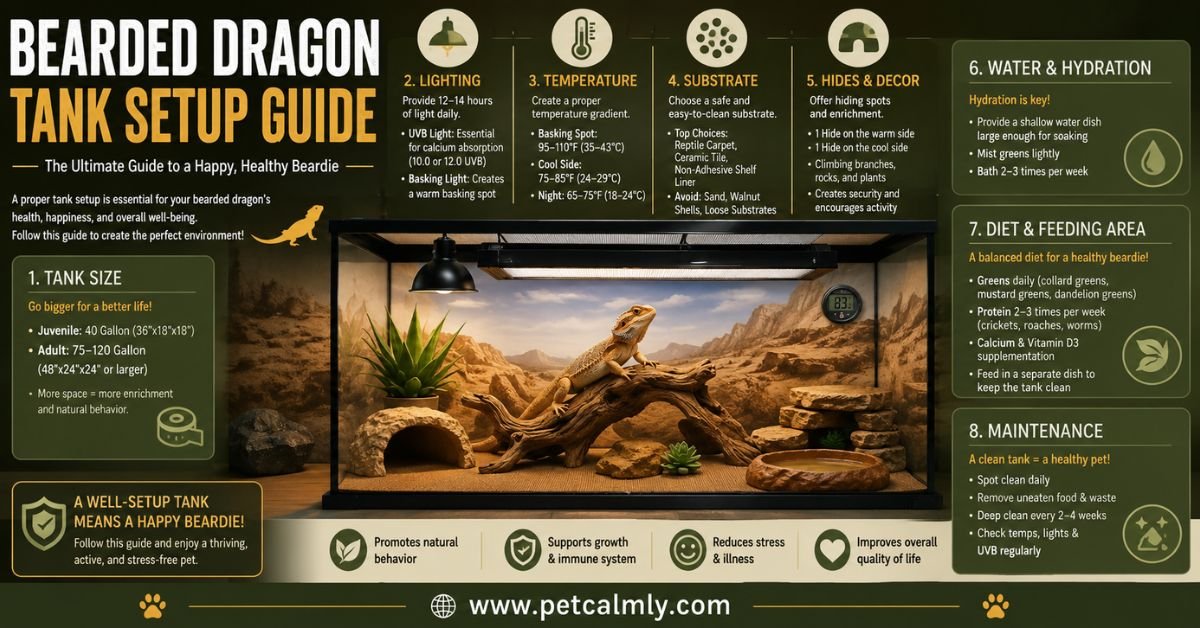
A proper bearded dragon tank setup includes a spacious enclosure, safe substrate, strong UVB lighting, a basking area between 100–110°F (38–43°C) for most adults (slightly warmer for babies), a cooler side around 75–85°F (24–29°C), secure hiding places, climbing opportunities, and clean food and water dishes. A well-designed habitat helps your bearded dragon regulate body temperature, digest food properly, shed normally, and display natural behaviors while reducing stress and illness.
Introduction
Setting up a home for a bearded dragon is much more than buying a glass tank and adding a heat lamp. Every part of the enclosure affects your pet’s health, comfort, and daily behavior.
Many first-time owners are surprised to learn that problems such as poor appetite, weak bones, frequent stress, difficult shedding, or inactivity often begin with an incorrect tank setup rather than a medical condition.
The good news is that creating a safe, enriching habitat isn’t complicated once you understand your bearded dragon’s natural needs.
In the wild, bearded dragons live in Australia’s dry woodlands, rocky deserts, and open scrublands. They spend their days basking in sunlight, climbing over rocks, hiding under shrubs, hunting insects, and regulating their body temperature by moving between warm and cool areas.
Your goal is to recreate these conditions as closely as possible indoors.
This guide explains everything beginners need to know from choosing the right enclosure and lighting to creating proper heating zones and avoiding common mistakes. By the end, you’ll have the knowledge to build a habitat that supports your bearded dragon throughout every stage of life.
Why a Proper Bearded Dragon Tank Setup Matters
A correctly designed enclosure does far more than look attractive. It directly influences your reptile’s physical health, mental well-being, and lifespan.
When the habitat meets their natural needs, bearded dragons are generally:
- More active
- Better eaters
- Easier to handle
- Less stressed
- Better at shedding
- More likely to display natural behaviors
- Less prone to preventable health problems
On the other hand, an unsuitable setup may contribute to:
- Poor digestion
- Loss of appetite
- Weak bones due to inadequate UVB exposure
- Chronic stress
- Obesity from inactivity
- Respiratory problems from excessive humidity
- Frequent shedding difficulties
A quality enclosure is one of the best investments you can make in your pet’s long-term health.
Understanding a Bearded Dragon’s Natural Habitat
Before choosing equipment, it’s helpful to understand where these reptiles come from.
Wild bearded dragons experience:
- Bright sunlight for many hours daily
- Dry air with relatively low humidity
- Warm days and cooler nights
- Rocky surfaces for basking
- Trees, logs, and branches for climbing
- Multiple hiding places for safety
- Plenty of open ground for exploring
Because they are ectothermic (cold-blooded), they rely on external heat sources to control their body temperature.
Unlike mammals, they cannot generate enough body heat on their own.
That is why proper heating and lighting are essentia not optional.
Choosing the Right Bearded Dragon Tank Size
One of the biggest beginner mistakes is purchasing a small enclosure because the dragon is still young.
Although baby bearded dragons start small, they grow surprisingly fast during their first year.
Buying an appropriately sized enclosure from the beginning can save money and reduce stress caused by repeated habitat changes.
Recommended Tank Sizes by Age
| Bearded Dragon Age | Recommended Minimum Tank Size |
|---|---|
| Hatchling | 20–40 gallons temporarily |
| Juvenile | 40–75 gallons |
| Adult | 120 gallons (4×2×2 feet) or larger |
Many reptile experts now recommend skipping smaller tanks altogether if space and budget allow.
A 120-gallon enclosure provides room for:
- Proper temperature gradients
- Exercise
- Climbing structures
- Multiple hides
- Natural behaviors
Bigger is almost always better, provided the habitat includes adequate furnishings and hiding places.
Should You Choose Glass, PVC, or Wooden Enclosures?
There isn’t one perfect enclosure for every owner.
Each material has advantages and disadvantages.
Glass Tanks
Pros
- Easy to find
- Good visibility
- Easy to clean
- Suitable for beginners
Cons
- Lose heat quickly
- Can cause reflections that stress some dragons
- Heavier than many alternatives
PVC Enclosures
PVC cages have become increasingly popular among experienced reptile keepers.
Advantages include:
- Excellent insulation
- Lightweight
- Durable
- Energy efficient
- Better humidity control
- Less reflection
Many owners find that PVC enclosures make maintaining consistent temperatures much easier.
Wooden Vivariums
Wooden enclosures also offer excellent heat retention.
Benefits include:
- Better insulation
- Attractive appearance
- Reduced heating costs
- Stable temperatures
However, they require proper sealing to protect against moisture and make cleaning easier.
Where Should You Place Your Bearded Dragon Tank?
Tank location is often overlooked, but it can significantly affect your dragon’s comfort.
Choose a quiet area that avoids sudden environmental changes.
Ideal Placement
- Stable room temperature
- Low household traffic
- Good ventilation
- Away from loud speakers
- Away from vibrating appliances
- Easy access for cleaning
Avoid
- Direct sunlight through windows
- Air conditioning vents
- Heating vents
- Drafty doors
- Frequently slammed doors
- Busy hallways
Direct sunlight through glass can rapidly overheat an enclosure, even if the room itself feels comfortable.
Essential Equipment for a Bearded Dragon Tank Setup
Creating the ideal habitat involves more than purchasing a tank.
Each component plays an important role in your pet’s health.
You’ll need:
- Enclosure
- UVB lighting
- Heat lamp
- Thermostat (if appropriate for your heating equipment)
- Digital thermometers
- Infrared temperature gun
- Basking platform
- Cool hide
- Warm hide
- Food dish
- Water dish
- Safe substrate
- Decorations
- Climbing branches
- Rocks
- Timer for lighting
Buying quality equipment initially often prevents expensive upgrades later.
Creating the Correct Temperature Gradient
One temperature throughout the enclosure is never enough.
Bearded dragons need a thermal gradient so they can move between warmer and cooler areas throughout the day.
Think of the enclosure as having different climate zones.
Basking Zone
This is where your dragon absorbs heat after eating.
Typical basking surface temperatures:
- Adult: 100–110°F (38–43°C)
- Baby: 105–110°F (40–43°C)
Always measure the surface temperature of the basking spot rather than relying only on air temperature.
Warm Side
The surrounding warm area should remain around:
88–95°F (31–35°C)
This gives your dragon room to warm gradually.
Cool Side
The opposite end should remain:
75–85°F (24–29°C)
This allows your pet to cool down whenever necessary.
Without this cooler area, your dragon cannot regulate its body temperature effectively.
Night Temperatures
Healthy adult bearded dragons generally tolerate nighttime temperatures around:
65–75°F (18–24°C)
Most homes stay within this range naturally.
Additional nighttime heating is usually unnecessary unless temperatures drop below recommended levels.
Avoid colored night bulbs, as they can disrupt your dragon’s normal day-night cycle.
Why UVB Lighting Is Essential
If there is one piece of equipment you should never compromise on, it’s UVB lighting.
Without proper UVB exposure, bearded dragons cannot efficiently produce vitamin D3.
Without vitamin D3, they struggle to absorb calcium.
Poor calcium absorption can eventually lead to:
- Weak bones
- Tremors
- Muscle weakness
- Deformities
- Difficulty moving
- Metabolic bone disease (MBD)
These problems are often preventable with the correct lighting and nutrition.
What Type of UVB Bulb Is Best?
Most experienced reptile keepers recommend a high-quality linear UVB tube rather than compact or coil bulbs for primary UVB coverage.
A linear fixture provides:
- More even light distribution
- Better UVB coverage across the enclosure
- Reduced dark spots
- More natural basking conditions
Replace UVB bulbs according to the manufacturer’s schedule, even if they still produce visible light, because UVB output declines over time.
UVB Placement Tips
Proper placement is just as important as choosing the right bulb.
For best results:
- Position the UVB light over the basking area.
- Follow the recommended distance provided by the manufacturer.
- Avoid placing glass or plastic between the bulb and your dragon, as these materials block most UVB rays.
- Ensure your dragon can move in and out of the UVB zone naturally.
Choosing the Right Heat Lamp
A heat lamp creates the warm basking spot your bearded dragon relies on for digestion and daily activity.
When selecting a heat source, focus on achieving the correct basking surface temperature rather than choosing a specific bulb wattage. The required wattage depends on factors such as enclosure size, room temperature, fixture height, and ventilation.
To fine-tune the setup:
- Measure basking surface temperatures with an infrared temperature gun.
- Check warm and cool side temperatures using digital thermometers.
- Adjust bulb height or wattage gradually until the temperature gradient is correct.
- Use timers to provide a consistent day-night lighting schedule of about 12–14 hours of light during most of the year.
A properly heated basking area encourages normal feeding, healthy digestion, and active behavior.
Choosing the Best Substrate for a Bearded Dragon Tank
The substrate is the material that covers the floor of your bearded dragon’s enclosure. It affects cleanliness, comfort, traction, digging behavior, and overall hygiene.
Many new owners wonder whether loose substrate is dangerous. The answer depends on your dragon’s age, health, husbandry, and the type of substrate used.
A healthy adult bearded dragon living in a properly heated enclosure is generally at lower risk of problems than a young dragon kept on unsuitable loose materials. However, beginners often find solid substrates easier to manage while they learn proper reptile care.
Safe Substrate Options
These choices are commonly recommended because they are easy to clean and reduce many common risks.
- Ceramic or slate tile
- Textured porcelain tile
- Reptile liner
- Paper towels (ideal for babies, quarantine, or sick dragons)
- Non-adhesive shelf liner designed for reptile use
These materials also make it easier to monitor droppings, helping owners notice potential health concerns early.
Loose Substrates That Require Careful Consideration
Some experienced keepers use naturalistic loose substrates successfully, but they require correct husbandry and routine maintenance.
Examples include:
- Bioactive soil mixes designed for reptiles
- Clay-based desert substrates
- Natural desert blends
These setups should only be considered after understanding proper heating, feeding practices, humidity control, and enclosure maintenance.
Substrates to Avoid
Some materials create unnecessary health risks or are difficult to keep clean.
Avoid using:
- Calcium sand
- Silica sand
- Crushed walnut shells
- Corn cob bedding
- Cedar shavings
- Pine shavings
- Cat litter
- Damp potting soil with fertilizers or chemicals
These materials may contribute to digestive issues, respiratory irritation, injuries, or poor hygiene.
How to Create the Perfect Basking Area
The basking spot is the most important location inside the enclosure.
Your bearded dragon will spend several hours there each day warming up after sleeping, digesting meals, and absorbing UVB light.
An ideal basking platform should:
- Be stable and impossible to tip over
- Allow your dragon to lie flat comfortably
- Reach the correct basking temperature
- Sit beneath the UVB fixture
- Offer enough space for your dragon to turn around
Good basking surfaces include:
- Natural slate rocks
- Large flat stones
- Secure reptile basking platforms
- Thick branches positioned safely
Avoid unstable piles of rocks that could collapse if your dragon climbs.
Why Hiding Places Are Essential
Many people assume that because bearded dragons enjoy basking, they rarely hide.
In reality, hiding is a completely natural behavior.
Even confident dragons appreciate a secure retreat where they can rest without feeling exposed.
Hides help reduce stress by giving your pet a sense of security.
Place at Least Two Hides
A balanced enclosure should include:
- One hide on the warm side
- One hide on the cool side
This allows your dragon to regulate temperature without sacrificing the feeling of safety.
Some dragons also enjoy partially covered resting areas created with cork bark or sturdy branches.
Add Climbing Opportunities for Exercise
Although bearded dragons spend much of their time on the ground, they are surprisingly good climbers.
In nature, they climb:
- Fallen logs
- Tree trunks
- Rock ledges
- Thick branches
- Elevated lookout points
Climbing encourages both physical activity and mental stimulation.
Safe Climbing Items
Choose decorations that are sturdy enough to support your dragon’s full weight.
Popular options include:
- Natural hardwood branches
- Cork bark tubes
- Reptile climbing structures
- Large driftwood pieces
- Artificial rock ledges
Before placing decorations inside the enclosure, make sure they cannot roll or shift.
Should You Add Plants?
Plants can make the enclosure look more natural while offering extra hiding places.
Safe Artificial Plants
Artificial plants are often the easiest option because they:
- Require no maintenance
- Increase visual cover
- Stay clean
- Do not affect humidity
Live Plants
Some keepers enjoy live plants in naturalistic enclosures.
Safe choices may include:
- Certain succulents
- Prickly pear cactus (with spines removed where appropriate)
- Aloe species commonly considered safe in reptile setups
Avoid toxic ornamental plants or those treated with pesticides.
Food and Water Bowl Placement
Proper placement helps keep the enclosure cleaner.
Food Dish
Place vegetables and greens in a shallow dish that:
- Cannot tip easily
- Is easy to remove
- Stays away from the basking bulb
- Reduces contamination from substrate
Fresh vegetables should be removed before they spoil.
Water Dish
Although bearded dragons obtain much of their moisture from food, many still benefit from access to fresh drinking water.
Choose a shallow bowl that:
- Is easy to clean
- Cannot be tipped over
- Is large enough for drinking but not so deep that young dragons could struggle
Replace the water daily or sooner if it becomes dirty.
Maintaining Proper Humidity
Unlike tropical reptiles, bearded dragons thrive in relatively dry environments.
Excess moisture may contribute to respiratory problems, mold growth, and poor enclosure conditions.
Recommended Humidity
Aim for approximately:
30–40% relative humidity
Humidity naturally changes throughout the day, so small fluctuations are usually normal.
Tips for Managing Humidity
- Provide good ventilation.
- Remove wet substrate promptly.
- Clean spilled water.
- Avoid frequent misting unless advised for a specific reason.
- Monitor humidity with a digital hygrometer.
How to Set Up Lighting on a Daily Schedule
Consistency is important for your dragon’s internal clock.
Most owners use timers to automate lighting.
Typical Daily Schedule
- Lights on in the morning
- UVB and basking light operate together
- About 12–14 hours of daylight
- Complete darkness at night
Avoid leaving lights on around the clock.
Constant lighting can interfere with normal sleep and increase stress.
Enriching Your Bearded Dragon’s Environment
An empty enclosure may meet basic survival needs, but enrichment encourages natural behaviors and helps prevent boredom.
Simple enrichment ideas include:
- Rearranging climbing branches occasionally
- Offering safe digging opportunities when appropriate
- Rotating decorations
- Providing different basking heights
- Hiding insects in enrichment feeders
- Creating multiple exploration paths
These small changes can make daily life more interesting without overwhelming your pet.
Cleaning Your Bearded Dragon Tank
A clean enclosure helps prevent odor, bacteria, parasites, and illness.
Daily Cleaning Checklist
- Remove droppings
- Replace dirty water
- Remove uneaten insects
- Discard spoiled vegetables
- Wipe obvious messes
Daily maintenance only takes a few minutes and keeps the habitat healthier.
Weekly Cleaning
Once a week:
- Clean food dishes
- Wash water bowls thoroughly
- Wipe decorations
- Clean glass panels
- Inspect heating and lighting equipment
Monthly Deep Cleaning
A deeper clean should include:
- Removing decorations
- Cleaning surfaces with a reptile-safe disinfectant
- Checking for worn equipment
- Inspecting cords and fixtures
- Replacing damaged décor if needed
Always allow the enclosure to dry completely before returning your dragon.
7 Common Bearded Dragon Tank Setup Mistakes
Even caring owners can make mistakes when setting up a new enclosure.
Fortunately, most are easy to avoid.
1. Choosing a Tank That’s Too Small
Small tanks limit exercise, reduce temperature gradients, and leave little room for enrichment.
2. Skipping UVB Lighting
Visible light alone cannot replace proper UVB exposure.
3. Guessing Temperatures
Using your hand to judge heat isn’t reliable.
Always use:
- Digital thermometers
- Infrared temperature gun
4. Using Unsafe Substrates
Some bedding materials create avoidable health risks.
Research carefully before introducing loose substrates.
5. Overcrowding the Tank
Too many decorations can reduce usable floor space.
Aim for a balance between enrichment and open movement.
6. Providing Only One Temperature
A single uniform temperature prevents your dragon from thermoregulating naturally.
7. Ignoring Equipment Maintenance
Old UVB bulbs, dusty fixtures, and inaccurate thermometers can gradually affect your dragon’s health without obvious warning signs.
Bearded Dragon Tank Setup Checklist
Use this quick checklist before introducing your new pet.
✔ Appropriate enclosure size
✔ Secure screen top
✔ Quality UVB fixture
✔ Heat lamp
✔ Basking platform
✔ Warm hide
✔ Cool hide
✔ Safe substrate
✔ Climbing branches
✔ Food bowl
✔ Water dish
✔ Digital thermometers
✔ Hygrometer
✔ Infrared temperature gun
✔ Timer for lighting
✔ Stable temperatures
✔ Proper humidity
✔ Safe decorations
✔ Clean enclosure
If every item is checked, your habitat is well on its way to providing a safe and comfortable home.
Bearded Dragon Tank Setup for Babies vs. Adults
A bearded dragon’s enclosure should grow with them. While the basic principles of heating, lighting, and safety stay the same, babies and adults have different needs.
Baby Bearded Dragon Tank Setup
Baby bearded dragons grow quickly and are extremely active. They need an enclosure that helps them find food easily while still providing enough space to move around.
Keep in mind:
- Slightly warmer basking temperatures than adults
- Plenty of small hiding places
- Easy access to food and water
- Safe, solid substrate such as paper towels or reptile liner
- Low climbing structures to reduce the risk of falls
Young dragons also eat more frequently, so keeping the feeding area clean is especially important.
Adult Bearded Dragon Tank Setup
Adult dragons need more room to explore and exercise.
An adult enclosure should include:
- A minimum 120-gallon enclosure
- Larger basking platforms
- Strong branches for climbing
- Multiple hides
- Open floor space for walking
- A stable temperature gradient
Many owners notice that adult dragons become more confident when they have enough room to move naturally instead of spending all day in one spot.
Seasonal Changes to Your Bearded Dragon’s Tank
Your home’s temperature changes throughout the year, so your enclosure may need occasional adjustments.
During Winter
Cooler indoor temperatures can make it harder to maintain proper basking temperatures.
Check your temperatures more often and make adjustments if needed.
You may need to:
- Raise the basking bulb wattage if temperatures are consistently too low
- Improve room insulation
- Reduce drafts around the enclosure
During Summer
Warm weather may cause the enclosure to become hotter than intended.
Help prevent overheating by:
- Monitoring temperatures daily
- Improving room ventilation
- Keeping the enclosure out of direct sunlight
- Adjusting bulb wattage if necessary
Always verify temperatures with reliable digital thermometers rather than guessing.
Signs Your Tank Setup May Need Improvement
Your bearded dragon often gives clues when something in the enclosure isn’t right.
Watch for changes such as:
- Spending all day hiding
- Constant glass surfing
- Refusing food
- Difficulty shedding
- Staying only on the cool side
- Staying only under the basking lamp
- Lethargy
- Weight loss
- Frequent attempts to escape
- Persistent dark beard when not threatened
These signs don’t always mean the enclosure is the problem, but they are a good reason to review your setup carefully.
If the behavior continues despite correcting husbandry, schedule an appointment with a reptile veterinarian.
When Should You Worry?
Some problems require more than adjusting temperatures or rearranging decorations.
Seek veterinary care if your bearded dragon has:
- Gone several days without eating while also appearing weak or losing weight
- Swollen limbs or jaw
- Difficulty walking or climbing
- Repeated falls
- Labored breathing
- Persistent diarrhea
- Blood in the stool
- Severe dehydration
- A sunken appearance around the eyes
- Signs of injury or burns
- Difficulty passing stool despite proper husbandry
Early treatment usually leads to better outcomes than waiting for symptoms to worsen.
What Should Pet Owners Do to Keep a Healthy Habitat?
A great enclosure isn’t something you set up once and forget. It needs regular attention.
A simple routine can make a big difference.
Every Day
- Check basking temperatures.
- Replace drinking water.
- Remove waste promptly.
- Offer fresh vegetables.
- Observe your dragon’s activity and appetite.
Every Week
- Clean bowls thoroughly.
- Wipe decorations.
- Inspect lighting fixtures.
- Check thermometer and hygrometer readings.
- Look for worn equipment.
Every Month
- Deep-clean the enclosure.
- Inspect UVB fixtures.
- Review the condition of hides and climbing branches.
- Replace damaged décor.
Regular observation helps you notice subtle changes before they become serious problems.
Beginner Tips for a Successful Bearded Dragon Tank Setup
If you’re setting up your first enclosure, these practical tips can save time and money.
Buy the Adult Tank First
Instead of upgrading several times, consider purchasing a 120-gallon enclosure from the beginning if possible.
Invest in Quality Lighting
UVB lighting is one of the most important pieces of equipment. A reliable fixture is worth the investment.
Measure Everything
Don’t rely on how warm the tank feels.
Use:
- Digital thermometers
- A hygrometer
- An infrared temperature gun
These tools provide accurate information that helps you make safe adjustments.
Avoid Constant Changes
Bearded dragons appreciate consistency.
Once the enclosure is working well, avoid moving decorations every few days unless you’re adding occasional enrichment.
Observe Your Dragon
No thermometer can tell you as much as your pet’s daily behavior.
An active dragon that eats well, basks regularly, sheds normally, and explores the enclosure is often a sign that the habitat is meeting its needs.
Bearded Dragon Tank Setup Checklist
Before bringing your bearded dragon home, make sure you have:
| Item | Ready? |
|---|---|
| 120-gallon enclosure (or suitable size for age) | ✓ |
| UVB lighting | ✓ |
| Heat lamp | ✓ |
| Digital thermometers | ✓ |
| Hygrometer | ✓ |
| Infrared temperature gun | ✓ |
| Basking platform | ✓ |
| Warm hide | ✓ |
| Cool hide | ✓ |
| Safe substrate | ✓ |
| Food bowl | ✓ |
| Water dish | ✓ |
| Climbing branches | ✓ |
| Decorations | ✓ |
| Timer for lights | ✓ |
| Cleaning supplies | ✓ |
Completing this checklist before your pet arrives makes the transition much less stressful.
Frequently Asked Questions
1. What is the best tank size for a bearded dragon?
An adult bearded dragon should have at least a 120-gallon (4×2×2-foot) enclosure. Larger habitats provide more room for exercise, climbing, and creating proper temperature gradients.
2. Can a bearded dragon live in a 40-gallon tank?
A 40-gallon enclosure may work temporarily for a young juvenile, but it is too small for most adult bearded dragons. Upgrading to a larger enclosure supports healthier behavior and easier temperature management.
3. Do bearded dragons need UVB lighting every day?
Yes. Daily UVB exposure is essential for calcium metabolism, healthy bones, and overall well-being. The UVB light should follow a regular day-night schedule and be replaced according to the manufacturer’s recommendations.
4. What should I put inside a bearded dragon tank?
A complete setup should include:
- UVB lighting
- Heat lamp
- Basking platform
- Safe substrate
- Warm and cool hides
- Climbing branches
- Food and water dishes
- Digital thermometers
- Hygrometer
These essentials create a safe and enriching environment.
5. Should I leave the heat lamp on at night?
In most homes, no. If nighttime temperatures remain within the recommended range, your bearded dragon benefits from a natural dark period. Avoid colored night bulbs, as they can disrupt normal sleep.
6. How often should I clean a bearded dragon enclosure?
Spot-clean the enclosure daily by removing waste and uneaten food. Clean bowls and decorations weekly, and perform a thorough deep clean about once a month or whenever the enclosure becomes noticeably dirty.
More Information About Pets, Please Visit Our Website: Bearded Dragon Shedding Problems
How to Calm a Stressed Bearded Dragon
Conclusion
Setting up the right home for a bearded dragon is one of the most important steps in responsible reptile ownership. A spacious enclosure, reliable UVB lighting, proper heating, safe substrate, and enriching décor work together to support healthy growth, natural behaviors, and long-term well-being.
Remember that no setup is truly “finished.” As your dragon grows and the seasons change, you’ll need to monitor temperatures, replace aging equipment, and make small adjustments to keep the habitat comfortable. Paying attention to your pet’s behavior is just as important as checking thermometer readings.
With patience, regular maintenance, and a focus on your bearded dragon’s natural needs, you can create a habitat where your reptile feels secure, active, and healthy for years to come. A thoughtfully designed enclosure not only prevents many common husbandry problems but also allows you to enjoy watching your bearded dragon thrive every day.