Short direct answer
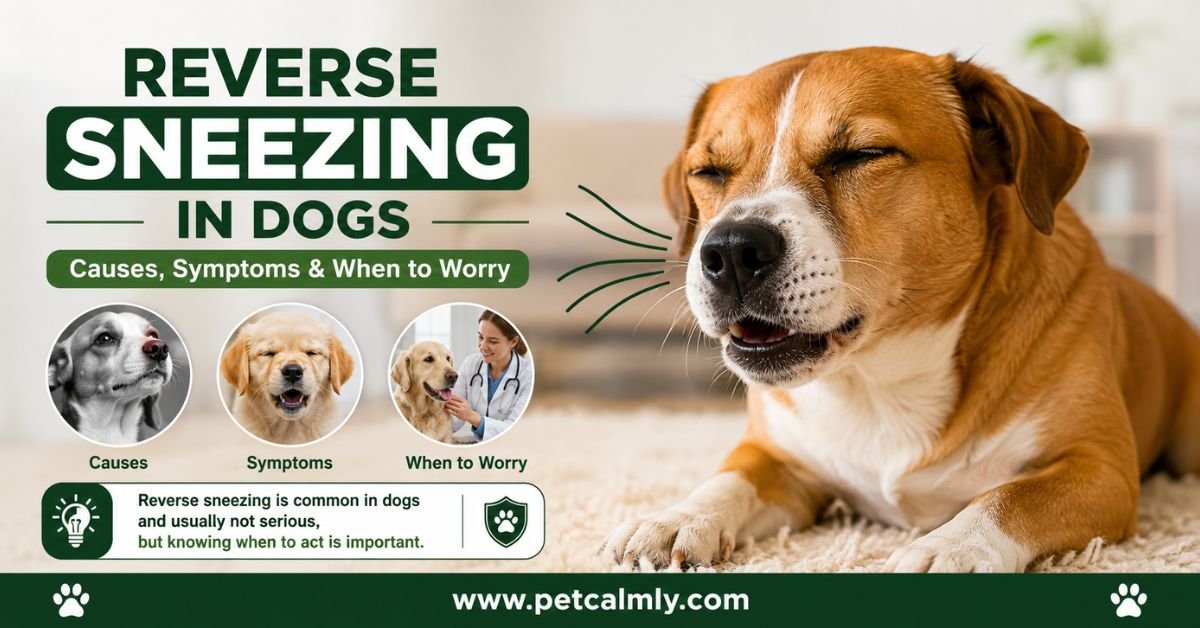
Reverse sneezing in dogs is a sudden episode where a dog rapidly pulls air inward through the nose, making loud snorting, honking, or gasping sounds. Although it can look alarming, it is usually harmless and lasts less than a minute. Episodes are often triggered by irritation in the nose or throat, excitement, allergies, pulling on a leash, or strong smells. If your dog struggles to breathe normally between episodes, coughs up blood, faints, or has frequent or worsening attacks, contact your veterinarian promptly.
Introduction
The first time you see your dog reverse sneeze, it’s easy to think they’re choking or having trouble breathing. They may suddenly stand still, stretch their neck forward, make loud snorting sounds, and repeatedly inhale through their nose. Many pet owners panic because the episode looks dramatic.
The reassuring news is that reverse sneezing is common in dogs and is usually not a medical emergency. In most cases, your dog returns to normal within a few seconds or a minute.
That said, reverse sneezing shouldn’t always be ignored. Frequent episodes, changes in breathing, or other unusual symptoms may point to allergies, nasal irritation, infections, or, in rare cases, more serious health conditions.
This guide explains everything you need to know about reverse sneezing in dogs, including what it is, why it happens, what it looks like, common causes, and how to tell the difference between a harmless episode and a situation that needs veterinary attention.
What Is Reverse Sneezing in Dogs?
Reverse sneezing, also called paroxysmal respiration or inspiratory paroxysmal respiration, is a reflex that occurs when the tissues in the back of a dog’s nose or throat become irritated.
Instead of forcefully pushing air out like a normal sneeze, your dog repeatedly pulls air inward through the nose, creating a distinctive snorting or honking sound.
Think of it as the opposite of a regular sneeze.
Normal sneeze
- Air is pushed out of the nose.
- Usually happens once or twice.
- Helps remove dust or irritants.
Reverse sneeze
- Air is pulled into the nose rapidly.
- Happens in repeated bursts.
- Usually lasts between 10 and 60 seconds.
Most dogs remain fully conscious during the episode and recover immediately afterward.
Is Reverse Sneezing Dangerous?
In most dogs, reverse sneezing is not dangerous. It is usually caused by temporary irritation of the nose or throat and resolves on its own within a minute. However, frequent episodes, difficulty breathing between attacks, nasal bleeding, collapse, blue gums, or other signs of illness should be evaluated by a veterinarian.
What Does Reverse Sneezing Look Like?
Recognizing a reverse snezing episode can help you stay calm and avoid confusing it with choking or respiratory distress.
Common signs include:
- Loud snorting sounds
- Repeated rapid inhaling through the nose
- Honking or goose-like noises
- Neck stretched forward
- Elbows held away from the body
- Standing still during the episode
- Wide eyes that may look frightened
- Brief inability to stop inhaling
- Normal breathing immediately afterward
Many dogs act completely normal once the episode ends.
Some may go right back to:
- Playing
- Eating
- Sleeping
- Walking
- Wagging their tail
This quick recovery is one reason reverse sneezing is generally considered harmless.
What Does Reverse Sneezing Sound Like?
Owners often describe it as sounding like:
- A goose honking
- Loud snorting
- Repeated sniffing
- Gasping through the nose
- Pig-like snorts
- Rapid inhaling noises
Because the sounds are unusual, many people mistake reverse sneezing for choking or an asthma attack.
Why Does Reverse Sneezing Happen?
Reverse sneezing is the body’s way of responding to irritation around the soft palate, nasal passages, or upper throat.
When these sensitive tissues become irritated, the muscles in the throat spasm briefly. This causes the dog to repeatedly inhale through the nose until the irritation settles.
The episode usually ends once the muscles relax and normal breathing resumes.
You can think of it as a protective reflex, much like coughing or regular sneezing.
11 Common Causes of Reverse Sneezing in Dogs
Many different triggers can irritate a dog’s upper airway. Some are completely harmless, while others may need veterinary treatment.
1. Allergies
Seasonal allergies are among the most common reasons dogs reverse sneeze.
Common allergens include:
- Grass pollen
- Tree pollen
- Weed pollen
- Mold spores
- Dust mites
Dogs with allergies may also show:
- Itchy skin
- Red ears
- Watery eyes
- Paw licking
- Frequent scratching
2. Strong Smells
Dogs have an incredibly sensitive sense of smell.
Powerful odors may irritate their nasal passages, including:
- Perfume
- Air fresheners
- Cleaning sprays
- Cigarette smoke
- Candles
- Essential oils
- Household chemicals
Reducing exposure often decreases episodes.
3. Excitement
Some dogs reverse sneeze after becoming excited.
Examples include:
- Visitors arriving
- Going for a walk
- Playing fetch
- Meeting other dogs
- Mealtime anticipation
The increased breathing rate may briefly irritate the throat.
4. Pulling on the Leash
Pressure from a collar can irritate the throat.
Dogs that pull hard while walking may experience more reverse sneezing episodes.
Using a well-fitted harness instead of a neck collar may reduce this trigger, especially for small breeds.
5. Drinking or Eating Too Quickly
Some dogs inhale small amounts of food particles or water while eating too fast.
This temporary irritation can trigger a reverse sneeze.
Slow-feeder bowls may help dogs that regularly gulp their meals.
6. Dust and Environmental Irritants
Airborne particles can irritate sensitive nasal tissues.
Examples include:
- Household dust
- Sand
- Garden mulch
- Smoke
- Powder
- Flour
- Construction debris
Keeping your home clean and well-ventilated can help minimize exposure.
7. Changes in Temperature
Sudden shifts between warm and cold air may trigger reverse sneezing in some dogs.
For example:
- Leaving an air-conditioned house
- Walking outside on a cold morning
- Sleeping under a fan
Not every dog is sensitive, but some experience episodes during seasonal weather changes.
8. Mild Upper Respiratory Infections
Minor viral or bacterial infections may temporarily inflame the nasal passages.
Along with reverse sneezing, you might notice:
- Mild nasal discharge
- Occasional coughing
- Sneezing
- Watery eyes
If these signs persist or worsen, your veterinarian should examine your dog.
9. Nasal Mites (Less Common)
In some regions, nasal mites can irritate the inside of a dog’s nose.
Possible signs include:
- Frequent reverse sneezing
- Nose rubbing
- Sneezing
- Nasal discharge
- Occasional nosebleeds
A veterinarian can diagnose and treat nasal mites with appropriate medication.
10. Foreign Objects in the Nose
Grass seeds, tiny plant fragments, or other debris can become lodged inside the nasal passages.
This is more likely if your dog has been:
- Hiking
- Running through tall grass
- Hunting
- Digging outdoors
A foreign object can cause persistent irritation and should be removed by a veterinarian.
11. Nasal Polyps or Growths
Although uncommon, benign polyps or tumors inside the nasal cavity can cause repeated reverse sneezing.
Other warning signs may include:
- One-sided nasal discharge
- Nosebleeds
- Facial swelling
- Difficulty breathing
- Reduced appetite
These symptoms require prompt veterinary evaluation.
Which Dogs Are More Likely to Reverse Sneeze?
Any dog can experience reverse sneezing, but some are more prone than others.
Dogs at higher risk include:
- Small breeds
- Toy breeds
- Dogs with shorter noses
- Dogs with allergies
- Young adult dogs
- Dogs exposed to smoke or strong odors
- Dogs that pull heavily on collars
Commonly affected breeds include:
- Chihuahua
- Pug
- Yorkshire Terrier
- Shih Tzu
- Maltese
- Pomeranian
- Boston Terrier
- French Bulldog
- Cavalier King Charles Spaniel
These breeds often have narrower upper airways, making them more sensitive to irritation.
Reverse Sneezing vs. Other Breathing Problems
One of the biggest concerns for pet owners is telling the difference between a harmless reverse sneeze and a true emergency.
| Feature | Reverse Sneezing | Choking | Collapsing Trachea | Asthma-Like Distress |
|---|---|---|---|---|
| Air movement | Rapid inhaling through nose | Airway may be blocked | Airway partially collapses | Labored breathing |
| Duration | 10–60 seconds | Continues until obstruction is relieved | May come and go | Often persistent |
| Dog remains conscious | Yes | Usually yes | Yes | Yes |
| Recovery | Immediate | No, unless object removed | May continue coughing | Breathing may stay difficult |
| Emergency? | Usually no | Yes | Veterinary evaluation recommended | Yes if severe |
Important: If your dog cannot breathe normally, has blue or pale gums, collapses, or appears unable to get enough air, seek emergency veterinary care immediately. These signs are not typical of reverse sneezing.
Can Reverse Sneezing Harm My Dog?
For most healthy dogs, occasional reverse sneezing does not damage the lungs, nose, throat, or heart. The episode may look dramatic, but it usually ends on its own without causing lasting harm.
However, frequent or worsening episodes deserve attention because they may indicate an underlying issue such as allergies, chronic nasal inflammation, dental disease affecting the nasal passages, or another upper airway problem. Treating the underlying cause often reduces how often reverse sneezing occurs.
How to Stop Reverse Sneezing in Dogs
Watching your dog reverse sneeze can be unsettling, but your reaction can make a difference. Most episodes stop on their own within 30 to 60 seconds. Your main goal is to keep your dog calm and help the throat muscles relax.
There’s no guaranteed way to stop every episode instantly, but these gentle techniques often help.
1. Stay Calm
Dogs are very good at picking up on our emotions. If you panic, speak loudly, or rush toward them, your dog may become more anxious, which can prolong the episode.
Instead:
- Speak in a soft, reassuring voice.
- Avoid sudden movements.
- Stay close without crowding your dog.
- Let them know you’re there until the episode passes.
2. Gently Massage the Throat
Lightly rubbing your dog’s throat can encourage swallowing, which may help relax the irritated muscles causing the reverse sneeze.
Use gentle pressure—never squeeze or press firmly on the neck.
3. Encourage Your Dog to Swallow
Swallowing often helps end a reverse sneezing episode.
You can encourage swallowing by:
- Offering a small sip of water after the episode begins to ease.
- Gently stroking under the chin.
- Lightly rubbing the throat.
Only do this if your dog is calm enough to swallow safely.
4. Briefly Cover the Nostrils (Only if Recommended by Your Veterinarian)
Some veterinarians recommend briefly covering a dog’s nostrils for one or two seconds to encourage swallowing.
Do not try this if:
- Your dog is panicking.
- They have trouble breathing.
- They have a known respiratory disease.
- You’re unsure how to do it safely.
If you’ve never done this before, ask your veterinarian to demonstrate the technique during a routine visit.
5. Remove the Trigger
If you know what started the episode, remove the irritant whenever possible.
Examples include:
- Moving away from smoke.
- Turning off scented sprays.
- Leaving a dusty room.
- Taking a break after vigorous play.
- Switching to fresh outdoor air if the environment is stuffy.
What to Do During a Reverse Sneezing Episode
Use this simple checklist the next time your dog reverse sneezes.
Step 1
Stay calm.
Step 2
Watch your dog’s breathing without restraining them.
Step 3
Speak softly to help them relax.
Step 4
Gently massage the throat if your dog tolerates it.
Step 5
Allow the episode to end naturally.
Step 6
Observe your dog afterward.
If your dog quickly returns to normal behavior, the episode was likely a typical reverse sneeze.
What NOT to Do During Reverse Sneezing
Some well-meaning actions can make the situation worse.
Avoid these common mistakes:
- Don’t panic.
- Don’t force your dog’s mouth open.
- Don’t put your fingers inside the mouth.
- Don’t shake your dog.
- Don’t hold their tongue.
- Don’t hit or pat their back forcefully.
- Don’t force food or water into their mouth during active snorting.
- Don’t assume every episode is harmless if they’re becoming frequent.
If something doesn’t seem right, trust your instincts and contact your veterinarian.
Home Care Tips for Dogs That Reverse Sneeze Frequently
If your dog experiences occasional reverse sneezing but your veterinarian has ruled out serious illness, small changes at home may reduce episodes.
Keep Indoor Air Clean
Reduce airborne irritants by:
- Vacuuming regularly.
- Washing pet bedding weekly.
- Using high-quality air filters if needed.
- Avoiding cigarette smoke indoors.
Cleaner air can be especially helpful for dogs with allergies.
Avoid Strong Fragrances
Many dogs have noses that are far more sensitive than ours.
Try limiting:
- Perfumes
- Air fresheners
- Scented candles
- Essential oil diffusers
- Strong cleaning products
Unscented products are often a better choice for sensitive dogs.
Switch to a Harness
Dogs that pull on a collar may benefit from a chest harness.
A harness reduces pressure on the throat and upper airway, especially during walks.
This is particularly helpful for:
- Chihuahuas
- Pugs
- Yorkies
- Shih Tzus
- Other small breeds
Manage Seasonal Allergies
If allergies trigger your dog’s reverse sneezing, your veterinarian may recommend:
- Allergy management plans
- Prescription medications
- Environmental changes
- Regular bathing to remove pollen
- Wiping paws after walks
Never give human allergy medications unless your veterinarian specifically advises it.
Slow Down Fast Eaters
Dogs that gulp food may irritate their throat.
Helpful solutions include:
- Slow-feeder bowls
- Puzzle feeders
- Smaller meals
- Feeding in a calm environment
Can Reverse Sneezing Be Prevented?
Not every episode can be prevented, but many dogs experience fewer attacks when common triggers are managed.
Prevention Checklist
Use a harness instead of a collar if your dog pulls.
Keep your home free of smoke.
Reduce dust buildup.
Limit exposure to strong scents.
Keep allergies under control.
Feed meals slowly.
Maintain regular veterinary checkups.
Watch for patterns in your dog’s episodes.
Many owners notice that simply identifying their dog’s trigger makes episodes much less frequent.
How Veterinarians Diagnose Reverse Sneezing
Reverse sneezing itself isn’t a disease—it’s a symptom. Your veterinarian’s job is to determine whether it’s a normal reflex or a sign of another condition.
During the appointment, your veterinarian may ask:
- How long has this been happening?
- How often do episodes occur?
- What does the episode sound like?
- Does anything trigger it?
- Has your dog been coughing?
- Is there nasal discharge?
- Any recent illness?
- Any exposure to smoke or chemicals?
Videos recorded on your phone can be extremely helpful because many dogs don’t reverse sneeze during the exam.
Physical Examination
Your veterinarian will typically examine:
- Nose
- Mouth
- Teeth
- Throat
- Neck
- Lungs
- Heart
- Lymph nodes
- Breathing pattern
This helps rule out other respiratory conditions.
Diagnostic Tests Your Veterinarian May Recommend
If episodes are unusual, severe, or frequent, additional testing may be needed.
Depending on your dog’s symptoms, tests may include:
| Test | Why It May Be Needed |
|---|---|
| Nasal examination | Looks for irritation or foreign objects |
| Blood tests | Checks for infection or underlying illness |
| X-rays | Evaluates lungs, airway, or chest |
| Rhinoscopy | Uses a small camera to examine the nasal passages |
| CT scan | Investigates nasal masses or chronic disease |
| Allergy evaluation | Identifies environmental triggers |
Not every dog requires these tests. Many healthy dogs with occasional reverse sneezing need only a physical examination and monitoring.
Treatment for Reverse Sneezing in Dogs
Treatment depends on the underlying cause not the reverse sneezing itself.
Here are some common approaches.
Allergies
If allergies are responsible, your veterinarian may recommend:
- Allergy medication
- Environmental management
- Regular bathing
- Air filtration
- Prescription therapies for chronic cases
Upper Respiratory Infection
Treatment may include:
- Supportive care
- Rest
- Hydration
- Appropriate medications if a bacterial infection is diagnosed
Nasal Mites
Prescription antiparasitic medication is typically effective.
Do not use over-the-counter parasite treatments unless directed by your veterinarian.
Foreign Object
If a grass seed or other object is lodged in the nose, your veterinarian may remove it using specialized equipment, sometimes under sedation.
Nasal Polyps or Tumors
Further imaging and specialized treatment may be required, depending on the diagnosis.
Collar-Related Irritation
A simple switch from a neck collar to a properly fitted harness often reduces episodes in dogs that pull on walks.
Are Certain Dog Breeds More Likely to Reverse Sneeze?
Yes. Although any breed can reverse sneeze, it tends to occur more often in dogs with smaller airways or shortened facial anatomy.
Breeds commonly affected include:
- Chihuahua
- Yorkshire Terrier
- Shih Tzu
- Pomeranian
- Maltese
- Toy Poodle
- Cavalier King Charles Spaniel
- Pug
- French Bulldog
- Boston Terrier
These dogs may have narrower nasal passages or soft palate structures that make them more sensitive to irritation.
Reverse Sneezing in Puppies
Puppies can reverse sneeze just like adult dogs.
Common reasons include:
- Curiosity leading to sniffing dust or grass
- Mild environmental allergies
- Excitement during play
- Developing immune systems encountering new irritants
Because puppies are still growing, it’s especially important to monitor for additional symptoms such as coughing, lethargy, poor appetite, or nasal discharge. These could indicate an infection or another condition that requires veterinary care.
Reverse Sneezing in Senior Dogs
Occasional reverse sneezing isn’t unusual in older dogs, but new or worsening episodes deserve closer attention.
In senior dogs, your veterinarian may want to rule out:
- Chronic nasal inflammation
- Dental disease affecting the nasal passages
- Nasal polyps
- Tumors
- Age-related respiratory conditions
Early evaluation can help identify underlying problems while they’re easier to manage.
Real-Life Owner Scenarios
Scenario 1: The Excited Greeter
Every time the front door opens, Bella, a 4-year-old Chihuahua, races to greet visitors. In her excitement, she occasionally has a brief reverse sneezing episode that lasts about 20 seconds before returning to normal. Her veterinarian finds no underlying illness, and the episodes become less frequent once her owner helps her stay calmer when guests arrive.
Scenario 2: The Springtime Snorter
Max, a Yorkshire Terrier, begins reverse sneezing several times a week each spring. He also licks his paws and rubs his face after walks. After a veterinary examination, seasonal allergies are identified as the likely trigger. Managing his allergies and wiping his paws after outdoor walks significantly reduces the episodes.
Scenario 3: The Outdoor Explorer
Luna enjoys running through tall grass at the park. One afternoon, she develops repeated reverse sneezing that continues throughout the day and is accompanied by pawing at her nose. A veterinary exam reveals a small grass seed lodged in her nasal passage, which is safely removed.
When Should You Worry About Reverse Sneezing in Dogs?
Most reverse sneezing episodes are harmless and pass within a minute. However, it’s important to know when an episode may be a sign of something more serious.
A good rule of thumb is to look at your dog’s overall condition, not just the reverse sneeze itself.
Contact Your Veterinarian If:
- Episodes become more frequent or severe.
- Your dog has never reverse sneezed before and suddenly starts doing it often.
- Episodes last longer than one minute or occur repeatedly throughout the day.
- Your dog seems uncomfortable even after the episode ends.
- There is thick, yellow, green, or bloody nasal discharge.
- Your dog coughs regularly in addition to reverse sneezing.
- Your dog has a fever, loss of appetite, or low energy.
- Your dog rubs or paws at their nose constantly.
- Breathing sounds abnormal even between episodes.
- Your dog has known allergies that are becoming harder to manage.
While these signs don’t always indicate a serious illness, they do warrant a professional examination to identify the underlying cause.
When Is Reverse Sneezing an Emergency?
Although reverse sneezing itself is rarely an emergency, some breathing problems can look similar.
Seek emergency veterinary care immediately if your dog:
- Cannot breathe normally after the episode.
- Has blue, gray, or very pale gums.
- Collapses or loses consciousness.
- Is choking on a known object.
- Has severe swelling around the face or throat.
- Shows signs of an allergic reaction after an insect sting or medication.
- Produces large amounts of blood from the nose.
- Has severe breathing difficulty that continues after the episode.
These symptoms are not typical of reverse sneezing and require urgent medical attention.
Signs It May Not Be Reverse Sneezing
Many respiratory conditions can resemble reverse sneezing, especially to first-time dog owners.
Here are some conditions that your veterinarian may consider.
Kennel Cough
Dogs with kennel cough often have:
- A persistent, harsh cough
- Retching after coughing
- Mild nasal discharge
- Reduced energy in some cases
Unlike reverse sneezing, kennel cough usually continues over several days.
Collapsing Trachea
This condition is common in small breeds.
Signs include:
- A dry “goose honk” cough
- Coughing after excitement
- Coughing when pressure is placed on the neck
- Exercise intolerance
Although the sound can resemble reverse sneezing, the breathing pattern is different.
Nasal Foreign Body
Grass awns, seeds, or other objects lodged in the nose may cause:
- Continuous sneezing
- Pawing at the face
- Nosebleeds
- One-sided nasal discharge
- Frequent reverse sneezing
This problem requires veterinary removal.
Dental Disease
Infections involving the upper teeth can sometimes affect the nearby nasal passages.
Possible signs include:
- Bad breath
- Difficulty eating
- Facial swelling
- Nasal discharge
- Reverse sneezing
Regular dental care helps reduce this risk.
Nasal Tumors
Although uncommon, nasal tumors are more likely in middle-aged and senior dogs.
Warning signs include:
- One-sided nasal discharge
- Nosebleeds
- Facial deformity
- Weight loss
- Persistent breathing changes
Early diagnosis offers the best chance for effective treatment.
Heart Disease
Reverse sneezing is not a common sign of heart disease, but dogs with heart conditions may cough, tire easily, or have difficulty breathing.
If your dog has:
- Persistent coughing
- Rapid breathing at rest
- Exercise intolerance
- Fainting episodes
Schedule a veterinary evaluation promptly.
Can Reverse Sneezing Become Chronic?
Yes, some dogs experience reverse sneezing throughout their lives.
For many, episodes remain:
- Short
- Mild
- Infrequent
- Triggered by predictable situations
Examples include:
- Seasonal pollen
- Excitement
- Drinking cold water quickly
- Pulling on a leash
- Dust exposure
If your veterinarian has ruled out underlying disease, occasional lifelong reverse sneezing is generally not harmful.
However, if the pattern changes, don’t assume it’s still the same issue. New or worsening symptoms should always be checked.
Will Reverse Sneezing Go Away on Its Own?
In many dogs, yes.
Some puppies outgrow reverse sneezing as their airways mature, while adult dogs may experience only occasional episodes throughout life.
Whether it improves depends on the underlying trigger.
For example:
| Cause | Likelihood of Improvement |
|---|---|
| Temporary nasal irritation | Usually resolves quickly |
| Seasonal allergies | Improves with allergy management |
| Strong odors | Stops once the irritant is removed |
| Collar irritation | Often improves after switching to a harness |
| Foreign object | Resolves after removal |
| Nasal disease | Depends on diagnosis and treatment |
Keeping a Reverse Sneezing Diary
If episodes happen regularly, keeping a simple record can help your veterinarian identify patterns.
Include:
| Record | Example |
|---|---|
| Date | April 12 |
| Time | 7:30 AM |
| Duration | 20 seconds |
| Trigger | Morning walk |
| Location | Backyard |
| Other symptoms | None |
| Recovery | Immediate |
Over time, you may notice patterns involving weather, exercise, specific environments, or allergens.
Prevention Checklist for Dog Owners
While not every episode can be prevented, these habits may reduce the chances of irritation.
Daily Prevention Checklist
Walk your dog using a harness if they pull.
Vacuum and dust your home regularly.
Avoid smoking around your dog.
Limit scented candles, perfumes, and air fresheners.
Keep vaccinations and wellness exams up to date.
Treat allergies under veterinary guidance.
Feed slowly if your dog gulps meals.
Watch for seasonal patterns.
Check your yard for foxtails or sharp grass seeds if they’re common in your area.
Record frequent episodes to discuss with your veterinarian.
Key Takeaways
- Reverse sneezing is a common reflex caused by irritation of the nose or throat.
- It sounds dramatic but is usually harmless.
- Most episodes last between 10 and 60 seconds.
- Stay calm and allow the episode to pass naturally.
- Gentle throat massage or encouraging swallowing may help some dogs.
- Allergies, excitement, strong smells, collars, and environmental irritants are common triggers.
- Frequent or worsening episodes should be evaluated by a veterinarian.
- Difficulty breathing, collapse, blue gums, or prolonged distress are emergencies.
More Information About Pets, Please Visit Our Website: Early Signs of Heart Disease in Dogs
Easy Dog Food Recipes at Home
Best Food for Senior Dogs to Gain Weight
Conclusion
Reverse sneezing can be frightening the first time you see it, but in most cases, it’s a normal reflex rather than a medical crisis. Learning what a typical episode looks and sounds like can help you respond calmly and confidently.
Pay attention to your dog’s overall health, identify possible triggers, and keep track of any changes in frequency or severity. Small adjustments—such as switching to a harness, reducing exposure to irritants, or managing seasonal allergies may significantly reduce episodes.
Most importantly, trust your instincts. If your dog seems unwell, struggles to breathe normally, or develops additional symptoms, don’t hesitate to contact your veterinarian. Early evaluation can identify underlying conditions and give your dog the best chance of staying healthy and comfortable.
Frequently Asked Questions
1. How long does reverse sneezing usually last in dogs?
Most episodes last 10 to 60 seconds. Some end in just a few seconds, while others may continue for about a minute. If an episode lasts much longer or your dog doesn’t recover normally, contact your veterinarian.
2. Can reverse sneezing hurt my dog?
Occasional reverse sneezing is generally harmless and doesn’t damage the lungs or throat. However, frequent or severe episodes should be evaluated to rule out allergies, infections, or other airway problems.
3. Why does my dog reverse sneeze when excited?
Excitement can cause rapid breathing and temporary irritation of the soft palate or throat, triggering a reverse sneezing episode. Many dogs recover as soon as they calm down.
4. Is reverse sneezing more common in certain dog breeds?
Yes. Toy and small breeds such as Chihuahuas, Yorkshire Terriers, Shih Tzus, Pomeranians, Pugs, and French Bulldogs are more likely to experience reverse sneezing because of their airway anatomy.
5. Should I take my dog to the vet after one reverse sneezing episode?
Not necessarily. If it’s a single, short episode and your dog returns to normal immediately, monitoring at home is usually appropriate. Seek veterinary advice if episodes become frequent, severe, or are accompanied by other symptoms.
6. Can allergies cause reverse sneezing in dogs?
Yes. Seasonal pollen, dust mites, mold, and other environmental allergens can irritate the upper airway and trigger reverse sneezing. Your veterinarian can help determine whether allergies are contributing to your dog’s symptoms.