Short direct answer
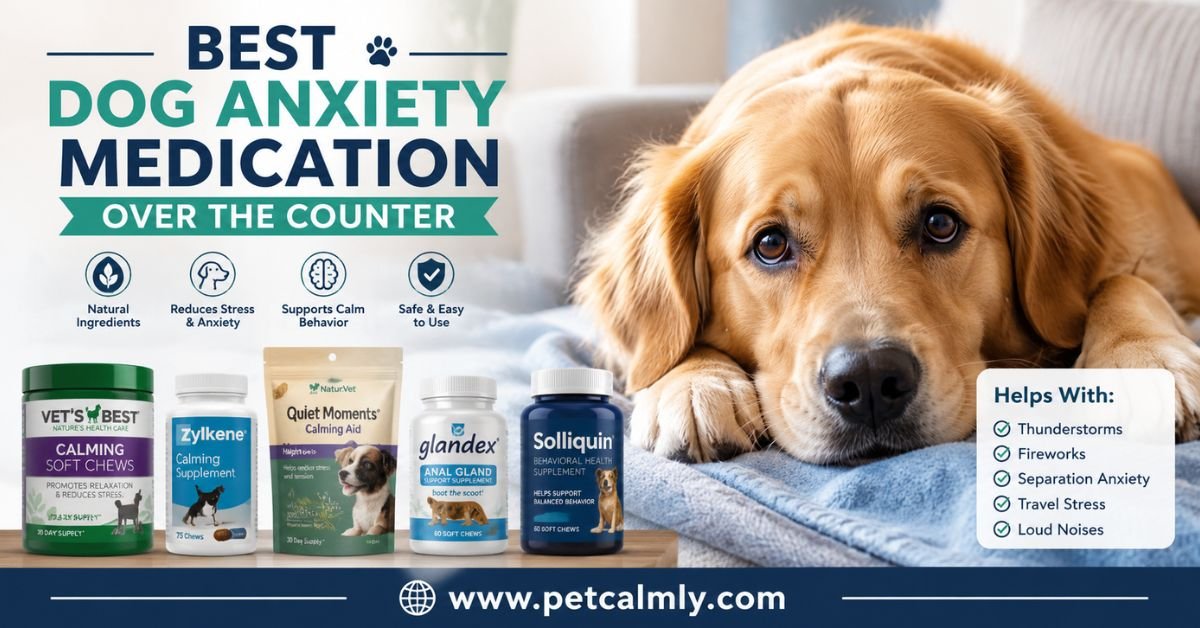
The best dog anxiety medication over the counter depends on what’s causing your dog’s stress. Mild anxiety often responds well to calming chews, pheromone products, L-theanine, melatonin (only when appropriate), or alpha-casozepine supplements. These products can help dogs relax during thunderstorms, fireworks, travel, grooming, or short periods alone. However, if your dog has severe anxiety, panic attacks, aggression, or self-injuring behaviors, over-the-counter (OTC) products are unlikely to be enough, and you should consult your veterinarian for a complete treatment plan.
Introduction
Watching your dog pace around the house, shake during a thunderstorm, bark nonstop when left alone, or hide under the bed can be heartbreaking. Every dog feels worried from time to time, but some dogs struggle with anxiety that affects their daily lives.
Many pet owners begin searching for the best dog anxiety medication over the counter because they want a solution they can use quickly without a prescription. While several OTC calming products can be helpful, not every supplement works the same way—and some are better suited for specific situations than others.
The good news is that many dogs with mild or occasional anxiety improve with the right combination of calming supplements, environmental changes, training, and predictable routines. Understanding why your dog is anxious is just as important as choosing the right calming product.
In this guide, you’ll learn:
- What over-the-counter dog anxiety medication actually means
- Which ingredients have the strongest evidence for calming dogs
- The best types of OTC anxiety products and when to use them
- Which dogs are good candidates for these supplements
- When OTC options aren’t enough and veterinary care becomes important
- How to safely support your dog’s emotional well-being without relying on unnecessary medication
Understanding Dog Anxiety Before Choosing an OTC Medication
Many owners think anxiety is simply “bad behavior,” but that’s rarely true. Anxiety is an emotional response to something a dog perceives as frightening, stressful, or unpredictable.
Instead of trying to stop the behavior alone, it’s more helpful to understand what is causing your dog’s fear.
Common anxiety triggers include:
- Being left home alone
- Loud noises like fireworks or thunderstorms
- Traveling in the car
- Veterinary appointments
- Moving to a new home
- Changes in family routine
- New pets or visitors
- Previous traumatic experiences
- Age-related cognitive decline in senior dogs
When dogs feel anxious, their bodies release stress hormones that prepare them for “fight or flight.” This explains why anxious dogs may pace, pant, bark, drool, shake, or refuse food.
Flight is the part worth planning for. A frightened dog can slip out an open door during a storm or a fireworks show, so on those nights keep an engraved leather ID collar on your dog, and whoever finds them can call you right away.
OTC calming supplements don’t “sedate” dogs like prescription medications. Instead, most work by gently supporting the nervous system, helping some dogs feel more relaxed while remaining alert.
Signs Your Dog May Benefit From an Over-the-Counter Anxiety Supplement
Not every nervous dog needs medication. Some simply need reassurance, training, or environmental changes.
However, an OTC calming supplement may be worth discussing with your veterinarian if your dog regularly shows signs such as:
- Excessive panting without exercise
- Constant pacing
- Restlessness
- Trembling
- Whining or barking when alone
- Hiding during storms
- Mild destructive chewing
- Difficulty settling down
- Trouble sleeping
- Stress during travel
- Fear at veterinary visits
- Mild social anxiety around unfamiliar people or dogs
These supplements generally work best for mild to moderate anxiety rather than severe panic disorders.
Best Dog Anxiety Medication Over the Counter: Quick Comparison
| OTC Option | Best For | How It Works | Typical Onset |
|---|---|---|---|
| L-Theanine supplements | Daily anxiety | Supports calming brain chemicals | Several days to 2 weeks |
| Alpha-casozepine supplements | General stress | Milk protein that promotes relaxation | Daily use |
| Melatonin | Nighttime anxiety, travel, fireworks | Supports relaxation and sleep cycles | 30–90 minutes |
| Chamomile blends | Mild situational stress | Gentle herbal calming support | Variable |
| Valerian root formulas | Temporary stress | Herbal relaxation support | Within a few hours |
| Calming probiotics | Stress linked to gut health | Supports the gut-brain connection | Several weeks |
| Combination calming chews | Everyday anxiety | Multiple calming ingredients working together | Depends on ingredients |
Remember that dogs respond differently. What works well for one dog may not help another.
What Makes an OTC Dog Anxiety Product Effective?
Not every product labeled as “calming” contains ingredients with meaningful evidence behind them.
When comparing products, look beyond marketing claims and pay attention to the active ingredients.
An effective calming supplement should ideally:
- Use ingredients supported by veterinary research
- Clearly list ingredient amounts
- Provide weight-based dosing instructions
- Be manufactured by a reputable company
- Avoid unnecessary fillers or excessive artificial ingredients
- Include safety information and warnings
Supplements are not regulated the same way as prescription medications, so product quality can vary. Buying from well-established pet health brands and discussing supplements with your veterinarian is a smart way to reduce risk.
Best Ingredients Found in Over-the-Counter Dog Anxiety Medications
Rather than focusing on brand names alone, it’s often more helpful to understand the ingredients that actually promote calm behavior.
L-Theanine: One of the Most Researched Calming Ingredients
L-theanine is an amino acid naturally found in green tea. It does not make dogs sleepy but may encourage a calmer emotional state by influencing neurotransmitters involved in relaxation.
Many veterinarians recommend L-theanine for dogs experiencing:
- Mild separation anxiety
- Noise sensitivity
- Travel anxiety
- General nervousness
- Stress during training
Pros
- Non-sedating for most dogs
- Suitable for long-term use under veterinary guidance
- May improve focus while reducing anxiety
- Generally well tolerated
Possible drawbacks
- Doesn’t work instantly
- Often requires consistent daily use
- May not be enough for severe anxiety
Alpha-Casozepine: A Milk-Derived Calming Protein
Alpha-casozepine is a protein derived from casein, the main protein found in milk. It has been studied for its calming effects in both dogs and cats.
It may help dogs that experience:
- Everyday anxiety
- Environmental stress
- Multi-pet household tension
- Mild separation anxiety
Many owners appreciate that this ingredient typically promotes relaxation without making dogs appear heavily sedated.
Dogs with known dairy allergies should only use products containing alpha-casozepine after discussing them with a veterinarian.
Melatonin: Helpful for Short-Term Stress
Melatonin is a hormone naturally produced by the body that helps regulate sleep cycles.
For dogs, veterinarians sometimes recommend melatonin before predictable stressful events such as:
- Fireworks
- Thunderstorms
- Long car rides
- Grooming appointments
- Overnight travel
Benefits
- Works relatively quickly
- Helpful for occasional anxiety
- May also support better sleep in some senior dogs
Keep in mind
Melatonin should never be given without checking the correct dosage for your dog’s size and medical history. Human melatonin products sometimes contain ingredients like xylitol, which is extremely toxic to dogs.
Chamomile: A Gentle Herbal Option
Chamomile has long been used as a traditional calming herb.
Although scientific evidence in dogs is more limited than for some other ingredients, many calming supplements include chamomile alongside other supportive compounds.
Chamomile may be useful for:
- Mild nervousness
- Temporary stress
- Travel discomfort
- New environments
Dogs with allergies to plants in the daisy family may not tolerate chamomile well, so monitor carefully if trying it for the first time.
Valerian Root: An Herbal Ingredient for Temporary Anxiety
Valerian root is another herbal ingredient commonly found in calming chews and supplements.
Some owners find it useful before stressful events such as:
- Holiday fireworks
- Vet appointments
- Long-distance travel
- Boarding stays
However, responses vary. Some dogs become noticeably calmer, while others show little change. Because herbal supplements can interact with certain medications, it’s wise to consult your veterinarian before using them regularly.
Calming Probiotics: Supporting the Gut-Brain Connection
Researchers continue to learn more about how gut health influences behavior.
A healthy digestive system communicates with the brain through what’s often called the gut-brain axis. Some probiotic strains may help support a balanced stress response, particularly in dogs with sensitive stomachs or stress-related digestive upset.
Calming probiotics aren’t a quick fix, but they may become part of a long-term wellness plan for anxious dogs.
Benefits may include:
- Improved digestive health
- Better stress resilience
- Support for overall emotional well-being
- Gentle daily use alongside other behavioral strategies
Should You Choose Calming Chews, Tablets, Liquids, or Sprays?
Over-the-counter anxiety products come in several forms, and the best choice often depends on your dog’s preferences and the situation you’re trying to manage.
Calming Chews
These are among the most popular options because they’re easy to give and often taste like treats. Many combine ingredients such as L-theanine, chamomile, and melatonin for convenient daily or occasional use.
Best for: Dogs that willingly eat treats and need routine anxiety support.
Tablets and Capsules
Tablets usually contain concentrated active ingredients and can be easier to dose accurately based on body weight. They may work well for dogs already accustomed to taking medication.
Best for: Dogs needing consistent daily supplementation.
Liquid Supplements
Liquids allow flexible dosing and may be mixed with food, making them useful for picky eaters or small breeds.
Best for: Puppies, toy breeds, or dogs that refuse tablets.
Calming Sprays and Pheromone Products
These products don’t contain medication. Instead, they create a calming environment by using dog-appeasing pheromones or soothing scents designed specifically for pets.
Best for: Travel crates, bedding, recovery areas, or stressful environments where environmental support can make a difference.
How to Choose the Best Dog Anxiety Medication Over the Counter
With so many calming products available, it’s easy to feel overwhelmed. Instead of choosing the first supplement with good reviews, think about why your dog is anxious and when the anxiety happens.
A dog that panics during thunderstorms needs a different approach than one that struggles with separation anxiety every workday.
Ask yourself these questions before buying an OTC anxiety product:
- Is the anxiety occasional or happens every day?
- Does my dog become destructive or simply restless?
- Is there a specific trigger, like fireworks or travel?
- Does my dog have any health conditions?
- Is my dog taking other medications or supplements?
- Has my veterinarian ruled out pain or illness?
Matching the product to your dog’s needs often leads to better results than simply choosing the most popular supplement.
Best OTC Options Based on Your Dog’s Anxiety Trigger
For Separation Anxiety
Dogs with mild separation anxiety may benefit from:
- Daily L-theanine supplements
- Alpha-casozepine products
- Calming probiotics
- Dog-appeasing pheromone diffusers
- Puzzle toys and food enrichment
- Gradual independence training
If your dog injures itself, destroys doors, breaks windows, or panics when left alone, OTC products alone are unlikely to solve the problem. A veterinarian or qualified behavior professional should be involved.
For Fireworks and Thunderstorms
Noise anxiety is one of the most common reasons owners seek calming medication.
Helpful options may include:
- Melatonin (when recommended by your veterinarian)
- Combination calming chews
- Pheromone diffusers
- White noise machines
- A quiet, comfortable safe room
- Anxiety wraps that apply gentle pressure
It’s often best to give calming supplements before the stressful event begins rather than waiting until your dog is already frightened.
For Car Travel
Some dogs become anxious as soon as the car starts moving.
Helpful strategies include:
- OTC calming supplements given before travel
- Short practice rides with positive rewards
- Familiar bedding or blankets
- Good ventilation
- Frequent breaks during long trips
If your dog drools heavily, vomits repeatedly, or experiences severe panic during travel, ask your veterinarian whether prescription medication is more appropriate.
For Veterinary Visits
Many dogs become nervous simply entering the veterinary clinic.
Helpful approaches include:
- Calming supplements given ahead of time
- Bringing favorite treats
- Practicing gentle handling at home
- Scheduling quieter appointment times when possible
- Remaining calm yourself, as dogs often notice owner emotions
What to Expect After Giving an OTC Anxiety Supplement
Many owners expect immediate changes, but calming supplements usually work differently than prescription sedatives.
Depending on the ingredients, you may notice:
- Less pacing
- Reduced panting
- Improved ability to settle
- Better focus during training
- Easier recovery after stressful events
- Improved sleep after excitement
Your dog should still be alert, responsive, and interested in normal activities.
The goal isn’t to make your dog sleepy it is to help them cope with stress more comfortably.
How Long Do OTC Dog Anxiety Medications Take to Work?
The answer depends on the ingredient.
| Ingredient Type | Typical Time to Notice Effects |
|---|---|
| Melatonin | 30–90 minutes |
| Chamomile blends | 1–2 hours (varies) |
| Valerian root | A few hours |
| L-theanine | Several days to 2 weeks of consistent use |
| Alpha-casozepine | Often within several days to a few weeks |
| Calming probiotics | Several weeks |
Some products are designed for daily support, while others are intended for short-term stressful events.
Always follow the manufacturer’s instructions and your veterinarian’s guidance.
5 Common Mistakes Dog Owners Make
Even the best over-the-counter anxiety medication won’t work well if common mistakes get in the way.
1: Expecting Supplements to Replace Training
Supplements may help lower your dog’s stress level, but they don’t teach new behaviors.
For example, if your dog barks whenever you leave the house, calming chews alone won’t teach them that being alone is safe.
Behavior modification remains an important part of treatment.
2: Giving Supplements Only After Panic Starts
Many calming products work best when given before the stressful event.
If your dog only receives a supplement after fireworks have already started, it may have less time to become effective.
3: Choosing Products With Unknown Ingredients
Not all calming supplements are created equally.
Avoid products that:
- Hide ingredient amounts
- Make unrealistic promises
- Lack clear dosing instructions
- Don’t identify the manufacturer
- Contain unnecessary additives
Quality matters.
4: Using Human Products Without Veterinary Advice
Some human supplements contain ingredients that are unsafe for dogs.
Examples include:
- Xylitol (highly toxic)
- Excess vitamin D
- Certain essential oils
- High caffeine levels
- Alcohol-containing liquid preparations
Never assume that a human calming supplement is safe simply because it’s “natural.”
5: Ignoring Medical Problems
Sometimes anxiety-like behavior is actually caused by illness.
Dogs experiencing pain, hormonal disorders, neurological disease, or cognitive decline may appear anxious even though another medical issue is responsible.
A veterinary examination helps rule out these possibilities.
Natural Ways to Help an Anxious Dog Alongside OTC Medication
Calming supplements often work best when combined with everyday management strategies.
Create a Predictable Routine
Dogs generally feel more secure when daily life is predictable.
Try to keep:
- Feeding times consistent
- Walk schedules regular
- Bedtime similar each night
- Exercise routine steady
Predictability reduces uncertainty, which can lower stress in many dogs.
Increase Daily Physical Exercise
Many healthy adult dogs simply aren’t getting enough physical activity.
Appropriate exercise can help reduce:
- Restlessness
- Excess energy
- Frustration
- Mild anxiety
The right amount depends on your dog’s:
- Breed
- Age
- Health
- Fitness level
Avoid intense exercise immediately before stressful events if it seems to increase excitement rather than promote calm.
Add More Mental Enrichment
Mental stimulation is just as important as physical exercise.
Ideas include:
- Food puzzles
- Snuffle mats
- Nose work games
- Frozen food toys
- Basic obedience practice
- Short trick-training sessions
Keeping your dog’s brain engaged can reduce boredom-related stress and build confidence.
Teach Relaxation Skills
Dogs can learn to relax through positive reinforcement.
Simple exercises include:
- Rewarding calm behavior on a mat or bed
- Practicing “settle” or “place” cues
- Offering quiet praise when your dog chooses to relax
- Gradually increasing distractions as your dog becomes more comfortable
These skills become especially useful during mildly stressful situations.
Build Positive Associations With Triggers
If your dog fears the car, visitors, or grooming, don’t force them to “get over it.”
Instead:
- Introduce the trigger at a low intensity.
- Pair it with favorite treats or play.
- Keep sessions short.
- End before your dog becomes overwhelmed.
- Slowly increase the challenge over time.
This gradual process, known as desensitization and counterconditioning, is widely recommended by veterinary behavior professionals.
When Over-the-Counter Medication Isn’t Enough
OTC calming supplements have their limits.
Some dogs experience anxiety that significantly affects their quality of life and requires professional treatment.
Signs Your Dog Needs Veterinary Help
Contact your veterinarian if your dog:
- Hurts themselves trying to escape
- Breaks doors or windows
- Bites out of fear
- Stops eating because of anxiety
- Has panic attacks
- Hyperventilates frequently
- Cannot calm down after the trigger ends
- Develops severe separation anxiety
- Suddenly becomes anxious without an obvious reason
- Shows signs of illness along with behavioral changes
These situations often require a more comprehensive treatment plan.
Prescription Anxiety Medication vs. OTC Supplements
Here’s a simple comparison:
| Over-the-Counter Supplements | Prescription Medication |
|---|---|
| Best for mild anxiety | Best for moderate to severe anxiety |
| Available without a prescription | Requires veterinary evaluation |
| Usually gentle, non-sedating | May provide stronger anxiety control |
| Often combined with training | Usually combined with behavior therapy |
| Results vary between dogs | More appropriate for panic disorders and chronic anxiety |
Prescription medication isn’t a “last resort” or a sign of failure. For some dogs, it can greatly improve welfare when used under veterinary supervision.
What Should Pet Owners Do If Their Dog Seems Anxious?
If you’re unsure where to start, follow this simple plan:
Step 1: Identify the Trigger
Keep a journal for one or two weeks.
Write down:
- When the anxiety happens
- What occurred beforehand
- How long it lasts
- How your dog responds
Patterns often become clear.
Step 2: Schedule a Veterinary Checkup
A physical examination helps rule out pain, illness, hearing loss, or other medical conditions that may contribute to anxiety.
Step 3: Choose a High-Quality OTC Product
Select a supplement with clearly labeled ingredients and dosing instructions that match your dog’s size and needs.
Step 4: Support It With Training
Combine the supplement with:
- Positive reinforcement
- Environmental management
- Consistent routines
- Mental enrichment
- Gradual exposure to triggers
This combination is often more effective than relying on supplements alone.
Step 5: Reassess Progress
After several weeks, ask yourself:
- Is my dog recovering from stressful events more quickly?
- Is the anxiety less intense?
- Can my dog relax more easily?
- Are we both enjoying daily life more?
If not, speak with your veterinarian about additional treatment options.
How to Help Prevent Anxiety in Dogs
While you can’t prevent every form of anxiety, especially if it’s linked to genetics or past experiences, you can reduce your dog’s risk by building confidence and creating a stable environment from an early age.
Small, consistent habits often make a bigger difference than relying on calming supplements alone.
Build a Predictable Daily Routine
Dogs thrive on consistency. Knowing what to expect each day helps many dogs feel safe and secure.
Try to keep these routines as consistent as possible:
- Feeding times
- Walks and exercise
- Play sessions
- Bedtime
- Bathroom breaks
- Training sessions
Life isn’t always predictable, but minimizing sudden changes can help reduce stress.
Socialize Puppies Carefully
The first few months of life are an important learning period.
Positive experiences with different people, friendly dogs, sounds, and environments can help puppies grow into more confident adults.
Good socialization means introducing new experiences gradually and ensuring your puppy feels safe. Forcing interactions or exposing a frightened puppy to overwhelming situations can have the opposite effect.
Avoid Punishment for Fearful Behavior
A frightened dog isn’t being stubborn or disobedient.
Punishing behaviors like trembling, hiding, or barking can increase fear and damage trust.
Instead:
- Stay calm.
- Reward brave behavior.
- Give your dog space when needed.
- Use positive reinforcement to build confidence over time.
Helping your dog feel safe is more effective than trying to punish anxiety away.
Keep Your Dog Mentally Engaged
Mental stimulation helps many dogs cope better with everyday stress.
Ideas include:
- Food puzzle toys
- Scent games
- Basic obedience practice
- Trick training
- Rotating toys
- Supervised exploration on walks
Even 10 to 15 minutes of mental enrichment each day can help reduce boredom and improve emotional well-being.
Watch for Early Warning Signs
Anxiety rarely appears overnight.
Learning to recognize subtle signs allows you to step in before your dog becomes overwhelmed.
Early signs may include:
- Lip licking
- Yawning when not tired
- Pacing
- Dilated pupils
- Ears pinned back
- Tail tucked
- Avoiding eye contact
- Seeking constant reassurance
- Restlessness
Responding early may prevent anxiety from escalating into panic.
Real-Life Examples: When OTC Anxiety Support May Help
Every dog is different, but these examples show how over-the-counter calming products can fit into a broader care plan.
Example 1: Firework Anxiety
Bella, a 4-year-old Labrador Retriever, became restless whenever fireworks started.
Her owner worked with their veterinarian and began:
- Giving a veterinarian-recommended calming supplement before expected fireworks
- Closing curtains
- Playing white noise
- Providing a comfortable hiding space
- Offering a food puzzle during quieter moments
Bella still noticed the sounds, but she recovered more quickly and appeared less distressed.
Example 2: Mild Separation Anxiety
Charlie, a young mixed-breed dog, barked for several minutes after his family left for work.
His owners focused on:
- Independence training
- Short practice departures
- Food enrichment toys
- Daily exercise
- A veterinarian-approved calming supplement
Over several weeks, Charlie gradually became more comfortable staying home alone.
Example 3: Senior Dog With New Anxiety
Max, a 12-year-old Golden Retriever, suddenly began pacing at night.
Instead of assuming it was normal aging, his owner scheduled a veterinary visit.
The examination revealed age-related cognitive changes, and the veterinarian recommended a comprehensive treatment plan rather than relying only on OTC calming products.
This example highlights an important point:
Sudden anxiety deserves medical evaluation, especially in older dogs.
Can You Combine OTC Anxiety Medication With Training?
Yes—in fact, that’s often the most effective approach.
Think of calming supplements as one piece of a larger plan.
A successful anxiety management program usually includes:
- Positive reinforcement training
- Environmental management
- Predictable routines
- Physical exercise
- Mental enrichment
- Adequate sleep
- Veterinary guidance when needed
The goal isn’t simply to stop anxious behaviors it’s to help your dog feel more secure and confident.
Safety Checklist Before Giving Any OTC Dog Anxiety Medication
Use this quick checklist before starting a new calming product.
✔ Read the ingredient list carefully.
✔ Follow weight-based dosing instructions.
✔ Check with your veterinarian if your dog has a medical condition.
✔ Ask your veterinarian before combining multiple calming products.
✔ Avoid products containing xylitol or other ingredients toxic to dogs.
✔ Store supplements safely out of your dog’s reach.
✔ Watch for side effects such as vomiting, diarrhea, excessive sleepiness, or changes in behavior.
✔ Stop using the product and contact your veterinarian if you notice concerning reactions.
More Information About Pets, Please Visit Our Website: Best Dog Calming Treats
Best Dog Hair Removal Products
Dog Coat Care Products
Best Calming Supplements for Dogs
Frequently Asked Questions
1. What is the best dog anxiety medication over the counter?
There isn’t a single product that’s best for every dog. Many veterinarians recommend OTC calming supplements containing ingredients such as L-theanine, alpha-casozepine, melatonin, or calming probiotics for dogs with mild anxiety. The right choice depends on your dog’s age, health, anxiety trigger, and whether the product is intended for daily or occasional use.
2. Do over-the-counter dog anxiety medications really work?
They can help many dogs with mild to moderate anxiety, especially when combined with behavior training and environmental changes. However, they are generally less effective for severe anxiety or panic disorders, which often require veterinary care and prescription treatment.
3. Can I give my dog human anxiety medicine?
No. Human anxiety medications should never be given unless your veterinarian specifically prescribes them for your dog. Some medications and ingredients that are safe for people can be dangerous—or even life-threatening—for dogs.
4. How long should I use calming supplements?
That depends on the product and your dog’s needs. Some supplements are designed for daily, long-term support, while others are intended only for occasional stressful events like travel or fireworks. Always follow the product directions and your veterinarian’s advice.
5. Are calming chews safe for puppies?
Some calming products are formulated for puppies, but not all are appropriate for young dogs. Check the product label for age recommendations and speak with your veterinarian before giving supplements to a growing puppy.
6. When should I stop trying OTC products and call a veterinarian?
Schedule a veterinary appointment if your dog:
- Panics regularly
- Injures themselves
- Stops eating
- Becomes aggressive because of fear
- Develops sudden anxiety without an obvious cause
- Doesn’t improve after several weeks of appropriate OTC support and behavior management
Prompt evaluation can help identify underlying medical or behavioral issues and prevent anxiety from worsening.
Conclusion
Finding the best dog anxiety medication over the counter starts with understanding that no supplement can replace proper care, training, or veterinary guidance. The most effective OTC products are designed to support your dog’s ability to cope with stress—not to mask serious behavioral or medical problems.
If your dog’s anxiety is mild and tied to predictable situations such as travel, thunderstorms, or temporary changes in routine, a high-quality calming supplement combined with positive training, mental enrichment, and a stable daily schedule may provide meaningful relief.
However, if your dog experiences frequent panic, destructive behavior, self-injury, or anxiety that interferes with normal life, don’t wait for the problem to become more severe. A veterinarian can determine whether pain, illness, age-related changes, or a diagnosed anxiety disorder is contributing to the behavior and recommend the safest treatment plan.
Every dog deserves to feel safe, and every owner deserves practical, trustworthy guidance. By combining patience, evidence-based care, and realistic expectations, you can help your dog build confidence and enjoy a calmer, happier life.