Short direct answer
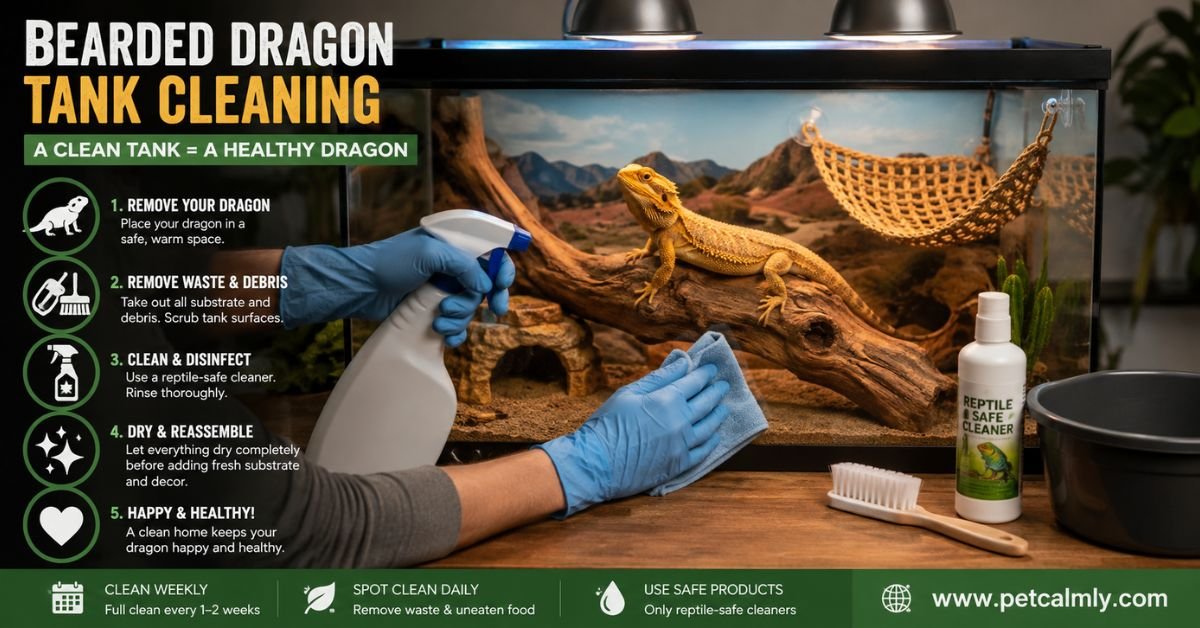
Clean a bearded dragon tank on two schedules: spot-clean daily by removing waste, uneaten food, and shed skin, and deep-clean every 2–4 weeks by removing all substrate and decor, washing everything with a reptile-safe disinfectant, rinsing thoroughly, and letting it dry completely before rebuilding the habitat. Daily spot-cleaning keeps bacteria and ammonia from building up between deep cleans, while the full reset prevents mold, mites, and the bacterial buildup that causes most bearded dragon skin and respiratory issues.
That’s the short version. If you want to actually get this right and avoid the mistakes that send a lot of first-time owners to the vet keep reading.
Why Tank Cleaning Matters More Than Most Owners Realize
Here’s something that surprises a lot of new bearded dragon owners: a tank that looks clean often isn’t. Bearded dragons defecate in the same corner repeatedly, which means bacteria concentrates in one spot even if the rest of the enclosure looks tidy. Add in the heat and humidity from their basking lamp, and you’ve got a small, warm, slightly damp environment that’s excellent at growing bacteria.
This isn’t fear-mongering it’s just how enclosed reptile habitats work. A dirty tank doesn’t usually cause a dramatic, obvious illness overnight. It’s more likely to show up as small, easy-to-dismiss changes: a slightly duller appetite, more frequent shedding problems, or a beardie that seems “off” without anything specific you can point to. By the time an owner notices something is really wrong, the tank has often been a problem for weeks.
The flip side is reassuring, though. Bearded dragons are actually one of the easier reptiles to keep clean once you have a system. You don’t need a hospital-grade routine you need a simple one you’ll actually stick to.
What You’ll Need Before You Start
Having supplies ready before cleaning day means you’re not scrambling mid-clean with a half-empty tank and a stressed dragon on your shoulder.
- Reptile-safe disinfectant (diluted chlorhexidine solution or a reptile-specific cleaner)
- White vinegar and water (for a natural alternative on non-porous surfaces)
- Paper towels or a designated reptile cleaning cloth
- A reptile-safe scrub brush or old toothbrush for corners and decor
- A spare, secure container with air holes to hold your dragon during cleaning
- Fresh substrate (if you use loose substrate)
- Gloves, ideally bearded dragons, like most reptiles, can carry Salmonella naturally, and this is worth taking seriously rather than dismissing
That last point deserves its own moment. It’s not that your dragon is dirty or that something is wrong with your setup — carrying Salmonella bacteria is normal and common in reptiles, and it doesn’t usually make the dragon sick at all. It’s simply part of owning a reptile responsibly. The CDC and AVMA both recommend handwashing after handling reptiles or their habitats, and that habit matters more than any specific cleaning product you choose.
Daily Spot-Cleaning: The 5-Minute Habit That Prevents Bigger Problems
Spot-cleaning is the unglamorous part of reptile ownership, but it’s genuinely the most important habit for tank hygiene. It’s also the part beginners tend to skip, usually because the tank “still looks fine.”
Each day, check for and remove:
- Solid waste — bearded dragons often use one corner consistently, which actually makes this easier once you know their spot
- Uneaten insects or greens — crickets left overnight can bite a sleeping dragon, and wilted greens attract bacteria and gnats
- Shed skin — small pieces can hide in substrate or decor and start to smell if left too long
- Damp substrate — a spilled water dish or splashed food creates a damp patch where bacteria multiplies fast
This takes about five minutes if you do it consistently. It’s the reptile equivalent of doing dishes right after dinner instead of letting them pile up much less overwhelming than an all-at-once deep clean would be if waste sat there for weeks.
Deep-Cleaning the Enclosure: Step-by-Step
A deep clean means everything comes out, gets washed, and goes back in fresh. Most owners do this every 2 to 4 weeks, though a heavily used tank or one with loose substrate may need it closer to every two weeks.
Step 1: Set Up a Safe, Temporary Space for Your Dragon
Move your bearded dragon into a secure holding container with good ventilation. Avoid anything overly stimulating or slippery a simple, calm space reduces stress during the move. If the clean will take more than 20–30 minutes, place the container somewhere warm, since bearded dragons cool down quickly outside their heated tank.
Step 2: Remove Everything
Take out all substrate, decor, hides, branches, and dishes. This is a good moment to actually look at your decor with fresh eyes — cracked hides, splintering wood, or decor with sharp edges are easy to miss day-to-day but worth replacing.
Step 3: Wash the Tank Itself
Wipe down the glass, floor, and corners with your reptile-safe disinfectant, paying particular attention to corners and seams where waste tends to collect. Let the disinfectant sit for the time recommended on the product label — this contact time is what actually kills bacteria, not just the wiping motion.
Step 4: Rinse Thoroughly
This step gets skipped more than any other, and it shouldn’t. Disinfectant residue left on tank surfaces can irritate a bearded dragon’s skin and eyes. Rinse until you can no longer smell the cleaning product at all, not just until the surface looks clean.
Step 5: Dry Completely Before Reassembling
A damp tank is an invitation for bacteria and mold to move back in immediately. Let everything air-dry fully, or dry it with a clean towel, before adding substrate and decor back in.
Step 6: Wash Decor and Dishes Separately
Hides, branches, and dishes should get the same disinfect-and-rinse treatment. Porous items like natural wood can be harder to fully sanitize — if a piece is looking worn out or you’re not confident it’s clean, it’s often easier to replace than to keep scrubbing.
Step 7: Rebuild the Habitat and Check Temperatures
Once everything is dry and back in place, give your basking and cool-side temperatures time to stabilize before returning your dragon. A tank that was just cleaned can run cooler than usual until the heat lamp has had time to warm the substrate and decor back up.
Choosing (and Cleaning) the Right Substrate
Substrate choice affects how often and how easily you’ll need to clean.
| Substrate Type | Cleaning Frequency | Notes |
|---|---|---|
| Reptile carpet / tile | Wipe daily, wash weekly | Easiest to keep hygienic; good for beginners |
| Paper towels / newsprint | Replace daily to every few days | Not attractive, but simple and safe |
| Non-adhesive shelf liner | Wipe daily, wash weekly | Similar upkeep to reptile carpet |
| Loose substrate (e.g., excavator clay, fine sand blends) | Spot-clean daily, full replace every few weeks | Requires more attention to avoid impaction risk; not recommended for young or new dragons |
If you’re newer to bearded dragon keeping, a solid surface like tile or reptile carpet tends to be far less stressful to maintain — and it removes any guesswork around impaction risk, which is a genuine concern some loose substrates carry for younger dragons in particular.
Common Cleaning Mistakes That Cause Real Problems
Using household cleaners. Bleach, ammonia-based products, and scented cleaners can leave residue that’s toxic to reptiles even after rinsing. Stick to products actually labeled reptile-safe or veterinary-grade disinfectants.
Skipping the rinse step. Mentioned above, but worth repeating because it’s the single most common corner-cutting mistake.
Cleaning the whole tank while the dragon is still inside. Beyond the stress this causes, disinfectant fumes in an enclosed space aren’t something your dragon should be breathing.
Not cleaning the water dish separately from the substrate area. Water dishes are a low-key hotspot for bacteria because they combine moisture with organic material like stray substrate or food particles.
Assuming “no smell” means “clean.” Ammonia buildup and early bacterial growth don’t always produce a strong odor right away. Sticking to your schedule matters more than trusting your nose alone.
Reusing decor from a sick dragon’s tank without full sanitizing. If your dragon has recently recovered from illness, decor and substrate deserve an extra-thorough clean or replacement rather than a quick wipe.
Behavior Signs That Point Back to Tank Hygiene
Sometimes a dirty tank shows up as a behavior change before it shows up as an obvious mess. Owners often describe things like:
- A dragon that suddenly avoids one side of the tank (often the side where waste has built up)
- Increased digging or restlessness, which can be discomfort-driven rather than just normal exploring
- A dragon that seems to bask less or eat less than usual, without other obvious explanation
None of these symptoms confirm a hygiene problem on their own bearded dragons show similar behavior for temperature issues, stress, or normal seasonal changes like brumation. But if a deep clean is overdue and you’re also seeing behavior shifts, it’s worth treating tank hygiene as your first, easiest thing to rule out.
When Should You Worry? Signs That Go Beyond Routine Cleaning
Most cleaning-related issues are preventable with a consistent schedule, but it’s important to know when something has moved past “clean the tank” territory and into “call the vet” territory.
Reach out to a reptile-experienced veterinarian if you notice:
- Discolored, swollen, or foul-smelling waste that doesn’t improve after a tank clean
- Visible mold or a persistent musty smell that returns quickly after deep cleaning
- Skin discoloration, sores, or unusual patches, especially around the belly or feet
- Labored breathing, wheezing, or bubbling around the nose or mouth
- Ongoing appetite loss that isn’t explained by brumation or a recent shed
- Lethargy that continues even after temperatures and humidity are corrected
These signs can point to respiratory infections, bacterial infections, or parasite issues that a cleaning routine alone won’t resolve. According to VCA Animal Hospitals and the Merck Veterinary Manual, reptile respiratory and skin infections are frequently linked to poor husbandry conditions, including inadequate temperatures and unsanitary enclosures which is exactly why hygiene and habitat setup are treated as prevention, not treatment. A vet visit at this stage isn’t an overreaction; it’s the appropriate next step once basic care has been ruled out as the cause.
What Pet Owners Should Actually Do: A Realistic Cleaning Schedule
Rather than trying to remember everything at once, most owners do better with a simple routine that becomes automatic over time.
Daily:
- Remove waste and leftover food
- Check and refill water
- Quick visual scan for shed skin or damp spots
Weekly:
- Wipe down glass and visible surfaces
- Wash the water dish with soap or reptile-safe cleaner
- Spot-check substrate for buildup
Every 2–4 weeks:
- Full deep clean of tank, substrate, and decor
- Inspect decor for wear or damage
- Recheck thermostat and humidity readings once the tank is reassembled
Sticking a simple checklist to the side of the tank or setting a recurring reminder on your phone works better than trying to keep the schedule in your head especially in the first few months of ownership, before the routine becomes second nature.
Conclusion
Consider a fairly typical setup: a bearded dragon in a 40-gallon tank with reptile carpet substrate. The owner spends about five minutes each morning removing waste and checking the water dish. Every Sunday, they give the glass a quick wipe and wash the water dish with soap. Once a month, they set aside 30–40 minutes on a weekend to do a full deep clean pulling the carpet, wiping every surface, and letting things dry while their dragon suns in a supervised outdoor enclosure nearby.
This isn’t a demanding routine once it’s established. Most of the ongoing work is those five daily minutes the monthly deep clean is really just an extension of habits already in place, not a separate, dreaded task.
More Information About Pets, Please Visit Our Website: 15 Bearded Dragon Illness Signs
Bearded Dragon Tail Rot Treatment
Bearded Dragon Lifespan in Captivity
How to Clean Bearded Dragon Tank
Bearded Dragon Humidity Level
120 Gallon Bearded Dragon Tank
How Long Do Bearded Dragons Live?
How Much Does a Bearded Dragon Cost?
Can Bearded Dragons Eat Fruit?
Frequently Asked Questions
1: How often should I clean my bearded dragon’s tank?
Spot-clean daily by removing waste and leftover food, and do a full deep clean every 2 to 4 weeks depending on substrate type and tank size.
2: Can I use regular soap and water to clean a bearded dragon tank?
Mild dish soap can work for dishes and non-porous decor if rinsed extremely thoroughly, but it won’t disinfect against bacteria the way a reptile-safe disinfectant will. For the tank itself, a reptile-specific cleaner is the safer choice.
3: Is it safe to clean the tank while my bearded dragon is still inside?
It’s better to move your dragon to a secure holding container during cleaning, both to reduce their stress and to avoid exposing them to cleaning product fumes.
4: Why does my bearded dragon’s tank smell bad even though I clean it regularly?
Persistent odor despite regular cleaning often points to substrate that’s holding onto moisture, decor that hasn’t been sanitized in a while, or a spot in the tank being missed during cleaning. If the smell continues after a full deep clean, it’s worth having a vet rule out a health cause.
5: What’s the safest substrate for easy cleaning?
Reptile carpet, tile, or non-adhesive shelf liner are generally the easiest to keep clean and carry the lowest risk, which makes them a solid choice for newer owners in particular.
6: Can dirty tank conditions actually make my bearded dragon sick?
Yes poor husbandry, including unsanitary enclosures, is a recognized contributing factor in reptile respiratory and skin infections. Regular cleaning is one of the most effective things an owner can do to prevent these issues before they start.
Conclusion
Tank cleaning isn’t the most exciting part of keeping a bearded dragon, but it’s one of the few things almost entirely within your control. Temperature gradients, lighting, and diet all take some trial and error to get right hygiene is more straightforward. Once you build a simple daily habit and a realistic deep-clean schedule, it stops feeling like a chore and just becomes part of how you and your dragon share the space.
If you’re ever unsure whether something you’re seeing is a cleaning issue or a health issue, it’s always reasonable to check in with a reptile-experienced vet. Ruling things out early is far easier than managing a problem that’s had weeks to develop.