
Short direct answer
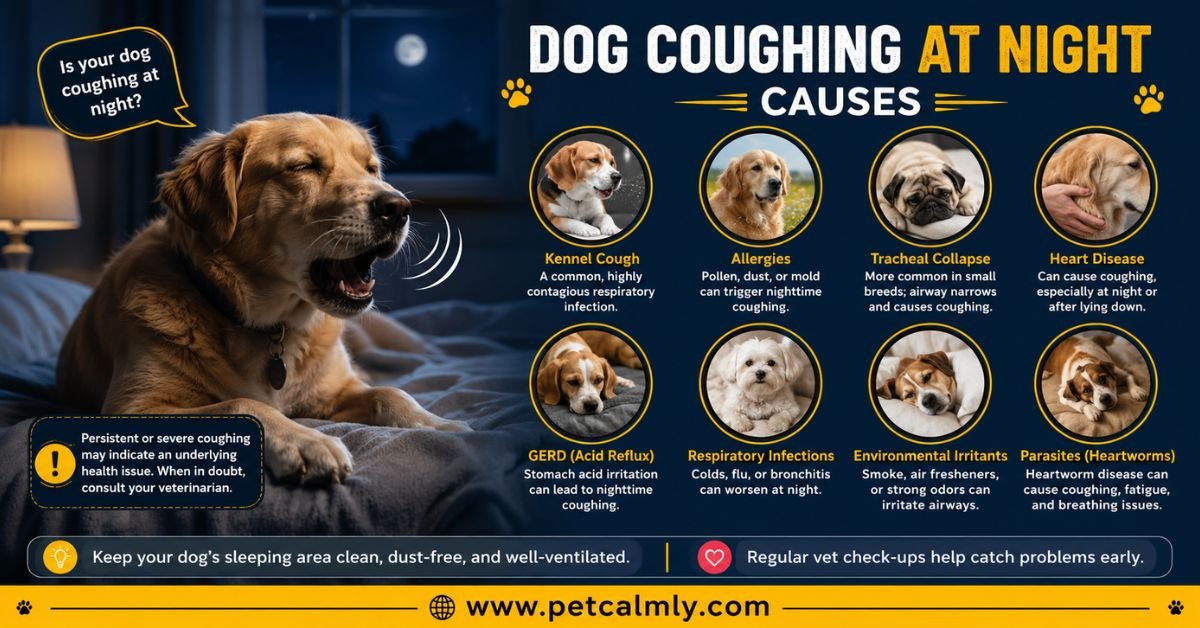
Dog coughing at night usually stems from a few manageable causes: collapsing trachea, allergies, kennel cough, heart conditions, or simple postnasal drip. Most cases aren’t emergencies, but persistent nighttime coughing warrants a vet visit to rule out underlying health issues. Changes in position (lying down), cooler air, and nighttime inactivity can all trigger or worsen existing coughs.
Why Your Dog’s Nighttime Cough Matters
If your dog suddenly starts hacking away just as you’re settling into bed, you’re not alone. Plenty of dog owners describe that unsettling moment when their pup’s cough echoes through the quiet house. It’s one of those symptoms that feels urgent but also leaves you wondering if it’s actually a problem.
The truth? Nighttime coughing in dogs is usually your pup’s way of telling you something has changed, but it’s rarely a middle-of-the-night emergency. That said, understanding why it’s happening helps you decide whether to schedule a vet appointment or manage it at home.
The difference between a minor irritation and something that needs professional attention often comes down to what else is happening: Is your dog otherwise acting normal? Are there other symptoms? How long has the coughing persisted?
Let’s walk through the most common causes, what each looks like in real life, and what you can realistically do about it.
Why Dogs Cough at Night (The Basics)
Before diving into specific causes, it helps to understand why nighttime coughing happens at all.
Dogs cough more at night for several interconnected reasons:
When your dog lies down, gravity stops helping clear secretions from their airways. Mucus, saliva, and irritants pool instead of draining naturally. This is especially true if your dog has any buildup of fluid in their lungs or throat—a condition that worsens when they’re horizontal.
Cooler evening temperatures also trigger coughing in some dogs. Temperature changes can irritate sensitive airways, particularly in dogs with underlying respiratory sensitivity or heart problems.
Finally, nighttime quiet amplifies sounds. Your dog’s occasional clearing-the-throat cough becomes that one persistent hack you can’t help but notice when everything else is silent. Sometimes what feels like increased coughing is partly about increased awareness.
That said, a cough that only happens at night is worth investigating, because it usually indicates a specific trigger your dog encounters during sleep or bedtime conditions.
The Most Common Causes of Nighttime Dog Coughing
1. Collapsing Trachea: The Most Frequent Offender
Collapsing trachea is probably the single most common cause of nighttime coughing in dogs, especially small breeds and older dogs.
What’s happening: A dog’s trachea (windpipe) is normally held open by cartilage rings. In collapsing trachea, those cartilage rings weaken, and the trachea narrows—especially when your dog is lying down or excited. Air passing through the constricted tube creates that distinctive dry, honking cough.
Who’s at risk: Small breed dogs (Chihuahuas, Pomeranians, toy breeds) and senior dogs over age 7–8, though any dog can develop it.
What it sounds like: Owners often describe it as a “goose honk” or dry, seal-like cough. It’s usually worse when your dog gets excited, pulls hard on the leash, or lies down to sleep.
Why it worsens at night: Lying down increases pressure on the already-weakened trachea, triggering the cough. As your dog settles in for sleep, the cough might be one of the first things they experience.
What you can do:
- Use a harness instead of a collar (reduces pressure on the trachea)
- Keep your dog at a healthy weight (extra weight puts pressure on airways)
- Minimize excitement right before bedtime
- Use a humidifier to keep air moist
- Ask your vet about anti-inflammatory options or medications that help
Collapsing trachea isn’t curable, but it’s very manageable once you know that’s what you’re dealing with.
2. Allergies and Environmental Irritants
Dogs have allergies just like humans do, and nighttime coughing is sometimes an allergic response.
Common allergens that trigger nighttime coughs:
- Dust and dust mites in bedding
- Pollen brought inside on your dog’s fur
- Mold in humid bedrooms
- Pet dander (if you have multiple pets)
- Smoke or strong fragrances in the bedroom
- Cleaning products residue
How to spot allergy-related coughing: The cough is usually dry, triggered after your dog lies down in a specific spot, and improves when they change position or leave the room. You might also notice itching, sneezing, or watery eyes.
What you can do:
- Wash your dog’s bedding weekly in hot water
- Replace their bed entirely if it’s older than 2–3 years
- Use a HEPA air filter in the bedroom
- Avoid scented products near your dog’s sleeping area
- Gently wipe your dog’s face and ears before bed to remove pollen
- Keep your dog’s sleeping area well-ventilated
If you notice the coughing happens specifically on certain nights or in certain rooms, allergies are a strong suspect.
3. Kennel Cough (Infectious Tracheobronchitis)
Kennel cough is a highly contagious respiratory infection that causes a distinctive, persistent cough. While it can happen anytime, it often worsens at night.
What it is: A viral or bacterial infection (often a combination) that inflames the trachea and bronchial tubes. Dogs pick it up from other dogs—anywhere from dog parks to groomers to boarding facilities.
The telltale signs:
- A dry, hacking cough that sounds like your dog has something stuck in their throat
- The cough is often worse at night or when your dog gets excited
- Generally acts normal otherwise (eating, playing, no fever)
- Coughing may persist for 1–3 weeks
What you can do:
- Rest and quiet time help (no intense play or running around)
- Use a humidifier to soothe airways
- Consider cough suppressants prescribed by your vet
- Keep your dog hydrated
- Isolate them from other dogs to prevent spreading it
Most cases resolve on their own, but your vet can confirm it’s kennel cough and recommend supportive care to speed recovery. Vaccines help prevent kennel cough, though they’re not 100% effective against all strains.
4. Heart Disease and Cardiovascular Issues
This is the one that worries owners most and rightly so, because it’s serious. But heart-related coughing has specific patterns you should know.
How heart disease causes coughing: When the heart isn’t pumping efficiently, fluid backs up into the lungs (pulmonary edema). This fluid irritates airways, triggering a cough. The cough is typically worse at night because of the fluid redistribution that happens when your dog lies down.
Who’s at higher risk: Older dogs, dogs with a history of heart murmurs, certain breeds prone to heart issues (cavalier spaniels, boxers, large breed dogs), and dogs who are overweight.
Heart-related cough sounds different: It’s often a moist, productive cough (you might hear wet sounds). Your dog may also seem fatigued, have trouble exercising, or breathe heavily after minimal activity.
When to take it seriously: If your dog has a nighttime cough plus any of these:
- Difficulty breathing or rapid breathing at rest
- Reluctance to exercise
- Bluish-gray tongue or gums
- Fainting or collapse
- Abdominal swelling
What to do: See your vet. Heart conditions require diagnosis and treatment, but many are manageable with medication and lifestyle adjustments.
5. Postnasal Drip and Sinus Issues
Sometimes the simplest explanation is the right one: your dog has a stuffy nose.
When your dog lies down, postnasal drip (mucus draining down the back of the throat) triggers a cough reflex. It’s annoying but usually harmless.
Common causes:
- Seasonal allergies
- Sinus infections or inflammation
- Nasal polyps (rare)
- Foreign objects in the nose (also rare, but worth considering)
Signs it’s postnasal drip: The cough is typically mild, sounds wet or gurgling, and your dog might make snuffling sounds. They often cough immediately upon lying down and again when getting up.
What you can do:
- Use a humidifier
- Flush your dog’s nasal passages with saline solution (ask your vet how)
- Elevate your dog’s head with an orthopedic bed
- Address underlying allergies
Less Common but Important Causes
Pneumonia
Bacterial or viral pneumonia causes coughing, usually accompanied by fever, lethargy, and difficulty breathing. This is one where you need vet attention relatively urgently.
Lungworms
Parasitic infections are rare in most areas but possible. They cause a chronic cough and require specific treatment.
Laryngitis or Pharyngitis
Inflammation of the larynx or throat from infection, irritation, or strain causes coughing and throat discomfort.
Aspiration
If your dog accidentally inhales food, water, or vomit into their lungs, pneumonia and coughing can develop. This requires vet attention.
When Should You Actually Worry? (Vet Visit Checklist)
Knowing the difference between “monitor at home” and “call the vet” can save you unnecessary anxiety or catch real problems early.
Schedule a vet appointment if:
- The cough persists for more than two weeks
- Your dog has a fever (normal dog temperature is 101–102.5°F)
- You see labored breathing or rapid breathing at rest
- Your dog seems lethargic, refuses food, or won’t play
- There’s blood in the cough or coughed-up fluid
- Your dog has a history of heart problems, and the cough is new
- The cough is getting progressively worse
- Your older dog suddenly develops a nighttime cough (especially with fatigue)
Call your vet immediately (or emergency vet if it’s after hours) if:
- Your dog is having serious difficulty breathing
- Their tongue or gums look bluish or pale
- They’re wheezing or making high-pitched breathing sounds
- They collapse or lose consciousness
- They’re coughing up blood
It’s probably fine to manage at home if:
- The cough is mild and sporadic (a few times per night)
- Your dog acts completely normal otherwise
- The cough just started and you can identify a trigger (new bedding, dusty room, etc.)
- Your younger dog has it and seems playful and healthy
Practical Solutions: What to Do Right Now
Immediate Comfort Measures
Optimize their sleeping setup: If your dog coughs when lying down, an orthopedic memory foam bed with extra support might help. Elevating their head slightly (with a pillow or bed wedge) can reduce postnasal drip and fluid pooling in the lungs.
Use a humidifier: Dry air irritates airways. A cool-mist humidifier running at night softens secretions and soothes irritated tissues. Aim for 40–60% humidity too much can encourage mold growth.
Keep air quality high: Close windows on high-pollen days, use air filters, and vacuum regularly with a HEPA-filter vacuum. Your dog’s bedroom should be your cleanest, freshest space.
Reduce nighttime irritants: Avoid perfumes, air fresheners, candles, or strong cleaning products in areas where your dog sleeps. Cigarette smoke is especially irritating to dogs’ sensitive airways.
Hydration and Nutrition
Keep your dog well-hydrated: Water helps thin mucus and keeps airways moist. Encourage drinking throughout the day, but don’t force it right before bed (which can increase bathroom trips).
Consider a humidified diet: Some vets recommend adding moisture to food (warm water mixed in) to support overall hydration and mucosal health.
Support with appropriate nutrition: Omega-3 fatty acids (fish oil) have natural anti-inflammatory properties. Talk to your vet about appropriate supplements for your dog’s age and size.
Environmental Adjustments
Temperature control: Cooler air irritates some dogs’ airways. If your bedroom is cold, a dog sweater or keeping them in a slightly warmer area might help.
Minimize excitement: Excitement and jumping around before bed increase coughing, especially with tracheal issues. Establish a calm bedtime routine—gentle petting, quiet time, no rough play 30–60 minutes before sleep.
Reduce pulling on the leash: Use a harness instead of a collar during walks. Collar pressure directly irritates the trachea.
What NOT to Do (Common Mistakes)
Don’t use cough suppressants without vet approval: Some coughs are productive (your dog’s way of clearing mucus). Suppressing them can trap fluid in the lungs. Others need suppressing. Your vet can tell the difference.
Don’t assume it’s always allergies: While allergies are common, jumping straight to allergy medications without investigating other causes might miss something important like kennel cough or heart disease.
Don’t ignore persistent coughing: A cough that lasts more than 2–3 weeks deserves professional attention, even if it doesn’t seem serious.
Don’t self-diagnose heart disease: Just because your dog coughs at night doesn’t mean there’s a heart problem. But if there’s any possibility (older dog, labored breathing, fatigue), get it checked.
Don’t skip vet visits because your dog “seems fine”: Plenty of serious conditions (early heart disease, pneumonia, collapsing trachea) exist before your dog shows major signs of illness. A vet can identify issues your eyes might miss.
Prevention: How to Reduce Nighttime Coughing
Year-Round Prevention
Maintain a healthy weight: Overweight dogs have more respiratory stress and pressure on airways. Regular, moderate exercise (appropriate for your dog’s age) supports overall respiratory health.
Keep vaccinations current: Regular vaccines, including kennel cough protection, reduce infection risk. Discuss with your vet which vaccines are appropriate for your dog’s lifestyle.
Practice good hygiene: Wash your dog’s bedding weekly, bathe them regularly (especially during high-pollen seasons), and gently wipe their face and paws before bed.
Use a humidifier during dry months: Most dogs benefit from 40–60% humidity, especially in winter when heating systems dry out indoor air.
Schedule regular vet checkups: Annual exams (or twice yearly for senior dogs) catch early signs of issues like heart disease or chronic respiratory problems before they become serious.
Seasonal Adjustments
Spring and summer: Watch for increased pollen exposure. Wipe your dog’s face, ears, and paws after outdoor time. Brush them regularly to remove pollen from their coat.
Fall and winter: Dry indoor air is a major culprit. Use a humidifier, avoid temperature extremes, and keep your dog away from fireplaces (smoke irritates airways).
During illness season: Minimize visits to dog parks or boarding facilities when upper respiratory infections are circulating. Keep your dog’s vaccinations current.
Real-Life Scenarios: What Other Owners Have Experienced
Scenario 1: The Small Breed Honk
“Our 4-year-old Chihuahua, Pepper, started honking like a goose every time she’d settle onto the couch. It was embarrassing, honestly. Our vet diagnosed collapsing trachea. We switched to a harness, bought her an orthopedic bed, and started a humidifier. The honking is still there, but it’s less frequent, and Pepper seems more comfortable. We know it’s something we’ll manage for life, but at least we understand what’s happening now.” Sarah, Pepper’s owner
Scenario 2: The Allergy Connection
“We couldn’t figure out why our Golden Retriever would cough every single night. We tried everything medications, dietary changes. Then my vet suggested it might be his bedding. We washed it in hot water and replaced it entirely. The coughing dropped by 80%. Turns out, dust mites were the culprit the whole time.” Marcus, Max’s owner
Scenario 3: The Kennel Cough Scare
“Our rescue dog brought home kennel cough after her first week with us. The vet said it would resolve on its own, but those hacking fits at night were terrifying. We used a humidifier, kept her calm, and let her rest. Three weeks later, it was gone. We felt silly for worrying so much, but also relieved it wasn’t something permanent.” — Jennifer, Luna’s owner
Scenario 4: The Heart Disease Wake-Up
“Our 10-year-old lab started coughing at night about six months ago. We thought it was just old-age stuff, but our vet found a heart murmur that was progressing. She’s now on medication, and the coughing is much better. We wish we’d brought her in sooner.” David, Bailey’s owner
Frequently Asked Questions
1. Is nighttime coughing in dogs normal?
Occasional coughing isn’t unusual, but persistent nighttime coughing suggests something is triggering it. Some causes (like allergies or collapsing trachea) are manageable and not emergencies, but they deserve attention. If the coughing is new or getting worse, a vet visit is worth it.
2. How can I tell if my dog’s cough is serious?
The seriousness usually depends on what else is happening. A mild dry cough in an otherwise energetic, healthy dog is less concerning than a cough accompanied by fatigue, difficulty breathing, or loss of appetite. When in doubt, ask your vet—that’s what they’re there for.
3. Can I give my dog over-the-counter cough medicine?
Not without vet approval. Some coughs need suppressing (to help your dog rest), while others are productive and important. Your vet can determine which type your dog has and recommend appropriate treatment.
4. Why does my dog cough more when lying down?
Gravity pulls mucus and fluids toward the back of the throat when your dog is horizontal. This irritates airways and triggers a cough reflex. It’s one of the reasons elevating your dog’s head sometimes helps.
5. Could my dog’s nighttime cough be contagious to other pets?
If it’s kennel cough, yes it’s highly contagious to other dogs. If it’s allergies, heart disease, or collapsing trachea, no. Your vet can help you identify which one it is and advise on isolating your dog if needed.
6. How long should I wait before taking my dog to the vet for coughing?
If the cough just started and seems mild, you can monitor for a few days. But if it persists beyond two weeks, worsens, or is accompanied by other symptoms, don’t wait. For older dogs or dogs with existing health issues, err on the side of caution and call your vet sooner.
More Information About Pets, Please Visit Our Website: Why Is My Dog Losing Hair?
Why Is My Dog Coughing Like Something is Stuck in his throat?
Why Is My Dog Panting So Much?
Early Signs of Heart Disease in Dogs
Best Food for Senior Dogs to Gain Weight
Dog Immune System Booster
Moving Forward: Your Action Plan
This week:
- Observe and note your dog’s cough (when it happens, what it sounds like, what triggers it)
- Check your dog’s bedding, humidity levels, and sleep space
- Schedule a vet appointment if the cough is new or persistent
At the vet appointment, mention:
- How long the cough has been happening
- What time of day it’s worst
- Any other symptoms (lethargy, appetite changes, breathing difficulty)
- Your dog’s breed, age, and medical history
- Anything that seems to trigger or worsen the cough
Going forward:
- Implement any recommendations your vet makes
- Maintain preventive care (vaccinations, annual checkups)
- Keep your dog at a healthy weight and activity level
- Monitor changes and report new symptoms promptly
Most nighttime coughing in dogs is manageable once you know what’s causing it. The goal isn’t to ignore it, but to understand it—and to act confidently knowing you’re making informed decisions for your pup’s health.
Conclusion
A dog coughing at night can feel alarming, especially when it jolts you awake or persists night after night. But understanding the most common causes and knowing how to respond puts you back in control.
Most nighttime coughing stems from manageable issues: allergies, collapsing trachea, environmental irritants, or kennel cough. Heart disease and other serious conditions are possible but less common, and veterinary attention can rule them in or out quickly.
The key is not ignoring persistent coughing, but also not catastrophizing every cough. Monitor your dog, note patterns, optimize their sleep environment, and consult your vet if the cough doesn’t resolve or worsens.
Your dog can’t tell you what’s wrong, but their cough is a signal worth paying attention to. With a little investigation and the right support, most dogs settle back into peaceful, cough-free nightsand so do their owners.
If you have any concerns about your dog’s nighttime cough, reach out to your veterinarian. They know your dog’s health history and can provide personalized guidance. That’s always the safest first step.