Short direct answer
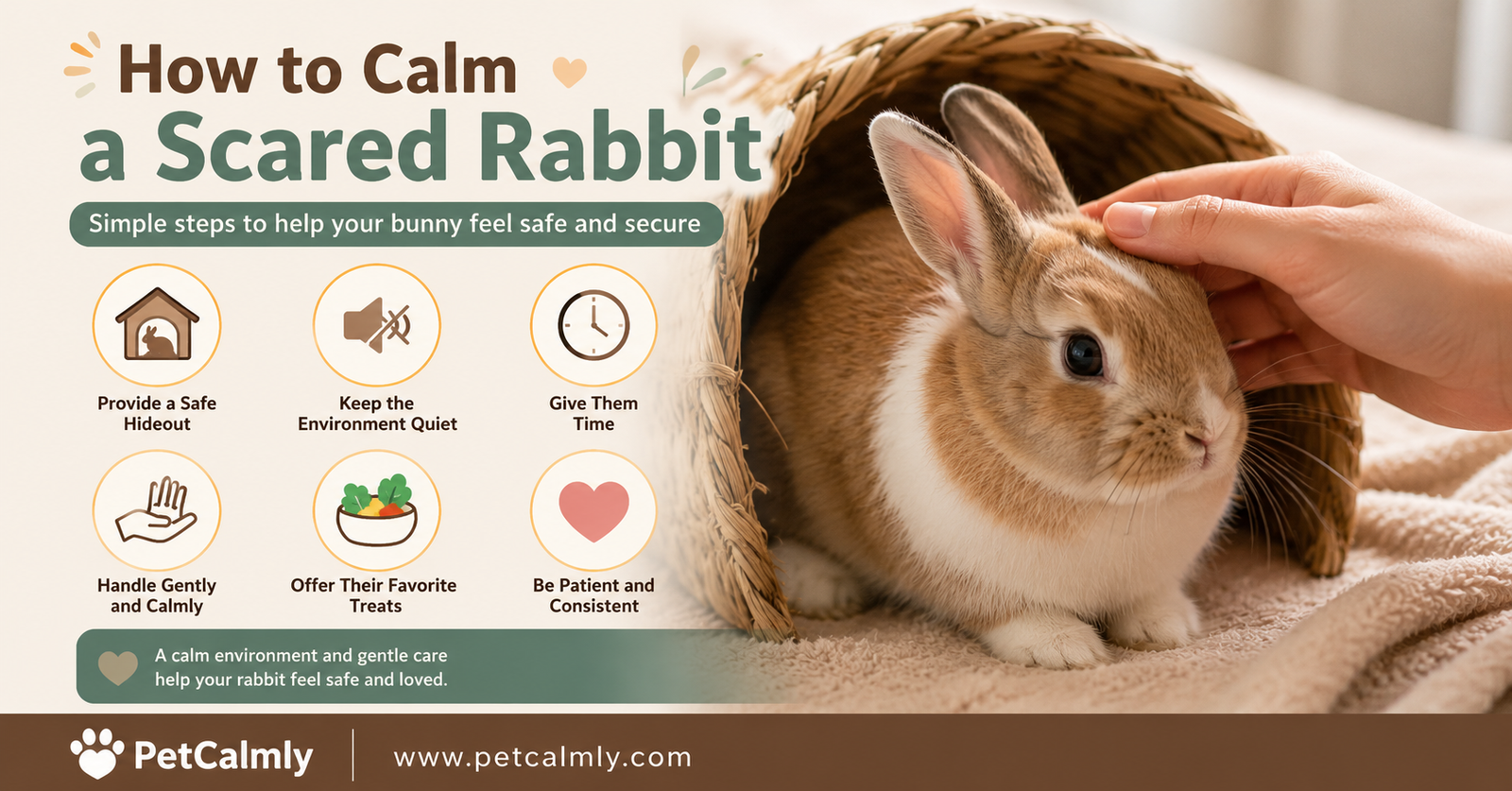
How to Calm a Scared Rabbit, lower yourself to their level, stop all sudden movement, and let them come to you instead of reaching for them. Speak in a low, steady voice, avoid direct eye contact (which reads as predator behavior to a rabbit), and give them a hiding spot they can retreat to. Most rabbits settle within a few minutes once they realize there’s no immediate threat. If the fear is tied to a specific event a loud noise, a new pet, a vet visit removing that trigger and giving your rabbit quiet, low-stimulation time is usually more effective than trying to physically soothe them.
That’s the short version. The rest of this guide covers why rabbits get scared in the first place, how to read their body language accurately, what actually works in the moment, and how to prevent fear from becoming a long-term stress problem.
Why Rabbits Get Scared So Easily (And Why That’s Normal)
Rabbits are prey animals. In the wild, hesitation can mean the difference between life and death, so their nervous systems are built to notice movement, sound, and shadows before almost anything else. A pet rabbit living in your home hasn’t lost that instinct just because there’s no fox in the garden.
This is why a rabbit can seem perfectly relaxed one moment and bolt the next. It’s not overreacting it’s doing exactly what evolution designed it to do.
Common triggers include:
- Sudden loud noises (vacuum cleaners, fireworks, slamming doors)
- Fast or unpredictable movement, including a hand reaching from above
- Being picked up without warning
- New smells, especially from other animals
- Changes to their environment, like moved furniture or a new cage location
- Being chased or cornered, even playfully
- Unfamiliar people or visitors
Understanding this changes how you respond. You’re not trying to “fix” a nervous rabbit you’re working with an instinct that’s been useful for thousands of years.
How to Tell If Your Rabbit Is Actually Scared
Fear in rabbits doesn’t always look dramatic. Some owners miss it because they’re watching for something obvious, like running away, when the real signs are much quieter.
Physical Signs of a Frightened Rabbit
- Freezing in place — this is often mistaken for calmness, but a rigid, statue-like posture is a classic fear response
- Thumping a back leg on the floor as a warning signal to other rabbits (or you)
- Flattened body pressed low to the ground
- Ears pinned back against the body
- Wide eyes with visible white around the edges
- Rapid breathing or a fast-moving nose
- Bolting or zigzag running, sometimes into walls or furniture in a panic
Behavioral Signs Owners Often Miss
- Refusing food they normally love
- Hiding for longer than usual, even after the trigger is gone
- Avoiding a specific area of the room or cage
- Becoming unusually still around people they normally approach
If you’re only checking for bolting, you’ll miss rabbits who freeze instead and freezing can actually indicate a more intense fear response, not a milder one.
What NOT to Do When Your Rabbit Is Scared
A lot of well-meaning owner behavior actually makes fear worse. Before we get into what helps, it’s worth ruling out what doesn’t.
- Don’t chase them to “comfort” them. Following a fleeing rabbit confirms, in their mind, that they were right to run.
- Don’t pick them up immediately. Restraint during a fear response can spike stress hormones and, in rare cases, cause injury if the rabbit kicks out while struggling.
- Don’t loom over them. Standing tall and reaching down mimics how a predator would approach.
- Don’t force interaction “to get them used to it.” Repeated exposure without giving the rabbit a way to escape usually increases fear rather than reducing it, a pattern seen across most prey species.
- Don’t punish thumping or hiding. These are communication, not misbehavior.
Step-by-Step: How to Calm a Rabbit in the Moment
When your rabbit is actively frightened, the goal isn’t to eliminate the fear instantly it’s to remove the pressure so their nervous system can come back down on its own.
1. Stop Moving and Lower Your Body
Sit or crouch down so you’re closer to their height. Standing over a rabbit, even without meaning to, can read as threatening.
2. Soften Your Eyes and Angle Your Body Sideways
Direct, prolonged eye contact is associated with predatory focus in the animal world. Turning slightly to the side and glancing rather than staring helps signal that you’re not hunting them.
3. Let Them Choose the Distance
Resist the urge to reach out. Place your hand flat on the ground a short distance away and let the rabbit decide whether to approach. This single change is often the biggest difference between owners who “can’t calm their rabbit down” and owners whose rabbits relax within minutes.
4. Use a Low, Even Voice
Rabbits respond more to tone than to words. A steady, low murmur is far more reassuring than baby talk or excited chatter, which can sound erratic to them.
5. Offer an Escape Route, Not a Hug
It might feel counterintuitive, but the most comforting thing you can do is not restrict their movement. A hide box, a cardboard tunnel, or simply an open path back to their enclosure gives them a sense of control, which lowers stress faster than physical comfort would.
6. Wait Before Handling
Once your rabbit has visibly relaxed ears up, normal posture, resumed eating or grooming that’s your window for calm interaction, not the moment right after the scare.
Practical Techniques for Building Long-Term Trust
Calming a rabbit in a single scary moment is different from helping a generally nervous rabbit feel safer over time. These techniques work best as a slow, ongoing process rather than a one-time fix.
Floor-Level Bonding Sessions
Sit on the floor near your rabbit’s space for 10–15 minutes a day without trying to touch them. Bring a book or your phone so you’re not staring. Many rabbits become curious once they realize sitting still doesn’t lead to being picked up.
Predictable Routines
Feeding, cleaning, and playtime at roughly the same times each day reduce uncertainty, which is one of the biggest drivers of chronic anxiety in rabbits.
Scent-First Introductions
Before handling a new item, toy, or even a new person’s hand, let your rabbit sniff it from a distance. Rabbits process the world heavily through scent, and skipping this step is a common reason introductions go badly.
Positive Association With Handling
Pair gentle handling with a small piece of their favorite fresh vegetable, offered after a calm interaction rather than as a lure to grab them. This builds an association between your presence and safety rather than your presence and being restrained.
Safe Hideouts in Every Space Your Rabbit Uses
A cardboard box with two openings, a covered corner, or a low tunnel gives your rabbit somewhere to retreat during loud moments like thunderstorms or vacuuming, without needing you to intervene at all.
Does the Cause of Fear Change How You Should Respond?
Not every scared rabbit needs the same response. The source of the fear often tells you how long recovery will take and what kind of help actually works.
A Newly Adopted Rabbit
New rabbits are often frightened simply because everything is unfamiliar the smell of your home, the sound of your voice, even the texture of your floors. This kind of fear tends to fade with time and consistency alone. Avoid the temptation to “prove” your home is safe by handling them frequently in the first week; less interaction, not more, usually builds trust faster during this stage.
A Rabbit Startled by a One-Time Event
Fireworks, a dropped pan, or a visiting dog can cause a sharp, short-term fear spike. These rabbits typically recover within minutes to hours once the noise stops, especially if they had a hideout available. If the skittishness lingers for days afterward, that’s a sign the event may have been more distressing than it looked from the outside.
A Rabbit Recovering From a Vet Visit or Grooming Session
Even routine, painless procedures like nail trims can leave a rabbit briefly on edge, since restraint itself is stressful regardless of whether anything hurt. Give a quiet recovery window with no further handling for a few hours afterward.
A Chronically Anxious Rabbit
Some rabbits stay easily startled even in a stable, familiar environment. This can be tied to limited early socialization, a difficult history before adoption, or simply an individual temperament, the same way some dogs or cats are naturally more reserved. These rabbits benefit most from the slow floor-level bonding described earlier, practiced consistently over weeks rather than days.
Setting Up an Environment That Prevents Fear Before It Starts
A surprising amount of “calming” work happens before your rabbit is ever scared, through how their space is arranged.
- Keep the enclosure at floor level, not on a high shelf or table. Height changes can make handling feel more threatening, since being lifted mimics how a predator would carry prey.
- Avoid glass or fully open-sided cages in high-traffic rooms. Rabbits feel safer with at least one solid wall at their back.
- Place the litter box and hideout at opposite corners, giving your rabbit a clean retreat that isn’t associated with mess or crowding.
- Introduce new furniture or decor gradually, since sudden changes to a familiar space can trigger the same wariness as an unfamiliar noise.
- Keep predator-shaped shadows in mind. Overhead ceiling fans, hawk-shaped kites, or even a swinging pendant light can trigger instinctive alarm in some rabbits.
Helping a Scared Rabbit Around Other Pets
Multi-pet households add another layer to rabbit anxiety. Dogs and cats, even friendly ones, register as predators to a rabbit’s nervous system by default.
- Introduce pets through a barrier first a baby gate, playpen, or crate door before any direct contact.
- Never leave a rabbit and another pet unsupervised until you’ve seen calm, neutral behavior on both sides over multiple sessions.
- Reward calm behavior in your other pet near the rabbit’s space, since a dog or cat’s excitement level directly affects how safe the rabbit feels.
- If your rabbit freezes or thumps whenever another pet enters the room, that’s a signal to slow the introduction process down, not push through it.
A Realistic Owner Example
One common scenario: a rabbit that’s lived happily in a household for months suddenly starts thumping and hiding every evening. Often, the cause turns out to be something small and easy to miss a new appliance noise, a neighbor’s dog barking at a certain time, or even a piece of furniture that casts a new shadow at dusk. Tracking when the fear happens, not just that it happens, is usually the fastest way to identify the trigger and remove it.
When Should You Worry? Signs That Go Beyond Normal Fear
Occasional startling is normal rabbit behavior. However, some patterns suggest something more serious than a passing scare, and this is where general care advice ends and professional guidance becomes important.
Consider contacting a veterinarian, ideally one experienced with rabbits, if you notice:
- Not eating for more than 12 hours, since rabbits can develop a serious digestive condition called GI stasis when stress or illness stops normal gut movement
- Ongoing loss of appetite alongside fear or hiding
- Labored or very rapid breathing that doesn’t settle after several minutes
- Aggression that’s new or worsening, which can sometimes signal pain rather than pure fear
- Self-injury during panic, such as broken nails, hair loss from over-grooming, or limping after a bolt
- Fear that doesn’t improve over several weeks despite a calm, consistent environment
- Freezing episodes that last unusually long, or a rabbit that seems “shut down” rather than simply cautious
Rabbits are skilled at hiding illness, since appearing weak would make them a target in the wild. This means a sudden change in fear-related behavior can sometimes be an early sign of pain or sickness rather than purely a behavioral issue, and it’s always worth ruling out a medical cause first.
What Should Pet Owners Do Long-Term?
Beyond individual scary moments, building an environment where fear is less likely to take hold in the first place is the most sustainable approach.
A short checklist for a lower-stress rabbit environment:
- At least one hideout in every room your rabbit spends time in
- A consistent daily routine for feeding and cleaning
- Enclosure placed away from constant foot traffic or loud appliances
- Handling kept brief and always initiated with a warning (a soft word, a hand in view)
- New people or animals introduced gradually, at the rabbit’s pace
- Nail trims, grooming, and vet visits practiced in short, low-pressure sessions before they’re actually needed
- A quiet, dim space available during fireworks, storms, or house guests
None of this means your rabbit will never be scared again that’s not realistic for a prey animal. The goal is to shrink both how often fear happens and how long it lasts once it does.
Comparing Common Calming Approaches
| Approach | Best For | What to Avoid |
|---|---|---|
| Sitting quietly nearby | Daily trust-building | Reaching out too soon |
| Offering a hideout | Sudden loud noises | Blocking the entrance |
| Low, steady voice | Active fear episodes | High-pitched or excited tones |
| Scent-first introductions | New people, pets, or objects | Direct handling before sniffing |
| Scheduled routine | Chronic, low-level anxiety | Frequent, unannounced changes |
5 Common Mistakes That Keep Rabbits Stuck in Fear Mode
Even attentive owners can unintentionally slow down their rabbit’s progress. A few patterns show up again and again:
- Testing trust too often. Repeatedly reaching out to “see if they’re okay with it yet” resets progress each time, since it puts the rabbit back on alert.
- Rewarding fear without meaning to. Rushing over with treats every time a rabbit looks startled can accidentally reinforce hiding as the behavior that gets attention, rather than calm behavior.
- Mixing calming techniques with punishment. Speaking softly one moment and scolding for a nipped finger the next sends mixed signals that make a rabbit less able to predict your behavior.
- Assuming stillness means comfort. A frozen rabbit is not a relaxed rabbit. Waiting for genuine relaxed posture flopping, loose ears, normal movement is a better sign that it’s safe to interact.
- Skipping the “cool down” period after a scare. Jumping straight back into play or handling right after a fear event doesn’t give the nervous system time to reset, which can make the next trigger feel bigger than it should.
How Diet and Environment Quietly Affect Anxiety Levels
Fearfulness isn’t only about individual scary moments a rabbit’s overall stress baseline matters too. A rabbit that’s already uncomfortable is far more reactive to sudden triggers than one who feels settled day to day.
- Unlimited access to hay supports normal digestion, and digestive discomfort can lower a rabbit’s tolerance for stress in general.
- A stable temperature range matters more than owners often realize; rabbits are sensitive to heat in particular, and overheating can make them appear anxious or lethargic.
- Enough space to fully stretch out and hop reduces the pent-up restlessness that can show up as jumpiness.
- Consistent lighting, avoiding sudden bright light in a previously dim room, helps prevent the kind of startle response that comes from rapid environmental change.
None of these factors replace direct behavioral work, but they create the baseline that makes calming techniques actually stick.
Frequently Asked Questions
1: How do I calm my rabbit down quickly?
Lower your body, stop moving suddenly, and give your rabbit space to retreat to a hideout. Most rabbits settle within a few minutes once the perceived threat is gone; forcing contact usually slows this down rather than speeding it up.
2: Is it normal for rabbits to be scared of everything?
Some individual rabbits are naturally more cautious than others, similar to personality differences in dogs or cats. However, constant, ongoing fear of everyday sounds and movements may point to insufficient socialization, past trauma, or an underlying health issue worth discussing with a vet.
3: Should I pick up my rabbit when it’s scared?
Generally, no. Picking up a frightened rabbit can increase stress and, because rabbits have fragile spines relative to their strength, struggling during restraint carries a small risk of injury. It’s usually safer to let them calm down on the ground first.
4: Why does my rabbit thump and then run and hide?
Thumping is a warning signal to alert other rabbits (or you) to potential danger, and running to hide is the natural follow-up behavior. Together, they’re one of the clearest signs your rabbit felt genuinely threatened by something in their environment.
5: Can loud noises cause long-term stress in rabbits?
Repeated exposure to loud, unpredictable noises without any way to escape can contribute to chronic stress over time. Giving your rabbit a quiet retreat space and reducing sudden noise near their enclosure helps prevent this from building up.
6: How long does it take for a scared rabbit to trust you again?
This varies widely depending on the rabbit’s personality and history, ranging from a few days to several weeks of consistent, low-pressure interaction. Rushing the process tends to extend it, while patience and predictability usually shorten it.
More Information About Pets, Please Visit Our Website: Rabbit Safe Vegetables List
How to Pick Up a Rabbit Properly
Rabbit Heat Stroke Signs Rapid Breathing Lethargy
Why Is My Rabbit Not Eating?
Rabbit Water Bottle vs Bowl
What Are the Best Pellets for Rabbits
Can Rabbits Eat Bananas?
Conclusion
A scared rabbit isn’t being difficult, dramatic, or “bad”they’re responding exactly the way thousands of years of instinct tell them to. The most effective thing you can do isn’t a single trick or technique; it’s consistently showing your rabbit, through small daily choices, that you’re not a threat. Lower your body, slow your movements, and let them set the pace. Over time, most rabbits even naturally nervous ones learn that your presence means safety rather than danger.
If fear ever seems severe, sudden, or paired with a loss of appetite, it’s worth checking in with a vet experienced in rabbit care to rule out pain or illness underneath the behavior.