Short direct answer
You can start treating dog separation anxiety quickly by building a calm departure routine, practicing short absences, using calming aids like puzzle toys or white noise, and rewarding relaxed behavior. Mild cases often improve within 2–4 weeks. Severe anxiety may need vet-prescribed medication combined with a structured behavior modification plan.
Why This Problem Breaks Pet Owners’ Hearts
Picture this: you grab your keys, and your dog starts panting, trembling, and gluing himself to your leg. You leave anyway and your neighbor texts you ten minutes later about the howling.
Separation anxiety is one of the most emotionally painful problems a dog owner can face. You feel guilty every time you walk out the door. Your dog feels terrified every time you do.
The good news? This is one of the most treatable behavioral conditions in dogs. With the right approach, many owners start seeing real improvement faster than they expect.
This guide walks you through everything causes, warning signs, treatment methods, and when to call a vet.
What Is Dog Separation Anxiety, Really?
Separation anxiety isn’t just a dog being “dramatic” or spoiled. It’s a genuine stress response similar to a panic attack in humans.
When a dog with this condition is left alone, their brain floods with stress hormones. They’re not being destructive on purpose. They’re trying to cope with what feels like a survival crisis.
There are actually two types:
True separation anxiety — triggered specifically when the dog is alone or separated from a key person.
Isolation distress the dog is fine with any human, but panics when left completely alone.
Understanding which type your dog has matters, because the treatment approach differs slightly.
5 Common Causes: Why Does This Happen?
1. A Sudden Change in Routine
Dogs are creatures of habit. A new job schedule, moving to a new home, or a child leaving for college can disrupt a dog’s world completely.
During the COVID-19 pandemic, veterinary clinics saw a massive spike in separation anxiety cases — because dogs spent months with their owners 24/7, then were suddenly alone again.
2. Early Life Experiences
Puppies that were separated from their litter too early, or dogs that spent time in shelters with inconsistent human contact, are more prone to developing anxiety.
Rescue dogs are especially vulnerable. They’ve often experienced loss and abandonment, so when their new beloved owner walks out the door, it can trigger deep fear.
3. Genetics and Breed Tendencies
Some breeds are simply more prone to attachment and anxiety Labrador Retrievers, German Shepherds, Vizslas, Border Collies, and Toy breeds like Chihuahuas top the list.
This doesn’t mean these breeds can’t be helped. It just means they may need a more patient, consistent training approach.
4. A Traumatic Event
A frightening experience during a period of solitude like a thunderstorm, a loud noise, or a home break-in can create an association between being alone and extreme danger.
5. Owner Reinforcement (Without Realizing It)
This one’s hard to hear, but it’s important. If you give your dog lots of affection every time they show anxious behavior or rush back home when they whine you can accidentally reinforce the anxiety.
This doesn’t mean you’re a bad owner. It means dogs learn patterns very quickly.
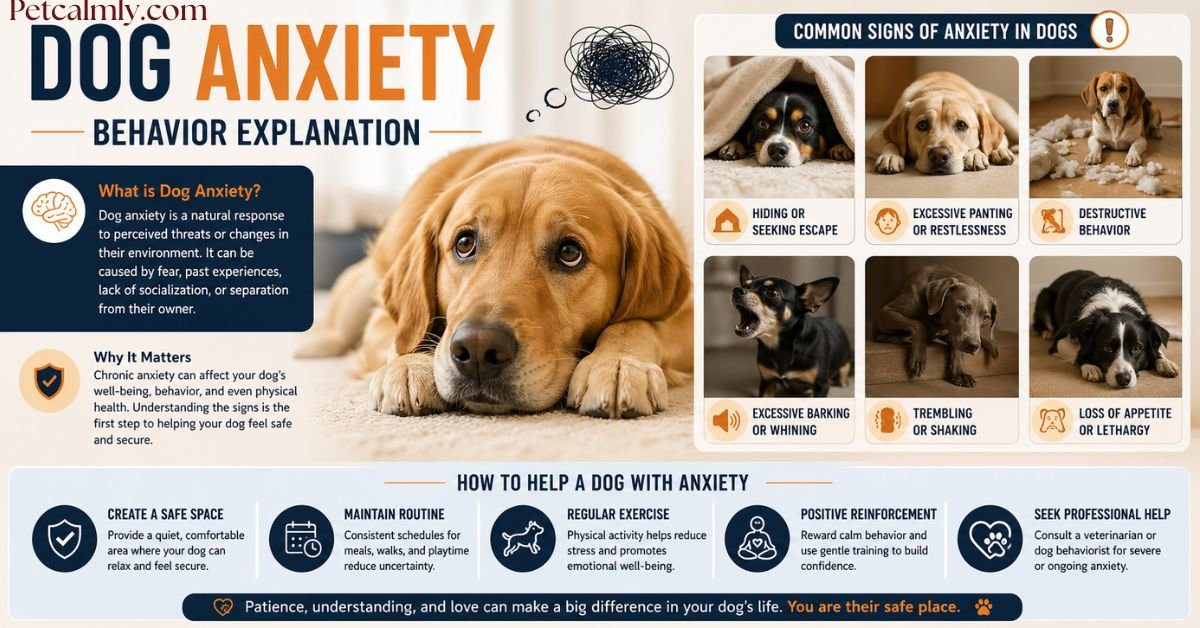
Recognizing the Signs: Does Your Dog Have Separation Anxiety?
Behavioral Signs While You’re Away
- Barking, howling, or whining that starts almost immediately after you leave
- Destructive chewing especially near doors, windows, and your belongings
- Urinating or defecating indoors despite being house-trained
- Frantic attempts to escape (some dogs injure themselves breaking through screens or doors)
- Pacing or circling in specific areas
Pre-Departure Signals
Many anxious dogs start to show stress before you even leave. Watch for:
- Following you from room to room as you get ready
- Whimpering when you pick up your keys or put on your shoes
- Refusing food before departures (even a food-motivated dog)
- Excessive yawning, lip-licking, or trembling
How to Know for Sure
Set up a simple phone camera or a pet camera to record your dog for the first 30–60 minutes after you leave. Dogs with true separation anxiety often begin showing distress within 10–15 minutes of departure.
What you see on that footage will tell you more than anything else.
Curing Dog Separation Anxiety Quickly: The Treatment Plan
Step 1 — Desensitization: Start Small, Go Slow
The core of almost every successful separation anxiety treatment is graduated exposure teaching your dog that being alone is safe, one tiny step at a time.
Start by leaving for just 30 seconds. Come back calmly. Gradually extend to 1 minute, 3 minutes, 10 minutes, and so on over days and weeks.
The key rule: never leave for longer than your dog can handle without showing anxiety. If you push too far too fast, you reset the progress.
Think of it like physical therapy after an injury. You don’t start with a 5K run. You start with small, manageable movements and build slowly.
Step 2 — Create a Calm Departure Ritual
How you leave matters enormously.
Avoid long, emotional goodbyes. Don’t say “It’s okay, Mama will be back soon!” in a high-pitched voice this signals to your dog that something is happening worth being anxious about.
Instead, practice neutral departures: grab your keys, put on your shoes, and leave without fanfare. Same routine, same tone, every time.
Equally important: ignore your dog for 10–15 minutes before you leave and after you return. Wait until your dog is calm before greeting them. This communicates that your comings and goings are not a big deal.
Step 3 — Build a “Safe Zone”
Create a designated space where your dog feels secure — a crate with a cozy blanket, a specific room, or a dog bed in a quiet area.
Cover the crate with a blanket to make it feel den-like. Leave an item with your scent, like a worn T-shirt.
Some dogs associate crates with confinement and stress. If that’s your dog, don’t force it. A baby-gated bedroom or safe room works just as well.
Step 4 — Enrichment Before Departure
A mentally tired dog is a calmer dog. Before you leave:
- Give your dog a brisk 20–30 minute walk
- Offer a puzzle feeder or a Kong stuffed with peanut butter and frozen
- Use sniff-based games in the yard
Physical and mental exercise don’t cure anxiety on their own — but they significantly reduce the intensity of anxious behavior.
Step 5 — Use Calming Aids
These aren’t magic fixes, but used alongside training, they genuinely help:
Adaptil (DAP diffuser or collar) releases synthetic dog-appeasing pheromones that mimic the calming effect of a nursing mother. Research supports its effectiveness in reducing anxiety-related behavior.
Calming music or white noise species-specific music (like Through a Dog’s Ear) has been clinically studied and shown to reduce stress in dogs.
Anxiety wraps (like ThunderShirt) the gentle, constant pressure has a calming effect similar to swaddling in infants.
Calming supplements L-theanine, melatonin, and products like Zylkene (casein-based) are widely used and generally safe. Always check with your vet before starting supplements.
Step 6 — Counter-Conditioning
Pair your departure with something your dog loves.
Give your dog a special long-lasting treat a frozen Kong, a Himalayan chew, a bully stick only when you leave. This treat is sacred. It doesn’t appear at any other time.
Over weeks, your dog begins to associate your departure with something wonderful. The anxiety doesn’t disappear overnight, but the emotional charge around being alone begins to shift.
When Should You Be Concerned?
Most dogs with mild to moderate separation anxiety improve significantly with consistent training. But certain situations warrant a vet visit sooner rather than later.
See your vet or a veterinary behaviorist if:
- Your dog is hurting himself trying to escape (broken nails, bloody paws, damaged teeth)
- Your dog completely refuses to eat for more than 24 hours when home alone
- There’s been no improvement after 4–6 weeks of consistent training
- Anxiety is extreme from the very first minute of departure
- Your dog is showing aggression or complete personality changes
A veterinary behaviorist (a vet with specialist training in animal behavior) can create a personalized behavior modification plan and prescribe medication when needed.
Medications that help: Fluoxetine (Prozac) and clomipramine are FDA-approved for canine separation anxiety. They work best when combined with behavior modification they lower the anxiety threshold so training can actually “stick.”
Medication isn’t giving up. It’s giving your dog’s brain a fighting chance.
What Should Pet Owners Avoid?
A few common mistakes can make separation anxiety worse:
Punishing anxious behavior
your dog is not being bad. Punishment increases fear and erodes trust.
Adopting a second pet right away
this sometimes helps, but many anxious dogs are specifically attached to you, not to other animals.
Crating as a punishment
if your dog associates the crate with bad experiences, forcing them in it will backfire.
Flooding (forcing long absences)
some owners think “just leaving” will force their dog to adapt. For anxious dogs, this typically makes the anxiety more severe, not less.
Ignoring the problem
separation anxiety doesn’t resolve on its own without intervention. The earlier you start treatment, the faster results come.
Real-Life Success Story
Sarah, a reader from Texas, shared her experience with her rescue Beagle mix, Biscuit.
When she adopted Biscuit, he would scream for 45 minutes straight every time she left. He chewed through a door frame trying to get out.
She started with 30-second departures using a frozen Kong as a distraction. Over six weeks of daily practice, Biscuit could stay calm for 3 hours. Her vet also recommended an Adaptil collar, which she says made a noticeable difference in the first two weeks.
Today Biscuit naps calmly while she’s at work. “It took patience,” she says, “but it completely changed both our lives.”
Professional Help: When to Bring in an Expert
If your dog’s anxiety is severe or you’re not making progress, consider working with:
A Certified Professional Dog Trainer (CPDT-KA) with experience in separation anxiety many now offer virtual consultations, which means you don’t even have to leave your home to get help.
A Certified Separation Anxiety Trainer (CSAT) a specialist designation specifically focused on this condition.
A Veterinary Behaviorist (DACVB) the highest level of expertise for complex cases.
Organizations like the IAABC (International Association of Animal Behavior Consultants) have trainer directories online.
How Long Does It Actually Take?
There’s no one-size-fits-all answer, but here’s a realistic timeline:
Mild anxiety: Most owners see meaningful progress in 2–4 weeks with consistent daily practice.
Moderate anxiety: 6–12 weeks of structured training, possibly with calming aids.
Severe anxiety: Several months, often requiring medication alongside behavior modification.
The most important factor isn’t time it’s consistency. Even 10–15 minutes of practice per day adds up faster than you’d think.
Conclusion
Separation anxiety is real, common, and very treatable. The fastest results come from combining gradual desensitization with calm departures, enrichment, and when needed veterinary support.
Don’t rush the process. Don’t punish the behavior. And don’t give up.
Your dog isn’t trying to make your life difficult. They’re just scared. And with your help, they can learn to feel safe.
More Information About Pets, Please Visit Our Website: Dog Barking When Owner Leaves
How to Stop a Dog From Crying When Left Alone?
Dog Separation Anxiety When Alone
Frequently Asked Questions
1: Can separation anxiety in dogs be cured permanently?
Yes, many dogs fully recover but “cure” depends on severity. Mild cases often resolve completely with consistent training. Severe cases may require ongoing management, similar to how some people manage chronic anxiety. The goal is getting to a point where your dog is comfortable and relaxed when alone.
2: How quickly can I treat separation anxiety in my dog?
Mild cases can show improvement within 2–4 weeks with daily practice. Moderate to severe anxiety usually takes 2–6 months. The speed depends on consistency, the severity of anxiety, and whether you’re using the right approach. Skipping days or rushing departures too fast will slow progress.
3: What is the fastest way to calm a dog with separation anxiety?
For immediate, short-term relief: a frozen stuffed Kong, white noise or calming music, an Adaptil collar, and a calm departure routine can all reduce anxiety within minutes. These tools don’t replace long-term training but they help significantly in the short term.
4: Should I crate my dog for separation anxiety?
It depends on your individual dog. Some dogs find crates calming and den-like. Others associate them with confinement and become more anxious inside. If your dog shows signs of stress in a crate (drooling, pawing, howling), try a safe room or baby-gated area instead. Never force a stressed dog into a crate.
5: Do vets prescribe medication for separation anxiety?
Yes, and it’s often very effective. Fluoxetine and clomipramine are both FDA-approved for canine separation anxiety. These medications work best when used alongside a behavior modification program they reduce the dog’s anxiety baseline enough for training to be effective. Ask your vet about options if training alone isn’t helping.
6: Can I train my dog to be okay alone without professional help?
Absolutely many owners successfully treat mild to moderate separation anxiety on their own with patience and the right techniques. However, if your dog’s anxiety is severe, if they’re injuring themselves, or if you’re not seeing any improvement after several weeks of consistent effort, consulting a certified trainer or veterinary behaviorist will save time and prevent setbacks.