Short direct answer
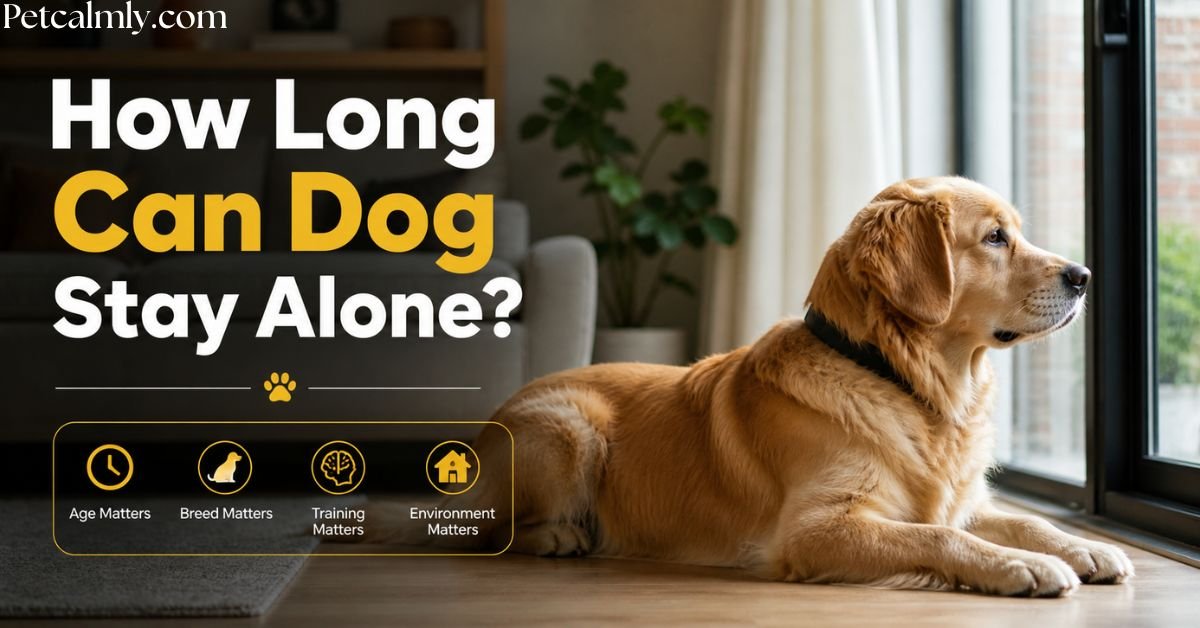
Most adult dogs can stay alone for 4 to 6 hours at a time. Some well-trained dogs may manage up to 8 hours occasionally, but this is not ideal every day. Puppies under 6 months should not be left alone for more than 1 to 2 hours. Senior dogs and anxious breeds also need more frequent check-ins.
Why This Question Matters More Than You Think
You have a job. You have errands. You have a life. And somewhere at home, your dog is waiting.
Most dog owners have wondered sometimes with real guilt whether their dog is okay alone while they’re away. It’s one of the most common questions vets, trainers, and dog behaviorists hear. And it deserves a real, honest answer.
Leaving a dog alone too long doesn’t just cause boredom. It can lead to anxiety, destructive behavior, bathroom accidents, and in more serious cases long-term emotional problems. Understanding your dog’s needs is the first step to giving them a better life, even when you can’t be there.
This guide covers everything: how long is safe by age, which breeds struggle most, warning signs to watch for, and practical steps you can take right now.
How Long Can a Dog Be Left Alone? (By Age)
The right amount of alone time depends heavily on your dog’s age. Here’s a simple breakdown:
Puppies (Under 6 Months)
Young puppies have tiny bladders. They also haven’t developed the emotional maturity to cope with long stretches of isolation.
As a general rule, a puppy can hold their bladder roughly one hour per month of age. So a 3-month-old puppy should not go more than 3 hours without a bathroom break and ideally, much less.
Leaving a 2-month-old puppy alone for 6 hours while you’re at work isn’t just hard on them physically. It’s one of the fastest ways to create a dog with deep anxiety issues and bad habits that take months to undo.
If you have a new puppy and a full-time job, consider: a puppy sitter, a trusted neighbor, doggy daycare, or a midday dog walker.
Adolescent Dogs (6 Months to 2 Years)
This age group is tricky. They have more bladder control than puppies, but they’re often at peak energy and curiosity. Boredom hits hard during these months.
Three to four hours alone is usually manageable, but without enough exercise and mental stimulation beforehand, you may come home to chewed furniture, knocked-over trash cans, or a dog that’s been barking since you left.
Burn their energy before you go. A 20-minute walk or a quick game of fetch can make a significant difference in how they handle alone time.
Adult Dogs (2 to 7 Years)
Most healthy adult dogs can comfortably handle 4 to 6 hours alone. Some well-adjusted, calm dogs can manage up to 8 hours on occasion.
But “can manage” doesn’t mean “should be expected to regularly.” Eight hours of alone time every single day five days a week is a lot to ask of any dog. It’s the difference between surviving and thriving.
If your schedule requires long work days, adding a midday walk (via a dog walker or neighbor) can dramatically improve your dog’s quality of life.
Senior Dogs (7 Years and Older)
Older dogs may seem calmer and more sleep-prone, which can make owners assume they’re fine alone for long periods. But senior dogs often have increased bathroom urgency, age-related anxiety, and a greater need for companionship.
Aim for no more than 4 to 6 hours for most senior dogs. Dogs with health conditions arthritis, incontinence, cognitive decline may need even shorter intervals.
Does Breed Make a Difference?
Absolutely. Not all dogs are built the same when it comes to independence.
Breeds that tend to struggle with alone time:
Labrador Retrievers, Golden Retrievers, Border Collies, Vizslas, German Shepherds, and most toy breeds like Chihuahuas and Bichon Frises were bred to work alongside humans. They bond deeply and can develop separation anxiety quickly.
Imagine hiring a Border Collie a dog literally designed to herd livestock all day with intense focus and then leaving him alone in a flat for 9 hours. That’s a recipe for chaos, and honestly, it’s not the dog’s fault.
Breeds that tend to handle solitude better:
Basset Hounds, Chow Chows, Shar Peis, Greyhounds (surprisingly), and some terrier breeds tend to be more independent. They’re not antisocial they just don’t experience absence as abandonment the way velcro breeds do.
That said, breed tendencies are just a starting point. Individual personality, upbringing, and training matter just as much.
Signs Your Dog Is Struggling With Alone Time
Dogs can’t tell you they’re stressed. They show it in their behavior both while you’re gone and after you return.
While You’re Away (Observable via Camera)
- Barking, howling, or whimpering persistently
- Pacing back and forth
- Scratching at doors or windows
- Destructive chewing, especially near exits (doors, windowsills)
- House soiling even though they’re housetrained
- Excessive drooling or panting
When You Return Home
- Frantic, over-the-top greeting that doesn’t calm down quickly
- Following you from room to room (velcro behavior)
- Appearing depressed or lethargic
- Refusing food (stress suppresses appetite)
- Signs of self-harm, like excessive paw licking
If you notice several of these signs regularly, your dog may have separation anxiety a genuine behavioral condition that can worsen without intervention.
The Difference Between Boredom and Separation Anxiety
These two problems look similar but have different causes and solutions.
Boredom happens when a dog doesn’t have enough to do. They chew your shoes not because they’re panicking they chew them because there’s nothing better to chew and it smells like you.
The fix for boredom is usually straightforward: more exercise, puzzle toys, longer Kongs, interactive feeders, and enrichment activities.
Separation anxiety is more intense. The dog isn’t just understimulated they’re genuinely distressed by your absence. They may not even touch their food or toys while you’re gone. They may self-injure. Their stress response kicks in the moment you start your leaving routine (picking up keys, putting on shoes).
Separation anxiety often requires a structured desensitization program, and in moderate-to-severe cases, guidance from a veterinary behaviorist or certified dog trainer. Some dogs also benefit from medication during the retraining process.
If you’re unsure which problem your dog has, set up a phone camera or pet cam and watch what happens in the first 20 minutes after you leave. Bored dogs usually settle. Anxious dogs often don’t.
What Happens to a Dog’s Body During Long Alone Periods?
This isn’t just about behavior. Extended isolation has real physiological effects on dogs.
Stress hormones rise. Cortisol the same stress hormone humans produce increases when dogs experience anxiety or prolonged isolation. Over time, chronically elevated cortisol can affect the immune system, digestion, and heart health.
Muscles weaken. Dogs that spend 10+ hours a day lying around aren’t getting the movement they need. Over time, this contributes to weight gain, joint stiffness, and reduced cardiovascular fitness.
Mental stimulation drops. Dogs’ brains need challenges. Without them, cognitive function can actually decline especially in senior dogs. Mental enrichment is as important as physical exercise.
When Should You Be Concerned?
Most dogs adapt to a reasonable routine, but there are situations where you should take action quickly:
- Your dog has been alone for more than 8 hours on a regular basis
- You’ve returned home to destruction, house soiling, or signs of panic
- Your dog has started refusing food or showing physical symptoms like weight loss
- A neighbor has told you your dog barks for hours while you’re gone
- Your dog has started injuring themselves excessive licking, chewing at paws, or self-scratching
In any of these situations, speak to your vet first to rule out medical issues. Then consider consulting a certified professional dog trainer (CPDT-KA) or a veterinary behaviorist.
This isn’t about judgment it’s about getting your dog real help.
What Should Pet Owners Do? Practical Steps That Actually Work
Here are concrete, actionable things you can do to make alone time safer and more comfortable for your dog.
1. Build Up Alone Time Gradually
Don’t go from constant company to 8-hour work days overnight. Start with 30-minute absences. Extend slowly over days or weeks. This teaches your dog that your departures are not permanent — and that you always come back.
2. Exercise Before You Leave
A well-exercised dog is a calmer dog. This doesn’t mean an exhausting run (though that helps). Even a brisk 20-minute walk before you leave can reduce anxiety and restlessness significantly.
Think of it this way: it’s hard to feel panicked when you’re physically tired and content.
3. Use Enrichment Toys
A frozen Kong stuffed with peanut butter and kibble can occupy a dog for 30 to 60 minutes. Puzzle feeders, snuffle mats, and lick mats are excellent tools. They keep your dog mentally engaged and associate your departure with something rewarding.
4. Create a Safe, Comfortable Space
Some dogs do better when they have a defined “home base” a crate, a cozy corner, or a specific room. It reduces the overwhelming space and gives them a sense of security.
Don’t use confinement as punishment. Make it a pleasant place with their bed, toys, and a worn t-shirt that smells like you.
5. Consider a Midday Check-In
A dog walker, a trusted neighbor, or a family member stopping by at lunchtime can break up a long day beautifully. Even a 15-minute visit a short walk, some playtime, a bathroom break can reset your dog’s stress levels for the afternoon.
6. Try Doggy Daycare (Once or Twice a Week)
If your dog is social and enjoys the company of other dogs, a couple of daycare days per week can be life-changing. They come home genuinely tired and content. Many facilities offer half-day options if full days are too stimulating.
7. Leave Calm Background Noise
Some dogs find comfort in soft background sound a TV with calm programming, classical music, or pet-specific playlists. Avoid anything loud or chaotic. The goal is to mimic a quiet, normal household environment.
8. Consider a Dog Companion (With Care)
Two dogs can sometimes keep each other company. But this isn’t a universal solution not all dogs want a companion, and adding a second dog to a household with separation anxiety can sometimes make things worse. Discuss with a trainer before making this decision.
A Real-Life Example: What 8 Hours Alone Looks Like
Meet Kira a 3-year-old Labrador mix whose owner, Sarah, works a standard 9-to-5 office job.
For the first year, Sarah assumed Kira was fine. She never mentioned problems to the vet. Then a neighbor knocked on her door one evening and mentioned that Kira had been whining for most of the day.
Sarah set up a camera. What she saw startled her: Kira spent the first two hours pacing, then settled briefly, then started barking around hour four. By hour seven, she had chewed through a wooden chair leg.
Sarah made two changes: she hired a dog walker for a midday 30-minute walk, and she started leaving a frozen Kong each morning. Within three weeks, Kira’s behavior on camera had transformed. She’d nap for long stretches, occasionally investigate her toys, and greet Sarah at the door calmly.
Small changes, real results.
Conclusion
The honest answer to “how long can a dog stay alone” is this: it depends on the dog. But for most adult dogs, 4 to 6 hours is the sweet spot manageable, but not ideal if it stretches to 8 or 9 hours every single day.
Puppies need far more frequent check-ins. Senior dogs often do too. And any dog showing signs of distress deserves your attention and action.
You don’t have to be perfect. You don’t have to quit your job. But you do owe your dog an honest assessment of their daily experience and a genuine effort to make it better when it falls short.
A dog who feels safe, exercised, and not forgotten is a happy dog. And a happy dog makes for a much happier home.
More Information About Pets, Please Visit Our Website: Why Is My Dog Suddenly Anxious?
Why Is My Dog Suddenly Anxious in the Car?
Frequently Asked Questions
1: Can I leave my dog alone for 8 hours while I work?
Occasionally, yes but not as a daily habit for most dogs. Eight hours is a long stretch, especially for puppies, seniors, and anxious breeds. If this is your reality five days a week, consider adding a midday dog walker or a daycare day to break up the day.
2: How do I know if my dog has separation anxiety?
Set up a camera and watch what happens in the first 20 minutes after you leave. Dogs with separation anxiety typically show distress immediately barking, pacing, drooling, scratching at doors. Bored dogs usually settle within 20 to 30 minutes. If your dog stays distressed, consult a vet or certified trainer.
3: Is it cruel to leave a dog alone all day?
Leaving a dog alone for a standard workday isn’t inherently cruel if their basic needs are met and they’re not showing signs of distress. However, doing so without exercise beforehand, enrichment during, or any midday break can cause real harm over time physically and emotionally.
4: What is the maximum time a dog should be left alone?
Most vets and behaviorists agree that 8 hours is the upper limit for an adult dog and even that should not be the daily norm. Puppies under 6 months shouldn’t be left more than 2 to 3 hours. Senior dogs with health issues may need breaks every 4 to 5 hours.
5: Do dogs get lonely when left alone?
Yes. Dogs are social animals. They don’t experience loneliness in exactly the way humans do, but they do experience distress, boredom, and emotional discomfort from extended isolation. A dog that is truly bored or anxious can develop behavioral problems and health issues over time.
6: What can I do to help my dog feel better when I’m gone?
Exercise before you leave, use food-stuffed enrichment toys like frozen Kongs, leave calming background noise (soft music or TV), create a cozy safe space, and consider a midday dog walker or occasional daycare. These steps, combined with a gradual routine, can significantly reduce your dog’s stress during alone time.