Short direct answer
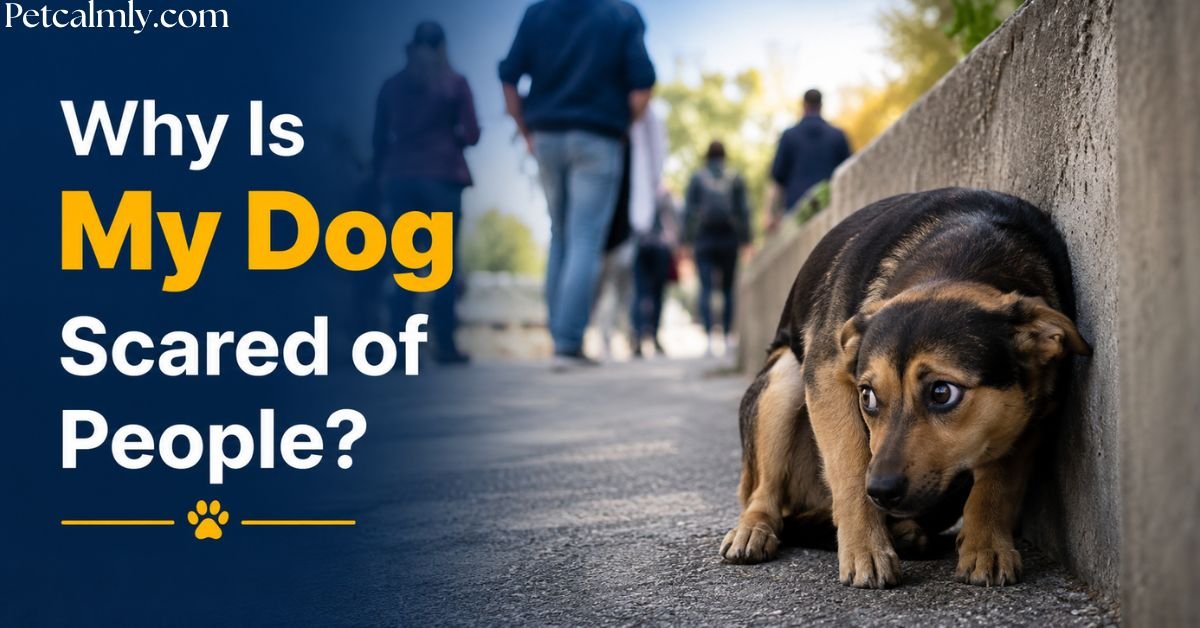
If your dog is scared of people, it is usually due to lack of early socialization, past negative experiences, genetics, or general anxiety. Some dogs simply were not exposed to different humans during their critical puppy stage, so strangers feel unpredictable and threatening. Others may have been frightened, handled roughly, or neglected, which creates long-term fear responses. Fearful behavior can show as hiding, barking, trembling, or trying to escape. In most cases, this is a learned emotional response not “bad behavior” and can often improve with calm training, patience, and gradual desensitization.
Understanding Your Dog’s Fear of People
Watching your dog get scared of visitors or strangers can feel confusing and even a little heartbreaking. You may notice them hiding behind furniture, barking nervously at guests, or refusing to approach anyone outside the family.
The important thing to understand is this: your dog isn’t being “rude” or “difficult.” Fear of people is a real emotional response, and it often develops for understandable reasons.
In this guide, you’ll learn:
- Why dogs become scared of people
- How fear shows up in behavior
- Common mistakes owners unknowingly make
- Safe ways to help your dog feel more confident
- When professional help may be needed
By the end, you’ll have a clear plan to help your dog feel safer around humans again.
Why Is My Dog Scared of People? (Main Causes Explained)
Fear in dogs doesn’t come out of nowhere. It usually builds over time based on experience, genetics, and environment.
1. Lack of Early Socialization (Most Common Reason)
Puppies go through a critical socialization window between 3–14 weeks of age. During this time, they learn what is “normal” in the world.
If a puppy does not meet:
- Different types of people (men, women, children)
- Different voices and appearances
- Gentle handling experiences
…then unfamiliar humans can feel scary later in life.
Real-life example:
A dog raised in a quiet backyard with minimal visitors may panic when meeting a guest wearing a hat or speaking loudly.
2. Past Negative Experiences With Humans
Dogs remember emotional experiences strongly. A single bad encounter can shape long-term fear.
This may include:
- Rough handling
- Being yelled at
- Harsh training methods
- Being frightened by strangers as a puppy
- Stray or rescue history with trauma
Even if the dog is now in a safe home, the memory can still influence behavior.
3. Genetic Temperament and Breed Sensitivity
Some dogs are naturally more cautious.
Breeds or temperaments that may show higher sensitivity:
- Guarding breeds (naturally protective instincts)
- Nervous or shy genetic lines
- Dogs bred with less human interaction
This doesn’t mean they can’t improve it just means they need more patient, structured exposure.
4. Poor or Inconsistent Social Exposure
Even friendly dogs can become fearful if they don’t regularly meet people.
For example:
- Only seeing family members
- Rare exposure to strangers
- Limited walks or public outings
Dogs are like “experience learners.” If something is unfamiliar, they may assume it is unsafe.
5. Fear Generalization (One Fear Spreading to Many)
Sometimes fear starts with one situation and spreads.
Example:
A dog is scared of a man in a uniform → later becomes scared of all men → eventually scared of most strangers.
This is called generalized fear response.
6. Medical Discomfort or Pain
A dog in pain may avoid people because interaction feels uncomfortable.
Possible issues:
- Joint pain
- Skin sensitivity
- Ear infections
- Neurological discomfort
If fear behavior appears suddenly, a vet check is important.
How a Scared Dog Behaves Around People
Fear doesn’t always look obvious. Some dogs freeze instead of running away.
Common Signs of Fear in Dogs
Physical signs:
- Trembling or shaking
- Tucked tail
- Ears pinned back
- Dilated pupils
- Crouching or freezing
Behavioral signs:
- Hiding behind furniture
- Barking or growling at strangers
- Avoiding eye contact
- Trying to escape or pull away
- Refusing treats near people
Emotional signs:
- Hyper-alertness
- Restlessness
- Sudden shutdown (no movement, no response)
Subtle Signs Many Owners Miss
Some fear signals are quiet:
- Lip licking
- Yawning (not tiredness-related)
- Turning head away
- Slow backing away
These are early warning signals that your dog is uncomfortable.
4 Common Mistakes Dog Owners Make (Without Realizing)
Many well-meaning actions can actually increase fear.
1. Forcing Interaction
Pushing a dog to “say hi” to strangers often backfires. It teaches the dog:
“I cannot escape this situation.”
2. Letting Strangers Overwhelm the Dog
People often:
- Reach out quickly
- Lean over the dog
- Make direct eye contact
- Speak loudly
To a fearful dog, this feels threatening.
3. Punishing Fear Behavior
Scolding barking or growling can make fear worse. The dog learns:
“People + fear = punishment”
4. Rushing Socialization
Too much exposure too quickly can increase anxiety instead of reducing it.
How to Help a Dog That Is Scared of People
Helping a fearful dog takes patience, not pressure.
Step-by-Step Approach
Step 1: Create a Safe Space
Give your dog a place where they feel secure:
- Quiet room
- Crate (if crate-trained)
- Familiar bedding area
Let them retreat when stressed.
Step 2: Distance-Based Exposure
Start with people at a safe distance.
Example:
- Stranger standing far away
- Dog observes without interaction
- Reward calm behavior
Step 3: Use Positive Reinforcement
Reward calm reactions with:
- Treats
- Gentle praise
- Calm tone
This builds positive associations.
Step 4: Gradual Desensitization
Slowly reduce distance over time:
- Stranger far away
- Stranger walks nearby
- Stranger stands still
- Stranger tosses treat (no direct contact)
Step 5: Counter-Conditioning
Change emotional response:
- Stranger appears → dog gets treat
- Over time: stranger = good experience
Step 6: Teach Basic Commands
Helpful commands:
- Sit
- Look at me
- Stay
These give structure and control in stressful moments.
Quick Training Tips Checklist
Keep sessions short (5–10 minutes)
Always end on a positive note
Never force contact
Move at your dog’s pace
Reward calm behavior instantly
When Should You Be Concerned?
Some fear is normal, but certain signs need attention.
Seek professional help if:
- Dog becomes aggressive (lunging, biting attempts)
- Fear worsens over time
- Dog cannot function normally in daily life
- Sudden personality change occurs
- Fear triggers include family members
A certified dog trainer or veterinary behaviorist can help create a structured plan.
What Should Pet Owners Do Daily?
Consistency matters more than intensity.
Daily Routine for a Fearful Dog:
- Calm morning walk in low-traffic areas
- Short exposure sessions (controlled distance)
- Reward calm behavior around people
- Avoid overwhelming environments
- Maintain predictable routine
Do’s and Don’ts
Do:
- Stay calm during fear reactions
- Give your dog space
- Use treats strategically
- Be patient with progress
Don’t:
- Force greetings
- Punish fear reactions
- Rush social exposure
- Ignore early stress signals
Real-Life Example: A Typical Recovery Journey
A rescued dog that initially hides from visitors may:
- First week: bark and retreat
- Second week: observe from distance
- Third week: accept treats from strangers
- Later: calmly stay in same room
Progress is often slow but meaningful when done correctly.
Conclusion
If your dog is scared of people, it’s not a behavior problem it’s an emotional one built from experience, genetics, or lack of exposure. The good news is that most dogs can improve with time, patience, and structured desensitization.
The key is not to rush the process. Let your dog learn that people are safe at their own pace. Small positive experiences repeated over time can completely change how they feel about strangers.
With calm guidance and consistency, even fearful dogs can grow into more confident, relaxed companions.
More Information About Pets, Please Visit Our Website: How to Desensitize a Dog to Strangers
Frequently Asked Questions
1. Why is my dog suddenly scared of people?
Sudden fear can come from a bad experience, illness, or stress change. A vet check is recommended if behavior changes quickly.
2. Can a scared dog become friendly again?
Yes, many dogs improve with gradual exposure, positive reinforcement, and patient training over time.
3. Should I force my dog to meet strangers?
No. Forcing interaction can increase fear and make the problem worse instead of solving it.
4. How long does it take to fix fear of people in dogs?
It depends on the dog. Some improve in weeks, others may need months of consistent training.
5. Are certain dog breeds more scared of people?
Yes, naturally cautious or protective breeds may be more sensitive, but training plays a bigger role than breed.
6. What is the fastest way to help a fearful dog?
The safest “fast” method is controlled desensitization combined with positive reinforcement never rushing exposure.