Short direct answer
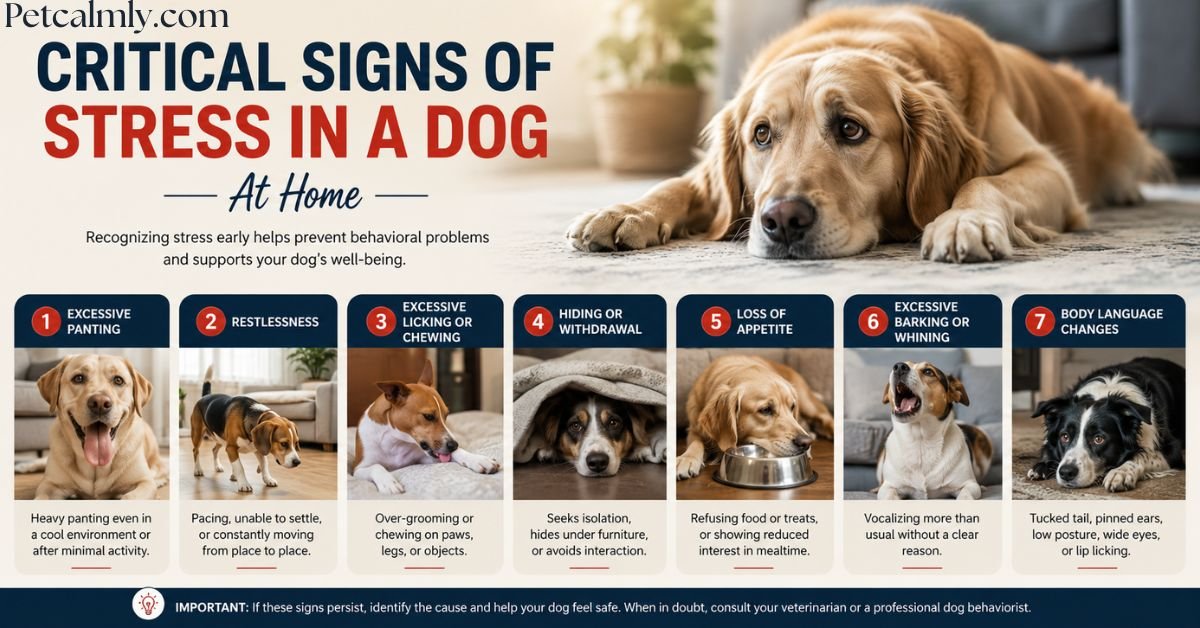
Critical signs of stress in a dog at home include excessive panting, pacing, trembling, hiding, loss of appetite, destructive behavior, frequent barking, and changes in body language such as tucked tail or flattened ears. Some dogs also become clingy or unusually withdrawn. These signs indicate emotional discomfort and should be addressed early to prevent worsening anxiety.
Why Understanding Dog Stress Matters
Dogs may not speak, but they communicate stress in very clear ways if we know how to notice them. Many pet owners misinterpret stress signals as bad behavior, when in reality, the dog is feeling overwhelmed, insecure, or uncomfortable.
At home, stress in dogs can come from small changes like loud noises, new people, separation from owners, or even boredom. If ignored, it can grow into long-term anxiety or behavioral issues.
This guide will help you understand:
- The most important stress signs in dogs
- Why they happen inside the home
- What they actually mean
- How you can help your dog feel safe again
By the end, you’ll be able to recognize even subtle signs of stress and respond confidently.
What Causes Stress in Dogs at Home?
Before identifying symptoms, it helps to understand the root causes. Dogs experience stress for many everyday reasons that owners often overlook.
Common stress triggers include:
- Loud household noises (TV, vacuum, construction)
- Separation from owner or family members
- Changes in routine (feeding time, walks)
- New environment or moving house
- New pets or visitors
- Lack of mental or physical stimulation
- Conflicts with other pets
- Confusion during training
Even something as simple as rearranging furniture can unsettle sensitive dogs.
6 Critical Behavioral Signs of Stress in Dogs
Stress shows up differently in each dog, but behavior changes are usually the first clue.
1. Excessive Panting (Without Heat or Exercise)
If your dog is panting heavily while resting, it may indicate stress rather than temperature.
2. Pacing and Restlessness
Dogs may walk in circles, move from room to room, or seem unable to settle.
3. Hiding or Avoidance
A stressed dog often seeks quiet corners, under beds, or behind furniture.
4. Destructive Behavior
Chewing furniture, scratching doors, or tearing objects can be a release of emotional tension.
5. Increased Barking or Whining
Dogs may vocalize more when they feel uncertain or anxious.
6. Sudden Silence or Withdrawal
Some dogs do the opposite they become unusually quiet and disconnected.
Physical Signs of Stress You Should Not Ignore
Stress doesn’t only affect behavior it shows in the body too.
Watch for these physical signals:
- Trembling or shaking (not cold-related)
- Dilated pupils or “wide eyes”
- Excessive shedding
- Lip licking or yawning repeatedly
- Sweaty paws (yes, dogs can sweat through pads)
- Tucked tail or stiff posture
- Flattened ears against the head
These signals often appear before behavioral changes become obvious.
Emotional and Subtle Signs of Stress
Some signs are very subtle but extremely important.
Subtle indicators include:
- Following the owner everywhere (clinginess)
- Sudden loss of interest in toys
- Not responding to commands they normally know
- Avoiding eye contact
- Freezing in place during unfamiliar situations
These early signs are often ignored, but they are your dog’s first warning signals.
Comparison: Normal Behavior vs Stress Behavior
| Normal Dog Behavior | Stress Behavior |
|---|---|
| Plays and relaxes easily | Unable to settle |
| Eats normally | Loss of appetite |
| Curious about surroundings | Hides or avoids interaction |
| Responsive to commands | Ignores familiar cues |
| Calm breathing | Heavy panting at rest |
This comparison helps pet owners quickly judge whether behavior changes are emotional or environmental.
Common Mistakes Pet Owners Make
Many owners unintentionally worsen stress by misunderstanding their dog’s behavior.
Mistakes to avoid:
- Punishing barking or destructive behavior
- Ignoring early warning signs
- Forcing interaction when the dog is hiding
- Changing routines suddenly
- Not providing enough mental stimulation
- Assuming “it will pass on its own”
Stress is not “bad behavior” it is communication.
Practical Ways to Help a Stressed Dog at Home
Helping your dog doesn’t always require complex training. Small changes can make a big difference.
Step-by-step support plan:
1. Create a Safe Space
Give your dog a quiet corner with a bed, toys, and minimal noise.
2. Stick to a Routine
Feed, walk, and play at consistent times every day.
3. Increase Mental Stimulation
Use puzzle toys, sniff games, or basic training exercises.
4. Gentle Physical Activity
Short walks and calm play sessions reduce nervous energy.
5. Stay Calm Yourself
Dogs mirror human emotions your calm energy helps them relax.
6. Avoid Overstimulation
Reduce loud sounds, sudden changes, and excessive visitors.
When Should You Be Concerned?
Some stress signs may indicate deeper anxiety or health issues.
Contact a veterinarian if you notice:
- Refusal to eat for more than 24 hours
- Aggressive behavior that appears suddenly
- Constant trembling or shaking
- Self-harming behavior (licking/chewing excessively)
- Extreme withdrawal for several days
- Loss of bladder or bowel control due to fear
Professional evaluation helps rule out medical problems and ensures proper treatment.
What Should Pet Owners Do Immediately?
If you suspect stress in your dog, take these immediate steps:
Quick action checklist:
- Observe and note behavior changes
- Remove known stress triggers
- Offer a calm environment
- Avoid punishment or shouting
- Maintain feeding and walking routine
- Provide comfort without overwhelming attention
Small, consistent actions often work better than sudden major changes.
Preventing Stress in Dogs Long-Term
Prevention is always easier than treatment.
Long-term strategies:
- Socialize your dog early (if possible)
- Keep a stable daily routine
- Provide regular exercise
- Rotate toys to prevent boredom
- Train using positive reinforcement
- Spend quality bonding time daily
A balanced lifestyle is the best protection against stress.
Real-Life Example (Relatable Scenario)
A common situation: a dog becomes anxious when the owner starts working from home after being away all day previously. The dog may bark more, follow constantly, or refuse to relax.
In most cases, the issue isn’t discipline it’s confusion and attachment imbalance. Gradual adjustment, routine rebuilding, and calm reassurance usually help the dog settle again.
Conclusion
Recognizing critical signs of stress in a dog at home is one of the most important parts of responsible pet ownership. Dogs often express emotional discomfort through behavior changes long before it becomes serious.
By observing body language, daily habits, and subtle emotional cues, you can identify stress early and take supportive action. Most dogs recover well when they feel safe, understood, and cared for consistently.
A calm environment, stable routine, and patient response from you can make a huge difference in your dog’s emotional well-being.
More Information About Pets, Please Visit Our Website: How to Stop Dog Barking in Seconds at Night
Why Do Dogs Lick Their Paws at Night?
Frequently Asked Questions
1. What is the first sign of stress in a dog?
The earliest signs often include restlessness, lip licking, yawning, and difficulty settling down. These subtle behaviors usually appear before more obvious symptoms.
2. Can stress make a dog behave aggressively?
Yes, stress can sometimes lead to defensive aggression. A fearful or overwhelmed dog may growl or snap if it feels cornered or unsafe.
3. How do I calm a stressed dog quickly at home?
Move your dog to a quiet space, reduce noise, and speak softly. Avoid sudden movements and give them time to relax naturally.
4. Is shaking always a sign of stress in dogs?
Not always. Shaking can also be caused by cold, excitement, or medical issues. If it continues frequently, consult a vet.
5. Can boredom cause stress in dogs?
Yes, lack of mental and physical stimulation is a major cause of stress. Dogs need activity, play, and engagement to stay balanced.
6. When should I take my dog to a vet for stress?
If stress symptoms persist for several days, or if your dog stops eating, becomes aggressive, or shows extreme behavior changes, veterinary help is recommended.