Short direct answer
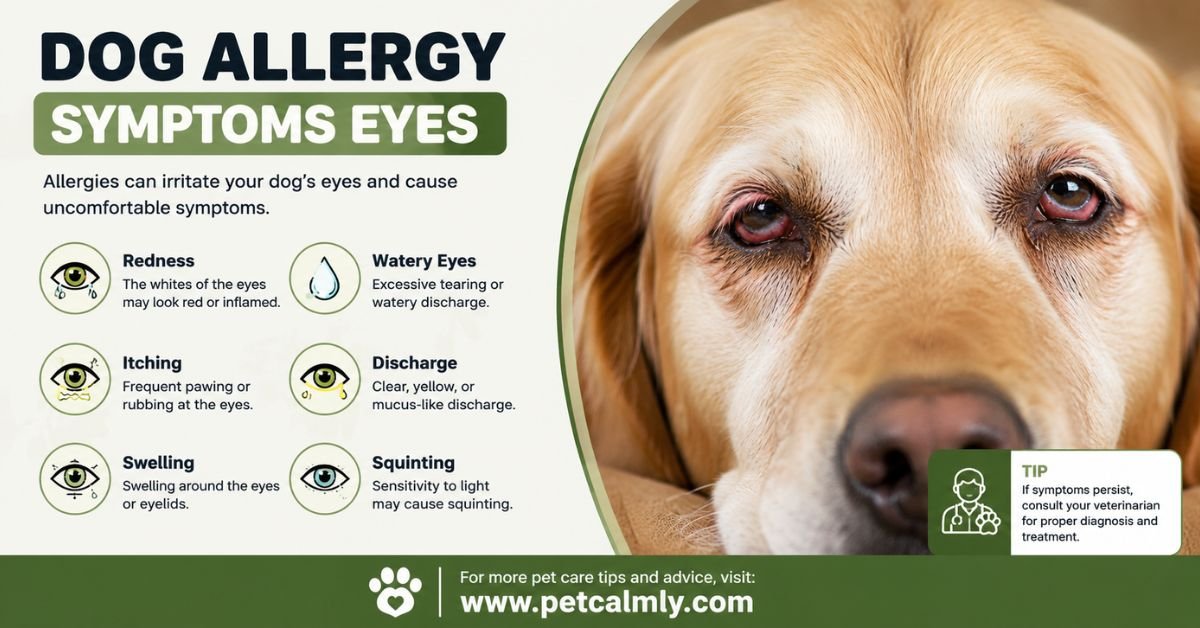
Dog allergy symptoms in the eyes usually show up as redness, watery discharge, puffy eyelids, and constant rubbing or pawing at the face. Your dog might squint more than usual, blink rapidly, or develop a slightly swollen look around the eyes after being outside, eating a new food, or being near dust and cleaning products. Mild cases often settle down with rest and gentle cleaning, but thick discharge, closed eyes, or non-stop scratching are signs it’s time to call your vet.
If you’ve noticed your dog blinking more than normal or rubbing their face against the couch after a walk in the park, you’re not imagining things. Eye allergies in dogs are more common than most owners realize, and they can look strikingly similar to human hay fever itchy, watery, irritated eyes that flare up at certain times of year or after certain exposures.
The tricky part is that allergy symptoms in the eyes can overlap with infections, injuries, and other eye conditions that need very different treatment. Knowing what to actually look for
and what separates a mild flare-up from something that needs same-day vet attention makes a real difference in how comfortable your dog is and how quickly things clear up.
What Do Dog Eye Allergies Actually Look Like?
Allergic reactions in a dog’s eyes don’t always look dramatic. Sometimes it’s subtle: a bit more blinking, a faint pink tinge to the white of the eye, or your dog rubbing their face on the carpet after coming inside. Other times it’s obvious puffy lids, streaming discharge, and a dog who clearly wants to claw at their own face.
Common Visual Signs of Eye Allergies in Dogs
Here’s what allergy-related eye irritation typically looks like in real life:
- Redness in the white of the eye or around the rims often described by owners as “bloodshot” or “pink”
- Watery, clear discharge that soaks the fur under the eye
- Puffy or swollen eyelids, sometimes making the eye look smaller than usual
- Excessive blinking or squinting, especially in bright light
- Pawing or rubbing the face against furniture, carpet, or your leg
- A dog who seems unusually irritable or restless, particularly after time outdoors
Some dogs only show one or two of these signs. Others get the full combination during a bad flare-up, especially during high-pollen seasons or after exposure to something new in the home, like a scented candle or a different laundry detergent.
How Allergy-Related Eye Symptoms Differ From Infections
This is where a lot of pet owners get stuck, and understandably so allergic conjunctivitis and infectious conjunctivitis can look almost identical at first glance. A few patterns tend to hold true:
- Allergy discharge is usually clear and watery, while infections often produce thick, yellow, or greenish discharge
- Allergies frequently affect both eyes at once, while infections and injuries more often start in just one eye
- Allergic flare-ups tend to come with itchiness and rubbing as the main complaint, while infections are more likely to involve crusting, matting, or the eye staying partly shut
- Allergy symptoms often follow a pattern worse after walks, worse in spring, worse after a food change while infections can appear suddenly without an obvious trigger
None of this replaces an actual eye exam. But if you’re trying to describe symptoms to a vet over the phone, these distinctions genuinely help them prioritize how urgently your dog needs to be seen.
Why Do Dogs Get Allergic Reactions in Their Eyes?
A dog’s eyes are exposed to the environment constantly, and the tissue around them especially the conjunctiva, the thin membrane covering the eye and inner eyelid is sensitive to airborne particles, chemicals, and immune reactions triggered from elsewhere in the body.
Environmental Allergens: Pollen, Dust, and Mold
Just like people, dogs can develop hypersensitivity to environmental allergens such as tree and grass pollen, mold spores, and household dust mites. When these particles land on or near the eye, the immune system overreacts, releasing histamine and causing the classic redness-and-itch response. This is why eye allergy symptoms often spike seasonally, particularly in spring and early autumn.
Food Allergies and Eye Symptoms
Food allergies don’t only cause digestive upset or itchy skin in some dogs, an ingredient sensitivity shows up as eye irritation, facial swelling, or itchiness around the face. Common culprits include proteins like beef, chicken, or dairy, though the specific trigger varies from dog to dog. If eye symptoms seem to track with a recent diet change, that pattern is worth mentioning to your vet.
Contact Allergens: Shampoos, Cleaning Products, and Fabrics
Sometimes the irritation isn’t inhaled or eaten — it’s something that physically touched the eye area. New shampoos, flea treatments, scented candles, air fresheners, cleaning sprays, and even certain bedding materials can trigger localized irritation. Dogs who dig their face into carpets or furniture right after a bath are often reacting to residue from a product that didn’t get fully rinsed out.
Atopic Dermatitis and the Eye Connection
Many dogs with atopic dermatitis a broader skin allergy condition experience eye symptoms as part of the same overall reaction. If your dog also has itchy paws, red ears, or recurring skin infections alongside their eye irritation, the eyes may just be one visible piece of a larger allergy picture rather than an isolated issue.
Breeds More Prone to Eye Allergies
Some breeds are simply more predisposed to allergic conditions in general, and that tendency often extends to the eyes. Owners of these breeds may notice eye allergy symptoms more frequently:
- Bulldogs and French Bulldogs — their shortened muzzles and prominent eyes leave less natural protection from airborne irritants
- Golden Retrievers and Labrador Retrievers commonly affected by atopic dermatitis, which frequently involves the eyes
- Shih Tzus, Pugs, and Pekingese — flat-faced breeds whose eyes sit more exposed
- West Highland White Terriers — known for a higher rate of skin and environmental allergies overall
This doesn’t mean other breeds are immune any dog can develop eye allergies but if you own one of these breeds, it’s worth paying a little closer attention during high-pollen months.
Allergies vs. Infection vs. Injury: How to Tell Them Apart
| Symptom | Likely Allergy | Likely Infection | Likely Injury |
|---|---|---|---|
| Discharge type | Clear, watery | Yellow or green, thick | Varies, sometimes bloody |
| Eyes affected | Usually both | Often just one | Usually just one |
| Onset | Gradual, seasonal, or after exposure | Can appear suddenly | Sudden, often after an incident |
| Behavior | Rubbing, blinking, mild irritation | Squinting, eye kept shut, sensitivity | Pawing at eye, avoiding light, visible pain |
| Swelling | Mild puffiness around lids | Can be present | Possible, sometimes severe |
| Accompanying signs | Sneezing, itchy skin, licking paws | Lethargy, possible fever | Visible scratch, cloudiness, sudden onset |
This table is a starting point for narrowing things down at home it isn’t a diagnostic tool. When symptoms are severe or you’re unsure, a same-day vet visit is always the safer choice, especially with anything eye-related, since eye tissue can be damaged quickly if the wrong condition goes untreated.
Practical Ways to Soothe Your Dog’s Eye Allergies at Home
For mild, confirmed allergy symptoms the kind your vet has already helped you identify as allergy-related there are a few gentle things you can do at home to keep your dog more comfortable.
Safe Home Care Steps
- Wipe the area gently with a clean, damp, lint-free cloth or a vet-approved eye wipe to remove pollen, dust, or discharge
- Rinse eyes with a vet-approved saline solution if your vet has recommended one, especially after outdoor time during high-pollen days
- Wash bedding and blankets regularly if dust or dander seems to be a trigger
- Keep face fur trimmed on longer-haired breeds so hair isn’t constantly brushing against the eye
- Track flare-up patterns in a simple notes app noting walks, new products, or food changes helps your vet spot triggers faster
- Use an air purifier in the home during pollen-heavy seasons if environmental allergies are suspected
What NOT to Do
- Don’t use human eye drops, essential oils, or home remedies not specifically approved for dogs — some can cause serious irritation or damage
- Don’t apply any medicated ointment without veterinary guidance, even if it worked for a previous issue
- Don’t ignore one-sided symptoms, since allergies typically affect both eyes a single irritated eye deserves closer attention
- Don’t assume every case is “just allergies” without ruling out infection, especially if this is the first time you’re seeing these symptoms
When Should You Worry? Signs That Need a Vet Visit
Most eye allergy symptoms are uncomfortable but not dangerous. That said, the eye is one area where it’s genuinely better to be cautious than to wait things out. Contact your vet promptly if you notice:
- Thick yellow or green discharge instead of clear, watery discharge
- One eye affected while the other looks completely normal
- The eye staying partially or fully closed
- Visible cloudiness, a change in eye color, or a scratched-looking surface
- Your dog pawing frantically at the eye or clearly in pain
- Swelling that seems to be getting worse rather than better
- Symptoms lasting more than a couple of days despite gentle home care
- Any sign of a lump, growth, or something visibly lodged in the eye
None of these symptoms should be managed at home. Eye tissue is delicate, and conditions like corneal ulcers or infections can worsen quickly without proper treatment.
What Should Pet Owners Do Next?
If you suspect your dog is dealing with eye allergies, the most useful thing you can do is gather a little information before your vet visit. Note when the symptoms started, whether both eyes are affected, any recent changes in food, cleaning products, or environment, and whether your dog has other allergy signs like itchy skin or sneezing.
Bringing this pattern to your vet rather than just saying “his eyes look red” often speeds up diagnosis considerably. Your vet may recommend an elimination diet if food allergies are suspected, antihistamines or prescription eye drops for environmental triggers, or further testing if symptoms are recurring and severe.
Preventing Future Eye Allergy Flare-Ups
Once you and your vet have identified likely triggers, prevention becomes much more manageable:
- Rinse your dog’s face after walks during high-pollen seasons
- Switch to fragrance-free, dog-safe grooming and cleaning products
- Keep a consistent diet and introduce new foods slowly, watching for reactions
- Vacuum and wash bedding frequently to reduce dust and dander buildup
- Ask your vet about seasonal allergy management if flare-ups follow a predictable yearly pattern
Conclusion
Dog allergy symptoms in the eyes redness, watery discharge, puffiness, and constant rubbing are common, but they’re not something to guess your way through. Mild, pattern-based irritation often responds well to gentle home care and trigger avoidance, while anything involving thick discharge, one-sided symptoms, or visible pain calls for a vet’s attention right away. Paying attention to how the symptoms show up, not just that they’re happening, is what actually helps you and your vet get your dog comfortable again.
More Information About Pets, Please Visit Our Website: How to Clean Dog Eyes Crust at Home
Dog Coughing at Night Causes
How to Choose the Best Dog Food for My Dog
Why Does My Dog Keep Sneezing?
Why Is My Dog Losing Hair?
How to Clean Dog Ears With Hydrogen Peroxide
Home Remedy for Reverse Sneezing in Dogs
Frequently Asked Questions
1: Can dog allergies really affect just the eyes?
Yes. While allergies often involve itchy skin or sneezing too, some dogs show eye symptoms as the main or only visible sign, especially with environmental allergens like pollen or dust.
2: What color is allergy discharge in a dog’s eyes?
Allergy-related discharge is typically clear and watery. Yellow, green, or thick discharge usually points toward an infection rather than a pure allergic reaction.
3: Should I clean my dog’s eyes if they have allergies?
Gently wiping away discharge with a clean, damp cloth is generally fine for mild cases. Avoid using any drops, ointments, or home remedies unless your vet has specifically approved them.
4: Can food allergies cause eye problems in dogs?
Yes, some dogs react to specific proteins or ingredients with facial swelling, itchiness, or eye irritation rather than the more commonly expected digestive symptoms.
5: How long do dog eye allergies usually last?
It varies by trigger. Reactions to a single exposure, like a cleaning product, may clear up within a day or two once the source is removed, while seasonal environmental allergies can persist for weeks during high-pollen periods.
6: When is red eye in dogs an emergency?
Redness paired with a closed eye, visible cloudiness, sudden onset in one eye only, or clear signs of pain should be treated as urgent and seen by a vet promptly rather than monitored at home.