Short direct answer
The fastest way to reduce cat shedding hair is to brush your cat two to three times a week with the right tool for their coat type, feed a diet rich in omega-3 and omega-6 fatty acids, keep them well hydrated, and rule out underlying health issues like stress, allergies, or thyroid problems. Shedding is a normal biological process, so the goal isn’t to stop it completely it’s to manage loose hair before it ends up on your couch, clothes, and lungs.
Why Is My Cat Shedding So Much Hair?
If you’ve ever run a hand down your cat’s back and come away with a fistful of fur, you already know the feeling somewhere between mild alarm and quiet resignation. Before you panic, it helps to understand what’s actually happening under that coat.
Cats shed for a mix of natural and situational reasons. Most of the time, it’s completely normal. Sometimes, though, it’s your cat’s way of telling you something else is going on.
Natural Shedding Cycles
Cats grow and lose hair in cycles, not all at once. Each hair follicle moves through growth, rest, and shedding phases on its own timeline, which is why you rarely see your cat go “bald” during shedding season you just see more loose hair than usual.
Indoor cats living under artificial light often shed lightly all year, while cats with more exposure to natural daylight tend to shed more heavily in spring and fall, as their bodies adjust coat density to the changing seasons.
Stress and Environmental Changes
A new pet, a move, loud construction next door, or even rearranged furniture can trigger stress shedding in cats. This is a real physiological response stress hormones can push hair follicles into the shedding phase earlier than they normally would.
If your cat suddenly started shedding heavily after a household change, the timing itself is often the biggest clue.
Diet and Hydration Gaps
A coat is largely built from protein and fatty acids. When a cat’s diet is missing enough of either, the coat is usually the first place it shows hair becomes dry, brittle, and prone to falling out. Cats who don’t drink much water (a common issue, since cats evolved from desert-dwelling ancestors) can also develop drier skin and coats over time.
Underlying Health Conditions
Occasionally, excessive shedding points to something medical rather than cosmetic. Conditions such as flea allergy dermatitis, food allergies, hyperthyroidism, or certain skin infections can all cause noticeable hair loss or over-shedding. According to the Cornell Feline Health Center, skin and coat changes are often among the earliest visible signs of an internal imbalance, which is why unexplained shedding is worth mentioning at your cat’s next checkup rather than dismissing outright.
Normal Shedding vs. Excessive Shedding: How to Tell the Difference
Most cat owners aren’t asking “is my cat shedding?” they already know the answer is yes. What they really want to know is whether the amount is normal.
Here’s a simple way to think about it:
| Sign | Likely Normal Shedding | Possible Cause for Concern |
|---|---|---|
| Hair on furniture and clothes | Daily, manageable with regular brushing | Extreme buildup even with regular grooming |
| Coat texture | Soft, glossy | Dry, dull, or brittle |
| Skin underneath | Smooth, no redness | Flaky, red, or scabbed |
| Bald patches | None | Visible thinning or bald spots |
| Behavior | Normal appetite and energy | Excessive licking, scratching, or restlessness |
| Timing | Seasonal increase (spring/fall) | Sudden increase with no clear trigger |
If your cat fits mostly in the left column, you’re likely dealing with ordinary shedding that responds well to grooming and diet adjustments. If several signs from the right column apply, it’s worth a conversation with your veterinarian.
Best Ways to Reduce Cat Shedding Hair at Home
This is the part most cat owners actually came for practical steps that make a visible difference within a few weeks.
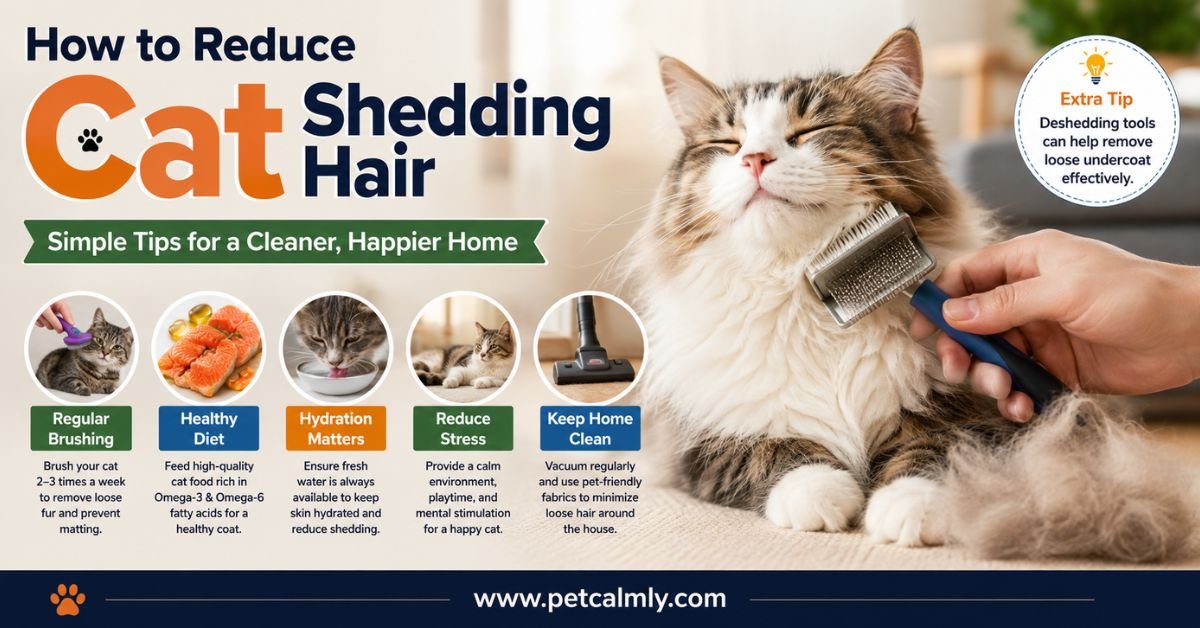
1. Brush Your Cat Regularly (and Correctly)
Brushing is, by a wide margin, the single most effective way to manage shedding. It physically removes loose hair before your cat swallows it during self-grooming or spreads it around your home.
- Short-haired cats: A rubber curry brush or grooming glove 2–3 times a week works well.
- Long-haired cats (Persians, Maine Coons, Ragdolls): Daily brushing with a slicker brush and a metal comb helps prevent both shedding buildup and matting.
- Double-coated cats: An undercoat rake, used gently, removes loose undercoat without damaging the topcoat.
Go slowly, especially around the belly and legs, which tend to be sensitive. Short, calm sessions build trust five relaxed minutes daily beats one stressful 20-minute wrestling match.
2. Feed a Coat-Supporting Diet
Look for cat food where a named animal protein (like chicken or salmon) is the first ingredient, and check that the food includes omega-3 and omega-6 fatty acids, which support skin barrier function and coat shine. Some owners add a vet-approved fish oil supplement, but it’s worth checking with your veterinarian first, since dosing matters and too much can cause digestive upset.
3. Keep Your Cat Hydrated
Cats prone to under-drinking often do better with wet food, which is roughly 70–80% moisture, compared to dry kibble. A cat water fountain can also encourage more drinking, since many cats instinctively prefer moving water over a still bowl.
4. Bathe Occasionally (Not Excessively)
Most cats don’t need regular baths, but an occasional bath with a cat-specific, moisturizing shampoo can loosen dead undercoat, especially in heavy shedders. Over-bathing, on the other hand, can strip natural oils and actually worsen shedding — once every 4–6 weeks is usually plenty for cats who tolerate baths at all.
5. Reduce Stress at Home
Since stress shedding is real, small comfort measures matter more than they might seem to:
- Keep feeding, litter box, and resting spots consistent
- Introduce changes (new pets, furniture, routines) gradually
- Provide vertical space like cat trees, since height often equals security for cats
- Use calming pheromone diffusers if your cat seems anxious
6. Use the Right Tools Around the House
Managing shedding isn’t only about the cat it’s also about the space they live in.
- A pet-specific vacuum with a HEPA filter picks up loose hair and dander more effectively
- Washable throws on furniture make cleanup easier
- An air purifier can help households with allergy sensitivities
Grooming Tool Comparison for Shedding Control
| Tool | Best For | How Often to Use |
|---|---|---|
| Rubber grooming glove | Short-haired cats, nervous cats | 2–3x per week |
| Slicker brush | Long-haired cats, surface tangles | Daily |
| Undercoat rake | Double-coated breeds, heavy shedders | 1–2x per week |
| Metal comb | Detecting mats, finishing touches | After brushing |
| Deshedding tool (e.g., FURminator-style) | Moderate to heavy shedders | Once weekly, gently |
A quick note on deshedding tools: they’re effective, but using them too aggressively or too often can irritate the skin. If your cat flinches, tries to move away, or the skin looks red afterward, ease off and space sessions further apart.
Common Mistakes That Make Shedding Worse
Even well-meaning cat owners sometimes make shedding harder to manage without realizing it.
- Skipping brushing until hair is already everywhere. Prevention is far easier than cleanup.
- Switching cat food too often. Frequent diet changes can upset digestion and, indirectly, coat condition.
- Using human shampoo. It disrupts a cat’s skin pH and can worsen dryness and shedding.
- Ignoring water intake. A dehydrated cat almost always has a duller, more shed-prone coat.
- Assuming all shedding is “just shedding.” Sudden, dramatic changes deserve a second look rather than automatic dismissal.
When Should You Worry About Cat Shedding?
Most shedding is nothing more than a cleaning inconvenience. But certain patterns are worth paying closer attention to:
- Bald or thinning patches, especially symmetrical ones on both sides of the body
- Red, scabby, or flaky skin underneath the coat
- Excessive licking, chewing, or scratching in one area
- Sudden onset with no obvious trigger (no season change, no new stress)
- Shedding paired with weight loss, increased appetite, or lethargy
These signs can point to allergies, parasites, hormonal imbalances such as hyperthyroidism, or skin infections. Veterinary resources such as the AVMA and VCA Animal Hospitals note that persistent coat and skin changes are common early indicators of conditions that respond well to early treatment so there’s real benefit in not waiting too long to get it checked.
What Should Pet Owners Do Next?
If your cat’s shedding falls into the “normal but annoying” category, start with consistent brushing, a quality diet, and better hydration most owners notice a real difference within three to four weeks. Keep a loose mental note (or a quick phone photo log) of your cat’s coat condition so you can spot changes over time rather than relying on memory alone.
If anything from the “worry” list above applies, book a veterinary visit rather than trying to self-diagnose. Skin and coat issues can look similar on the surface but have very different underlying causes, and a vet can run the right tests skin scrapes, bloodwork, or allergy panels to figure out what’s actually going on.
Conclusion
Shedding is simply part of sharing your life with a cat it’s not a flaw to fix, but a rhythm to manage. With regular brushing, a coat-supporting diet, enough water, and a calm home environment, most cats settle into a manageable shedding pattern that’s far easier to live with. Pay attention to the exceptions the bald patches, the itching, the sudden changes and let those be your cue to loop in a veterinarian rather than a reason to worry unnecessarily. The rest is just fur on the couch, and that, most cat owners will tell you, is a small price for the company.
More Information About Pets, Please Visit Our Website: Best Food for Persian Cats
Cat Digestive Health Tips
Best Cat Brushes for Shedding
Best Cat Vitamins for Indoor Cats
Why Does My Cat Smell So Good to Me?
Cat Constipation Home Remedy
Best Professional Cat Grooming Brush
Frequently Asked Questions
1. How often should I brush my cat to reduce shedding?
Short-haired cats generally do well with brushing 2–3 times a week, while long-haired cats benefit from daily brushing to prevent both shedding buildup and matting.
2. Does diet really affect how much a cat sheds?
Yes. A diet with quality animal protein and adequate omega-3 and omega-6 fatty acids supports healthy skin and coat, which often reduces excessive shedding over time.
3. Can stress cause my cat to shed more?
Yes, stress can trigger hormonal changes that push hair follicles into the shedding phase earlier than usual, which is why shedding sometimes spikes after a household change.
4. Are deshedding tools safe to use at home?
They can be, when used gently and not too often. Stop or ease off if your cat seems uncomfortable or the skin looks irritated afterward.
5. Is it normal for cats to shed more in spring and fall?
Yes, especially for cats with regular exposure to natural daylight, since seasonal shedding is a normal way cats adjust coat density to changing temperatures.
6. When should I take my cat to the vet for shedding?
See a vet if you notice bald patches, red or flaky skin, sudden unexplained shedding, or shedding combined with other symptoms like weight loss or lethargy.