Short direct answer
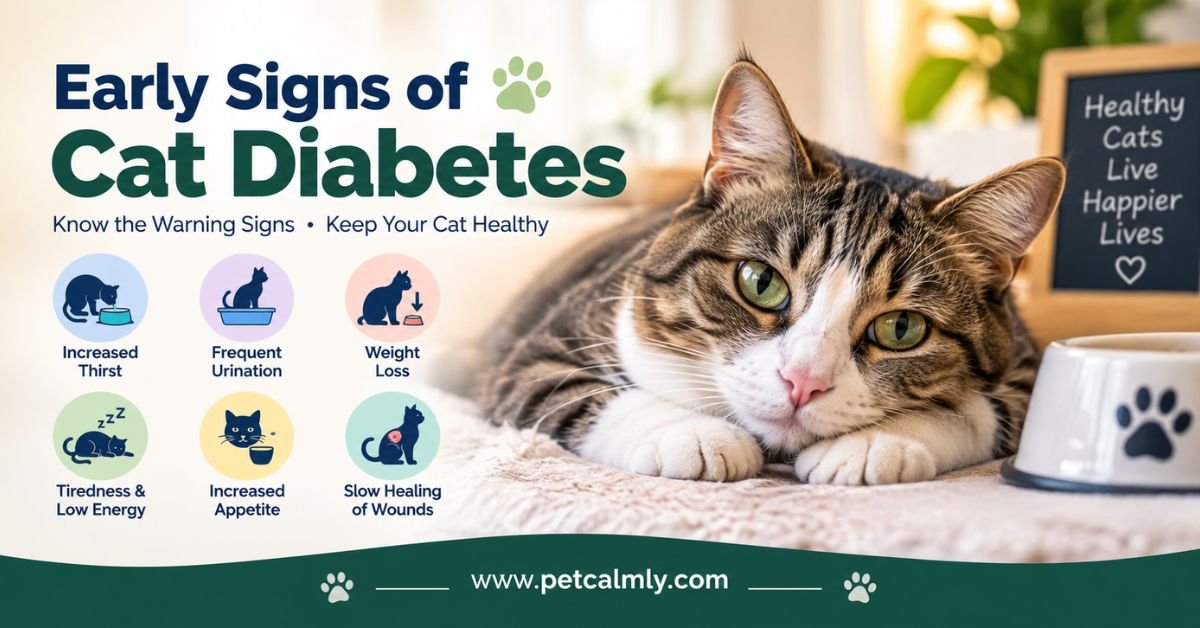
The early signs of cat diabetes are drinking much more water, urinating more, eating more than usual, and losing weight anyway. Some cats also seem tired, groom less, or start walking low on their back legs. If your cat shows two or more of these signs for more than a few days, book a vet visit. A simple blood and urine test can confirm the cause, and early treatment gives your cat the best chance of feeling well again.
Why Spotting Cat Diabetes Early Matters
Most owners don’t notice diabetes on day one. The changes creep in. The water bowl needs filling a bit more often. The litter box feels heavier to scoop. Your cat seems hungrier, and honestly, that feels like a good sign. A cat who eats well must be healthy, right?
That’s what makes the early signs of cat diabetes so easy to miss. Cats are also experts at hiding discomfort, so a sick cat can look surprisingly normal for weeks.
The good news is that diabetes in cats is a manageable condition. Many diabetic cats go on to live comfortable, happy lives. Some cats, especially those treated early, even go into remission and no longer need insulin for a time. This guide walks you through what to look for, what else it might be, how to track changes at home, and when you need to call the vet right away.
A quick note: this article is for education. It can’t diagnose your cat, and only a veterinarian can do that.
What Is Diabetes in Cats, and Why Does It Happen?
Diabetes mellitus is a condition where the body can’t use sugar (glucose) properly. Normally, the hormone insulin acts like a key. It lets glucose move out of the blood and into cells, where it becomes energy.
In diabetic cats, one of two things goes wrong. The pancreas doesn’t make enough insulin, or the body stops responding to insulin well. Most diabetic cats have a condition that looks a lot like type 2 diabetes in people. The body becomes less sensitive to insulin, and over time the pancreas struggles to keep up.
So the sugar stays in the bloodstream instead of reaching the cells. Your cat’s body is surrounded by fuel but can’t use it. That’s why a diabetic cat can be hungry and still lose weight.
Excess weight is the biggest factor you can influence. Genetics, age, and other health problems play a part too. We’ll cover those risk factors shortly.
6 Early Signs of Cat Diabetes You Can Spot at Home
You don’t need special equipment to notice these changes. You just need to know what to look for. Here are the most common early signs of diabetes in cats.
1: Drinking more water than usual
Increased thirst is often the first clue. When blood sugar climbs too high, the kidneys try to flush the extra sugar out through urine. That pulls water along with it, and your cat gets thirsty to make up the loss.
You might notice your cat drinking from the bowl more often, sipping from the faucet, or visiting unusual spots like the bathtub or a plant saucer. A cat who never cared about water before may suddenly seem fixated on it.
2: Peeing more often, or in bigger amounts
More water in means more urine out. In the litter box, this shows up as larger clumps, more clumps, or litter that needs changing much sooner than before.
Some cats also start urinating outside the box. They aren’t being naughty. They may simply not make it in time, or the box may be so wet it’s unpleasant. If a previously reliable cat starts having accidents, don’t assume it’s a behavior problem.
3: Eating more but losing weight
This combination is a classic red flag. Your cat begs for food, finishes meals fast, and still looks thinner. You may feel the spine or ribs more clearly when you pet them.
Because the body can’t use glucose, it starts breaking down fat and muscle for energy instead. Weight loss in a cat who is eating well always deserves a vet visit, whatever the cause.
4: Low energy and less interest in play
Without usable fuel, cats tire easily. Your cat might sleep more, skip the laser-pointer game they used to love, or stop jumping onto the couch or windowsill.
This one is easy to blame on age. But “slowing down” that appears over a few weeks is different from the slow change of a senior cat over years.
5: A dull or messy coat
Cats who feel unwell often groom less. The coat may look greasy, dull, or unkempt, with more dandruff than usual. A cat who normally keeps spotless fur and suddenly looks scruffy is telling you something.
6: Walking differently on the back legs
In some diabetic cats, high blood sugar damages the nerves in the hind legs. The cat may walk with the heels (hocks) touching the ground instead of up on the toes. It looks a bit like a bear walking flat-footed. Some cats also struggle to jump.
This is usually a sign of diabetes that has gone on for a while. It’s not one of the earliest signs, but if you notice it, don’t wait.
Subtle Signs of Diabetes in Cats That Owners Often Miss
Not every cat reads the textbook. Here are quieter changes that can point the same way:
- Your cat is hungrier at odd hours, such as waking you at 4 a.m. for food.
- Weight loss is gradual and hidden under a fluffy coat.
- Your cat seems more clingy or more withdrawn than normal.
- Vomiting happens now and then.
- Bad breath appears out of nowhere.
- Urine smells stronger or looks different.
None of these proves diabetes. But a cluster of small changes, together, is worth a call to your vet. Think of it like piecing together a puzzle. One piece means little, but several pieces start to show a picture.
Which Cats Are Most at Risk?
Any cat can develop diabetes, but some are more likely to. Veterinary sources commonly list these risk factors:
- Being overweight or obese. This is the strongest risk factor, because extra body fat makes cells respond less well to insulin.
- Age. Diabetes is most often diagnosed in middle-aged and older cats.
- Being male, especially if neutered. Male cats seem to be diagnosed more often than females.
- Low activity. Indoor cats who rarely play burn fewer calories.
- Certain medications. Long-term steroids (corticosteroids) can raise the risk, so never stop a prescribed medication without asking your vet.
- Other illnesses. Pancreatitis and some hormone disorders can contribute.
- Breed. Burmese cats, particularly in some parts of the world, have a higher reported risk.
Having risk factors doesn’t mean your cat will get diabetes. It just means paying closer attention is wise.
Is It Really Diabetes? Other Conditions With Similar Signs
Here’s something many articles skip. Several other illnesses cause increased thirst, more urination, and weight loss. That’s why guessing at home doesn’t work, and why testing matters.
| Condition | Signs that overlap with diabetes | Often seen in |
|---|---|---|
| Chronic kidney disease | More thirst and urination, weight loss | Senior cats |
| Hyperthyroidism | Big appetite, weight loss, restlessness | Middle-aged to senior cats |
| Urinary tract infection | Frequent peeing, accidents outside the box | Cats of any age |
| Intestinal disease or parasites | Weight loss despite eating | Any age |
| Pancreatitis | Weight loss, vomiting, low energy | Any age |
Some cats have more than one condition at once. For example, a cat can be diabetic and also have kidney disease. Your vet will sort this out with bloodwork and a urine test, so you don’t have to.
How to Check for the Early Signs of Cat Diabetes at Home
Your vet will want specifics, not just “she seems off.” A week of simple notes makes that appointment far more useful. Here’s an easy way to do it.
A simple seven-day tracking checklist
- Measure water. Fill the bowl with a measured amount each morning. At the same time the next day, measure what’s left. The difference is roughly how much your cat drank. Keep it consistent, and note if you have more than one pet sharing the bowl.
- Count the clumps. Scoop the litter box and count the urine clumps each day. Note if they look larger than before.
- Track appetite. Write down how much your cat eats and whether they’re asking for extra food.
- Check weight weekly. A baby scale or a bathroom scale works. Weigh yourself holding your cat, then subtract your own weight. Small changes matter in a cat, since half a pound is a lot.
- Note energy and behavior. Does your cat play, jump, and groom as usual?
- Take a short video. If your cat walks strangely, a clip is worth a thousand words at the vet.
One honest caveat: cats on wet food get a lot of water from their meals, so they may drink less from the bowl than cats on dry food. Keep that in mind when you compare numbers. What matters most is change from your own cat’s normal.
What not to do at home
Please don’t try to test your cat’s blood sugar with a human glucose meter before talking to a vet. Cats often show stress-related spikes in blood sugar, and a home reading without guidance can send you down the wrong path. Your vet can teach you proper home monitoring later if your cat does need it.
How Vets Confirm Diabetes in Cats
At the appointment, your vet will ask about the changes you’ve seen, so bring your notes. Then they’ll usually run a few tests.
- A physical exam. They’ll check weight, body condition, hydration, and the coat.
- Blood glucose. This measures the sugar in the blood.
- A urine test. Glucose in the urine, along with persistently high blood sugar, supports a diagnosis.
- Fructosamine. This blood test reflects average blood sugar over the past couple of weeks. It helps because stress alone can raise a cat’s glucose temporarily, and a visit to the clinic is stressful for most cats.
- Extra bloodwork. This looks for other problems, like kidney disease or pancreatitis.
If the picture isn’t clear, your vet may suggest a recheck. That’s normal. It doesn’t mean they’re unsure of themselves. It means they’re being careful to avoid a wrong diagnosis.
When Should You Worry? Signs of a Diabetic Emergency
Most early signs of cat diabetes call for a vet visit within a few days. But some signs mean you should go to an emergency clinic right away.
Go now if your cat shows any of these:
- Vomiting that keeps happening
- Refusing food completely
- Extreme weakness or collapse
- Fast or labored breathing
- Severe lethargy, or being hard to wake
- Sweet or fruity-smelling breath
- Signs of dehydration, like sunken eyes or tacky gums
These can point to diabetic ketoacidosis (DKA), a serious complication where the body breaks down fat so fast that acids build up in the blood. It’s treatable, but it needs hospital care quickly.
There’s a second emergency to know about if your cat is already on insulin: blood sugar that drops too low (hypoglycemia). Signs include wobbliness, trembling, confusion, and seizures. Your vet will give you a plan for this when insulin is prescribed. If you ever see these signs, follow that plan and call the clinic immediately.
What Should You Do If You Notice the Early Signs of Cat Diabetes?
Take a breath first. Noticing early is the best thing you can do for your cat. Here’s a calm plan.
- Call your vet and describe what you’ve seen. Mention thirst, urination, appetite, and weight changes. Ask if they’d like to see your cat soon.
- Keep your cat’s food and routine steady until the visit. Sudden changes can muddy the picture.
- Never cut back food to “fix” weight. Cats who stop eating can develop a dangerous liver problem. Weight loss should always be gradual and vet-guided.
- Bring your notes, a video, and your cat’s food labels. Your vet will want to know exactly what your cat eats.
- Ask about the plan. If the diagnosis is diabetes, ask what diet, insulin, and monitoring schedule suit your cat.
Here’s a realistic example. Picture an 11-year-old, slightly overweight neutered male who suddenly won’t leave the water bowl alone and is yelling for breakfast at dawn. His owner scoops the litter and notices the clumps are twice the usual size. She writes it down for four days, brings it in, and the vet runs tests. Because she noticed early, the cat starts treatment before he gets seriously ill. That kind of attention makes a real difference.
6 Common Mistakes Owners Make With Early Diabetes Signs
Almost every owner makes at least one of these. They’re understandable, but worth avoiding.
- Blaming old age. Thirst and weight loss aren’t “just aging.”
- Waiting to see if it passes. Diabetes doesn’t resolve on its own, and delay can lead to complications.
- Treating a big appetite as a good sign. A hungry cat who loses weight needs testing.
- Switching diets without advice. The right food matters, but the wrong switch at the wrong time can backfire, especially once insulin is involved.
- Giving human supplements or “natural cures.” Some products are unsafe for cats, and none replace proper care.
- Skipping follow-up. Diabetes management takes fine-tuning, and the first dose is rarely the last adjustment.
Treatment and Outlook: What Life With a Diabetic Cat Looks Like
Hearing the word “insulin” can feel overwhelming. Many owners are surprised by how manageable it becomes. Most cats tolerate the tiny needles well, and a treat after the shot helps.
A typical plan includes:
- Insulin injections, usually twice a day, at doses your vet decides.
- A diet your vet recommends. Many vets prefer higher-protein, lower-carbohydrate foods for diabetic cats, but the right choice depends on the individual cat.
- Weight management. If your cat is overweight, gradual loss can improve how the body uses insulin.
- Regular monitoring. This can include rechecks, fructosamine tests, and sometimes home glucose tracking.
Some cats achieve remission, meaning their blood sugar stays normal without insulin. It’s more likely when treatment starts early, but it’s never guaranteed, and it can come back. Even without remission, a well-managed diabetic cat can enjoy a good quality of life for years.
How to Lower Your Cat’s Risk of Diabetes
You can’t control everything, but you can stack the odds in your cat’s favor.
- Keep your cat lean. Ask your vet what a healthy weight looks like, because it varies by frame.
- Measure meals. Free-feeding dry food makes it easy to overeat.
- Encourage movement. Short play sessions, climbing trees, and puzzle feeders all help.
- Schedule regular checkups. Older cats benefit from routine bloodwork, which can catch changes early.
- Review medications with your vet. If your cat takes steroids, ask whether alternatives or monitoring make sense.
- Treat dental and digestive problems. Ongoing inflammation can affect overall health.
None of this guarantees a cat will avoid diabetes. But a lean, active cat who sees the vet regularly is well placed to stay healthy.
Conclusion
If you remember one thing, make it this: more water, more urine, more appetite, and still losing weight. That combination should send you to the vet, not to the internet.
You know your cat better than anyone. Trust that little voice that says something is different. Catching the early signs of cat diabetes gives your cat the best shot at a comfortable future, and gives you more options, too. And if the diagnosis does come, you’re not facing it alone. Your vet team will help you build a routine that works for both of you.
More Information About Pets, Please Visit Our Website: How to Train Cat to Use Litter Box
Cat Drinking From Toilet?
How to Keep a Cat Happy Indoors
Best Food for Persian Cats
Cat Ear Infection Symptoms
Can Cats Eat Tuna?
Cat Digestive Health Tips
Can Cats Eat Watermelon?
Why Does My Cat Smell So Good to Me?
Best Cat Vitamins for Indoor Cats
Frequently Asked Questions
1: What are the first signs of diabetes in a cat?
The first signs are usually increased thirst and more urination, often followed by a bigger appetite and gradual weight loss. Some cats also become tired or groom less. Because these signs can also point to kidney disease or hyperthyroidism, a vet should run tests rather than guess.
2: How long can a cat live with untreated diabetes?
There’s no safe timeline, and untreated diabetes tends to get worse. It can lead to nerve damage, dehydration, and diabetic ketoacidosis, which is life-threatening. Cats with treated diabetes can live comfortably for years, so getting a diagnosis early really matters.
3: Can a cat have diabetes without symptoms?
Yes, especially in the early stages. Mild changes may be so gradual that owners miss them, and some cats are diagnosed from routine bloodwork before obvious signs appear. That’s one reason regular senior checkups are valuable.
4: Is my cat drinking too much water?
If your cat’s water intake has clearly gone up compared with their normal, and you’re refilling the bowl more often or seeing bigger litter clumps, it’s worth a vet call. Wet food, hot weather, and diet changes can also affect drinking, so track it for a few days and share the notes.
5: Can diabetes in cats go away?
Sometimes. Some cats go into diabetic remission, where blood sugar stays normal without insulin, particularly when treatment starts early and weight and diet are well managed. It’s not guaranteed, and it can return, so ongoing vet monitoring still matters.
6: Can I test my cat for diabetes at home?
You can watch for signs at home, such as water intake, litter clumps, appetite, and weight. But you can’t confirm diabetes yourself. Stress can raise a cat’s blood sugar, and only a vet can interpret the results correctly. Ask your vet about home monitoring if your cat is diagnosed.