Short direct answer
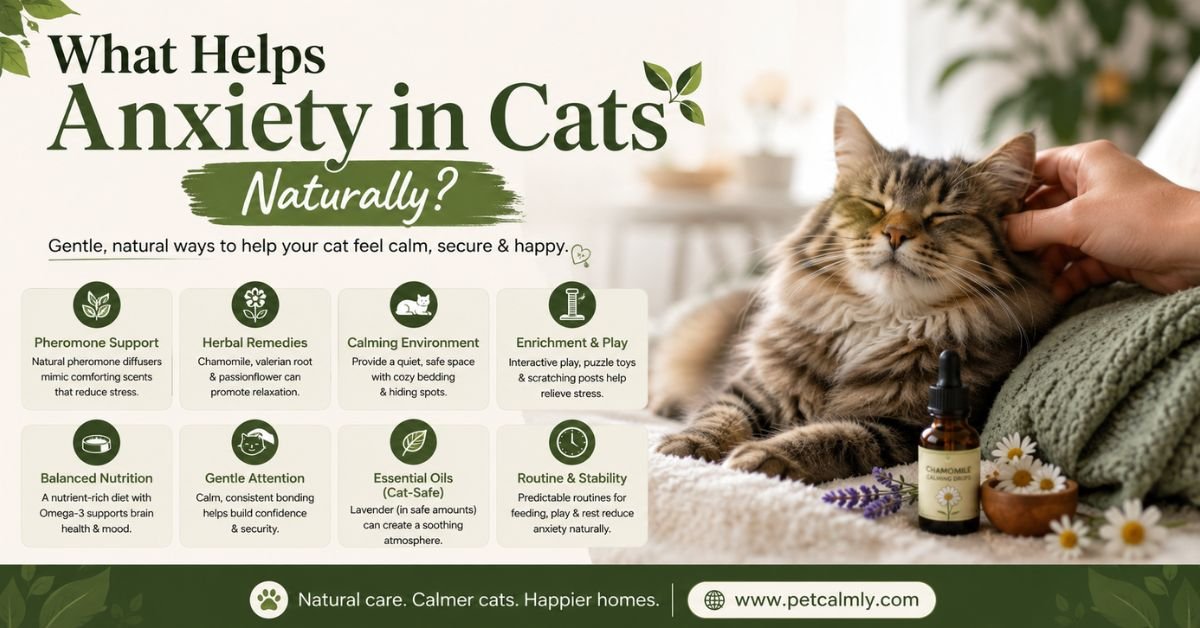
Natural ways to help anxiety in cats include creating a predictable routine, providing safe hiding spaces, using calming pheromones, increasing play and enrichment, reducing household stress, and supporting your cat with gentle behavioral changes rather than punishment. Some cats also benefit from calming supplements, soothing music, interactive toys, or quiet bonding time.
Most importantly, anxious cats need to feel safe and in control of their environment. Sudden changes, loud homes, loneliness, boredom, and conflict with other pets are common triggers. If anxiety becomes severe or causes appetite loss, aggression, overgrooming, or litter box issues, a veterinarian should evaluate your cat to rule out medical problems.
Why Cat Anxiety Is More Common Than Many Owners Realize
Cats often hide stress surprisingly well.
A nervous dog may bark, pace, or cling to its owner. Cats tend to do the opposite. They withdraw, sleep more, hide under furniture, stop using the litter box, overgroom, or become unusually reactive. Some owners mistake these signs for “bad behavior” or assume their cat is simply aloof.
In reality, anxiety can affect cats deeply.
Many cat owners start searching for natural anxiety relief because they notice subtle changes like:
- Their cat suddenly hiding more
- Meowing at night
- Excessive licking or hair loss
- Fear during storms or visitors
- Stress after moving homes
- Tension between household pets
- Separation anxiety when left alone
- Aggressive behavior that seems “out of nowhere”
The good news is that many mild to moderate anxiety problems improve significantly once owners understand what is triggering the stress.
This guide explains:
- What naturally calms anxious cats
- Common causes of feline anxiety
- Safe home remedies and calming techniques
- Mistakes that accidentally worsen stress
- When anxiety becomes a medical concern
- How to create a calmer daily routine for your cat
What Anxiety Looks Like in Cats
Quick answer
Anxiety in cats often appears as behavioral changes rather than obvious panic. Hiding, overgrooming, aggression, appetite changes, clinginess, or litter box problems are some of the most common signs.
Every cat expresses stress differently.
Some become quieter. Others become louder, reactive, or destructive.
Common signs of anxiety in cats
Behavioral signs
- Hiding frequently
- Avoiding people or pets
- Sudden aggression
- Excessive meowing
- Clinginess
- Restlessness
- Hypervigilance
- Startling easily
Physical signs
- Dilated pupils
- Trembling
- Flattened ears
- Tail twitching
- Overgrooming
- Fur loss from licking
- Digestive upset
- Reduced appetite
Household-related signs
- Urinating outside the litter box
- Spraying
- Scratching furniture excessively
- Nighttime crying
- Refusing certain rooms
One important thing to remember: cats rarely act “spiteful.” Stress usually has a reason behind it.
What Causes Anxiety in Cats?
Understanding the cause matters because the best natural remedy depends on the trigger.
1. Changes in the environment
Cats thrive on predictability.
Even small changes can feel overwhelming, including:
- Moving house
- Rearranging furniture
- New roommates
- New pets
- A baby in the home
- Renovation noise
- Different work schedules
Some cats adjust quickly. Others may need weeks.
2. Lack of safe territory
Cats feel calmer when they can:
- Climb
- Observe safely
- Hide privately
- Escape unwanted interaction
A home without vertical spaces or quiet zones can increase anxiety significantly, especially in multi-pet households.
3. Conflict with other pets
This is one of the most overlooked causes of feline stress.
Two cats do not need to physically fight for tension to exist. Subtle blocking behaviors, staring, chasing, or resource guarding can create constant anxiety.
Look for signs like:
- One cat avoiding food bowls
- Waiting to use the litter box
- Sleeping separately
- Sudden hiding after another pet enters the room
4. Boredom and lack of stimulation
Indoor cats still have strong hunting instincts.
Without enrichment, many cats become:
- Restless
- Destructive
- Obsessive
- Attention-seeking
- Night-active
Mental stimulation is often one of the most effective natural anxiety reducers.
5. Traumatic experiences
Cats may develop long-term stress after:
- Shelter experiences
- Abuse or neglect
- Loud accidents
- Dog attacks
- Painful medical procedures
- Being lost outdoors
Fear-based anxiety can linger even after the danger is gone.
6. Separation-related stress
Some cats become very attached to their owners.
These cats may:
- Cry when left alone
- Follow owners constantly
- Stop eating while alone
- Overgroom during absences
Separation anxiety in cats is real, although it often looks quieter than it does in dogs.
Natural Ways to Calm an Anxious Cat
Create a predictable daily routine
In short, consistency helps cats feel secure.
Try to keep these activities consistent:
- Feeding times
- Play sessions
- Sleep environment
- Human interaction
- Cleaning routines
Cats relax when they know what to expect.
Even 10–15 minutes of predictable play and attention each day can make a noticeable difference.
Give your cat safe hiding spaces
Anxious cats need escape routes.
Good calming spaces include:
- Covered cat beds
- Quiet closets
- Cat tunnels
- High shelves
- Window perches
- Cardboard boxes
One common mistake is forcing a scared cat out of hiding. This usually increases fear.
A hiding cat is often trying to self-regulate.
Use vertical space
Height creates security for cats.
Cat trees, shelves, or window hammocks allow anxious cats to:
- Observe safely
- Avoid conflict
- Feel more in control
This is especially helpful in homes with children, dogs, or multiple cats.
Increase interactive play
Play is one of the most powerful natural stress relievers for cats.
Why? Because it:
- Releases pent-up energy
- Mimics hunting behavior
- Builds confidence
- Reduces boredom
- Strengthens trust with owners
Best toys for anxious cats
- Wand toys
- Feather teasers
- Treat puzzles
- Motion toys
- Crinkle tunnels
- Small prey-like toys
Aim for short sessions rather than one long exhausting session.
Many cats respond best to:
- Stalk
- Chase
- Pounce
- “Catch”
- Small treat reward
That sequence feels emotionally satisfying to them.
Do Calming Pheromones Help Cats?
Quick answer
Yes, many cats respond well to synthetic calming pheromones, especially for environmental stress, moving, travel, or multi-cat tension.
These products mimic calming facial pheromones cats naturally leave when they rub objects.
Owners often notice improvements in:
- Hiding
- Spraying
- Tension
- Stress vocalization
- Mild aggression
Pheromones are not sedatives. They simply help some cats perceive the environment as safer.
They tend to work best alongside environmental changes rather than as a standalone solution.
Natural Calming Supplements for Cats
Some cats benefit from veterinarian-approved calming supplements.
Common natural calming ingredients
| Ingredient | May Help With | Notes |
|---|---|---|
| L-theanine | Stress and reactivity | Found in some calming chews |
| Chamomile | Mild relaxation | Use only pet-safe products |
| Tryptophan | Mood support | Sometimes included in calming diets |
| CBD (pet-formulated only) | Anxiety in some cats | Research is still developing |
| Casein peptides | Relaxation | Milk-derived calming proteins |
Important safety note
Never give human anxiety supplements or essential oils to cats without veterinary guidance.
Cats are extremely sensitive to many substances that humans tolerate safely.
Are Essential Oils Safe for Anxious Cats?
The main reason for caution
Many essential oils are toxic to cats.
This includes oils commonly promoted online for relaxation, such as:
- Tea tree
- Peppermint
- Eucalyptus
- Citrus oils
- Cinnamon
- Clove
Cats process chemicals differently than humans and dogs.
Even diffused oils can sometimes irritate sensitive cats or cause toxicity in poorly ventilated spaces.
If you want to try scent-based calming methods, speak with a veterinarian first and choose products specifically formulated for cats.
Food and Nutrition Can Affect Anxiety Too
Some anxious cats improve when overall wellness improves.
Helpful nutritional considerations
- Consistent feeding times
- Adequate hydration
- High-quality protein
- Weight management
- Puzzle feeders for enrichment
Cats that feel hungry, uncomfortable, or under-stimulated may become more irritable or stressed.
Puzzle feeders are especially useful because they combine:
- Mental stimulation
- Hunting behavior
- Slower eating
- Confidence-building
How to Naturally Reduce Anxiety at Night
Nighttime anxiety is surprisingly common in cats.
Owners often describe:
- Crying at the same time every night
- Zoomies after midnight
- Restlessness
- Attention-seeking behavior
What often helps
Increase evening play
A good play session before bedtime helps many cats settle.
Feed a small meal afterward
This mimics the natural hunt-eat-groom-sleep cycle.
Avoid reinforcing nighttime crying
If owners consistently reward nighttime meowing with food or attention, the habit can intensify.
Add nighttime enrichment
Try:
- Puzzle feeders
- Window access
- Quiet toys
- Cozy sleeping areas
Senior cats should always be evaluated if nighttime vocalization appears suddenly.
Multi-Cat Homes: The Hidden Stress Problem
Some homes look peaceful but feel stressful to the cats living there.
Cats are territorial by nature. Shared resources can create silent tension.
Common signs of multi-cat anxiety
- Blocking hallways
- One cat staying upstairs only
- Sudden litter accidents
- Grooming obsessively
- Sleeping separately
- Staring contests
- Chasing
The solution often starts here
Provide multiple:
- Litter boxes
- Water bowls
- Feeding stations
- Resting areas
- Scratching posts
A helpful rule:
One litter box per cat, plus one extra.
Resource competition is a major anxiety trigger.
Calming an Anxious Rescue Cat Naturally
Rescue cats often need extra patience.
Some adjust within days. Others need months before feeling truly safe.
What helps most
Let the cat approach first
Avoid overwhelming interaction.
Keep one quiet “base camp” room initially
This prevents sensory overload.
Speak softly and move predictably
Fast movements can trigger fear.
Reward brave behavior gently
Treats, blinking slowly, or sitting quietly nearby can help build trust.
One realistic expectation: progress is rarely perfectly linear. A rescue cat may seem confident one day and fearful the next.
That is normal.
What NOT to Do With an Anxious Cat
Avoid punishment
Punishment increases fear and damages trust.
Yelling, spraying water, or physically correcting a cat often worsens anxiety-driven behaviors.
Do not force interaction
Many owners unintentionally overwhelm stressed cats by:
- Carrying them constantly
- Pulling them from hiding
- Forcing cuddles
- Introducing strangers too quickly
An anxious cat needs choice and control.
Avoid sudden environmental changes
Try not to abruptly:
- Move litter boxes
- Switch food
- Remove safe spaces
- Change routines
Small gradual changes are easier for cats to handle.
Don’t assume every issue is behavioral
Medical problems can mimic anxiety.
Pain, thyroid disease, urinary problems, digestive discomfort, or cognitive decline can all change behavior.
Sudden behavioral shifts always deserve attention.
A Simple Daily Routine That Helps Many Anxious Cats
Here is a beginner-friendly calming routine many owners find helpful.
Morning
- Feed at consistent time
- Short interactive play session
- Open blinds/window perch access
Afternoon
- Quiet resting areas available
- Puzzle feeder or enrichment toy
- Calm environment if possible
Evening
- Longer play session
- Grooming or bonding time if cat enjoys it
- Small meal afterward
Overnight
- Cozy sleeping spots
- Access to water and litter box
- Quiet background noise if helpful
Consistency matters more than perfection.
Comparison Table: Natural Anxiety Solutions for Cats
| Natural Method | Best For | How Quickly It Helps |
|---|---|---|
| Interactive play | Boredom, restlessness | Days to weeks |
| Pheromone diffusers | Environmental stress | 1–4 weeks |
| Vertical spaces | Multi-pet stress | Immediate to gradual |
| Safe hiding spots | Fearful cats | Immediate |
| Routine consistency | General anxiety | Gradual |
| Puzzle feeders | Lonely indoor cats | Days |
| Calming supplements | Mild anxiety | Varies |
| Reduced noise/stimulation | Sensitive cats | Immediate |
4 Common Mistakes Cat Owners Make
Mistake 1: Assuming cats “get over it”
Cats often adapt slowly.
Ignoring stress signs can allow anxiety to worsen over time.
Mistake 2: Giving attention only during anxious behavior
Some cats learn that stress behaviors bring interaction.
Balance comfort with encouraging calm, confident moments too.
Mistake 3: Underestimating boredom
Indoor cats still need:
- Exploration
- Climbing
- Hunting behavior
- Mental stimulation
A bored cat is not always a lazy cat.
Mistake 4: Using dog training methods
Cats generally respond poorly to dominance-based correction.
Trust-building works far better.
When Should You Worry?
Seek veterinary help if your cat:
- Stops eating
- Loses weight
- Self-injures from overgrooming
- Suddenly becomes aggressive
- Has litter box accidents repeatedly
- Hides constantly
- Shows panic-level fear
- Cries excessively at night
- Has sudden personality changes
Emergency warning signs
Seek urgent care if anxiety-like symptoms appear alongside:
- Difficulty breathing
- Collapse
- Seizures
- Straining to urinate
- Severe lethargy
Some medical emergencies initially look behavioral.
What Should Pet Owners Do First?
If your cat seems anxious, start simple.
Step-by-step approach
1. Observe patterns
Ask:
- When does the anxiety happen?
- What changed recently?
- Are other pets involved?
- Is it worse at certain times?
2. Improve the environment
Add:
- Hiding spots
- Vertical territory
- Predictable routines
- Enrichment
3. Increase interactive play
This alone helps many cats.
4. Reduce stress triggers gradually
Avoid overwhelming exposure.
5. Consult a veterinarian if symptoms persist
Especially if:
- The behavior is sudden
- Severe
- Escalating
- Physically harmful
Sometimes medication is necessary, especially for severe chronic anxiety. Natural support and veterinary care can work together.
Can Certain Cat Breeds Be More Anxious?
Yes, personality and breed tendencies can influence stress sensitivity.
For example:
- Siamese cats are often vocal and socially attached
- Bengal cats may become anxious without enough stimulation
- Shyer rescue mixes may struggle with environmental change
- Senior cats may become anxious due to cognitive decline
Still, individual personality matters far more than breed alone.
Helping Senior Cats With Anxiety Naturally
Older cats often experience anxiety differently.
Common triggers in senior cats
- Reduced hearing or vision
- Cognitive decline
- Arthritis pain
- Confusion at night
- Less confidence jumping/climbing
Helpful adjustments
- Easy-access litter boxes
- Night lights
- Heated beds
- Gentle routines
- Quiet environments
Sudden confusion or nighttime crying in older cats should always be discussed with a veterinarian.
Indoor Enrichment Ideas That Reduce Stress
Mental stimulation prevents many stress-related behaviors.
Easy enrichment ideas
- Bird feeders outside windows
- Cat shelves
- Rotating toys
- Snuffle mats
- Treat hunts
- Cardboard forts
- Training simple cues with treats
Even confident cats benefit emotionally from enrichment.
Frequently Asked Questions
1: What is the best natural calming aid for cats?
The best natural calming method depends on the cause of anxiety. For many cats, environmental improvements, routine, interactive play, and safe hiding spaces work better long-term than supplements alone.
2: Can cats recover from anxiety naturally?
Yes, many cats improve significantly with patience, environmental support, and stress reduction. Mild anxiety often responds well to consistent routines and enrichment.
3: Do calming collars actually work for cats?
Some cats respond positively to pheromone-based calming collars, especially during travel or environmental changes. Results vary by individual cat and severity of stress.
4: How long does it take for an anxious cat to calm down?
Some cats improve within days, while others need weeks or months. Rescue cats and chronically stressed cats often require gradual trust-building and routine stability.
5: Is catnip good for anxious cats?
Catnip relaxes some cats but excites others. It is not a universal anxiety solution. Observe your cat’s reaction carefully before using it regularly.
6: Should I ignore my anxious cat?
No. Anxious cats still need support and reassurance. The goal is gentle, calm interaction without forcing attention or reinforcing fearful behavior excessively.
More Information About Pets, Please Visit Our Website: Why Does My Cat Cry at the Same Time Every Night?
Why Does My Cat Run Away From Me?
Conclusion
Helping an anxious cat naturally is rarely about finding one “magic” product.
Most cats improve when their environment becomes safer, calmer, more predictable, and mentally enriching. Small changes often matter more than owners expect. A quiet hiding place, a better routine, extra play, or reduced household tension can completely change how a stressed cat feels day to day.
Try to view anxiety through your cat’s perspective.
Cats are sensitive animals that depend heavily on routine, territory, and emotional security. When those needs are supported consistently, confidence usually grows over time.
And if your cat’s anxiety feels overwhelming or suddenly severe, involving a veterinarian is not a failure. Sometimes anxious cats need deeper medical or behavioral support and early help can make life much easier for both the cat and the owner.