Short direct answer
If you’re wondering why is my cat hiding suddenly, the most common reasons include stress, fear, illness, pain, changes in the home, or simply needing quiet time. While occasional hiding is normal for many cats, a sudden change in behavior especially if your cat refuses food, avoids people, or stays hidden for more than a day can signal a medical or emotional problem. Watching for other symptoms and understanding recent changes in your cat’s environment can help you decide whether your pet needs reassurance at home or a prompt veterinary visit.
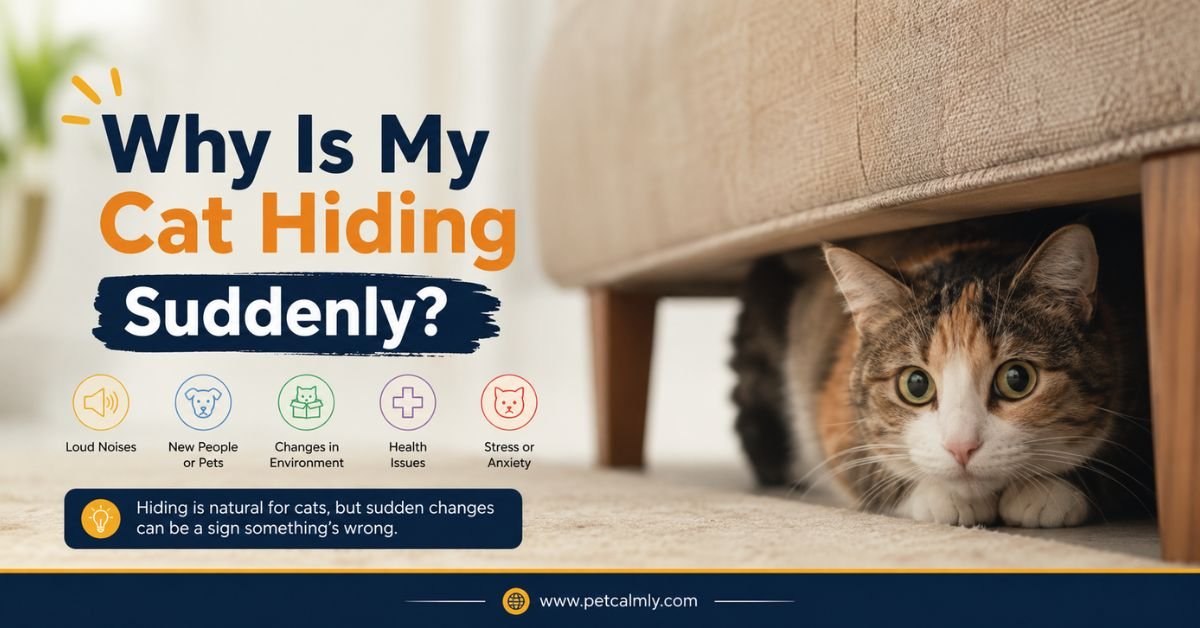
Why Is My Cat Hiding Suddenly?
One day your cat is curled up beside you on the couch. The next, they’re nowhere to be found except behind the washing machine or under the bed.
It’s a situation that worries many cat owners because sudden hiding often feels out of character. While cats naturally enjoy quiet, enclosed spaces, a noticeable change in their behavior deserves attention.
The good news is that hiding doesn’t always mean something is seriously wrong. Cats are instinctively cautious animals. In the wild, they hide to stay safe, recover from injuries, avoid predators, or wait until they feel comfortable again. Those same instincts remain strong in our house cats.
The key is figuring out why your individual cat has suddenly started hiding. Sometimes the answer is simple, like a noisy renovation or visiting guests. Other times, hiding can be one of the earliest signs that a cat isn’t feeling well.
This guide explains the most common causes, what warning signs to watch for, and how you can help your cat feel safe again.
Why Do Cats Hide in the First Place?
Before looking at sudden behavior changes, it helps to understand that hiding is actually a normal feline behavior.
Cats feel safest when they have:
- A small enclosed space
- Limited noise
- Good visibility of their surroundings
- An easy escape route
- Minimal disturbance
That’s why many cats choose places like:
- Under beds
- Inside closets
- Behind furniture
- Cardboard boxes
- Cat caves
- High shelves
- Empty cabinets
These locations help cats regulate stress and feel protected.
If your cat occasionally disappears for an afternoon and returns relaxed, they’re probably just enjoying some alone time.
The concern starts when hiding becomes sudden, prolonged, or accompanied by other unusual behaviors.
5 Common Reasons Why Your Cat Is Hiding Suddenly
1. Your Cat Is Feeling Stressed
Stress is one of the leading reasons a cat suddenly starts hiding.
Cats thrive on routine. Even small disruptions can make them feel insecure.
Common stress triggers include:
- Rearranging furniture
- Moving to a new home
- Visitors staying overnight
- Loud music
- Construction work
- Fireworks
- Thunderstorms
- Changes in feeding schedules
- New household smells
Some cats recover within hours, while others may need several days to feel comfortable again.
Signs the Hiding Is Stress-Related
Besides hiding, you may notice:
- Dilated pupils
- Flattened ears
- Less interest in playing
- Reduced appetite
- Increased sleeping
- Startling easily
- Grooming more than usual
Stress-related hiding often improves once your home becomes calm and predictable again.
2. Fear After a Frightening Experience
Sometimes a single scary event causes a cat to retreat.
Examples include:
- A vacuum cleaner
- A dropped pan
- A barking dog
- An aggressive cat
- Being accidentally stepped on
- A child chasing them
- Unexpected visitors
Cats have excellent memories for frightening experiences.
If your cat was scared near a particular room, they may avoid that area for several days.
How Long Does Fear-Based Hiding Last?
For most healthy cats:
- Mild fright: a few hours
- Moderate fear: one to two days
- Severe fear: several days
If your cat continues hiding longer than this without improving, it’s worth considering other possible causes.
3. Pain or Illness
One of the most important reasons cats hide is because they’re not feeling well.
Unlike dogs, cats rarely advertise pain.
Instead, they often:
- Become quiet
- Sleep more
- Withdraw from family members
- Hide in dark spaces
This behavior is instinctive. In nature, an injured animal that appears weak becomes an easy target for predators.
Even indoor cats still follow this survival instinct.
Illnesses That May Cause Hiding
Many medical problems can cause sudden hiding, including:
- Dental pain
- Fever
- Stomach upset
- Urinary problems
- Arthritis
- Injuries
- Respiratory infections
- Digestive disorders
Hiding is often just one symptom.
Other warning signs include:
- Not eating
- Drinking less
- Vomiting
- Diarrhea
- Limping
- Rapid breathing
- Weight loss
- Excessive sleeping
If your cat is hiding and showing any of these symptoms, contact your veterinarian promptly.
4. A New Person or Pet Has Entered the Home
Cats are territorial.
Even calm, friendly cats may hide after:
- Adopting another cat
- Bringing home a puppy
- A visiting pet
- A new baby
- Long-term house guests
To humans, these changes seem exciting.
To a cat, they’re major disruptions.
The newcomer introduces unfamiliar smells, sounds, and routines.
Many cats choose hiding while they slowly assess whether the new arrival is a threat.
Helping a Cat Adjust
Avoid forcing introductions.
Instead:
- Give your cat access to quiet rooms.
- Keep feeding routines consistent.
- Offer hiding places they choose themselves.
- Reward calm behavior with treats.
- Let introductions happen gradually.
Most cats adjust with patience.
5. Your Cat Is Recovering From Overstimulation
Some cats become overwhelmed after:
- Busy family gatherings
- Children playing loudly
- Long play sessions
- Grooming appointments
- Trips to the veterinarian
Think of hiding as your cat’s way of pressing the “pause” button.
After resting somewhere quiet, many cats return acting completely normal.
Can Weather Cause a Cat to Hide?
Surprisingly, yes.
Many cat owners notice changes during:
- Thunderstorms
- High winds
- Extreme heat
- Heavy rain
- Fireworks seasons
Cats have sensitive hearing and may detect changes in air pressure before humans notice anything unusual.
During storms, hiding is often a coping mechanism rather than a sign of illness.
Provide a quiet, comfortable room and avoid forcing your cat out of their hiding place.
Could My Cat Be Sick Even If Hiding Is the Only Symptom?
Yes.
Cats are experts at masking discomfort.
In fact, behavior changes often appear before physical symptoms.
A cat may hide for:
- Twelve hours
- Twenty-four hours
- Several days
before showing obvious signs like vomiting or refusing food.
This is why veterinarians encourage owners to pay attention to sudden personality changes—not just physical illness.
If your normally social cat suddenly isolates themselves without an obvious reason, monitor them closely over the next day.
How to Tell Whether Your Cat Is Just Resting or Needs Help
The table below highlights the difference between normal hiding and behavior that may require closer attention.
| Normal Hiding Behavior | Potentially Concerning Hiding |
|---|---|
| Comes out to eat | Refuses food completely |
| Uses the litter box normally | Stops using the litter box |
| Responds to your voice | Ignores people completely |
| Plays later in the day | Stops playing entirely |
| Normal grooming | Unkempt or excessive grooming |
| Relaxed body language | Hunched posture or signs of pain |
| Hiding lasts a few hours | Hiding continues for more than 24–48 hours with other symptoms |
Remember, the context matters. A cat hiding for a few hours after a loud party is very different from a cat that has been hiding for two days, won’t eat, and seems uncomfortable.
Does Your Cat’s Age Matter?
Age can provide important clues about why your cat is hiding suddenly.
Kittens
Young kittens often hide because everything around them is new. Strange sounds, unfamiliar people, or recent adoption can make them seek safe hiding places while they build confidence.
Adult Cats
Healthy adult cats usually have established routines. If an adult cat suddenly starts hiding without an obvious environmental change, it’s worth looking more closely for signs of stress, illness, or pain.
Senior Cats
Older cats are more likely to hide because of age-related conditions such as arthritis, dental disease, declining vision, hearing loss, or other chronic health issues. Even subtle discomfort can make a senior cat withdraw more than usual.
If your senior cat’s behavior changes suddenly, a veterinary examination is the safest course of action.
What Should You Do If Your Cat Is Hiding Suddenly?
Finding your cat tucked away under the bed or behind furniture can be upsetting, especially if it’s unusual behavior. Your first instinct may be to pull them out and make sure they’re okay, but that’s rarely the best approach.
Instead, take a calm, step-by-step approach to understand what’s happening.
Step 1: Stay Calm and Observe
Cats are highly sensitive to human emotions. If you panic, speak loudly, or repeatedly search for your cat, you may increase their stress.
Instead, quietly observe:
- Is your cat awake or sleeping?
- Do they respond when you call their name?
- Are they breathing normally?
- Do they come out for food or water?
- Have they used the litter box today?
These observations can provide valuable clues about whether your cat is simply seeking quiet or experiencing a more serious problem.
Step 2: Think About Recent Changes
Ask yourself what has changed in the last few hours or days.
Common changes include:
- New furniture
- Home renovations
- Visitors
- Another pet entering the house
- A recent move
- A trip to the veterinarian
- A different work schedule
- Holiday celebrations
- Loud storms or fireworks
Even changes that seem minor to us can feel significant to a cat.
If you identify a likely trigger, restoring a familiar routine often helps your cat regain confidence.
Step 3: Check Their Appetite
A cat that hides but still:
- Eats normally
- Drinks water
- Uses the litter box
- Comes out occasionally
is often experiencing temporary stress rather than a medical emergency.
On the other hand, hiding combined with refusing food for more than 24 hours deserves prompt attention.
Cats should never go long periods without eating because prolonged fasting can lead to serious liver problems, particularly in overweight cats.
Step 4: Watch Their Body Language
Your cat’s posture often tells you more than their hiding place.
Relaxed Signs
These usually indicate your cat simply wants quiet:
- Slow blinking
- Normal breathing
- Relaxed ears
- Comfortable sleeping position
- Stretching when they wake up
Warning Signs
These suggest discomfort or illness:
- Hunched posture
- Tense muscles
- Rapid breathing
- Squinting eyes
- Growling when approached
- Flinching when touched
- Tail tightly tucked
- Constant hiding without moving
These behaviors warrant a veterinary assessment, especially if they persist.
Step 5: Offer, Don’t Force
One of the biggest mistakes owners make is dragging a frightened cat out of their hiding spot.
Instead:
- Sit quietly nearby.
- Speak softly.
- Place fresh water nearby.
- Offer a favorite treat.
- Leave the room if your cat seems more comfortable alone.
Giving your cat control over when they emerge helps rebuild their confidence.
4 Common Mistakes Cat Owners Should Avoid
Even with the best intentions, some actions can make the situation worse.
1: Forcing Your Cat Out
Pulling your cat from under a bed or inside a closet increases fear and may damage trust.
Unless there’s an immediate danger such as a fire or another emergency allow your cat to come out on their own.
2: Punishing the Behavior
Cats don’t hide to be stubborn or disobedient.
Punishing them by shouting, spraying water, or blocking hiding places only increases anxiety.
Instead, focus on identifying the underlying cause.
3: Ignoring Other Symptoms
Sometimes owners assume their cat is “just shy.”
However, if hiding is accompanied by:
- Vomiting
- Difficulty breathing
- Limping
- Loss of appetite
- Weight loss
- Straining to urinate
- Extreme lethargy
the problem may be medical rather than behavioral.
4: Making Too Many Changes at Once
When a cat seems stressed, it’s tempting to buy new toys, rearrange furniture, or move their bed.
Ironically, these additional changes may increase stress.
Keep routines as consistent as possible until your cat feels secure again.
How to Help Your Cat Feel Safe Again
Most cats recover more quickly when they feel they have control over their environment.
Here are practical ways to support them.
Create Safe Hiding Spaces
Instead of preventing hiding altogether, provide appropriate hiding areas such as:
- Covered cat beds
- Cardboard boxes
- Cat tunnels
- Blankets draped over chairs
- Cat trees with enclosed compartments
These options let your cat feel protected while remaining accessible.
Keep a Predictable Routine
Cats thrive on consistency.
Try to keep:
- Feeding times
- Play sessions
- Bedtime
- Litter box cleaning
- Household routines
as regular as possible.
Predictability reduces anxiety and helps cats regain confidence.
Give Them Vertical Space
Many cats feel safer above ground.
Consider adding:
- Cat trees
- Wall shelves
- Window perches
- Elevated beds
Being able to observe their surroundings from above often reduces stress.
Encourage Gentle Play
Interactive play can help rebuild confidence.
Good choices include:
- Feather wand toys
- Soft toy mice
- Balls that roll slowly
- Food puzzles
Keep sessions short and stop if your cat loses interest.
Never force interaction.
Use Food as Positive Reinforcement
If your cat begins leaving their hiding place, reward the behavior naturally.
Offer:
- Small treats
- Wet food
- Gentle praise
- Quiet companionship
Avoid overwhelming them with excitement.
When Should You Be Concerned?
While many cases of hiding resolve on their own, certain situations require prompt veterinary care.
Contact Your Veterinarian Within 24 Hours If Your Cat:
- Refuses food
- Stops drinking
- Appears weak
- Hides continuously
- Cries in pain
- Has diarrhea or vomiting
- Has difficulty walking
- Seems unusually sleepy
- Shows sudden aggression
- Has noticeable swelling or injury
Behavior changes are often one of the earliest indicators that something is wrong.
When Is It an Emergency?
Seek immediate veterinary care if your cat is hiding and also has any of these signs:
- Difficulty breathing
- Repeated vomiting
- Collapse
- Seizures
- Pale gums
- Heavy bleeding
- Inability to urinate
- Severe trauma
- Sudden paralysis
- Loss of consciousness
These symptoms should never be monitored at home without professional advice.
A Quick Checklist for Cat Owners
Use this simple checklist if your cat suddenly starts hiding.
Eating normally
Drinking water
Using the litter box
Normal breathing
No limping
No vomiting
Responds to your voice
Comes out occasionally
No signs of pain
If you check “yes” to most of these items, your cat may simply need time and a calm environment.
If several answers are “no,” arrange a veterinary appointment.
How Long Should You Wait Before Worrying?
There’s no exact timeline because every cat is different.
As a general guide:
| Time Hidden | What It May Mean | Recommended Action |
|---|---|---|
| A few hours | Normal reaction to stress or a nap | Observe quietly |
| Up to 24 hours | Mild stress or adjustment | Monitor eating, drinking, and litter box habits |
| More than 24–48 hours with normal appetite | Schedule a routine veterinary visit if behavior doesn’t improve | |
| More than 24 hours with poor appetite or other symptoms | Contact your veterinarian as soon as possible | |
| Any duration with breathing difficulty, collapse, or inability to urinate | Seek emergency veterinary care immediately |
Remember, you know your cat better than anyone. If their behavior feels significantly different or your instincts tell you something isn’t right, it’s always reasonable to seek professional advice.
Can You Prevent Sudden Hiding?
Not every situation can be avoided, but you can reduce the likelihood of stress-related hiding.
Daily Habits That Help
- Keep a predictable routine.
- Provide multiple quiet resting areas.
- Clean litter boxes regularly.
- Introduce new pets gradually.
- Offer daily interactive play.
- Give your cat safe places to climb.
- Respect their need for personal space.
- Schedule regular veterinary checkups.
- Watch for subtle changes in behavior before they become more serious.
Frequently Asked Questions
1. Why is my cat hiding suddenly but still eating?
If your cat is eating, drinking, and using the litter box normally, the hiding is more likely related to stress, fear, or a recent change in their environment than a serious illness. Think about anything unusual that has happened recently, such as visitors, loud noises, moving furniture, or introducing another pet. Continue monitoring your cat over the next day or two. If the hiding persists or new symptoms develop, schedule a veterinary checkup.
2. Should I force my cat to come out of hiding?
No. In most situations, forcing your cat out of a hiding place will only increase their fear and anxiety. Instead, create a calm environment, provide food and fresh water nearby, and let them come out at their own pace.
The exception is if your cat is hiding because of an emergency, such as a house fire or another immediate danger.
3. Why is my indoor cat hiding all of a sudden?
Indoor cats can become stressed by changes that humans barely notice.
Possible reasons include:
- New household members
- Different daily routines
- Loud appliances
- Construction noise
- Storms
- New furniture
- Changes in scent around the home
- Medical discomfort
Because indoor cats spend so much time in familiar surroundings, even small changes can affect their sense of security.
4. How long is it normal for a cat to hide?
A healthy cat may hide for a few hours after a stressful event, such as a thunderstorm or a visit from guests.
However, hiding that lasts longer than 24 to 48 hours especially if your cat isn’t eating, drinking, or behaving normally—should be evaluated by a veterinarian.
5. Can older cats suddenly start hiding?
Yes. Senior cats are more likely to hide because of age-related health conditions, including arthritis, dental disease, reduced vision, or chronic pain.
If an older cat that is usually social begins hiding without an obvious reason, it’s a good idea to arrange a veterinary examination rather than assuming it’s simply part of aging.
6. Why is my cat hiding and acting scared?
Cats often hide when they feel frightened or overwhelmed.
Common triggers include:
- Fireworks
- Thunderstorms
- New pets
- Visitors
- Loud household noises
- Negative experiences
If your cat is acting fearful, avoid chasing or cornering them. Give them a quiet, secure space and allow them to regain confidence on their own.
More Information About Pets, Please Visit Our Website: How to Trim Cat Nails at Home
How to Help a Constipated Kitten Naturally
How Often Should I Brush My Cat Teeth?
Quick Recap: What Sudden Hiding Usually Means
Here’s a simple overview of the most common reasons cats suddenly start hiding.
| Possible Cause | Common Signs | What You Should Do |
|---|---|---|
| Stress | Quiet behavior, occasional hiding | Keep routines consistent and provide a calm space |
| Fear | Hiding after a loud or scary event | Give your cat time and avoid forcing interaction |
| Illness | Hiding with poor appetite, lethargy, or vomiting | Contact your veterinarian promptly |
| Pain | Hunched posture, reluctance to move, hiding | Arrange a veterinary examination |
| New pet or family member | Avoiding busy areas, increased caution | Introduce changes gradually and provide safe spaces |
| Overstimulation | Hiding after visitors or noisy events | Allow your cat uninterrupted time to relax |
Helping Your Cat Feel Safe Every Day
While you can’t prevent every stressful situation, you can create an environment where your cat feels secure and confident.
Healthy daily habits include:
- Maintaining a consistent feeding schedule.
- Providing multiple comfortable resting places.
- Keeping litter boxes clean.
- Offering regular interactive play.
- Respecting your cat’s need for quiet time.
- Scheduling routine veterinary checkups.
- Watching for gradual behavior changes instead of waiting until problems become severe.
Small, consistent actions often make the biggest difference in your cat’s emotional well-being.
Conclusion
If you’ve been asking yourself, “Why is my cat hiding suddenly?”, remember that hiding is a behavior not a diagnosis.
For many cats, retreating to a quiet space is a perfectly normal response to stress, excitement, or environmental changes. A new visitor, a loud thunderstorm, or even rearranged furniture can be enough to send a cat searching for a safe hiding place.
However, a sudden and persistent change in behavior should never be ignored. Cats instinctively conceal pain and illness, which means hiding can sometimes be one of the earliest signs that something isn’t right. Paying attention to your cat’s eating habits, litter box use, energy level, and body language can help you recognize when they simply need time to decompress and when they may need veterinary care.
The most helpful thing you can do is provide patience, consistency, and a secure environment. Avoid forcing your cat to interact before they’re ready, maintain familiar routines, and monitor them closely for any additional symptoms.
By understanding your cat’s natural instincts and responding with calm observation rather than panic, you’ll be better equipped to support both their physical health and emotional well-being.
Whether the cause is temporary stress or an underlying medical issue, acting thoughtfully and early gives your feline companion the best chance to feel safe, comfortable, and back to their usual self.