Short direct answer
Dog diarrhea can often be managed at home if your dog is otherwise healthy, active, and drinking water. A simple diet of boiled chicken and plain white rice, plenty of fresh water, and a short period of digestive rest can help mild cases improve within 24 to 48 hours. However, puppies, senior dogs, dogs with existing health conditions, or any dog showing blood in the stool, repeated vomiting, severe weakness, or signs of dehydration should be examined by a veterinarian as soon as possible.
Introduction
Few things worry dog owners more than discovering a pile of loose stool on the floor or seeing their normally energetic companion struggling with diarrhea. The good news is that not every episode is an emergency. Many dogs experience mild digestive upset from eating something unusual, a sudden food change, or temporary stress.
Knowing the difference between a simple stomach upset and a serious medical problem can save your dog unnecessary discomfort while helping you avoid delays when professional care is needed.
This guide explains safe dog diarrhea home treatment, what you can feed your dog, how to prevent dehydration, common mistakes to avoid, and the warning signs that mean it’s time to contact your veterinarian.
Whether you’re caring for a playful puppy, an adult dog, or a senior companion, these practical steps can help you respond calmly and confidently.
Why Does My Dog Have Diarrhea?
Diarrhea is not a disease by itself. It is a symptom that tells you something has irritated or disrupted your dog’s digestive system.
Understanding the possible cause helps determine whether home treatment is appropriate.
Sudden Dietary Changes
Dogs often develop loose stools after switching to a new food too quickly. Their digestive system needs time to adjust to different ingredients.
A gradual transition over seven to ten days usually prevents stomach upset.
Eating Something They Shouldn’t
Many dogs are curious eaters. They may consume:
- Table scraps
- Fatty foods
- Spoiled leftovers
- Garbage
- Grass
- Toys
- Bones
- Socks or fabric
- Compost
Some of these only cause temporary digestive irritation, while others can create dangerous intestinal blockages.
Food Intolerance
Some dogs react poorly to certain ingredients, including:
- Dairy products
- Rich treats
- Artificial additives
- High-fat foods
- Certain proteins
If diarrhea repeatedly occurs after eating the same food, an ingredient sensitivity may be involved.
Stress and Anxiety
Dogs can develop diarrhea during stressful events such as:
- Boarding
- Moving house
- Fireworks
- Travel
- Introducing a new pet
- Veterinary visits
Stress affects the gut through the brain-gut connection, often leading to loose stools for a short period.
Parasites
Internal parasites are especially common in puppies and dogs that spend time outdoors.
Common parasites include:
- Roundworms
- Hookworms
- Whipworms
- Giardia
- Coccidia
These usually require veterinary diagnosis and prescription treatment.
Viral or Bacterial Infections
Some infections cause diarrhea that becomes severe quickly, especially in young puppies.
Examples include:
- Parvovirus
- Salmonella
- Campylobacter
These conditions should never be treated with home remedies alone.
Chronic Health Problems
Recurring diarrhea may be linked to:
- Food allergies
- Pancreatitis
- Liver disease
- Kidney disease
- Inflammatory bowel disease
- Hormonal disorders
If diarrhea keeps returning, your veterinarian may recommend diagnostic tests rather than repeated home treatment.
Is Your Dog a Good Candidate for Home Treatment?
Before trying any home remedy, assess your dog’s overall condition.
Home care is generally appropriate when your dog:
- Is bright and alert
- Continues drinking water
- Has only mild diarrhea
- Has no blood in the stool
- Is not vomiting repeatedly
- Is breathing normally
- Has no known toxin exposure
- Has had diarrhea for less than 24 hours
- Is an otherwise healthy adult dog
In these situations, supportive care at home is often enough.
When Dog Diarrhea Should Never Be Treated Only at Home
Some situations require immediate veterinary attention.
Puppies
Young puppies become dehydrated much faster than adult dogs. Even one day of severe diarrhea can become dangerous.
Senior Dogs
Older dogs often have underlying medical conditions that make diarrhea more serious.
Dogs with Chronic Illness
Extra caution is needed if your dog has:
- Diabetes
- Kidney disease
- Liver disease
- Cancer
- Immune disorders
Bloody Diarrhea
Bright red blood, dark black stool, or large amounts of mucus may indicate intestinal injury, infection, ulcers, or internal bleeding.
Persistent Vomiting
Vomiting combined with diarrhea greatly increases the risk of dehydration and electrolyte imbalance.
Suspected Poisoning
If your dog recently ate chocolate, grapes, xylitol, medications, cleaning products, or toxic plants, seek emergency veterinary care rather than relying on home treatment.
Severe Lethargy
A dog that refuses to stand, seems unusually weak, or becomes difficult to wake needs prompt medical evaluation.
How to Assess Your Dog at Home
Taking a few minutes to observe your dog can help you decide whether supportive care is reasonable or if veterinary attention is needed sooner.
Check Energy Level
Ask yourself:
- Is your dog interested in family members?
- Do they respond when called?
- Are they willing to go outside?
- Do they still wag their tail?
A dog that remains alert is generally less concerning than one that becomes withdrawn or unresponsive.
Watch Water Intake
Hydration is one of the most important factors during recovery.
Healthy signs include:
- Drinking small amounts regularly
- Moist gums
- Normal saliva
- Bright eyes
Concerning signs include:
- Refusing water
- Dry or sticky gums
- Sunken eyes
- Weakness
- Excessive panting
Look at the Stool
The appearance of the stool provides useful clues.
| Stool Appearance | Possible Meaning |
|---|---|
| Soft but formed | Mild digestive upset |
| Watery diarrhea | Significant irritation or infection |
| Yellow stool | Rapid movement through the intestines |
| Green stool | Grass ingestion or bile |
| Black stool | Possible digested blood (requires veterinary attention) |
| Bright red blood | Lower intestinal bleeding |
| Mucus | Colon irritation or inflammation |
Keeping a photo or note of your dog’s stool can be helpful if you later consult your veterinarian.
Common Causes of Mild Diarrhea That Often Improve at Home
Not every digestive upset signals a serious illness. Many healthy dogs recover with supportive care when the cause is temporary.
Examples include:
- Eating a few extra treats during a family gathering
- Switching dog food too quickly
- Mild stress from travel
- Excitement after boarding
- Sampling food from the trash without consuming toxic items
- Minor dietary indiscretion during walks
In these situations, careful monitoring, hydration, and a gentle diet are often enough to help the digestive system settle.
What Happens Inside Your Dog’s Digestive System During Diarrhea?
Understanding what your dog’s body is doing can make home care feel less overwhelming.
Normally, food moves through the stomach and intestines at a steady pace. As it travels, the intestines absorb water, nutrients, vitamins, and minerals.
When the digestive tract becomes irritated whether from a sudden diet change, stress, infection, or something unusual your dog ate it speeds up. Food passes through too quickly, leaving less time for water to be absorbed.
The result is loose, watery stool.
At the same time, inflammation can increase the amount of fluid released into the intestines, making diarrhea even worse. This is why replacing lost fluids and feeding easily digestible foods are such important parts of home treatment.
Dog Diarrhea Home Treatment: A Step-by-Step Recovery Guide
If your dog is alert, drinking water, and only has mild diarrhea, supportive home care may help their digestive system recover. The goal is simple: give the intestines a chance to rest, prevent dehydration, and gradually return to a normal diet.
Every dog recovers at a different pace, so monitor your pet closely and don’t hesitate to contact your veterinarian if symptoms worsen.
How to Treat Mild Dog Diarrhea at Home
Step 1: Give the Digestive System a Break
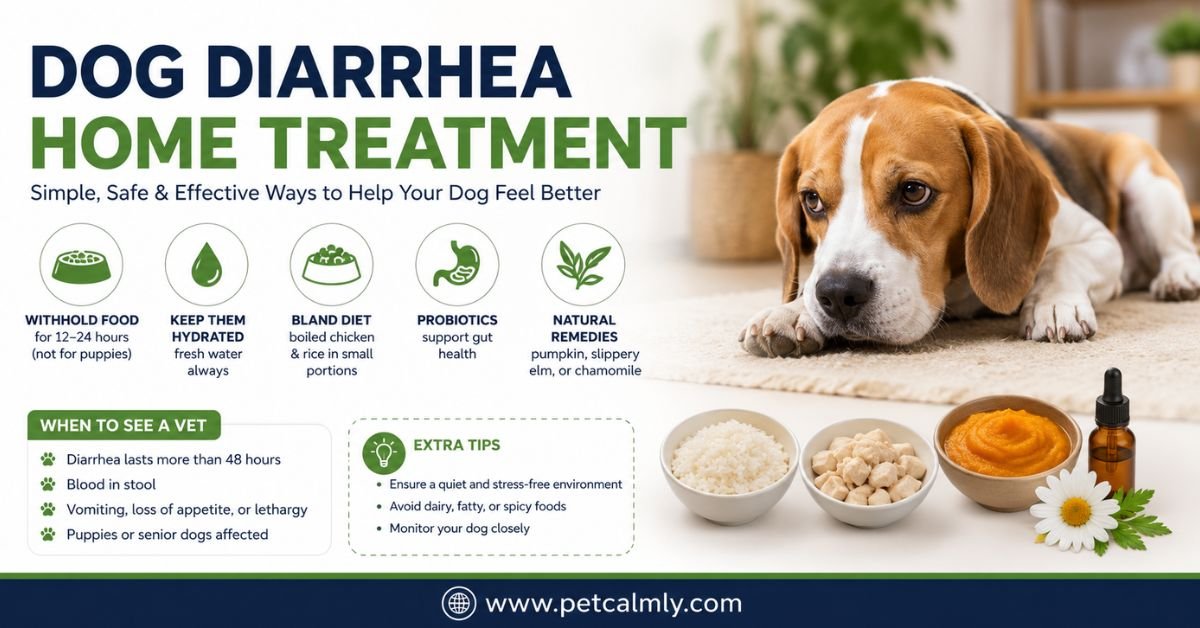
For healthy adult dogs with mild diarrhea, some veterinarians may recommend a short break from food to let the digestive tract settle.
General guidance:
- Healthy adult dogs may tolerate a brief fasting period of 8 to 12 hours.
- Always provide access to fresh water.
- Avoid fasting puppies, senior dogs, underweight dogs, toy breeds, pregnant dogs, or dogs with medical conditions unless your veterinarian specifically advises it.
A prolonged fast can do more harm than good, so once the brief rest period is over, begin feeding a bland, easy-to-digest diet.
Step 2: Keep Your Dog Hydrated
Diarrhea causes the body to lose both water and important electrolytes. Even mild dehydration can make your dog feel weak and delay recovery.
Signs Your Dog Is Drinking Enough
Look for these positive signs:
- Moist gums
- Normal energy
- Urinating regularly
- Drinking small amounts throughout the day
Encourage water intake by:
- Refreshing the water bowl frequently
- Offering several bowls around the house
- Adding a little water to meals
- Providing ice cubes for dogs that enjoy licking them
If your dog refuses water for several hours or cannot keep fluids down, contact your veterinarian.
Step 3: Feed a Bland Diet
A bland diet is gentle on the digestive system and gives the intestines time to heal.
Best Bland Foods for Dogs With Diarrhea
Boiled Chicken and White Rice
This is one of the most commonly recommended temporary meals.
Use:
- Skinless chicken breast
- No seasoning
- No oil
- Plain cooked white rice
A typical ratio is about two parts rice to one part chicken.
Feed small meals several times a day instead of one large meal.
Plain Boiled Turkey
Lean turkey can be used if chicken isn’t available or if your dog has a chicken sensitivity.
Avoid:
- Skin
- Butter
- Oils
- Herbs
- Salt
- Garlic
- Onion
Plain Scrambled Eggs
Some dogs tolerate plain cooked eggs well during recovery.
Cook without:
- Milk
- Cheese
- Butter
- Cooking spray
- Seasonings
Eggs should be offered in moderation and not as the only food for several days.
Plain Pumpkin Purée
Plain canned pumpkin (not pumpkin pie filling) contains soluble fiber that may help improve stool consistency.
Offer small amounts:
- Small dogs: 1 to 2 teaspoons
- Medium dogs: 1 tablespoon
- Large dogs: up to 2 tablespoons
Too much pumpkin can actually worsen diarrhea, so moderation is important.
Prescription Gastrointestinal Diets
If your veterinarian has previously recommended a prescription digestive diet, it may be appropriate during recovery.
These diets are designed to be highly digestible while supporting intestinal healing.
Foods You Should Never Feed a Dog With Diarrhea
Some foods place extra stress on the digestive system.
Avoid feeding:
- Fried foods
- Fatty meats
- Bacon
- Sausage
- Pizza
- Cheese
- Ice cream
- Spicy foods
- Rich table scraps
- Chocolate
- Grapes
- Raisins
- Onions
- Garlic
- Xylitol-containing foods
- Alcohol
- Macadamia nuts
Even if these foods didn’t cause the diarrhea, they can make recovery take longer.
Should You Give Your Dog Probiotics?
Probiotics may help restore a healthy balance of beneficial bacteria in the intestines after mild digestive upset.
Some dogs benefit from veterinarian-recommended probiotic supplements, especially after:
- Mild stomach upset
- Dietary changes
- Stress-related diarrhea
- Antibiotic treatment
Avoid giving human probiotic products unless your veterinarian confirms they are appropriate, as formulations vary.
Can Fiber Help Dog Diarrhea?
Fiber supports normal digestion, but the right type matters.
Soluble Fiber
Soluble fiber absorbs excess water and may help firm loose stools.
Sources include:
- Plain pumpkin
- Certain prescription gastrointestinal diets
Insoluble Fiber
Too much insoluble fiber may worsen diarrhea in some dogs.
If you’re unsure which type of fiber is best for your dog, ask your veterinarian before making major dietary changes.
How Much Should You Feed During Recovery?
Large meals can overwhelm an irritated digestive tract.
Instead:
- Feed four to six small meals daily.
- Use smaller portions than normal.
- Increase food gradually as stools become firmer.
- Return to the regular feeding schedule over several days.
Slow and steady feeding often produces better results than rushing back to a normal routine.
How to Transition Back to Regular Dog Food
Once your dog’s stool has been normal for at least one to two days, gradually reintroduce their usual food.
A simple transition plan:
| Day | Bland Diet | Regular Food |
|---|---|---|
| 1 | 75% | 25% |
| 2 | 50% | 50% |
| 3 | 25% | 75% |
| 4 | Normal diet | 100% |
If diarrhea returns during the transition, slow the process and consult your veterinarian if needed.
Should You Exercise a Dog With Diarrhea?
Most dogs benefit from taking it easy while recovering.
Good Activities
- Short leash walks
- Quiet time indoors
- Gentle interaction
- Plenty of rest
Avoid
- Long hikes
- Running
- Dog parks
- Agility training
- Swimming
- Rough play
Physical rest allows the body to focus energy on healing.
Common Home Treatment Mistakes
Even well-meaning owners can accidentally delay recovery.
Changing Foods Too Often
Switching between several foods in a short period can upset the digestive system further.
Choose one appropriate bland diet and stick with it unless your veterinarian recommends otherwise.
Giving Human Medications
Never give over-the-counter anti-diarrheal medications, pain relievers, or antibiotics without veterinary guidance.
Some medications that are safe for people can be dangerous or even life-threatening for dogs.
Feeding Too Many Treats
Treats, chews, and table scraps should be avoided until your dog’s stool has returned to normal.
Even healthy treats can interfere with digestive recovery.
Ignoring Hydration
Owners often focus on food while forgetting that water loss is the biggest concern.
Monitor your dog’s water intake throughout the day.
Waiting Too Long
If diarrhea lasts longer than 48 hours, or your dog develops new symptoms such as vomiting, weakness, or blood in the stool, it’s time to seek veterinary advice.
Can Stress Cause Diarrhea in Dogs?
Yes. Dogs have a strong connection between the brain and the digestive system.
Stress-related diarrhea may occur after:
- Boarding
- Moving to a new home
- Fireworks
- Thunderstorms
- Traveling
- Meeting unfamiliar dogs
- Changes in routine
In many cases, symptoms improve once the stressful event has passed and your dog returns to a familiar environment.
Providing a calm space, maintaining a regular schedule, and avoiding additional stress can support recovery.
Keeping Your Home Clean During Recovery
Diarrhea can spread bacteria and parasites, so good hygiene protects both your family and other pets.
Clean Up Promptly
- Wear disposable gloves if possible.
- Remove stool immediately.
- Use pet-safe disinfectants on hard surfaces.
- Wash bedding if accidents occur.
- Clean food and water bowls daily.
Wash Your Hands
Always wash your hands thoroughly after cleaning up accidents or handling your dog’s waste, especially before preparing food.
Monitoring Your Dog’s Recovery
Improvement is usually gradual rather than immediate.
Positive signs include:
- Firmer stools
- Better appetite
- More energy
- Normal drinking habits
- Interest in play
- Comfortable sleeping
Keep a simple daily record of:
- Number of bowel movements
- Stool consistency
- Appetite
- Water intake
- Vomiting (if any)
- Energy level
This information can be very helpful if your veterinarian needs to evaluate your dog.
When Dog Diarrhea Becomes an Emergency
While many cases of mild diarrhea improve with supportive care, some situations require prompt veterinary attention. Acting quickly can prevent serious complications such as severe dehydration, electrolyte imbalances, or worsening illness.
Contact Your Veterinarian Immediately If Your Dog Has:
- Diarrhea lasting longer than 48 hours
- Frequent vomiting along with diarrhea
- Blood in the stool (bright red or black, tarry stool)
- Severe lethargy or collapse
- Refusal to drink water
- Signs of dehydration
- A swollen or painful abdomen
- Difficulty breathing
- A fever
- Known ingestion of a toxin or foreign object
- Persistent diarrhea in a puppy or senior dog
- Diarrhea in a dog with diabetes, kidney disease, liver disease, or another chronic illness
When in doubt, it’s always safer to call your veterinarian. They can help determine whether home care is still appropriate or if your dog should be examined.
How to Check for Dehydration at Home
Diarrhea can cause fluid loss surprisingly quickly.
Gum Check
Healthy gums should feel:
- Moist
- Smooth
- Slippery
Dry, sticky gums may indicate dehydration.
Skin Tent Test
Gently lift the skin over your dog’s shoulders and release it.
- It should return to its normal position almost immediately.
- If it stays “tented” or moves back slowly, dehydration may be present.
Keep in mind that this test is less reliable in older or overweight dogs.
Other Warning Signs
Watch for:
- Sunken eyes
- Thick saliva
- Weakness
- Panting without exercise
- Reduced urination
These signs warrant veterinary advice, especially if they are getting worse.
How Long Does Dog Diarrhea Usually Last?
Recovery depends on the underlying cause.
| Cause | Typical Recovery Time |
|---|---|
| Mild dietary indiscretion | 24–48 hours |
| Sudden food change | 1–3 days |
| Mild stress | 1–2 days |
| Minor stomach irritation | 1–3 days |
| Parasites | Until treated |
| Bacterial infection | Several days with treatment |
| Viral illness | Varies; veterinary care required |
| Chronic digestive disease | Long-term management |
Even if your dog seems better, continue the gradual return to their normal diet to reduce the chance of another digestive upset.
How to Help Prevent Future Episodes
Some causes of diarrhea can’t be avoided, but many can.
Change Foods Gradually
Whenever introducing a new dog food:
- Mix a small amount with the current food.
- Increase the new food over seven to ten days.
- Watch for changes in stool quality.
Slow transitions are much easier on the digestive system.
Keep Garbage Out of Reach
Many cases of diarrhea begin after dogs raid the trash.
Use:
- Secure trash cans
- Child-proof cabinet latches if needed
- Covered compost bins
Preventing access is easier than treating an upset stomach later.
Limit Rich Human Foods
Holiday meals and table scraps are common triggers.
Avoid sharing:
- Fatty meats
- Gravies
- Desserts
- Highly seasoned foods
Instead, reward your dog with treats made specifically for dogs.
Stay Up to Date on Parasite Prevention
Routine parasite prevention and regular fecal testing help reduce the risk of intestinal infections.
Your veterinarian can recommend the best schedule based on your dog’s age, lifestyle, and local parasite risks.
Reduce Stress
Dogs thrive on predictable routines.
Helpful strategies include:
- Consistent feeding times
- Daily exercise
- Mental enrichment
- Positive training
- Quiet resting areas
For dogs that struggle with travel or boarding, discuss stress-management options with your veterinarian before the event.
Dog Diarrhea Home Treatment Checklist
Use this quick checklist whenever your dog develops mild diarrhea.
Check your dog’s energy level.
Make sure fresh water is always available.
Monitor for vomiting or blood in the stool.
Feed a bland diet in small meals.
Skip treats and table scraps.
Keep your dog rested.
Watch stool consistency over the next 24–48 hours.
Gradually transition back to regular food after recovery.
Contact your veterinarian if symptoms worsen or don’t improve.
Common Myths About Dog Diarrhea
Myth: “Diarrhea Always Means My Dog Ate Something Bad.”
Not necessarily. Stress, parasites, food sensitivities, infections, medications, and chronic illnesses can all cause diarrhea.
Myth: “If My Dog Is Still Eating, It Can’t Be Serious.”
Some dogs continue eating despite significant illness. Always consider their overall behavior and other symptoms—not appetite alone.
Myth: “Human Anti-Diarrhea Medicine Is Safe for Dogs.”
Many medications made for people are not safe for dogs without veterinary guidance. Never give over-the-counter medications unless your veterinarian recommends them.
Myth: “One Normal Stool Means My Dog Is Completely Recovered.”
Digestive healing continues even after stools begin to firm up. Continue the bland diet transition and monitor your dog for another day or two.
Frequently Asked Questions
1: Can I treat my dog’s diarrhea at home?
Yes, if your dog is a healthy adult with mild diarrhea, is drinking water, remains alert, and has no concerning symptoms such as blood in the stool or repeated vomiting. Monitor closely and contact your veterinarian if symptoms persist or worsen.
2: What is the best food for a dog with diarrhea?
Plain boiled chicken and white rice are commonly used because they are easy to digest. Plain canned pumpkin (not pumpkin pie filling) may also help some dogs due to its soluble fiber content.
3: How long should diarrhea last before I worry?
If diarrhea lasts more than 48 hours, becomes severe, or is accompanied by vomiting, weakness, dehydration, or blood in the stool, your dog should be evaluated by a veterinarian.
4: Can stress really cause diarrhea in dogs?
Yes. Changes in routine, travel, boarding, loud noises, or other stressful events can temporarily upset a dog’s digestive system.
5: Should I stop feeding my dog if they have diarrhea?
Healthy adult dogs may sometimes benefit from a short period of digestive rest before starting a bland diet, but puppies, senior dogs, toy breeds, and dogs with medical conditions should not be fasted unless your veterinarian advises it.
6: Can I give my dog pumpkin every day?
Pumpkin can be helpful in small amounts during digestive upset, but it should not replace a balanced diet. If your dog has ongoing digestive issues, discuss long-term nutrition with your veterinarian.
More Information About Pets, Please Visit Our Website: Vet Recommended Supplements for Dogs
Best Pet Food for Sensitive Stomach 2026
Conclusion
Seeing your dog develop diarrhea can be unsettling, but many mild cases improve with thoughtful home care. Staying calm, keeping your dog hydrated, and offering a gentle, easily digestible diet are often the most effective first steps.
The key is knowing your limits. Home treatment is meant for mild digestive upset in otherwise healthy adult dogs—not for severe illness or emergencies. Paying close attention to your dog’s energy level, hydration, and stool changes will help you recognize when recovery is on track and when professional care is needed.
By responding early, avoiding common mistakes, and maintaining healthy daily habits, you can support your dog’s recovery while reducing the risk of future digestive problems. When you’re ever unsure, a quick call to your veterinarian is the safest choice. It’s always better to ask questions early than to wait until your dog becomes seriously ill.