Short direct answer
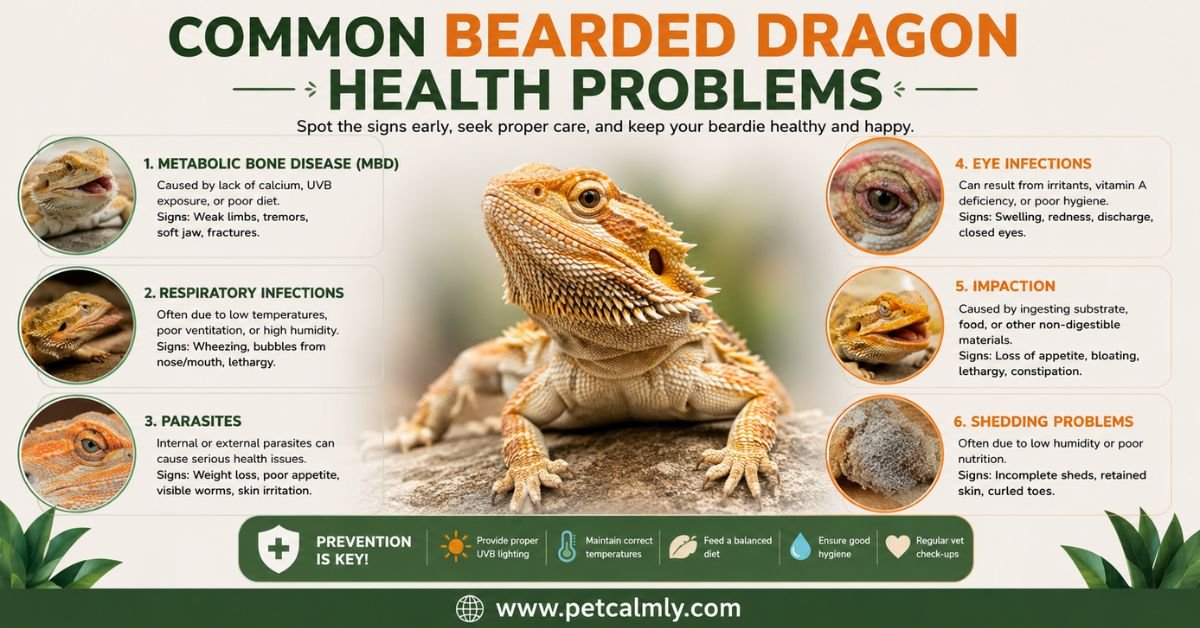
Common bearded dragon health problems include metabolic bone disease, respiratory infections, dehydration, parasites, impaction, mouth rot, shedding issues, nutritional deficiencies, obesity, and reproductive complications. Many of these conditions develop because of incorrect UVB lighting, poor diet, improper temperatures, or inadequate humidity. Early recognition, proper habitat care, and prompt veterinary treatment greatly improve recovery and help your bearded dragon live a long, healthy life.
Introduction
Bearded dragons are known for their calm personalities, curious behavior, and relatively easy care. They often become true family pets, recognizing their owners and enjoying gentle interaction. However, even healthy-looking dragons can develop medical problems if their environment or nutrition isn’t quite right.
Unlike dogs or cats, reptiles naturally hide signs of illness. A bearded dragon may continue acting fairly normal until a health issue becomes serious. That’s why small changes—such as eating less, spending more time hiding, moving slowly, or refusing favorite insects—deserve attention.
The good news is that many common bearded dragon health problems are preventable. Correct lighting, balanced nutrition, proper temperatures, clean housing, and routine observation make a huge difference.
This guide explains the most common illnesses, why they happen, how to recognize early warning signs, what you can safely do at home, and when professional veterinary care is the safest choice.
Why Bearded Dragons Become Sick More Often Than Owners Expect
Many illnesses don’t appear overnight. Instead, they develop gradually because of small husbandry mistakes that build up over weeks or months.
Common contributing factors include:
- Incorrect UVB lighting
- Low basking temperatures
- Poor temperature gradient
- Calcium deficiency
- Vitamin imbalance
- Dirty enclosure
- Chronic dehydration
- Stress from improper handling
- Parasite exposure
- Inadequate diet variety
Most health issues improve significantly once the underlying husbandry problem is corrected.
Common Bearded Dragon Health Problems Every Owner Should Know
Some conditions are seen far more often than others. Learning these common problems helps owners recognize illness early before it becomes life-threatening.
| Health Problem | Common Signs | Typical Cause |
|---|---|---|
| Metabolic Bone Disease | Soft jaw, shaking, weakness | Calcium or UVB deficiency |
| Respiratory Infection | Wheezing, mucus, open-mouth breathing | Cold enclosure, poor humidity |
| Dehydration | Sunken eyes, wrinkled skin | Insufficient water intake |
| Impaction | Constipation, bloated belly | Loose substrate, oversized food |
| Mouth Rot | Swollen gums, drooling | Bacterial infection |
| Parasites | Weight loss, diarrhea | Internal parasites |
| Shedding Problems | Stuck skin | Low humidity or dehydration |
| Nutritional Deficiencies | Poor growth, weakness | Unbalanced diet |
| Obesity | Fat pads, inactivity | Overfeeding |
| Egg Binding | Difficulty laying eggs | Calcium deficiency or stress |
Knowing these conditions helps you respond quickly instead of waiting for symptoms to worsen.
What Are the First Signs of Health Problems in a Bearded Dragon?
One of the biggest mistakes new owners make is waiting until obvious symptoms appear. Bearded dragons instinctively hide illness because showing weakness makes reptiles vulnerable in the wild.
Watch for subtle changes such as:
Reduced Appetite
Skipping one meal isn’t always alarming, but refusing food for several days outside of brumation deserves attention.
Lower Activity Levels
Healthy dragons spend time exploring, basking, and watching their surroundings. A dragon that barely moves may not be feeling well.
Weight Loss
Gradual weight loss often indicates parasites, poor nutrition, chronic illness, or digestive problems.
Changes in Stool
Healthy droppings should have a formed fecal portion and a white urate. Persistent diarrhea, foul odor, blood, or a lack of stool may signal illness.
Behavioral Changes
A dragon that suddenly hides constantly, becomes unusually aggressive, or seems weak may be experiencing pain or discomfort.
Abnormal Appearance
Look for:
- Sunken eyes
- Swollen joints
- Curved spine
- Soft jaw
- Discolored mouth
- Retained shed
- Swollen abdomen
Early detection often leads to easier treatment and lower veterinary costs.
Metabolic Bone Disease in Bearded Dragons
What Is Metabolic Bone Disease?
Metabolic bone disease (MBD) is one of the most common and preventable health problems in captive bearded dragons. It occurs when the body cannot properly use calcium to build and maintain healthy bones.
Without enough usable calcium, the body begins pulling calcium from the skeleton, causing bones to weaken over time.
Young dragons are especially vulnerable because they grow rapidly.
What Causes Metabolic Bone Disease?
Several husbandry mistakes can contribute to MBD.
The most common causes include:
- Poor-quality or expired UVB bulbs
- UVB bulbs placed too far away
- Lack of calcium supplementation
- Diets high in phosphorus
- Too many insects without vegetables
- Inadequate vitamin D3
- Poor basking temperatures that impair digestion
Often, more than one factor is involved.
Symptoms of Metabolic Bone Disease
Early symptoms include:
- Mild weakness
- Reduced appetite
- Trembling legs
- Shaking while walking
- Difficulty climbing
- Less activity
As the disease progresses, you may notice:
- Soft lower jaw
- Swollen limbs
- Curved spine
- Broken bones
- Muscle twitching
- Paralysis
- Severe lethargy
Advanced MBD is much harder to reverse, making early intervention essential.
How to Help Prevent Metabolic Bone Disease
A healthy routine goes a long way toward prevention.
Best practices include:
- Provide a high-quality UVB light designed for reptiles.
- Replace UVB bulbs according to the manufacturer’s schedule, even if they still produce visible light.
- Offer calcium supplements as recommended for your dragon’s age.
- Feed a balanced diet with appropriate leafy greens and gut-loaded insects.
- Maintain proper basking temperatures so calcium can be metabolized effectively.
- Schedule regular wellness exams with a reptile veterinarian, especially for young dragons.
Respiratory Infections in Bearded Dragons
Why Respiratory Infections Happen
Respiratory infections are another common bearded dragon health problem. They are often linked to environmental conditions rather than bad luck.
Low temperatures weaken the immune system, allowing bacteria to multiply more easily. High humidity, poor ventilation, and chronic stress can also increase the risk.
Symptoms of a Respiratory Infection
Watch for signs such as:
- Wheezing
- Clicking sounds while breathing
- Open-mouth breathing when not basking
- Mucus around the nose
- Bubbles from the nostrils
- Frequent gaping unrelated to temperature regulation
- Lethargy
- Reduced appetite
If breathing appears labored or your dragon keeps its mouth open for long periods away from the basking spot, seek veterinary care promptly.
Can Respiratory Infections Be Treated at Home?
Supportive care—such as ensuring the enclosure has the correct temperatures, improving ventilation, and minimizing stress—can help your dragon stay comfortable. However, respiratory infections are usually caused by bacteria or other pathogens that require diagnosis and prescription treatment from a reptile veterinarian.
Avoid giving antibiotics intended for other pets or humans, as incorrect medication or dosing can be harmful.
How to Reduce the Risk of Respiratory Illness
To help keep your bearded dragon’s lungs healthy:
- Maintain an appropriate basking temperature and a proper cool side gradient.
- Avoid prolonged damp conditions inside the enclosure.
- Use accurate digital thermometers and hygrometers to monitor the habitat.
- Clean food dishes, water bowls, and enclosure surfaces regularly.
- Quarantine new reptiles before introducing them to the same room or collection.
By maintaining consistent husbandry, many respiratory infections can be prevented before they start.
Common Bearded Dragon Health Problems
Dehydration in Bearded Dragons
Dehydration is one of the easiest health problems to overlook because bearded dragons do not always drink from a water bowl. In the wild, they obtain much of their moisture from food, dew, and occasional rainfall. Captive dragons depend on their owners to provide proper hydration through fresh vegetables, clean water, and suitable enclosure conditions.
Mild dehydration can often be corrected quickly, but severe dehydration may lead to kidney problems, digestive issues, and general weakness.
Common Causes of Dehydration
Several everyday husbandry mistakes can contribute to dehydration:
- Not providing fresh water
- Feeding too few moisture-rich vegetables
- Excessively high enclosure temperatures
- Illness that reduces appetite
- Chronic diarrhea
- Parasite infections
- Extended shedding periods
Young dragons and sick reptiles can become dehydrated more quickly than healthy adults.
Signs of Dehydration
Watch for these warning signs:
- Wrinkled or loose-looking skin
- Sunken eyes
- Thick, sticky saliva
- Dry mouth
- Loss of appetite
- Lethargy
- Constipation
- Difficult shedding
One sign alone does not always confirm dehydration, but several symptoms together deserve attention.
How to Help a Dehydrated Bearded Dragon
For mild dehydration:
- Offer fresh drinking water every day.
- Feed moisture-rich vegetables such as collard greens, mustard greens, and squash.
- Ensure the enclosure temperatures are appropriate rather than excessively hot.
- Encourage hydration by gently dripping water onto the dragon’s nose if it readily licks the droplets.
If your dragon is extremely weak, refuses food and water, or shows severe dehydration, contact a reptile veterinarian immediately. Injectable or oral fluids may be needed.
Impaction in Bearded Dragons
What Is Impaction?
Impaction occurs when something blocks the digestive tract, preventing normal bowel movements. This condition ranges from mild constipation to a life-threatening emergency.
Young dragons are especially at risk because they often investigate their environment by licking or swallowing loose materials.
Common Causes of Impaction
Impaction is commonly linked to husbandry issues, including:
- Loose sand or gravel substrates
- Large wood chips
- Oversized insects
- Feeding insects that are too hard to digest
- Low basking temperatures that slow digestion
- Chronic dehydration
- Poor muscle function caused by calcium deficiency
Using safe enclosure materials significantly reduces the risk.
Symptoms of Impaction
Symptoms may include:
- No bowel movements for several days
- Swollen or firm abdomen
- Difficulty walking
- Dragging the back legs
- Reduced appetite
- Lethargy
- Straining without producing stool
- Vomiting in severe cases
Paralysis of the hind legs may occur if the blockage becomes severe.
What Should You Do?
If you suspect mild constipation:
- Double-check basking temperatures.
- Encourage hydration.
- Allow gentle exercise in a safe area.
- Continue monitoring stool production.
Never force-feed or attempt unsafe home remedies.
If your dragon has not passed stool for several days and is becoming weak or bloated, seek veterinary care promptly. Imaging such as X-rays may be needed to confirm an impaction.
Internal Parasites in Bearded Dragons
Are Parasites Always Dangerous?
Many healthy bearded dragons naturally carry small numbers of intestinal parasites without becoming ill. Problems usually develop when parasite numbers increase or the dragon’s immune system becomes weakened.
Stress, poor hygiene, overcrowding, and recent transportation can all contribute to parasite overgrowth.
Common Symptoms of Parasites
Possible signs include:
- Weight loss despite eating
- Poor appetite
- Diarrhea
- Strong-smelling stools
- Mucus in feces
- Lethargy
- Poor growth in juveniles
- Dehydration
Because these symptoms resemble many other illnesses, a fecal examination performed by a reptile veterinarian is the most reliable way to diagnose parasites.
Preventing Parasite Problems
Simple hygiene practices help lower the risk:
- Remove feces promptly.
- Clean food bowls daily.
- Disinfect enclosure surfaces regularly.
- Wash your hands after handling reptiles.
- Quarantine new reptiles before introducing them near existing pets.
- Schedule routine fecal checks, especially for newly acquired dragons.
Good sanitation protects both your dragon and your household.
Mouth Rot (Infectious Stomatitis)
What Is Mouth Rot?
Mouth rot is a bacterial infection affecting the gums and tissues inside the mouth. It often develops when a dragon’s immune system is weakened by stress, poor nutrition, injury, or unsuitable environmental conditions.
Without treatment, the infection can spread deeper into the jaw and surrounding tissues.
Symptoms of Mouth Rot
Check for:
- Swollen gums
- Redness inside the mouth
- Thick saliva
- Yellow or white patches
- Bad odor
- Difficulty eating
- Drooling
- Bleeding around the mouth
Routine health checks make it easier to notice these early changes.
Treatment
Mouth rot should always be examined by a reptile veterinarian.
Treatment commonly involves:
- Cleaning infected tissue
- Prescription antibiotics
- Pain management when needed
- Correcting husbandry problems contributing to the infection
Early treatment usually leads to a much better outcome than waiting until the infection becomes severe.
Shedding Problems in Bearded Dragons
Is Stuck Shed Normal?
Healthy bearded dragons shed their skin regularly as they grow. Juveniles shed much more frequently than adults because they are growing rapidly.
Small patches of retained shed may occur occasionally, but persistent stuck skin should not be ignored.
Why Does Stuck Shed Happen?
Common reasons include:
- Mild dehydration
- Poor nutrition
- Previous injuries
- Low humidity during shedding
- Illness that weakens the dragon
Retained skin is especially common around the:
- Toes
- Tail tip
- Eyes
- Legs
If left untreated, tight bands of retained skin can reduce blood circulation.
Safe Ways to Help
You can often assist by:
- Ensuring proper hydration.
- Maintaining appropriate enclosure conditions.
- Allowing your dragon to rub naturally against safe enclosure decorations.
Avoid pulling off dry skin by force, as this can damage healthy tissue and increase the risk of infection.
Nutritional Deficiencies
Why Diet Matters
A bearded dragon’s nutritional needs change throughout its life. Feeding only one type of insect or offering too few vegetables can eventually cause vitamin and mineral deficiencies.
Healthy nutrition supports:
- Bone development
- Muscle strength
- Organ function
- Healthy shedding
- Immune system function
- Normal growth
Signs of Poor Nutrition
Possible warning signs include:
- Slow growth
- Weakness
- Poor body condition
- Frequent illness
- Dull coloration
- Reduced appetite
- Difficulty shedding
These signs usually develop gradually rather than overnight.
Building a Balanced Diet
A healthy feeding routine should include:
Appropriate Insects
Examples include:
- Dubia roaches
- Crickets
- Black soldier fly larvae
- Silkworms
Offer insects that are appropriately sized for your dragon.
Nutritious Vegetables
Good daily choices include:
- Collard greens
- Mustard greens
- Turnip greens
- Dandelion greens
- Endive
- Squash
- Bell peppers
Rotate vegetables regularly to provide a wider range of nutrients.
Obesity in Bearded Dragons
Can Bearded Dragons Become Overweight?
Yes. Obesity is becoming increasingly common because captive dragons often receive too many insects and treats while getting less exercise than their wild counterparts.
Extra weight places additional strain on the liver, joints, and cardiovascular system.
Signs of Obesity
Watch for:
- Thick fat pads behind the head
- Large abdomen
- Difficulty climbing
- Reduced activity
- Heavy fat deposits near the tail base
Weight gain usually develops slowly, making regular body condition checks important.
Preventing Obesity
Healthy habits include:
- Feeding age-appropriate portions.
- Avoiding excessive treats.
- Providing opportunities to climb and explore safely.
- Offering a balanced mix of vegetables and insects.
- Monitoring weight regularly.
Brumation or Illness? How to Tell the Difference
One of the most confusing situations for owners is deciding whether a bearded dragon is entering brumation a natural period of reduced activity—or showing signs of illness.
| Brumation | Illness |
|---|---|
| Seasonal | Can happen any time |
| Sleeps more | Weak or unable to move normally |
| Appetite decreases gradually | Sudden refusal to eat |
| Body weight stays fairly stable | Noticeable weight loss |
| No breathing problems | May wheeze or breathe with an open mouth |
| Eyes appear normal | Sunken or swollen eyes may occur |
If you’re unsure, it’s safest to schedule a veterinary examination before assuming your dragon is simply brumating, especially if it is losing weight or showing other concerning symptoms.
Egg Binding in Female Bearded Dragons
Female bearded dragons can produce eggs even if they have never been with a male. Occasionally, they are unable to lay the eggs normally, leading to a condition called egg binding.
Symptoms
- Swollen abdomen
- Repeated digging without laying eggs
- Straining
- Weakness
- Loss of appetite
- Lethargy
Egg binding is a medical emergency that requires prompt veterinary care.
Eye Problems in Bearded Dragons
Healthy eyes should be bright, clear, and fully open. Because bearded dragons rely heavily on their vision to hunt, explore, and interact with their surroundings, eye problems can quickly affect their quality of life.
Minor irritation may improve once the underlying cause is corrected, but persistent eye issues should never be ignored.
Common Causes of Eye Problems
Several factors can irritate or damage a bearded dragon’s eyes, including:
- Loose or dusty substrate
- Poor-quality UVB lighting
- Vitamin A imbalance
- Foreign objects
- Bacterial infections
- Injuries from feeder insects
- Incomplete shedding around the eyelids
Keeping the enclosure clean and using appropriate lighting helps reduce many of these risks.
Symptoms to Watch For
Monitor your dragon for:
- Swollen eyelids
- Eyes that remain closed
- Discharge or crusting
- Cloudy appearance
- Frequent rubbing of the eyes
- Difficulty locating food
- Squinting under normal lighting
A dragon that keeps one or both eyes closed for more than a day or two should be evaluated by a reptile veterinarian.
Skin Infections in Bearded Dragons
Healthy skin protects your bearded dragon from dehydration, injury, and infection. Cuts, retained shed, burns, or consistently dirty enclosure conditions can allow bacteria or fungi to enter the skin.
Signs of a Skin Infection
Possible symptoms include:
- Red or inflamed patches
- Open sores
- Darkened areas of skin
- Swelling
- Unpleasant odor
- Oozing or discharge
- Areas that fail to heal
Skin infections rarely improve without addressing the underlying cause, so early veterinary treatment is important.
Common Husbandry Mistakes That Lead to Health Problems
Many illnesses are preventable. In practice, veterinarians often see health issues that stem from a few common care mistakes.
Avoid these problems whenever possible:
- Using inadequate or expired UVB bulbs
- Feeding too many insects and not enough leafy greens
- Forgetting calcium supplementation
- Keeping basking temperatures too low
- Housing dragons in enclosures that are too small
- Using unsafe loose substrates for young dragons
- Ignoring gradual weight loss
- Waiting too long before seeking veterinary advice
- Cleaning the enclosure infrequently
- Handling a stressed or sick dragon excessively
Correcting husbandry problems is often the first step toward recovery.
How to Perform a Weekly Health Check at Home
A simple five-minute health check each week can help you spot subtle changes before they become serious.
Use this checklist:
Appetite
✔ Eating normally
✔ Interested in insects and vegetables
Weight
✔ Body condition looks healthy
✔ No unexpected weight loss
Eyes
✔ Bright and clear
✔ No swelling or discharge
Mouth
✔ Pink, clean gums
✔ No odor or drooling
Skin
✔ No retained shed
✔ No wounds or discoloration
Movement
✔ Walking normally
✔ Climbing without difficulty
Stool
✔ Regular bowel movements
✔ Normal appearance without blood or persistent diarrhea
Keeping a notebook or digital log of your dragon’s weight, appetite, shedding, and behavior can help you notice gradual changes that might otherwise be missed.
How to Prevent Common Bearded Dragon Health Problems
Preventive care is far easier and often less expensive than treating advanced illness.
Provide Proper Lighting
UVB lighting is essential for calcium metabolism and healthy bone development.
- Choose a high-quality UVB fixture designed for bearded dragons.
- Position it according to the manufacturer’s recommendations.
- Replace bulbs on schedule, even if they still emit visible light.
Maintain Correct Temperatures
A proper temperature gradient allows your dragon to digest food, regulate body temperature, and support its immune system.
Use reliable digital thermometers to monitor both the basking area and the cooler side of the enclosure.
Feed a Balanced Diet
Offer a varied diet that matches your dragon’s age.
Include:
- Gut-loaded feeder insects
- Calcium supplementation
- Fresh leafy greens
- Appropriate vegetables
- Occasional healthy treats
Avoid relying on a single food item every day.
Keep the Enclosure Clean
Good hygiene reduces exposure to harmful bacteria and parasites.
A healthy cleaning routine includes:
- Removing waste daily
- Washing food and water dishes
- Cleaning decorations regularly
- Performing deep enclosure cleanings as needed
Schedule Veterinary Wellness Exams
Even healthy-looking reptiles benefit from periodic checkups.
A reptile veterinarian can:
- Detect early disease
- Perform fecal parasite testing
- Assess body condition
- Review husbandry practices
- Recommend preventive care
Routine exams are especially valuable for young, senior, or newly adopted bearded dragons.
When Should You Worry About a Sick Bearded Dragon?
Some symptoms require prompt veterinary attention because they may indicate a serious illness.
Contact a reptile veterinarian if your dragon has:
- Refused food for an extended period outside of normal brumation
- Significant or rapid weight loss
- Difficulty breathing or wheezing
- Blood in the stool
- Persistent diarrhea
- A swollen or hard abdomen
- Paralysis or weakness in the legs
- Broken bones or a soft jaw
- Severe dehydration
- Repeated vomiting
- Seizures or tremors
- Large wounds or burns
- An inability to lay eggs
Early treatment often leads to better outcomes and may prevent complications.
What Should Pet Owners Do if They Notice Health Problems?
Finding signs of illness can be stressful, but a calm, organized approach helps your bearded dragon receive the best care.
Follow these steps:
- Observe your dragon carefully and note any changes in appetite, activity, breathing, or stool.
- Double-check enclosure temperatures, UVB lighting, and humidity.
- Ensure fresh water and a balanced diet are available.
- Avoid experimenting with unproven home remedies or medications intended for other animals.
- Contact a qualified reptile veterinarian if symptoms persist, worsen, or involve breathing difficulties, severe weakness, or injuries.
Remember, husbandry improvements support recovery, but they do not replace professional treatment when a serious illness is present.
Frequently Asked Questions
1. What is the most common health problem in bearded dragons?
Metabolic bone disease is one of the most common conditions in captive bearded dragons. It is usually linked to inadequate UVB lighting, insufficient calcium, or an unbalanced diet. Fortunately, it is largely preventable with proper husbandry.
2. How can I tell if my bearded dragon is sick?
Early warning signs include reduced appetite, unusual lethargy, weight loss, changes in stool, difficulty moving, swollen joints, wheezing, or abnormal behavior. Because reptiles often hide illness, even subtle changes should be taken seriously.
3. Why has my bearded dragon stopped eating?
Loss of appetite may be caused by brumation, incorrect enclosure temperatures, stress, parasites, dehydration, shedding, or illness. If your dragon refuses food for an extended period outside of brumation or develops additional symptoms, schedule a veterinary examination.
4. Can poor UVB lighting make my bearded dragon sick?
Yes. Without adequate UVB exposure, bearded dragons cannot effectively use calcium, increasing the risk of metabolic bone disease and other health complications. Replace UVB bulbs as recommended and ensure they are installed correctly.
5. Can I treat a sick bearded dragon at home?
You can support your dragon by correcting husbandry issues, maintaining proper temperatures, and encouraging hydration. However, infections, parasites, fractures, egg binding, and other serious conditions require diagnosis and treatment by a reptile veterinarian.
6. How can I keep my bearded dragon healthy?
Provide proper UVB lighting, a balanced diet, calcium supplementation, correct enclosure temperatures, clean housing, routine observation, and regular veterinary checkups. Preventive care is the best way to reduce the risk of common health problems.
More Information About Pets, Please Visit Our Website: Safe Vegetables for Bearded Dragons
Why Is My Bearded Dragon Not Eating?
Bearded Dragon Stress Signs
Conclusion
Most common bearded dragon health problems develop gradually rather than appearing overnight. Changes in appetite, activity, breathing, shedding, or body condition are often your first clues that something isn’t right. By paying attention to these early signs and maintaining excellent husbandry, you can prevent many illnesses before they become serious.
Successful bearded dragon care starts with the basics: quality UVB lighting, appropriate temperatures, a nutritious and varied diet, regular calcium supplementation, clean living conditions, and consistent observation. These simple habits support strong bones, healthy digestion, proper shedding, and a resilient immune system.
If your dragon develops concerning symptoms such as persistent loss of appetite, breathing difficulties, severe lethargy, paralysis, or rapid weight loss don’t delay seeking help from a reptile veterinarian. Early diagnosis and treatment can make a significant difference in recovery.
With informed care, regular health checks, and prompt attention to unusual changes, your bearded dragon can enjoy a healthy, active life for many years.