Short direct answer
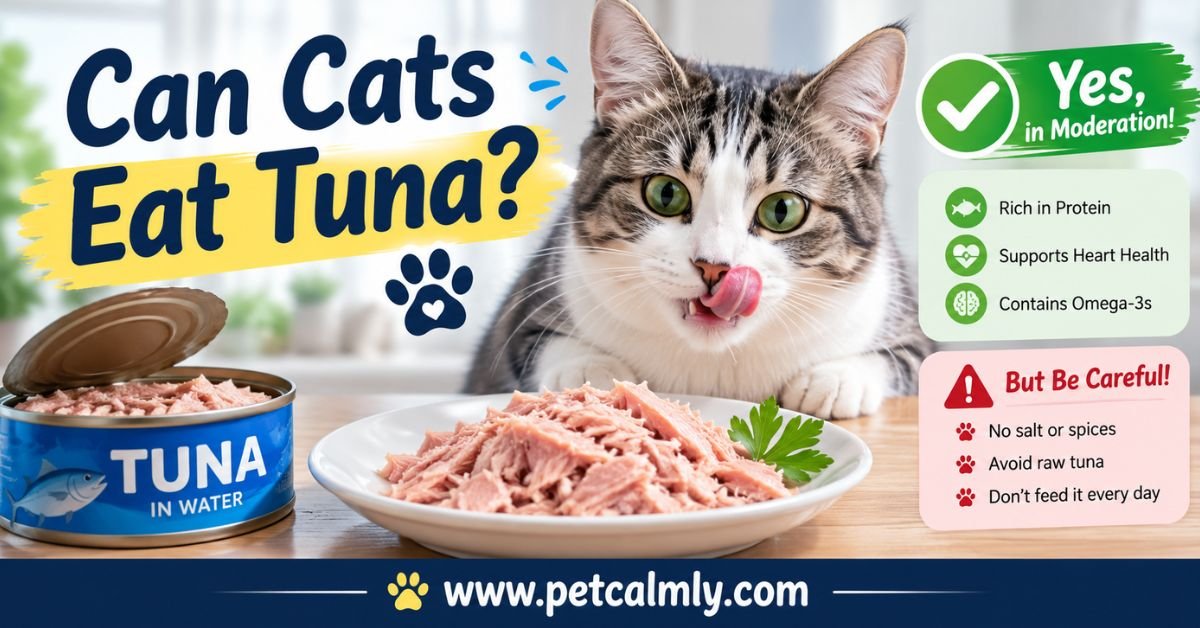
Yes, cats can eat tuna but only in moderation and as an occasional treat. Plain, cooked tuna without added salt, oil, seasonings, or spices is generally safe for healthy adult cats. However, tuna should not become a regular part of your cat’s diet because it doesn’t provide all the nutrients cats need and may expose them to excessive mercury if fed too often.
A balanced, complete cat food should always make up the majority of your cat’s meals. Think of tuna as a special treat rather than an everyday food.
Can Cats Eat Tuna? Everything Pet Owners Need to Know
If you’ve ever opened a can of tuna only to find your cat rubbing against your legs, meowing loudly, or staring at you with wide eyes, you’re not alone. Cats are naturally drawn to the strong smell of fish, and tuna is one of their favorite scents.
Many pet owners wonder:
- Is tuna actually good for cats?
- Can kittens eat tuna?
- Is canned tuna safe?
- How much is too much?
- Can tuna make cats sick?
These are important questions because while tuna is safe in small amounts, feeding it the wrong way or too often can lead to nutritional imbalances and even health problems over time.
This guide explains everything you need to know about feeding tuna safely, including the benefits, risks, portion sizes, and healthier alternatives so you can make informed decisions for your cat.
Why Do Cats Love Tuna So Much?
Cats don’t just enjoy tuna—they’re often obsessed with it. The reason comes down to their biology.
Unlike humans, cats are obligate carnivores, meaning they rely on nutrients found in animal protein. Tuna has a rich aroma created by natural amino acids and fats that strongly appeal to a cat’s highly sensitive sense of smell.
A cat’s nose is far more powerful than ours, allowing it to detect the scent of fish from surprising distances. Even if your cat seems uninterested in other human foods, the smell of tuna often grabs their attention immediately.
Some common behaviors include:
- Following you into the kitchen
- Meowing when they hear a can open
- Pawing at the counter
- Trying to steal tuna from your plate
- Refusing their regular food after tasting tuna
While this enthusiasm is normal, it’s important not to mistake excitement for nutritional need.
Is Tuna Good for Cats?
The answer is yes but with limits.
Tuna contains several nutrients that can benefit cats when offered occasionally. However, it isn’t nutritionally complete enough to replace a balanced cat food.
Benefits of Tuna for Cats
| Nutrient | How It Helps Cats |
|---|---|
| High-quality protein | Supports muscles, skin, and body repair |
| Omega-3 fatty acids | Helps maintain healthy skin and a shiny coat |
| B vitamins | Support metabolism and nervous system function |
| Selenium | Helps protect cells from oxidative damage |
| Potassium | Supports healthy muscle and nerve function |
These nutrients make tuna a healthy occasional snack rather than a complete meal.
Protein Supports Strong Muscles
Cats require significantly more protein than many other pets.
Protein helps:
- Build lean muscle
- Repair body tissues
- Support healthy organs
- Maintain energy levels
- Promote immune function
Tuna provides highly digestible animal protein, making it appealing to many cats.
Omega-3 Fatty Acids May Support Skin and Coat Health
Tuna naturally contains omega-3 fatty acids, including EPA and DHA.
These healthy fats may help support:
- Softer skin
- Shinier fur
- Healthy joints
- Normal brain function
- Eye health
However, cats usually receive sufficient fatty acids from a high-quality commercial cat food, so extra tuna is rarely necessary for these benefits.
Tuna Is Easy to Digest for Most Healthy Cats
Plain cooked tuna is generally gentle on the digestive system.
Some owners even use small amounts of tuna to encourage cats recovering from minor illnesses to start eating again because its strong smell can stimulate appetite.
However, if your cat has kidney disease, food allergies, pancreatitis, or another medical condition, always check with your veterinarian before introducing tuna.
Is Tuna Safe for Cats?
In moderation, yes.
The key word is moderation.
A few bites of tuna once in a while usually won’t harm a healthy adult cat. Problems develop when tuna becomes a daily habit or replaces balanced cat food.
Veterinary nutrition experts generally recommend treating tuna as an occasional reward instead of a staple food.
Why Too Much Tuna Can Become a Problem
Many owners assume that because cats love tuna, it must be ideal for them.
Unfortunately, that’s not true.
Cats need dozens of nutrients in precise amounts, including:
- Taurine
- Vitamin A
- Vitamin D
- Calcium
- Phosphorus
- Essential fatty acids
- Trace minerals
Tuna alone doesn’t provide the right balance of these nutrients.
Over time, relying heavily on tuna can contribute to nutritional deficiencies or imbalances, especially if it replaces complete commercial cat food.
Can Cats Eat Canned Tuna?
Yes—but choosing the right type matters.
Not all canned tuna is created equal.
Best Choice
Choose:
- Tuna packed in water
- No added salt
- No seasoning
- No garlic
- No onion
- No sauces
- No flavorings
Drain excess liquid before serving.
Avoid These Types of Tuna
Do not feed tuna that contains:
- Garlic
- Onion
- Chili
- Black pepper
- Lemon seasoning
- Spicy sauces
- Butter
- Heavy oils
- Excess salt
Even small amounts of onion or garlic can be toxic to cats.
Can Cats Eat Tuna in Oil?
It is best to avoid tuna packed in oil.
Oil-packed tuna isn’t toxic by itself, but it isn’t the healthiest choice.
Too much added fat may contribute to:
- Upset stomach
- Vomiting
- Diarrhea
- Unnecessary calories
- Weight gain
Some oils may also contain added seasonings that are unsafe for cats.
If water-packed tuna isn’t available, rinse oil-packed tuna thoroughly and only offer a tiny amount on rare occasions.
Can Cats Eat Fresh Tuna?
Yes.
Fresh, cooked tuna is one of the safest ways to share tuna with your cat.
Cook it plainly by:
- Baking
- Steaming
- Boiling
- Grilling without seasoning
Do not add:
- Salt
- Garlic
- Onion
- Butter
- Cooking sprays
- Marinades
- Spice blends
Let the fish cool completely and remove every bone before serving.
Can Cats Eat Raw Tuna?
Raw tuna is not recommended.
Although wild cats eat raw prey, feeding raw fish at home comes with several risks.
Raw tuna may contain:
- Harmful bacteria
- Parasites
- Thiaminase, an enzyme that breaks down vitamin B1 (thiamine)
- Contaminants that cooking would normally reduce
A long-term deficiency in thiamine can lead to serious neurological problems in cats.
Cooking tuna thoroughly helps reduce many of these risks.
Can Cats Eat Tuna Every Day?
No.
Daily tuna feeding is not recommended.
Even if your cat seems perfectly healthy, feeding tuna every day may eventually contribute to:
- Mercury accumulation
- Poor nutritional balance
- Vitamin deficiencies
- Obesity from excess calories
- Picky eating habits
- Refusal of complete cat food
Many cats quickly develop a strong preference for tuna because of its smell and flavor. Once this happens, some begin ignoring their nutritionally balanced food, making it harder to meet their dietary needs.
Different Types of Tuna: Which Is Safest for Cats?
| Type of Tuna | Safe for Cats? | Notes |
|---|---|---|
| Fresh cooked tuna | Yes | Plain, boneless, fully cooked is the best option. |
| Canned tuna in water | Yes | Choose low-sodium, unseasoned varieties and feed occasionally. |
| Tuna in sunflower or vegetable oil | Occasionally | High in fat and calories; not ideal. |
| Tuna with garlic or onion | No | Garlic and onion are toxic to cats. |
| Tuna salad | No | Often contains mayonnaise, onion, spices, and salt. |
| Raw tuna | Not recommended | Risk of bacteria, parasites, and thiamine deficiency. |
| Smoked tuna | No | Usually very high in sodium and seasonings. |
| Flavored tuna packets | No | Often contain additives, spices, or ingredients unsafe for cats. |
Common Mistakes Cat Owners Make When Feeding Tuna
Even well-meaning owners sometimes make choices that aren’t ideal for their cat’s health.
Some of the most common mistakes include:
- Feeding tuna every day because the cat enjoys it.
- Replacing balanced cat food with tuna.
- Offering tuna seasoned for human meals.
- Giving large portions instead of a few bites.
- Feeding raw tuna without understanding the risks.
- Assuming all canned tuna is safe.
- Ignoring sodium levels on the label.
- Letting picky cats rely only on tuna.
Avoiding these mistakes can help your cat enjoy tuna safely while still getting complete nutrition from a balanced feline diet.
How Much Tuna Can Cats Eat?
The safest approach is to think of tuna as an occasional treat, not a meal replacement.
A complete and balanced cat food should provide at least 90% of your cat’s daily calories. Treats, including tuna, should make up no more than 10% of the daily diet.
For most healthy adult cats, a few small flakes or bite-sized pieces are enough to satisfy their curiosity without upsetting their nutritional balance.
General Feeding Guide
| Cat | Recommended Amount | Frequency |
|---|---|---|
| Adult cat | 1–2 teaspoons | Once or twice per week |
| Large adult cat | Up to 1 tablespoon | Once or twice per week |
| Senior cat | Small portions | Only with your veterinarian’s guidance if they have health conditions |
| Kitten | Generally not recommended as a regular treat | See kitten section below |
These are general guidelines. Your cat’s age, weight, activity level, and health all affect what is appropriate.
How Often Can Cats Eat Tuna?
A common question from pet owners is whether a little tuna every day is harmless.
The answer is no.
Even small daily servings can add up over time and create problems that aren’t obvious at first.
A healthier schedule is:
- An occasional training reward
- A special weekend treat
- A small appetite booster during temporary illness (only if your veterinarian recommends it)
Giving tuna less frequently helps reduce the risk of mercury exposure and prevents your cat from becoming overly dependent on its taste.
Can Kittens Eat Tuna?
Young kittens have very different nutritional needs than adult cats.
While a tiny taste of plain cooked tuna is unlikely to harm an older kitten, tuna should not become part of a kitten’s regular diet.
Growing kittens need carefully balanced nutrition to support:
- Brain development
- Bone growth
- Muscle development
- Healthy eyesight
- A strong immune system
Commercial kitten foods are specially formulated to provide these nutrients in the right proportions.
Too much tuna can fill a kitten’s stomach without supplying everything they need to grow properly.
If You Want to Offer Tuna
Wait until your kitten is eating solid food consistently and ask your veterinarian before introducing any human foods.
If approved:
- Offer only a very small flake.
- Make sure it’s plain and cooked.
- Watch for digestive upset.
- Return to their regular kitten food afterward.
Can Senior Cats Eat Tuna?
Many older cats become pickier eaters, making tuna seem like an easy solution.
In some situations, a veterinarian may suggest using a small amount of tuna to encourage eating. However, this should not become a long-term habit.
Senior cats are more likely to develop conditions such as:
- Kidney disease
- Hyperthyroidism
- Heart disease
- High blood pressure
- Diabetes
These conditions often require carefully controlled diets. Human tuna may contain more sodium, protein, or phosphorus than is appropriate for some senior cats.
If your older cat suddenly refuses food, don’t rely on tuna alone. Loss of appetite in senior cats deserves veterinary attention.
Is Tuna in Cat Food Different From Canned Tuna?
Yes—and this is an important distinction.
Many people assume that if tuna-flavored cat food is healthy, canned tuna from the grocery store must be equally suitable.
That’s not the case.
Commercial Tuna Cat Food
Cat foods labeled as tuna are formulated to meet feline nutritional requirements.
They typically include:
- Taurine
- Essential vitamins
- Minerals
- Balanced fats
- Proper calcium-to-phosphorus ratio
- Other nutrients cats require daily
Grocery Store Tuna
A can of tuna intended for people is simply fish.
While nutritious, it lacks the complete nutrient profile cats need for long-term health.
That’s why feeding only canned tuna can eventually lead to deficiencies.
Does Tuna Contain Mercury?
Yes.
Like many ocean fish, tuna naturally contains mercury absorbed from the environment.
Large predatory fish tend to accumulate more mercury over time because they eat smaller fish throughout their lives.
This doesn’t mean every bite of tuna is dangerous, but it does explain why moderation matters.
Mercury Risk Depends On:
- The species of tuna
- How often it’s fed
- The amount eaten
- Your cat’s overall diet
Occasional small portions are unlikely to cause problems in healthy cats.
The concern comes from frequent or excessive feeding over months or years.
Which Types of Tuna Have Less Mercury?
Different tuna species contain different mercury levels.
In general:
| Tuna Type | Relative Mercury Level |
|---|---|
| Skipjack tuna | Lower |
| Light canned tuna | Usually lower |
| Albacore tuna | Higher |
| Yellowfin tuna | Moderate to higher |
| Bigeye tuna | Highest |
If you’re occasionally sharing canned tuna with your cat, water-packed light tuna is generally a better choice than albacore.
Can Too Much Tuna Make Cats Sick?
Yes.
While most cats tolerate an occasional serving well, eating too much tuna can cause both short-term and long-term problems.
Short-Term Problems
A cat that overeats tuna may experience:
- Vomiting
- Diarrhea
- Stomach discomfort
- Temporary loss of appetite
- Soft stools
These signs often improve once the digestive system settles.
Long-Term Problems
Regular excessive tuna consumption may contribute to:
- Nutritional imbalance
- Obesity
- Mercury exposure
- Vitamin deficiencies
- Food fixation
- Refusal to eat balanced cat food
These issues usually develop gradually, which is why prevention is so important.
Can Cats Become Addicted to Tuna?
Not in the way humans think of addiction, but they can certainly become strongly attached to its smell and flavor.
Cats often learn that tuna is more exciting than their everyday food.
Over time they may:
- Ignore regular meals.
- Beg for tuna constantly.
- Wake owners for fish treats.
- Refuse anything except tuna.
This behavior is commonly called food preference rather than a true addiction.
Signs Your Cat May Be Eating Too Much Tuna
Watch for changes such as:
- Refusing normal cat food
- Persistent begging
- Weight gain
- Digestive upset
- Lethargy
- Poor overall nutrition
- Changes in coat quality
- Unusual weakness
These signs don’t always mean tuna is the cause, but they do indicate it’s time to review your cat’s diet with your veterinarian.
What If My Cat Ate a Whole Can of Tuna?
Don’t panic.
A healthy adult cat that eats one plain can of water-packed tuna is unlikely to experience a serious emergency.
However, they may develop:
- Mild vomiting
- Loose stools
- Temporary stomach upset
- Increased thirst if the tuna contained sodium
Provide fresh water and monitor your cat over the next 24 hours.
Contact your veterinarian if you notice:
- Repeated vomiting
- Severe diarrhea
- Weakness
- Collapse
- Difficulty walking
- Tremors
- Refusal to eat
- Any unusual behavior
The situation is more concerning if the tuna contained onions, garlic, spicy seasonings, or other ingredients that are toxic to cats.
Can Cats Eat Tuna Every Day If It’s Mixed With Cat Food?
This is another common misconception.
Mixing tuna into complete cat food does not eliminate the risks of feeding tuna too frequently.
Although small amounts may encourage picky eaters temporarily, daily mixing can cause your cat to expect tuna at every meal.
Instead, try other appetite-boosting methods, such as:
- Slightly warming wet food
- Adding warm water to canned food
- Using veterinarian-approved food toppers
- Rotating flavors of complete cat food
If your cat suddenly becomes picky without an obvious reason, schedule a veterinary examination rather than relying on tuna.
Can Cats Be Allergic to Tuna?
Yes, although it’s not among the most common food allergies.
Possible signs include:
- Itchy skin
- Excessive scratching
- Ear infections
- Vomiting
- Diarrhea
- Hair loss
- Skin redness
Food allergies usually develop after repeated exposure rather than after the very first taste.
If you notice these symptoms after feeding tuna, stop offering it and consult your veterinarian.
Safe Ways to Serve Tuna
If you decide to share tuna with your cat, preparation matters.
Choose Tuna That Is:
- Plain
- Fully cooked
- Boneless
- Packed in water
- Low in sodium
- Free of seasonings
Before Serving
- Drain excess liquid.
- Check carefully for bones.
- Break into tiny pieces.
- Serve at room temperature.
- Discard leftovers that have been sitting out for more than two hours.
Good food hygiene helps reduce the risk of stomach upset.
When Should You Call Your Veterinarian?
Most cats enjoy small amounts of tuna without any issues. However, veterinary advice is important if your cat shows concerning symptoms after eating tuna or has an underlying medical condition.
Contact Your Veterinarian If Your Cat:
- Vomits repeatedly
- Has persistent diarrhea
- Stops eating for more than 24 hours
- Seems weak or unusually sleepy
- Has trouble walking or loses coordination
- Shows signs of an allergic reaction, such as facial swelling or severe itching
- Eats tuna containing onions, garlic, or other toxic ingredients
- Has kidney disease, liver disease, diabetes, or another condition that requires a prescription diet
Early evaluation can help identify whether the problem is related to tuna or another health issue that needs treatment.
Practical Checklist: Is This Tuna Safe for My Cat?
Before sharing tuna, ask yourself these questions:
- Is it plain and fully cooked?
- Is it packed in water rather than oil?
- Does it contain no onion, garlic, spices, or sauces?
- Have I removed all bones?
- Am I offering only a small portion?
- Is this an occasional treat instead of a daily habit?
- Is my cat otherwise eating a complete and balanced diet?
If you can answer yes to all of these, you’re making a much safer choice for your feline companion.
Healthy Alternatives to Tuna for Cats
While tuna can be a tasty treat, it shouldn’t be the only special food your cat enjoys. Rotating safe, protein-rich treats helps provide variety without encouraging an unhealthy obsession with one food.
Here are some healthier alternatives that many cats love.
Cooked Chicken
Plain, skinless chicken breast is one of the best treats for cats.
Benefits include:
- Lean, high-quality protein
- Easy to digest
- Low in fat
- Suitable for many sensitive stomachs
Boil, bake, or steam the chicken without adding salt, spices, butter, garlic, or onion.
Cooked Turkey
Turkey is another excellent source of lean protein.
Offer small pieces of plain cooked turkey as an occasional reward. Avoid deli meats or processed turkey because they often contain excess sodium and preservatives.
Cooked Salmon
Salmon contains beneficial omega-3 fatty acids and is often easier to digest than richer meats.
Choose:
- Fully cooked salmon
- No seasoning
- No bones
- Small portions only
Like tuna, salmon should be a treat—not a daily meal.
Cooked White Fish
Fish such as cod or pollock can provide variety with generally lower mercury levels than many tuna species.
Always cook thoroughly and remove every bone before serving.
Commercial Cat Treats
High-quality commercial treats formulated specifically for cats are often a safer option than human foods because they are made with feline nutrition in mind.
Look for treats that are:
- High in animal protein
- Low in unnecessary fillers
- Appropriate for your cat’s age
- Given in moderation
Foods You Should Never Mix With Tuna
Some owners accidentally make tuna unsafe by mixing it with ingredients meant for human meals.
Avoid serving tuna with:
- Onion
- Garlic
- Chives
- Leeks
- Excess salt
- Soy sauce
- Spicy seasonings
- Hot sauce
- Butter
- Heavy cream
- Mayonnaise
- Alcohol
- Artificial sweeteners such as xylitol
Even small amounts of certain ingredients especially onion and garlic can be harmful to cats.
What If Your Cat Refuses Regular Food After Eating Tuna?
This is a surprisingly common problem.
Because tuna has such a strong smell and flavor, some cats begin holding out for it instead of eating their normal food.
Avoid Giving In
If your cat is healthy and your veterinarian has ruled out illness, avoid replacing every meal with tuna. Doing so reinforces picky eating.
Instead:
- Feed meals on a consistent schedule.
- Remove uneaten food after about 20–30 minutes.
- Limit treats between meals.
- Offer a variety of complete wet and dry cat foods over time.
- Use tuna only occasionally.
If your cat suddenly stops eating altogether or refuses food for more than 24 hours (or even sooner for kittens), contact your veterinarian promptly. Cats can become seriously ill if they go without food for too long.
Signs Your Cat Is Eating a Balanced Diet
Tuna may be enjoyable, but your cat’s everyday diet matters much more.
A well-fed cat typically has:
- Bright, alert eyes
- A shiny coat
- Healthy skin
- Steady energy levels
- Good muscle condition
- Normal stools
- A healthy body weight
- A good appetite for complete cat food
If these signs begin to change, review your cat’s diet with your veterinarian.
7 Common Mistakes to Avoid When Feeding Tuna
Even caring pet owners sometimes make simple mistakes.
Avoid these common pitfalls:
1: Feeding Tuna Every Day
Cats need complete nutrition that tuna alone cannot provide.
2: Replacing Cat Food With Tuna
Human tuna is not nutritionally balanced for long-term feline health.
3: Ignoring Sodium Content
Many canned products contain added salt, which isn’t ideal for cats.
4: Offering Large Portions
A small taste is enough. Bigger servings don’t provide additional health benefits.
5: Feeding Tuna Packed in Oil
Oil increases unnecessary calories and may upset some cats’ stomachs.
6: Giving Seasoned Tuna
Human recipes often contain ingredients that are unsafe for pets.
7: Forgetting Fresh Water
Fish can make some cats thirstier. Always provide access to clean drinking water.
Practical Feeding Tips From a Pet Care Perspective
If you decide to share tuna occasionally, keep these simple habits in mind:
- Treat tuna as an occasional reward, not a routine meal.
- Choose plain, water-packed or freshly cooked tuna.
- Keep portions small.
- Continue feeding a complete and balanced cat food every day.
- Introduce any new food gradually.
- Monitor your cat for digestive changes or allergic reactions.
- Discuss dietary changes with your veterinarian if your cat has an existing medical condition.
These habits help your cat enjoy treats safely while maintaining good overall nutrition.
When Should You Worry?
Most cats can safely enjoy a small amount of plain tuna from time to time. However, don’t ignore symptoms that suggest something more serious.
Seek veterinary advice if your cat:
- Vomits repeatedly after eating tuna
- Has diarrhea lasting more than a day
- Refuses all food
- Appears weak or dehydrated
- Has difficulty walking or seems uncoordinated
- Develops facial swelling, hives, or severe itching
- Accidentally eats tuna containing onion, garlic, or other toxic ingredients
- Has a chronic illness and reacts differently after eating tuna
Prompt veterinary care can make a significant difference if your cat is experiencing an underlying health problem.
What Should Pet Owners Do?
If you’re wondering whether tuna deserves a place in your cat’s diet, the answer is simple:
- Feed a complete and balanced cat food every day.
- Offer tuna only as an occasional treat.
- Choose plain, cooked, water-packed tuna without seasonings.
- Keep portions small.
- Watch for any unusual reactions.
- Contact your veterinarian if you have concerns or if your cat has an existing health condition.
By following these steps, you can satisfy your cat’s curiosity without compromising their long-term health.
More Information About Pets, Please Visit Our Website: Can Cats Eat Watermelon?
Why Does My Cat Smell So Bad?
Cat Constipation Home Remedy
Why Is My Cat Losing Hair and Weight?
Why Is My Cat Not Eating But Acting Normal?
Conclusion
So, can cats eat tuna?
Yes—but moderation is the key to keeping it safe.
Plain, cooked tuna or canned tuna packed in water can be an enjoyable treat for most healthy adult cats when offered occasionally. It provides high-quality protein and beneficial omega-3 fatty acids, but it does not contain the complete balance of nutrients cats need every day.
Feeding tuna too often can contribute to nutritional imbalances, encourage picky eating, and increase long-term mercury exposure. That’s why veterinarians and feline nutrition experts recommend using tuna as an occasional reward rather than a dietary staple.
When in doubt, choose a complete, balanced cat food as your cat’s primary diet and reserve tuna for special moments. Your cat will still enjoy the treat, and you’ll have the peace of mind that comes from supporting their health for years to come.
Frequently Asked Questions
1. Can cats eat tuna straight from the can?
Yes, if it’s plain tuna packed in water with no added salt, onion, garlic, or seasonings. Offer only a small amount as an occasional treat rather than a regular meal.
2. Is canned tuna or fresh tuna better for cats?
Plain, fully cooked fresh tuna is generally the better option because you control the preparation. If using canned tuna, choose water-packed, low-sodium varieties without added flavorings.
3. Can kittens eat tuna?
A tiny taste is unlikely to harm an older kitten, but tuna should not become part of a kitten’s regular diet. Growing kittens need complete, balanced kitten food to support healthy development.
4. Why does my cat love tuna so much?
Cats have an excellent sense of smell and are naturally attracted to the strong aroma of fish. Tuna is rich in animal protein and fats, making it especially appealing to many cats.
5. How much tuna is too much for a cat?
For most healthy adult cats, 1–2 teaspoons once or twice a week is a reasonable limit. Daily feeding or large portions can lead to nutritional imbalances and encourage picky eating.
6. What should I do if my cat accidentally eats too much tuna?
Monitor your cat for vomiting, diarrhea, lethargy, or loss of appetite. If the tuna contained onion, garlic, spices, or if your cat develops concerning symptoms, contact your veterinarian promptly.