Short direct answer
If your cat is constipated but otherwise acting normally, a few simple home remedies may help. Encourage your cat to drink more water, feed moisture-rich wet food, add a small amount of plain canned pumpkin if appropriate, promote gentle exercise, and keep the litter box clean and stress-free. Mild constipation often improves within 24 to 48 hours. However, if your cat hasn’t passed stool for more than two days, is vomiting, has a swollen belly, cries in the litter box, or seems weak, seek veterinary care promptly. Constipation can sometimes signal a serious underlying condition that requires medical treatment.
Introduction
Finding your cat repeatedly visiting the litter box without producing much or any stool can be worrying. Many cat owners immediately wonder whether there’s a safe cat constipation home remedy they can try before scheduling a veterinary appointment.
The good news is that mild constipation is fairly common and, in many cases, improves with supportive care at home. Cats may become constipated after eating a low-moisture diet, drinking too little water, swallowing excess hair while grooming, experiencing stress, or becoming less active. Addressing these issues early often helps restore normal bowel movements.
The challenge is knowing when home care is enough and when constipation has become something more serious. Waiting too long can allow stool to become increasingly hard and difficult to pass, making your cat uncomfortable and increasing the risk of complications.
This guide explains:
- Why cats become constipated
- Safe home remedies that may help
- Warning signs you should never ignore
- Common mistakes many owners make
- Practical ways to prevent constipation from returning
Whether your kitten has skipped a bowel movement for a day or your senior cat is struggling in the litter box, understanding the cause is the first step toward helping them feel better safely.
Understanding Cat Constipation
Cat constipation occurs when stool moves too slowly through the large intestine (colon). As it sits there longer, the colon continues absorbing water from the waste. The longer stool remains inside, the drier, harder, and more difficult it becomes to pass.
Most healthy cats produce stool every 12 to 36 hours, although normal frequency varies depending on diet, age, hydration, and activity level. Missing one bowel movement isn’t always an emergency. The concern begins when your cat repeatedly strains, passes very small amounts of dry stool, or stops passing stool altogether.
Unlike temporary digestive upset, constipation usually develops gradually. Many owners first notice subtle behavioral changes before realizing their cat is having trouble defecating.
What Does Constipation Look Like in Cats?
Constipation isn’t simply “not pooping.” Many constipated cats continue trying to use the litter box but cannot empty their bowels effectively.
Common signs include:
- Repeated trips to the litter box
- Straining without producing stool
- Passing very small, dry, pebble-like feces
- Hard stools
- Reduced appetite
- Drinking less or more than usual
- Restlessness
- Hiding more often
- Mild abdominal discomfort
- Excessive grooming around the rear end
- Defecating outside the litter box because using it has become uncomfortable
Some owners mistake constipation for a urinary problem because both conditions involve frequent litter box visits and straining. Since urinary blockages especially in male cats can become life-threatening within hours, it’s important to watch carefully. If you’re unsure whether your cat is trying to urinate or defecate, contact your veterinarian immediately.
Why Early Treatment Matters
Many cases begin as mild constipation but become progressively harder to resolve if ignored.
As stool remains inside the colon:
- More water is absorbed.
- Stool becomes harder.
- Passing stool becomes painful.
- Your cat may avoid trying altogether.
- The colon stretches over time, making future constipation even more likely.
In severe or long-standing cases, cats may develop obstipation, where stool becomes impacted and cannot be passed without veterinary treatment. Chronic stretching of the colon can also contribute to a condition called megacolon, in which the colon loses much of its ability to move stool normally.
For this reason, early intervention is usually easier, safer, and less stressful than waiting until constipation becomes severe.
Why Is My Cat Constipated?
Constipation is usually a symptom rather than a disease itself. Understanding the underlying cause helps you choose the safest and most effective solution.
Below are the most common reasons cats become constipated.
Dehydration Is One of the Biggest Causes
Many cats naturally have a low thirst drive. Their wild ancestors obtained much of their water from prey, so domestic cats often don’t drink enough especially if they eat mostly dry kibble.
When the body needs water, the colon absorbs more fluid from waste before it leaves the body. The result is dry, hard stool that’s difficult to pass.
Your cat may become dehydrated because of:
- Eating only dry food
- Hot weather
- Kidney disease
- Diabetes
- Vomiting
- Diarrhea
- Poor water intake
- Certain medications
Even mild dehydration can make constipation noticeably worse.
Low-Moisture Diet
Cats eating exclusively dry food generally consume less water overall than cats fed wet food or a mixed diet.
Dry food itself doesn’t automatically cause constipation, but when water intake doesn’t compensate, stool can become firmer.
A diet lacking sufficient moisture may also slow digestion in some cats, particularly older adults.
Hairballs
Cats swallow loose fur every day while grooming. Most hair passes through the digestive tract without causing problems.
However, heavy shedding, long coats, or excessive grooming can increase the amount of swallowed hair.
Instead of moving normally through the intestines, accumulated hair may contribute to firmer stool or slow movement of waste through the colon.
Long-haired breeds often experience this more frequently, especially during seasonal shedding.
Lack of Exercise
Movement helps stimulate normal intestinal contractions.
Indoor cats that spend most of the day sleeping may have slower digestion than active cats.
Reduced activity is especially common in:
- Senior cats
- Overweight cats
- Cats recovering from surgery
- Cats with arthritis
- Cats experiencing chronic pain
Even short interactive play sessions can encourage healthier digestion.
Obesity
Extra body weight affects more than joints.
Overweight cats often:
- Exercise less
- Groom less effectively
- Drink less
- Experience reduced intestinal movement
These factors can combine to increase constipation risk.
Maintaining a healthy weight benefits digestive health as well as overall well-being.
Stress and Routine Changes
Cats thrive on predictability.
Stress can alter digestive function and cause some cats to delay using the litter box.
Possible triggers include:
- Moving house
- New pets
- Visitors
- Loud construction
- Travel
- Changes in litter type
- Dirty litter boxes
- Household conflicts between pets
A cat that repeatedly postpones defecation because it dislikes the litter box may eventually become constipated.
Pain While Squatting
Some cats avoid defecating because the squatting position hurts.
Pain may result from:
- Arthritis
- Hip injuries
- Back pain
- Pelvic injuries
- Joint disease
Older cats commonly develop stiffness that makes entering high-sided litter boxes or maintaining the squatting posture uncomfortable.
The constipation develops because the cat delays bowel movements not because digestion has slowed initially.
Certain Medications
Some medications may contribute to constipation as a side effect.
Examples include:
- Certain pain medications
- Some antacids
- Medications that reduce intestinal movement
- Drugs that cause dehydration
Never stop or adjust prescribed medication without speaking with your veterinarian.
Underlying Medical Conditions
Sometimes constipation signals a larger health issue rather than a simple digestive slowdown.
Possible medical causes include:
- Kidney disease
- Neurological disorders
- Colon disorders
- Pelvic narrowing after previous injuries
- Tumors affecting the digestive tract
- Electrolyte imbalances
- Hormonal disorders
These conditions require veterinary diagnosis and treatment rather than home remedies alone.
Signs Your Cat May Benefit From a Home Remedy
Home care is generally appropriate only when constipation appears mild and your cat is otherwise bright, comfortable, and eating reasonably well.
You may be able to try supportive care if your cat:
- Has been constipated for less than 24–48 hours
- Is alert and responsive
- Has no vomiting
- Continues eating at least some food
- Drinks water normally
- Produces small amounts of stool instead of none at all
- Does not appear to be in severe pain
Mild constipation often improves with hydration, dietary adjustments, and increased activity.
However, if symptoms worsen or fail to improve within a day or two, it’s time to contact your veterinarian rather than continuing home treatment.
When Home Remedies Are Not Enough
A cat constipation home remedy should never replace professional care when warning signs are present.
Contact your veterinarian promptly if your cat:
- Has not passed stool for more than 48 hours
- Cries while straining
- Produces no stool despite repeated attempts
- Vomits repeatedly
- Stops eating completely
- Has a swollen or painful abdomen
- Appears extremely tired or weak
- Has blood in the stool
- Is a kitten, elderly cat, or has an existing medical condition
These signs may indicate severe constipation, an intestinal blockage, or another medical emergency that requires prompt treatment.
Best Cat Constipation Home Remedy: Safe Ways to Help Your Cat Poop Naturally
Now that you know what causes constipation and when it’s safe to try home care, let’s look at the most effective remedies. These methods focus on improving hydration, encouraging normal bowel movements, and making your cat more comfortable—all without using unsafe DIY treatments.
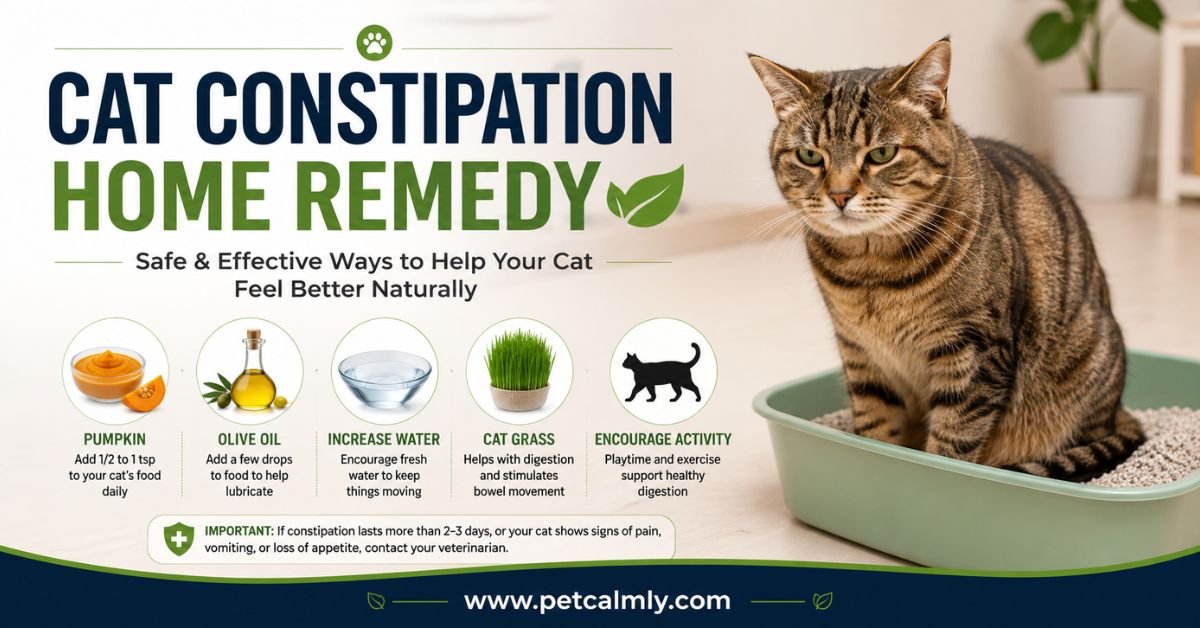
Remember, even the best cat constipation home remedy works only for mild constipation. If your cat is in pain, vomiting, or hasn’t passed stool for more than two days, skip home treatment and contact your veterinarian.
Increase Water Intake: The Most Important Cat Constipation Home Remedy
If there is one remedy that helps the majority of mildly constipated cats, it’s improving hydration.
Water softens stool, supports healthy digestion, and helps waste move through the colon more easily. Because cats naturally have a low thirst drive, many don’t drink enough on their own.
Easy Ways to Help Your Cat Drink More Water
Try one or more of these simple strategies:
- Place several water bowls around your home.
- Refill bowls with fresh water every day.
- Wash bowls regularly to remove odors.
- Use wide, shallow bowls that don’t touch your cat’s whiskers.
- Keep water away from food and litter boxes if your cat prefers separate locations.
- Try a pet water fountain if your cat enjoys moving water.
- Add a small amount of warm water to wet food.
Many owners notice their cat drinks more simply because clean water is available in multiple quiet locations.
Switch to Wet Food When Appropriate
Wet food contains significantly more moisture than dry kibble, making it one of the easiest ways to increase daily water intake.
If your cat normally eats only dry food, gradually introducing wet food may help soften stools within a day or two.
Benefits include:
- Higher moisture intake
- Softer stool consistency
- Better overall hydration
- Increased urine production, which also supports urinary health
Make dietary changes gradually over several days to reduce the chance of stomach upset.
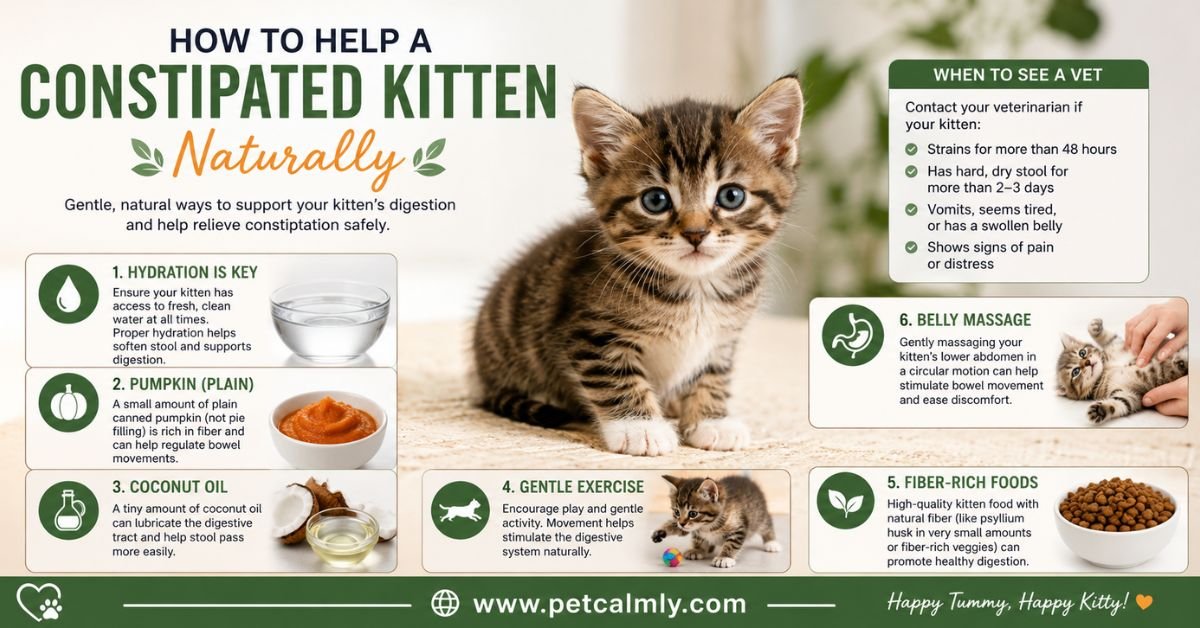
Can Pumpkin Help Cat Constipation?
Plain canned pumpkin is one of the most commonly recommended home remedies for mild constipation.
It contains soluble and insoluble fiber that may help regulate bowel movements by improving stool consistency.
How Pumpkin Works
Fiber can help by:
- Holding water in the stool
- Supporting healthy intestinal movement
- Encouraging more regular bowel movements
- Promoting beneficial gut bacteria
However, pumpkin isn’t a miracle cure.
If constipation is caused by dehydration, pain, a blockage, or an underlying illness, pumpkin alone won’t solve the problem.
How Much Pumpkin Can Cats Have?
A typical starting amount is:
- ½ to 1 teaspoon of plain canned pumpkin mixed into food once or twice daily.
Choose 100% plain pumpkin puree without:
- Sugar
- Salt
- Spices
- Pie filling ingredients
- Artificial sweeteners
Introduce pumpkin slowly. Too much fiber may cause diarrhea or digestive upset in some cats.
If your cat refuses pumpkin, don’t force it. There are other safe options to discuss with your veterinarian.
Add Moisture to Every Meal
Many owners focus only on drinking water, but adding moisture directly to meals often works even better.
Simple ideas include:
- Stir warm water into canned food.
- Mix low-sodium, onion-free broth approved for cats with meals.
- Serve smaller, more frequent meals if your cat prefers.
Some cats enjoy food with a softer texture, especially seniors with dental disease.
Encourage Gentle Exercise
Physical activity stimulates the muscles that move food through the digestive tract.
Cats that spend most of the day sleeping often have slower intestinal movement than active cats.
Easy Ways to Get Your Cat Moving
Aim for two or three play sessions each day.
Ideas include:
- Wand toys
- Feather teasers
- Small balls
- Laser pointers (always end with a toy your cat can catch)
- Puzzle feeders
- Treat hunts around the house
Even 10 to 15 minutes of play can make a noticeable difference over time.
Senior cats may benefit from shorter, gentler sessions that match their energy level.
Reduce Hairballs to Improve Digestion
Hairballs don’t always cause constipation, but excessive swallowed fur can contribute to digestive slowdowns.
Helping your cat swallow less hair may reduce future constipation episodes.
Brush Your Cat Regularly
Brushing removes loose fur before your cat swallows it.
Frequency depends on coat length.
Short-haired cats:
- Once or twice each week
Medium-haired cats:
- Several times weekly
Long-haired cats:
- Daily brushing during shedding seasons
Besides helping digestion, regular grooming reduces hairballs throughout the home.
Support Healthy Grooming
Cats experiencing obesity, arthritis, or chronic pain may groom less effectively.
Helping these cats with regular brushing reduces loose hair while also allowing you to check for skin problems, mats, or parasites.
Keep the Litter Box Comfortable
Some constipated cats avoid using the litter box because it has become unpleasant or uncomfortable.
Improving the litter box environment may encourage normal bowel movements.
Litter Box Tips
Make sure the litter box is:
- Scooped at least once daily
- Easy to access
- Located in a quiet area
- Large enough for your cat to turn around comfortably
- Free from strong cleaning product odors
For older cats with arthritis, use a box with lower sides to reduce discomfort when entering.
Help Reduce Stress
Stress affects the digestive system in many cats.
Major changes in routine can slow bowel movements or make cats reluctant to use their litter box.
Common Sources of Stress
Your cat may become stressed by:
- Moving to a new home
- Introducing another pet
- Construction noise
- Traveling
- Changes in household schedules
- Dirty litter boxes
- Conflict with other cats
Providing predictable routines, quiet resting places, and plenty of hiding spots helps many cats feel secure.
Should You Massage Your Cat’s Belly?
Some owners wonder whether gentle abdominal massage helps constipation.
The answer depends on your cat’s condition.
A relaxed cat that enjoys being touched may tolerate very gentle stroking around the sides of the abdomen.
However, never press firmly or attempt to “move” stool yourself.
Stop immediately if your cat:
- Pulls away
- Growls
- Hisses
- Shows signs of pain
- Has a swollen abdomen
Forceful massage can cause discomfort and may worsen certain medical conditions.
Is Olive Oil a Safe Cat Constipation Home Remedy?
Olive oil is often suggested online, but the evidence supporting its effectiveness is limited.
Small amounts are unlikely to harm most healthy cats, but adding oils to food does not reliably treat constipation and may upset the digestive system or add unnecessary calories.
Instead of experimenting with oils, focus on methods that have stronger veterinary support:
- Increasing water intake
- Feeding wet food
- Encouraging exercise
- Adding appropriate fiber when recommended
- Seeking veterinary advice if constipation persists
What About Coconut Oil?
Coconut oil is another popular internet remedy.
Although some owners report improvement, there is little scientific evidence that it consistently relieves constipation in cats.
Potential drawbacks include:
- Digestive upset
- Diarrhea
- Weight gain
- Increased fat intake
It should not replace proven treatments or veterinary care.
Can Cat Grass Help?
Cat grass may encourage normal digestion in some cats.
Some cats enjoy chewing grass, which can stimulate digestive activity.
However:
- It is not a reliable treatment for constipation.
- Results vary between cats.
- It won’t resolve moderate or severe constipation.
Think of cat grass as an enrichment option rather than a primary remedy.
Should You Give More Fiber?
Fiber can be helpful but only when used appropriately.
Too little fiber may contribute to constipation in some cats, while too much fiber can actually make constipation worse, especially if your cat is dehydrated.
Before adding fiber supplements, consider:
- Your cat’s age
- Existing medical conditions
- Water intake
- Current diet
- Previous digestive history
If constipation becomes recurrent, your veterinarian may recommend a prescription diet with carefully balanced fiber rather than guessing at home.
Foods That May Support Healthy Digestion
A moisture-rich, balanced diet supports normal bowel movements better than relying on occasional home remedies.
Foods that may help include:
| Food | Potential Benefit | Notes |
|---|---|---|
| Wet cat food | Increases hydration | Often the first dietary recommendation |
| Plain canned pumpkin | Adds gentle fiber | Use only plain pumpkin puree |
| Prescription digestive diets | Balanced fiber and nutrients | Recommended for chronic constipation |
| Fresh water | Softens stool | Essential every day |
Avoid introducing multiple dietary changes at once. If constipation improves, you’ll know which adjustment made the difference.
Home Remedies That Are Not Safe
Many internet tips can do more harm than good.
Avoid giving your cat:
- Human laxatives
- Mineral oil by mouth
- Castor oil
- Enemas made for people
- Essential oils
- Milk to “make them poop”
- Large amounts of cooking oils
- Herbal supplements without veterinary guidance
Some of these remedies can cause aspiration pneumonia, poisoning, dehydration, or serious intestinal injury.
When in doubt, it’s always safer to ask your veterinarian before trying a product that wasn’t designed specifically for cats.
How Long Should a Home Remedy Take to Work?
For mild constipation, you may notice improvement within 24 to 48 hours after increasing hydration and making gentle dietary changes.
Signs your cat is improving include:
- Passing normal stool
- Less straining in the litter box
- Better appetite
- More comfortable behavior
- Increased activity
- Normal grooming habits
If there is no improvement after two days, or your cat’s condition worsens at any point, home remedies are no longer appropriate. Continued straining can lead to painful stool impaction and requires veterinary attention.
Common Mistakes to Avoid When Treating Cat Constipation at Home
Wanting to help your cat quickly is completely understandable. Unfortunately, some well-meaning home treatments can delay proper care or even make constipation worse.
Understanding these common mistakes can help your cat recover more safely.
Mistake 1: Waiting Too Long
Many owners assume constipation will resolve on its own.
While mild cases often improve with hydration and dietary adjustments, constipation that lasts several days becomes progressively harder to treat. As stool remains in the colon, it continues losing moisture, making it larger, drier, and more difficult to pass.
Don’t keep trying home remedies if your cat:
- Hasn’t passed stool for more than 48 hours
- Continues straining without success
- Starts vomiting
- Stops eating
- Appears painful or lethargic
Prompt veterinary care is much safer than waiting for the problem to become severe.
Mistake 2: Confusing Constipation With a Urinary Blockage
One of the biggest risks is assuming your cat is constipated when they’re actually unable to urinate.
Both conditions can look similar because affected cats often:
- Visit the litter box repeatedly
- Strain
- Vocalize
- Produce very little waste
- Lick the genital area
- Hide due to discomfort
A urinary blockage, especially in male cats, is a life-threatening emergency that can become fatal within hours if left untreated.
How to Tell the Difference
Constipation usually involves:
- Hard or dry stool
- Straining to defecate
- Small fecal pellets
Urinary problems often involve:
- Little or no urine
- Frequent attempts to urinate
- Blood in the urine
- Crying while urinating
If you’re unsure which problem your cat has, treat it as an emergency and contact your veterinarian immediately.
Mistake 3: Giving Human Laxatives
Many over-the-counter laxatives designed for people are unsafe for cats.
These products may:
- Cause severe diarrhea
- Lead to dehydration
- Create dangerous electrolyte imbalances
- Interact with medications
- Delay proper diagnosis
Never give human constipation medicine unless your veterinarian specifically instructs you to do so.
Mistake 4: Forcing Your Cat to Eat or Drink
If your cat feels nauseous or uncomfortable, forcing food or water into their mouth can increase stress and may even lead to choking or aspiration.
Instead:
- Offer fresh water frequently.
- Serve highly palatable wet food.
- Warm food slightly to improve aroma.
- Feed small meals instead of large portions.
If your cat refuses food entirely, seek veterinary advice.
Mistake 5: Ignoring Recurrent Constipation
Occasional constipation may simply reflect mild dehydration.
Repeated constipation is different.
Frequent episodes may point to:
- Chronic dehydration
- Kidney disease
- Arthritis
- Obesity
- Digestive disorders
- Neurological problems
- Megacolon
- Inadequate dietary management
Recurring constipation deserves a veterinary evaluation rather than repeated home treatment.
When Should You Worry About a Constipated Cat?
Knowing when constipation becomes an emergency can make a significant difference in your cat’s recovery.
Contact Your Veterinarian Within 24 Hours If:
- Constipation lasts longer than two days
- Your cat repeatedly strains without producing stool
- Appetite decreases noticeably
- Constipation keeps returning
- Your cat seems uncomfortable
- Stool contains bloo
- Your senior cat suddenly becomes constipated
Seek Emergency Veterinary Care Immediately If Your Cat:
- Cannot urinate
- Vomits repeatedly
- Has a swollen or painful abdomen
- Collapses or becomes extremely weak
- Cries continuously while straining
- Stops eating completely
- Has difficulty walking because of pain
- Produces no stool after repeated attempts
These symptoms may indicate an intestinal blockage, severe constipation, urinary obstruction, or another serious illness requiring immediate treatment.
How Veterinarians Diagnose Cat Constipation
If home care doesn’t work, your veterinarian will try to identify both the constipation and its underlying cause.
A diagnosis often includes:
Medical History
You’ll likely be asked:
- When your cat last passed stool
- What your cat normally eats
- Water intake
- Current medications
- Changes in behavior
- Previous constipation episodes
- Vomiting or weight loss
- Litter box habits
Keeping notes at home can make these questions much easier to answer.
Physical Examination
Your veterinarian may:
- Feel the abdomen
- Check hydration status
- Assess body weight
- Evaluate pain levels
- Examine the rectal area if necessary
Sometimes a firm colon filled with stool can be felt during the examination.
Additional Tests
Depending on your cat’s condition, testing may include:
- Blood work
- Urinalysis
- X-rays
- Ultrasound
- Neurological examination
These tests help identify conditions such as kidney disease, pelvic narrowing, tumors, or megacolon.
How Veterinarians Treat Constipation
Treatment depends on the severity of the constipation.
Mild Cases
Your veterinarian may recommend:
- Increased water intake
- Prescription gastrointestinal diets
- Stool softeners formulated for cats
- Fiber adjustments
- Follow-up monitoring
Many mild cases improve without hospitalization.
Moderate Cases
Cats with significant constipation may require:
- Subcutaneous or intravenous fluids
- Prescription laxatives
- Pain relief when appropriate
- Medications that stimulate intestinal movement
Severe Cases
When stool becomes impacted, treatment may involve:
- Sedation or anesthesia
- Manual removal of impacted stool
- Hospitalization
- Fluid therapy
- Ongoing monitoring
These procedures should never be attempted at home.
Can Constipation Become Chronic?
Yes.
Some cats develop chronic constipation because the underlying cause never fully resolves.
Long-term management often focuses on reducing recurrence rather than providing a one-time cure.
Cats at greater risk include:
- Senior cats
- Long-haired breeds
- Overweight cats
- Cats with arthritis
- Cats with kidney disease
- Cats diagnosed with megacolon
With proper veterinary guidance, many of these cats continue to enjoy an excellent quality of life.
How to Prevent Constipation in Cats
Preventing constipation is usually easier than treating it.
Small daily habits can make a big difference.
1. Prioritize Hydration
Fresh water should always be available.
Many cats drink more when:
- Water bowls are cleaned daily.
- Multiple bowls are available.
- Water fountains are provided.
- Wet food is included in the diet.
2. Feed a Balanced Diet
Choose a complete and balanced cat food appropriate for your cat’s:
- Age
- Weight
- Activity level
- Medical history
Avoid frequent, sudden food changes unless recommended by your veterinarian.
3. Maintain a Healthy Weight
Healthy body weight supports:
- Better mobility
- Easier grooming
- Improved digestion
- Lower arthritis risk
Weight management is especially important for indoor cats with limited activity.
4. Encourage Daily Play
Interactive play doesn’t just prevent boredom.
It also:
- Supports digestion
- Helps maintain muscle tone
- Reduces obesity
- Improves mental well-being
Aim for at least two short sessions every day.
5. Brush Your Cat Regularly
Routine grooming reduces swallowed hair and helps prevent excessive hairball formation.
It’s also an excellent opportunity to:
- Check skin health
- Find mats early
- Monitor body condition
- Notice changes in weight
6. Keep the Litter Box Inviting
Cats are more likely to delay bowel movements if they dislike their litter box.
Follow these best practices:
- Scoop waste daily.
- Replace litter regularly.
- Provide one litter box per cat, plus one extra whenever possible.
- Place boxes in quiet, accessible locations.
- Use low-entry boxes for older cats.
Daily Checklist for Cats Prone to Constipation
Use this quick routine to support healthy digestion.
| Daily Habit | Why It Helps |
|---|---|
| Refresh water bowls | Encourages drinking |
| Feed moisture-rich meals | Improves hydration |
| Scoop litter boxes | Encourages normal elimination |
| Play for 10–15 minutes twice daily | Stimulates bowel movement |
| Observe stool quality | Detects problems early |
| Brush your cat | Reduces swallowed hair |
| Monitor appetite | Helps identify illness sooner |
A Real-Life Example
Imagine an eight-year-old indoor cat named Milo.
Over the weekend, Milo starts visiting the litter box several times but produces only a few small, dry stools. He’s still eating, playing, and greeting family members, so his owner increases his wet food, adds a little extra water to meals, encourages interactive play, and carefully monitors his litter box.
The next day, Milo passes a normal bowel movement and returns to his usual routine. In this situation, mild constipation responded well to supportive home care.
Now imagine a different scenario.
Milo hasn’t passed stool for three days. He’s hiding, refusing food, vomiting, and crying while straining in the litter box. At this point, continuing home remedies would be unsafe. He needs immediate veterinary care because severe constipation—or another serious condition could be causing his symptoms.
These two examples highlight an important lesson: your cat’s overall condition matters just as much as whether they’ve had a bowel movement.
Frequently Asked Questions
1. What is the fastest cat constipation home remedy?
The safest first step is to increase your cat’s water intake. Feeding wet food, adding a little warm water to meals, encouraging gentle exercise, and keeping the litter box clean may help mild constipation resolve within 24 to 48 hours.
Avoid giving human laxatives or home enemas, as these can be dangerous. If your cat hasn’t passed stool for more than two days or seems unwell, contact your veterinarian instead of continuing home treatment.
2. Can I give my cat pumpkin for constipation every day?
Plain canned pumpkin can help some cats because it provides fiber that supports healthy digestion. However, it isn’t necessary for every cat and shouldn’t be considered a long-term solution without veterinary advice.
If constipation keeps returning, your veterinarian may recommend a different diet or investigate an underlying health condition.
3. How long can a cat safely go without pooping?
Many healthy cats pass stool every 12 to 36 hours. Missing one bowel movement isn’t always a cause for concern.
However, if your cat hasn’t produced stool for more than 48 hours, repeatedly strains, or develops vomiting, loss of appetite, or abdominal pain, veterinary care is recommended.
4. Is olive oil a good home remedy for cat constipation?
Olive oil is often recommended online, but there is very little evidence that it reliably treats constipation in cats.
Rather than relying on oils, focus on proven approaches like improving hydration, feeding moisture-rich food, encouraging exercise, and following your veterinarian’s recommendations.
5. Can dry food cause constipation in cats?
Dry food doesn’t automatically cause constipation, but cats eating only kibble may consume less water than they need.
When combined with inadequate hydration, obesity, inactivity, or underlying health conditions, a dry-food diet may increase the risk of constipation in some cats.
Adding wet food or extra moisture to meals often helps improve hydration.
6. When should I stop trying home remedies?
Stop home treatment and contact your veterinarian immediately if your cat:
- Hasn’t passed stool for more than 48 hours
- Vomits repeatedly
- Refuses food
- Has a swollen or painful abdomen
- Appears weak or lethargic
- Cries while straining
- Produces no stool despite repeated attempts
- May actually be unable to urinate
Prompt treatment can prevent complications and improve your cat’s recovery.
Key Takeaways
If you’re short on time, here’s what every cat owner should remember:
- Mild constipation often improves with better hydration, wet food, gentle exercise, and a clean, comfortable litter box.
- Plain canned pumpkin may help some cats but isn’t a cure for every case.
- Never give human laxatives, mineral oil, or human enemas unless your veterinarian specifically instructs you to do so.
- Constipation lasting longer than two days should always be evaluated by a veterinarian.
- Vomiting, abdominal swelling, severe pain, or inability to urinate are medical emergencies.
- Daily hydration, routine grooming, and regular activity are the best long-term prevention strategies.
Quick Action Plan for Cat Owners
If you think your cat has mild constipation, follow this simple plan:
✔ Step 1: Observe Carefully
Check:
- When your cat last passed stool
- Stool consistency
- Appetite
- Water intake
- Energy level
- Litter box behavior
✔ Step 2: Improve Hydration
- Feed wet food if appropriate.
- Add a little warm water to meals.
- Refresh water bowls daily.
- Consider using a pet water fountain.
✔ Step 3: Encourage Movement
Spend 10–15 minutes playing with your cat two or three times a day to help stimulate normal digestion.
✔ Step 4: Monitor for Improvement
Most mild cases should begin improving within 24–48 hours.
Continue watching for:
- Easier bowel movements
- Less straining
- Better appetite
- Normal activity
✔ Step 5: Contact Your Veterinarian if Needed
Don’t continue trying home remedies if your cat:
- Gets worse
- Stops eating
- Vomits
- Appears painful
- Doesn’t pass stool after two days
Early treatment is much easier than managing severe constipation later.
More Information About Pets, Please Visit Our Website: Why Is My Cat Losing Hair and Weight?
How to Give Eye Drops to a Cat
Conclusion
A safe cat constipation home remedy can be very effective when the problem is mild and recognized early. In many cases, something as simple as increasing water intake, feeding moisture-rich food, encouraging daily exercise, and maintaining a clean litter box is enough to help your cat return to regular bowel movements.
At the same time, it’s important to remember that constipation is a symptom not a diagnosis. While occasional constipation may result from dehydration, hairballs, or temporary dietary changes, repeated or severe episodes can point to underlying health problems such as arthritis, kidney disease, digestive disorders, or megacolon.
The best approach is to pay attention to your cat’s normal habits. Small changes in litter box behavior, appetite, or activity often provide the earliest clues that something isn’t right. Acting early not only improves your cat’s comfort but may also prevent more serious complications.
If you’re ever unsure whether it’s safe to treat constipation at home, it’s always wise to contact your veterinarian. A timely examination can identify the cause, provide appropriate treatment, and give you peace of mind.
Healthy digestion is an important part of your cat’s overall well-being. With consistent hydration, balanced nutrition, regular grooming, daily play, and routine veterinary checkups, many cats can enjoy comfortable, regular bowel movements throughout their lives.