Short direct answer
Your dog sniffs you constantly because sniffing is their primary language and way of gathering critical information about you. Dogs have up to 300 million olfactory receptors and can detect subtle chemical changes in your body from stress hormones to blood sugar fluctuations that tell them far more than their eyes ever could. Most constant sniffing is completely normal bonding behavior, though excessive sniffing sometimes signals anxiety, a health concern, or an unmet need for stimulation.
Why This Matters: Understanding Your Dog’s Secret Communication System
If you’ve ever wondered why your dog greets you at the door with their nose pressed directly into your face, or why they sniff you while you’re sitting on the couch, you’re experiencing one of the most fundamental ways dogs interact with their world. While humans rely heavily on sight, dogs have evolved to live in a world of scent.
This difference isn’t trivial—it shapes how dogs experience everything from safety to sickness to emotional connection. When your dog sniffs you repeatedly, they’re not being annoying or desperate for attention. They’re doing something deeply instinctive and meaningful: reading your story written in chemicals.
The good news? Most of the sniffing you’re experiencing is completely normal and actually indicates a healthy, attentive dog. Understanding what your dog is “reading” when they sniff you will help you see these moments not as an annoyance, but as an insight into how your dog experiences your relationship.
Why Dogs Sniff Their Owners: The Complete Picture
Dogs Use Sniffing as Their Primary Communication Method
Your dog’s nose is doing what your phone’s camera, your ability to read facial expressions, and your sense of hearing all do combined. Dogs communicate through scent marking, scent reading, and scent memory in ways that are utterly central to their social structure.
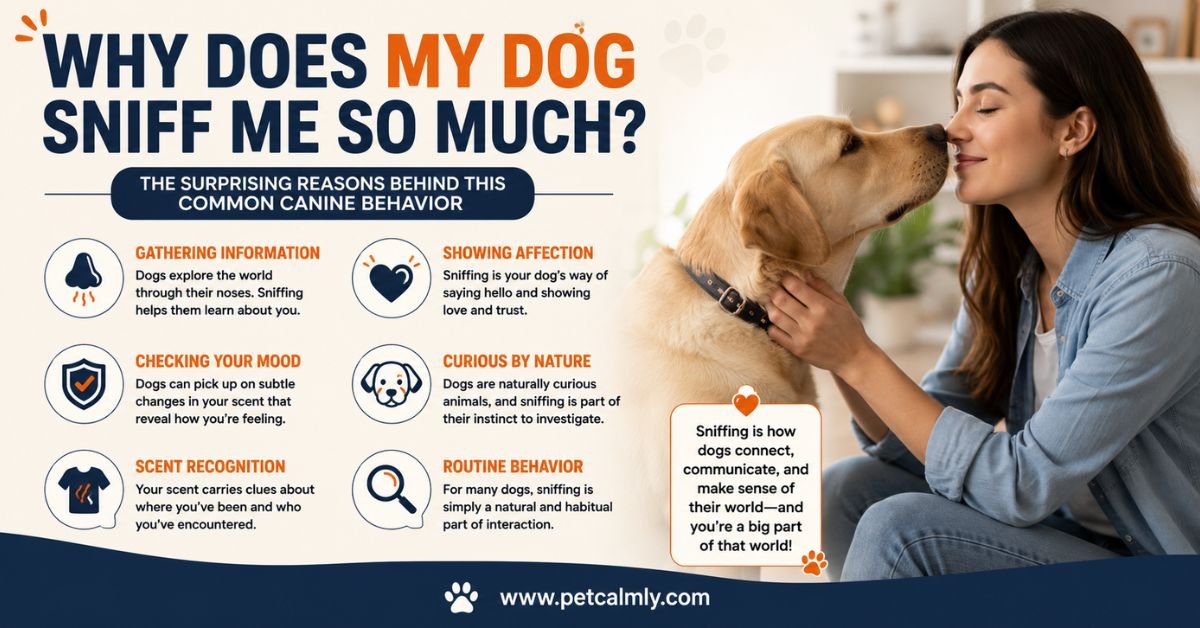
When your dog sniffs you, they’re gathering detailed information: Where have you been? Who have you been around? What have you been eating? What’s your emotional state? Are you sick? This isn’t random curiosity—it’s essential data collection that helps your dog navigate their relationship with you and their environment.
Pack-living wolves (and domestic dogs living in multi-dog households) greet each other constantly by sniffing, often spending several seconds nose-to-nose or nose-to-rear. This is how they say hello, check in on each other’s wellbeing, and maintain social bonds. Your dog does the same with you because they consider you part of their pack.
Dogs Are Constantly Monitoring Your Health and Emotional State
One of the most remarkable aspects of canine sniffing is their ability to detect physiological changes you might not even be aware of yourself. Dogs can identify infections, changes in blood sugar, approaching seizures, and shifts in hormone levels through scent alone.
Research has shown that dogs can differentiate between the breath of people with diabetes and those without, detect some cancers through scent, and recognize when their owners are anxious or stressed. They’re doing this through volatile organic compounds (VOCs) released through your skin, breath, and sweat—chemicals that tell a detailed story about your current physical and emotional state.
This isn’t mystical. It’s biology. Your dog’s olfactory system is wired to detect micro-changes in your chemistry that your own conscious mind might miss. If your dog sniffs you more intently when you’re stressed, sick, or upset, they’re responding to real chemical signals your body is sending out.
Sniffing Is How Dogs Gather Information About Their Environment
When your dog sniffs you, they’re also sniffing everything you’ve been in contact with: the street you walked on, other animals you passed, the food you’ve touched, the people you’ve hugged. Your body becomes a scent library that tells your dog about the world beyond your home.
This is why dogs often greet their owners with an intense sniff—they’re catching up on hours or days of information they couldn’t access directly. It’s equivalent to you scrolling through someone’s social media to see what they’ve been up to. Except dogs do it in seconds and gather vastly more detailed information.
Some dogs are more invested in this “news gathering” than others. Breeds with strong scenting heritage—like Beagles, Bloodhounds, Basset Hounds, and Spaniels—may sniff more intensely and more frequently than toy breeds. This is genetic, not a sign of a problem.
Sniffing Provides Comfort and Strengthens Bonding
Many dogs sniff their owners repeatedly when they’re seeking reassurance, comfort, or just connection. The act of sniffing releases endorphins in dogs’ brains, making it a self-soothing behavior as well as a communication method.
If your dog sniffs you while you’re petting them, sitting together, or after you come home, they’re deepening your bond. They’re familiarizing themselves with your scent, which is genuinely comforting to them. You likely do similar things without thinking about it—hugging someone you love, holding their hand, sitting close enough to notice their familiar smell. Dogs experience similar comfort through scent.
Dogs who are especially attached to their owners often sniff them more frequently. This is a sign of security and affection, not clinginess. A dog who feels safe and loved is more likely to check in with you through sniffing throughout the day.
Anxiety and Uncertainty Can Trigger Excessive Sniffing
Just as sniffing can be soothing, it can also be a self-soothing behavior when a dog is anxious or uncertain. Some dogs sniff repeatedly when they’re nervous about a situation, worried about their owner’s emotional state, or stressed about a change in their environment.
If your dog sniffs you intensely before a thunderstorm, during a stressful car ride, or when they sense your own tension, they may be trying to regulate their own anxiety. The sniffing itself is calming, but it also serves another purpose: they’re checking on you to make sure the situation is safe and you’re handling it okay.
This is why anxious dogs sometimes sniff their owners obsessively. It’s a coping mechanism. Understanding this distinction—between normal, healthy sniffing and anxiety-driven sniffing helps you respond appropriately (we’ll cover this more below).
Is Your Dog Sniffing You Excessively? How to Tell the Difference
Normal sniffing and excessive sniffing look different, though the line between them isn’t always crystal clear. Here’s how to assess whether your dog’s sniffing behavior falls within a healthy range or suggests an underlying issue:
Signs of Normal, Healthy Sniffing
- Your dog sniffs you when greeting you (after you come home or wake up)
- They sniff your hands, face, or body for 5-30 seconds, then move on to other activities
- Sniffing happens several times throughout the day but doesn’t interfere with normal play, sleep, or eating
- Your dog sniffs you when you’re stressed or upset, then seems reassured
- They sniff you during petting or cuddling sessions
- The behavior increases when you’ve been away or around other people/animals
- Your dog seems calm and content during and after sniffing
All of these are normal expressions of canine communication and bonding.
Signs Your Dog Might Be Sniffing Too Much
- Your dog sniffs you constantly and obsessively, ignoring other activities
- They sniff your specific body parts (genital area, armpits, breath) repeatedly for minutes at a time
- Sniffing is accompanied by other anxious behaviors (pacing, panting, whining)
- The behavior intensifies to the point where it’s disruptive (won’t stop even when redirected)
- Your dog seems distressed or fixated during sniffing, not calm
- Excessive sniffing coincides with changes in their eating, sleeping, or elimination habits
- Your dog sniffs you so much they ignore food, toys, or other rewards
The key question is: Does the sniffing seem like a natural behavior they’re doing for connection and information, or does it seem compulsive and anxiety-driven?
When Constant Sniffing Might Signal a Problem
While most sniffing is completely normal, there are situations where excessive sniffing warrants a closer look. The issue might be behavioral, medical, or environmental—and sometimes a combination of factors.
Medical Issues That Can Cause Excessive Sniffing
Certain health conditions can trigger obsessive sniffing behavior:
Gastrointestinal issues are one of the most common culprits. Dogs with digestive problems, food sensitivities, or intestinal parasites sometimes develop compulsive sniffing, often directed at their own rear end or the rear ends of people in the household. They’re responding to abnormal scents or sensations.
Neurological issues can also manifest as repetitive sniffing. Conditions affecting the brain or nervous system sometimes show up as obsessive behaviors, including excessive sniffing. If your dog’s sniffing seems truly compulsive (they can’t stop even when redirected), this is worth investigating with your veterinarian.
Allergies and skin conditions occasionally trigger excessive sniffing because the dog is responding to itching, irritation, or unusual scent changes. A dog with an ear infection or skin problem might sniff themselves or their owners more frequently.
Hormonal changes related to the estrous cycle in female dogs, thyroid imbalances, or other endocrine issues can sometimes manifest as behavioral changes, including increased sniffing.
Pain or discomfort can make dogs more reactive and clingy. Some dogs sniff their owners compulsively because they’re seeking reassurance during pain or discomfort.
If you suspect a medical cause, your veterinarian can help rule out health issues through examination and, if necessary, diagnostic testing.
Behavioral and Environmental Factors
Beyond medical issues, environmental stress and behavioral concerns can drive excessive sniffing:
Separation anxiety sometimes manifests as obsessive sniffing when you’re home—your dog is intensely checking in because they’re worried about separation. They may also sniff your belongings excessively when you leave.
Lack of mental stimulation can lead to repetitive behaviors, including obsessive sniffing. Bored dogs sometimes develop behavioral compulsions as a way to occupy themselves.
Changes in routine or environment can trigger temporary increases in sniffing as dogs try to gather information and feel more in control of uncertain situations.
Social anxiety may show up as excessive sniffing—the dog is anxious about the interaction itself and sniffing is a way to manage that anxiety.
History of stress or trauma can make some dogs more clingy and dependent on checking in through sniffing. They’re seeking ongoing reassurance that they’re safe.
The encouraging news: Most behavioral causes of excessive sniffing respond well to environmental adjustments, additional exercise, mental enrichment, and sometimes training or behavioral medication.
How to Respond to Your Dog’s Sniffing Behavior
Your response to your dog’s sniffing matters. While normal sniffing doesn’t need management, how you react shapes whether the behavior becomes reinforced or naturally balances out.
Healthy Responses to Normal Sniffing
When your dog sniffs you in normal, relaxed ways:
Let it happen. There’s no need to discourage natural sniffing behavior. It’s communication and connection. Brief sniffing—a few seconds when greeting you—is fine and even healthy.
Engage with them after. When your dog sniffs you in greeting, acknowledge them afterward. Pet them, talk to them, or play with them. This reinforces that you’re happy to connect with them.
Sniff them back (sort of). Dogs appreciate when owners engage with their senses. Let them lick your face or hands occasionally, or gently touch your nose to theirs. It’s weird by human standards, but it’s normal dog-to-dog bonding.
Notice patterns. If your dog sniffs you more when you’re stressed, upset, or have been away, recognize this as attentiveness. They’re checking on you. It’s sweet, even if it’s slightly annoying at 6 AM.
Responses to Excessive or Problematic Sniffing
When sniffing becomes obsessive, disruptive, or seems anxiety-driven, you want to address it without punishment, which will only create more anxiety:
Redirect the behavior. When your dog starts obsessive sniffing, gently redirect them to a toy, a puzzle, or a different activity. “Let’s play with your toy instead.” Make the alternative rewarding.
Increase exercise and mental stimulation. Excessive sniffing often reflects under-stimulation or anxiety. Additional walks, playtime, nose work, and puzzle toys can significantly reduce compulsive behaviors.
Create predictable routines. Dogs feel more secure with consistent schedules. Regular meal times, walk times, and play times can reduce anxiety-driven sniffing.
Use desensitization if appropriate. If your dog sniffs you obsessively when you’re stressed, doing anxiety-reduction exercises (like meditation or breathing exercises that calm your own nervous system) can reduce their anxiety-driven checking-in behavior.
Stay calm. Don’t react with frustration or punishment. Your dog will sense your irritation and become more anxious, which typically makes sniffing worse, not better.
Consider environmental modifications. If stress or changes are triggering excessive sniffing, address the underlying cause. More time with you, additional playtime, or changes to their living space might help.
Training Tips for Managing Excessive Sniffing
If your dog’s sniffing has become truly excessive and is interfering with normal life, training strategies can help:
The “Leave It” Command
Teaching a reliable “leave it” command gives you a tool to redirect obsessive sniffing. Practice this command with treats and toys, then gradually practice it during mild sniffing episodes when your dog is calm.
Engagement Strategies
Train your dog to engage with you on cue. Teach them to make eye contact, sit for attention, or bring you a toy when they want to connect. These alternative behaviors can replace obsessive sniffing as a way to get your attention or reassurance.
Nose Work and Scent Games
Ironically, channeling your dog’s sniffing into structured activities—like hide-and-seek games, scent tracking, or puzzle toys—can actually reduce compulsive sniffing. You’re giving the sniffing instinct an appropriate outlet.
Duration Management
Start with short interactions and gradually increase duration. If your dog sniffs obsessively for 10 minutes, interrupt after 2-3 minutes with play or a puzzle toy. Over time, this can reset their compulsion threshold.
Reward Non-Sniffing Time
Actively reward your dog when they’re not sniffing you obsessively. Praise, treats, and play during calm moments reinforce balanced behavior.
When to Call Your Vet: Red Flags and Warning Signs
Excessive sniffing warrants a veterinary visit if it’s accompanied by any of these signs:
- Changes in eating habits or appetite
- Changes in drinking or urination patterns
- Weight loss or weight gain
- Lethargy or unusual tiredness
- Vomiting, diarrhea, or constipation
- Hair loss, skin irritation, or unusual odors
- Limping, stiffness, or apparent pain
- Unusual aggressiveness or personality changes
- Seizures or loss of consciousness
- The sniffing behavior is truly compulsive and can’t be interrupted
Additionally, if your dog’s sniffing is so excessive that it’s interfering with their quality of life they won’t play, eat normally, or sleep that’s reason to contact your vet.
Your veterinarian can rule out medical issues and, if appropriate, refer you to a veterinary behaviorist. In some cases, anti-anxiety medication may be temporarily helpful while you work through behavioral or environmental factors.
Frequently Asked Questions
1: Why does my dog sniff my face and mouth when I wake up?
Your dog is gathering information about your health and emotional state, plus checking on your wellbeing overnight. They’re also greeting you. Dogs have learned that our faces and breath tell them a lot about how we’re doing, so face-sniffing is particularly common upon greeting. It’s totally normal and actually kind of sweet, even if it’s less so at 6 AM.
2: Is it normal for my dog to sniff me constantly when I’m anxious or upset?
Absolutely yes. Dogs are incredibly attuned to human emotional states. When you’re anxious, stressed, or upset, your body releases stress hormones like adrenaline and cortisol that change your scent. Your dog can detect these changes and becomes more attentive, which often shows up as increased sniffing. They’re checking on you and trying to help. Some research suggests dogs can even benefit people with anxiety simply through this attentive presence.
3: Why does my dog sniff my groin area so much?
This is a common question and, thankfully, a normal behavior. Groin area sniffing is extremely common in dogs they can detect pheromones and hormonal changes most easily from this area. It’s also true for the underarms and feet, which is why dogs sniff these areas intensely. It’s not sexual behavior or aggression; it’s simply where the most information is concentrated. If the sniffing is obsessive to the point of being uncomfortable for you or disruptive to your dog’s normal life, that warrants closer attention. But normal sniffing in this area? Totally standard dog behavior.
4: Should I stop my dog from sniffing me?
No—not unless the sniffing is compulsive, anxiety-driven, or excessive to the point of interference. Normal sniffing is healthy communication and bonding. Short sniffing sessions are great. However, if sniffing is obsessive or happening constantly, you can redirect the behavior to other activities, increase mental and physical stimulation, and consult with your vet to rule out medical issues or anxiety.
5: Can my dog’s sniffing tell me something is wrong with my health?
Possibly, though not reliably. Dogs can detect some serious conditions certain cancers, seizures, blood sugar changes in diabetics, and infections through scent. However, you shouldn’t rely on your dog’s sniffing as a diagnostic tool. If your dog is sniffing you differently than usual or intensely targeting a specific area of your body, it’s worth noting, but see your own doctor if you have health concerns. Your dog’s behavior might be a helpful additional indicator, but it’s not a substitute for professional medical attention.
6: How can I tell if my dog’s sniffing is obsessive versus normal?
Normal sniffing lasts seconds to a minute, happens throughout the day but doesn’t dominate your dog’s time, and the dog seems relaxed during and after sniffing. Obsessive sniffing is fixated (your dog sniffs the same spot for many minutes), compulsive (your dog can’t stop even when redirected), and often accompanied by anxiety signals. If sniffing is interrupting sleep, play, eating, or your own comfort regularly, that’s a sign it’s moved from normal behavior into problem territory.
More Information About Pets, Please Visit Our Website: Why Does My Dog Howl at Night
How to Cut Dog Nails That Are Black
Dog Care in Winter
How to Calm Puppy Separation Anxiety
12 Week Old Puppy Crying at Night?
Dog Separation Anxiety Symptoms and Solutions
Why Do Dogs Lick Their Paws at Night?
Best Calming Music for Dogs
Conclusion
Your dog’s constant sniffing isn’t random, and it’s not something you need to eliminate. It’s one of the primary ways your dog loves you, stays connected to you, and gathers information about your wellbeing. In most cases, it’s completely normal and genuinely endearing once you understand what they’re doing.
That said, if the sniffing becomes obsessive, anxiety-driven, or accompanied by other changes, it’s worth investigating. Your veterinarian can rule out medical causes, and environmental adjustments or training can address behavioral factors.
The remarkable truth is that your dog’s nose is a bridge between your two worlds. While you navigate the world primarily through sight and sound, your dog does it through scent. When they sniff you, they’re sharing that world with you—reading your story, checking on your wellbeing, and deepening your bond. The fact that it sometimes happens at inconvenient moments is a small price for that kind of attention and love.