Short direct answer
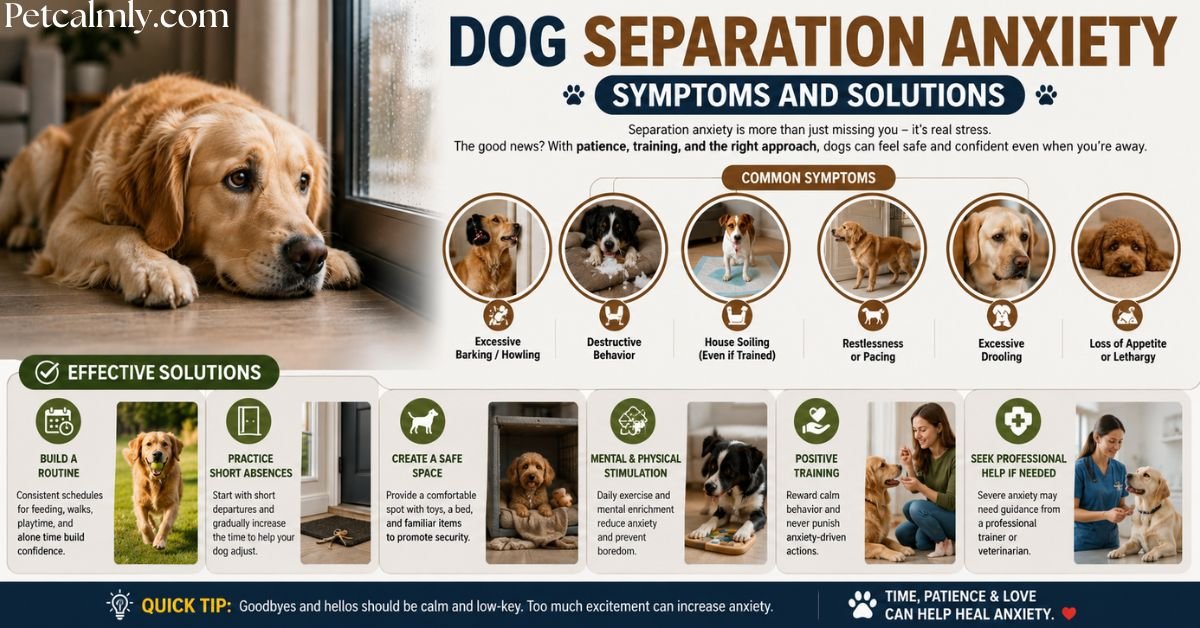
Dog separation anxiety happens when a dog becomes extremely stressed when left alone or separated from their favorite person. Common symptoms include barking, destructive behavior, pacing, accidents indoors, and panic-like reactions. Helpful solutions usually involve gradual alone-time training, mental stimulation, routine changes, calming techniques, and sometimes guidance from a veterinarian or certified dog behaviorist.
Dog Separation Anxiety Symptoms and Solutions: A Complete Pet Owner’s Guide
Few things feel more heartbreaking than leaving home and knowing your dog may panic the moment the door closes. Many owners first notice small signs whining at the door, torn cushions, nonstop barking, or anxious pacing near windows. Over time, the behavior can become exhausting for both the dog and the family.
The good news is that separation anxiety in dogs can often improve with patience, consistency, and the right approach.
In this guide, you’ll learn:
- Common dog separation anxiety symptoms
- Why some dogs develop attachment-related stress
- How to calm an anxious dog safely
- Training methods that actually help
- Mistakes that can worsen the problem
- When professional or veterinary help may be needed
Whether you have a new puppy, rescue dog, or older companion suddenly struggling to stay alone, this article will help you understand what is happening and what to do next.
What Is Separation Anxiety in Dogs?
Separation anxiety is a behavioral condition where a dog experiences intense stress when separated from a person they are emotionally attached to.
This is not simple boredom or mild whining.
A dog with true separation anxiety may behave as though something terrible has happened the second their owner leaves. Some dogs panic within minutes. Others become distressed when they notice “departure clues” like keys jingling, shoes being put on, or a work bag appearing.
In many homes, the anxiety cycle quietly builds over weeks or months before owners realize how serious it has become.
10 Common Dog Separation Anxiety Symptoms
Most Recognizable Signs
Dogs show anxiety in different ways, but these symptoms are especially common:
- Excessive barking or howling when alone
- Scratching doors or windows
- Destroying furniture, blinds, or carpets
- Chewing household items
- Pacing repeatedly
- Drooling heavily
- Trying to escape crates or rooms
- Indoor urination or defecation despite house training
- Refusing food when left alone
- Following owners constantly at home
Some dogs even injure themselves while attempting to escape.
Emotional Signs Many Owners Miss
Not all symptoms look dramatic.
Some anxious dogs become unusually quiet or emotionally withdrawn.
You may notice:
- Clingy behavior
- Restlessness before departures
- Shaking when you prepare to leave
- Sleeping less during the day
- Constant monitoring of your movement
- Panting without heat or exercise
- Difficulty settling down
A dog that cannot relax unless you are nearby may already be struggling emotionally.
What Causes Separation Anxiety in Dogs?
There is rarely one single cause. Usually, several emotional and environmental factors combine together.
1. Sudden Changes in Routine
Dogs thrive on predictability.
A major schedule change can trigger anxiety, such as:
- Returning to office work after staying home for months
- Moving to a new house
- A child leaving for college
- Changes in feeding or walking schedules
Many dogs developed separation-related stress after owners suddenly changed work-from-home routines.
2. Adoption or Rehoming Stress
Rescue dogs sometimes carry emotional uncertainty from previous experiences.
Even loving homes can feel unpredictable at first.
Some newly adopted dogs become deeply attached to one person and panic when separated because they fear abandonment again.
3. Lack of Confidence
Certain dogs naturally struggle with independence.
Breeds known for strong human bonding may be more prone to separation stress, including:
- Labrador Retrievers
- Border Collies
- German Shepherds
- Vizslas
- Cavalier King Charles Spaniels
That does not mean every dog from these breeds will develop anxiety, but emotional attachment can be stronger.
4. Traumatic Experiences
Stressful events may contribute, including:
- Long shelter stays
- Previous neglect
- Loud household conflicts
- Sudden isolation
- Medical hospitalization
Dogs remember emotional experiences more than many owners realize.
Separation Anxiety vs Normal Dog Behavior
Many owners wonder whether their dog truly has anxiety or is simply energetic or mischievous.
Here is a helpful comparison:
| Behavior | Normal Dog Behavior | Separation Anxiety |
|---|---|---|
| Barking | Occasional | Persistent panic barking |
| Chewing | During play or teething | Destructive panic chewing |
| Following owner | Mild attachment | Extreme clinginess |
| Crate behavior | Settles after a while | Attempts escape frantically |
| Accidents indoors | Rare | Happens mainly when alone |
| Greeting owner | Excited | Over-the-top emotional reaction |
The key difference is panic intensity.
An anxious dog is not “being bad.” The dog is emotionally distressed.
How Long Does Separation Anxiety Last?
Some mild cases improve within weeks with consistent training.
More severe cases may take several months.
Recovery depends on:
- How long the anxiety has existed
- The dog’s personality
- Consistency of training
- Household routine
- Whether panic has become deeply conditioned
Improvement is usually gradual rather than instant.
Owners often notice small wins first:
- Less pacing
- Shorter barking periods
- More relaxed body language
- Better independence indoors
Those small improvements matter.
7 Signs Your Dog’s Anxiety Is Getting Worse
Watch carefully for escalating stress behaviors.
Warning Signs Include
- Self-injury during escape attempts
- Broken teeth or bleeding paws
- Complete refusal to eat alone
- Extreme panting or drooling
- Aggression triggered by departures
- Panic attacks immediately after cues like picking up keys
- Destruction increasing over time
Severe anxiety can seriously affect a dog’s emotional and physical health.
Practical Solutions for Dog Separation Anxiety
1. Start Independence Training at Home
One of the biggest mistakes owners make is staying physically close to their dog constantly.
Dogs need to learn that distance is safe.
Try This:
- Move around the house without always inviting your dog
- Use baby gates briefly
- Encourage calm time on a dog bed
- Reward relaxed independent behavior
Even learning to rest in another room can help build confidence.
2. Practice Very Short Departures
This is one of the most effective techniques.
Do not start with long absences.
Instead:
- Leave for 10–30 seconds
- Return calmly
- Repeat multiple times daily
- Gradually increase duration
The goal is teaching your dog:
“People leave and always come back.”
Progress too quickly can restart panic.
3. Avoid Emotional Goodbye Routines
Many owners unintentionally increase anxiety.
Examples include:
- Repeatedly saying “I’ll miss you”
- Hugging nervously before leaving
- Making departures dramatic
Dogs often absorb human tension.
Instead, keep exits calm and predictable.
4. Create Positive Alone-Time Associations
Give your dog something enjoyable only when alone.
Helpful options include:
- Frozen food puzzles
- Long-lasting chew toys
- Snuffle mats
- Stuffed enrichment toys
Mental stimulation can redirect emotional energy.
5. Increase Daily Exercise
A mentally and physically under-stimulated dog may struggle more with stress.
Helpful activities include:
- Structured walks
- Scent games
- Obedience training
- Puzzle feeders
- Fetch sessions
- Controlled socialization
A calmer body often supports a calmer mind.
Best Daily Routine for an Anxious Dog
Consistency helps many anxious dogs feel safer.
Example Routine
Morning
- Potty break
- Exercise walk
- Breakfast puzzle feeder
- Calm quiet time
Midday
- Short training session
- Independent relaxation practice
- Enrichment activity
Evening
- Moderate exercise
- Calm family interaction
- Predictable bedtime routine
Dogs often relax when life becomes more predictable.
4 Common Mistakes That Make Separation Anxiety Worse
Punishing Destructive Behavior
Dogs do not connect punishment with anxiety episodes that happened hours earlier.
Punishment may increase fear and insecurity.
Leaving Dogs Alone Too Long Too Soon
Many owners accidentally push their dog past emotional limits.
A dog that panics for hours is not “learning independence.”
The dog is rehearsing fear repeatedly.
Ignoring Early Signs
Small symptoms can become deeply rooted habits if ignored for months.
Early intervention is usually easier.
Over-Attachment at Home
Constant cuddling is not automatically harmful, but dogs also need emotional resilience.
Encourage healthy independence alongside affection.
Can Crate Training Help Separation Anxiety?
Sometimes but not always.
For some dogs, crates create safety and structure.
For others, confinement increases panic dramatically.
A Crate May Help If Your Dog:
- Already relaxes comfortably inside it
- Sleeps there willingly
- Associates it with safety
Avoid Forced Crating If Your Dog:
- Breaks teeth trying to escape
- Panics intensely
- Injures themselves inside
- Shows worsening fear
Never use a crate as punishment.
Helpful Products for Separation Anxiety
Products alone rarely solve severe anxiety, but they may support training.
Potentially Helpful Tools
- Puzzle feeders
- Calming dog beds
- White noise machines
- Dog cameras with audio
- Adaptil pheromone diffusers
- Slow feeders
- Safe chew toys
Choose products that encourage relaxation and mental engagement rather than overstimulation.
How Puppies Show Separation Anxiety
Puppies naturally dislike being alone at first, so some whining is normal.
However, ongoing panic behaviors may indicate developing anxiety.
Puppy Warning Signs
- Constant screaming in crate
- Extreme distress after short absences
- Refusal to settle independently
- Destructive chewing linked to departures
Early training matters greatly during puppyhood.
Teaching calm independence gently can prevent bigger problems later.
Separation Anxiety in Older Dogs
Senior dogs may suddenly develop anxiety due to:
- Vision or hearing loss
- Cognitive decline
- Reduced confidence
- Health discomfort
An older dog becoming suddenly clingy should not automatically be labeled “behavioral.”
A veterinary checkup is important.
When Should You Be Concerned?
Some cases go beyond simple training challenges.
Seek Veterinary or Professional Help If:
- Your dog harms themselves
- Panic lasts for hours
- Anxiety suddenly appears in older dogs
- House-training suddenly regresses
- Your dog stops eating when alone
- Escape attempts become dangerous
- Aggression develops
- Symptoms are severe despite training
A veterinarian can rule out medical causes and discuss treatment options if needed.
In moderate-to-severe cases, a certified dog behaviorist can create a structured behavior plan tailored to your dog.
What Should Pet Owners Do?
If your dog struggles with separation anxiety, focus on steady progress rather than perfection.
Practical Action Plan
Start With These Steps
- Keep departures calm
- Build short successful alone periods
- Add daily enrichment
- Avoid punishment
- Create predictable routines
- Encourage confidence indoors
- Track improvement in small stages
Quick Checklist for Owners
Helpful Habits
- Reward calm behavior
- Exercise consistently
- Use food enrichment
- Practice independence daily
- Stay patient
Avoid
- Yelling after accidents
- Sudden long absences
- Dramatic goodbyes
- Inconsistent routines
- Forcing fearful situations
Real-Life Example: Mild vs Severe Anxiety
Mild Case
A dog whines for two minutes after the owner leaves but settles with a chew toy afterward.
This may improve fairly quickly with routine training.
Severe Case
A dog scratches doors nonstop, drools excessively, refuses food, and destroys walls within minutes of being alone.
This level of panic usually needs structured behavioral support and possibly veterinary guidance.
Understanding the difference helps owners respond appropriately.
Can Dogs Fully Recover From Separation Anxiety?
Many dogs improve significantly.
Some fully recover and become comfortable staying alone for reasonable periods.
Others remain emotionally sensitive but manageable with routine and training.
The biggest factor is consistency.
Dogs learn emotional safety slowly through repeated calm experiences.
How to Prevent Separation Anxiety Before It Starts
Prevention is often easier than treatment.
Prevention Tips
- Teach puppies short alone sessions early
- Avoid constant togetherness all day
- Encourage independent rest
- Rotate enrichment activities
- Maintain predictable routines
- Avoid making departures emotionally intense
Confidence-building should start early whenever possible.
Frequently Asked Questions
How do I know if my dog has separation anxiety or boredom?
Bored dogs may chew or bark occasionally, but anxious dogs show panic-related behaviors like pacing, drooling, escape attempts, and intense distress specifically when left alone.
Can dogs outgrow separation anxiety?
Some mild cases improve with maturity and training, but many dogs need active behavior support. Ignoring the problem often allows it to worsen over time.
Should I ignore my dog when I come home?
You do not need to completely ignore your dog, but keeping greetings calm and low-key can help reduce emotional extremes connected to departures and arrivals.
What dog breeds are most prone to separation anxiety?
Highly social breeds like Labrador Retrievers, Border Collies, German Shepherds, and Vizslas may be more vulnerable because they bond strongly with people.
Is medication ever used for dog separation anxiety?
In severe cases, veterinarians may recommend medication alongside training. Medication alone usually works best when combined with behavior modification.
Can leaving the TV on help dogs with anxiety?
Background noise may comfort some dogs by reducing silence or outside triggers, but it is usually only a small part of a broader anxiety-management plan.
More Information About Pets, Please Visit Our Website: Critical Signs of Stress in a Dog at Home
Conclusion
Dog separation anxiety can feel overwhelming, especially when you come home to destruction, nonstop barking complaints, or a visibly distressed pet. But behind those behaviors is usually fear, confusion, and emotional dependence not stubbornness.
Most dogs improve through patience, predictable routines, gradual independence training, and calm leadership.
Progress may happen slowly at first. One quieter departure, one relaxed nap alone, or one successful short absence can be an important step forward.
If symptoms become severe or dangerous, professional veterinary or behavioral support is worth seeking early.
With consistency and understanding, many anxious dogs learn that being alone does not mean being abandoned and that sense of security can completely change their quality of life.