Short direct answer
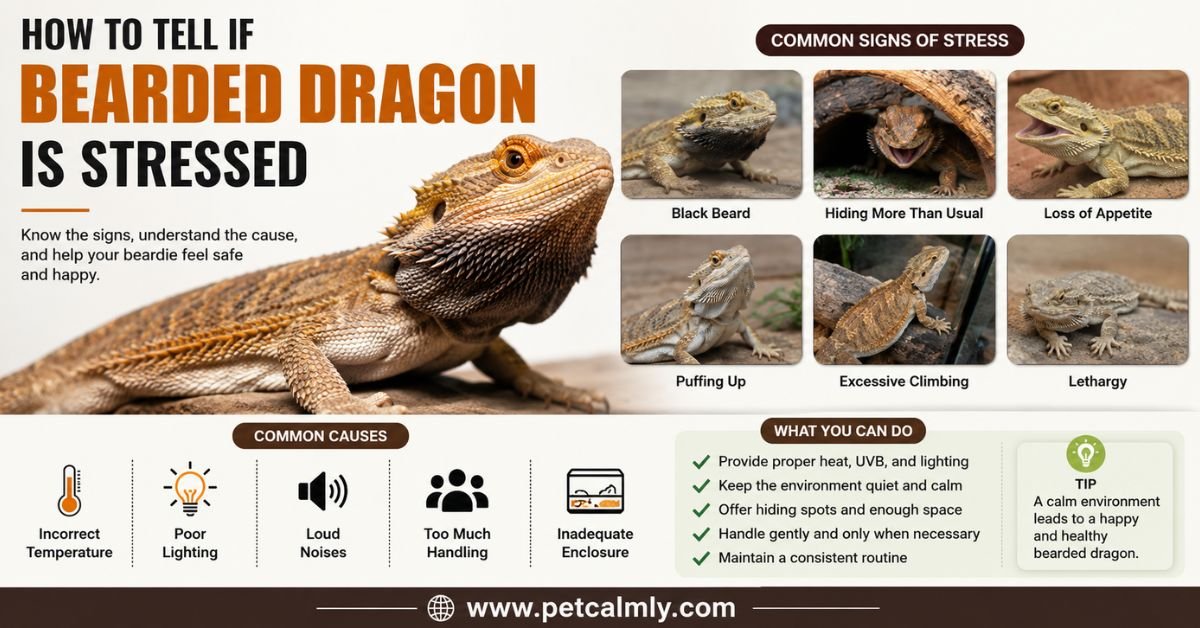
A stressed bearded dragon usually shows a darkened or black beard, glass surfing (scratching at the tank walls), puffing up its body, hiding for long periods, or refusing food. These signs mean your dragon feels unsafe, uncomfortable, or overwhelmed by something in its environment temperature, handling, a new tank, or an unseen threat like a reflection or another pet. Most stress resolves once the trigger is identified and fixed, but stress that lasts more than a few days, or comes with weight loss or lethargy, should be checked by a reptile vet.
If you’ve noticed your bearded dragon acting “off” lately, you’re already doing the right thing by paying attention. Bearded dragons are surprisingly expressive animals once you learn their language you just have to know what you’re looking at.
Why Bearded Dragons Get Stressed in the First Place
Bearded dragons are desert animals with a strong instinct to avoid anything that feels unpredictable. In the wild, being caught off guard usually means becoming something else’s meal, so their nervous system is wired to react fast to anything unfamiliar. A new smell, an odd sound, a housemate cat pressing its face against the glass any of it can register as a threat.
This is worth remembering when your dragon starts acting differently, because owners often assume something is “wrong” with the animal itself. More often, the dragon is reacting completely normally to something in its environment that needs to change. Once you start reading stress signals instead of guessing, caring for a bearded dragon gets a lot less stressful for you too.
Physical Signs of a Stressed Bearded Dragon
These are the signs you’ll usually notice first, because they show up on the body itself.
A Black or Darkened Beard
This is probably the most well-known bearded dragon stress signal, and for good reason it’s hard to miss. When a dragon feels threatened, annoyed, or overstimulated, blood flow changes under the throat skin, and the beard darkens, sometimes turning almost fully black.
A black beard isn’t always bad news, though. Male dragons also do this during breeding displays or when asserting dominance over another dragon, so context matters. If the black beard shows up right after a stranger walks by the tank, a loud noise, or being picked up too abruptly, it’s almost certainly stress rather than a hormonal display.
Glass Surfing or Repetitive Pacing
Glass surfing is when a dragon repeatedly climbs, scratches, or presses against the tank walls, almost like it’s trying to walk through the glass. It’s one of the clearest signs that a dragon feels trapped, overstimulated, or is picking up on a threat it can’t get away from commonly a reflection it mistakes for a rival dragon, or a household pet staring in from outside the enclosure.
Owners sometimes mistake this for excitement or curiosity. In reality, it’s closer to panic, and it can wear down a dragon’s nose and claws if it continues for long stretches.
Stress Marks and Sudden Color Changes
Bearded dragons can shift their skin tone for temperature regulation, but sudden dark patches, blotchy stress marks along the belly or beard, or a noticeably duller color can also point to stress, especially if the change happens quickly and doesn’t match a basking or cooling pattern.
Puffing Up or Flattening the Body
A dragon that suddenly puffs up its body and gapes its mouth is usually trying to look bigger to a perceived threat — this is a defensive response, not aggression for its own sake. Flattening the body against the substrate, on the other hand, is often an attempt to appear smaller and less noticeable, which is a more submissive stress response.
Appetite Loss or Digestive Changes
A dragon that suddenly stops eating, eats far less than usual, or has irregular bowel movements may be stressed rather than sick — though the two aren’t always easy to tell apart at home. Stress can suppress appetite in reptiles the same way it does in many animals, and prolonged stress can also affect digestion.
If appetite loss lasts more than a few days, or is paired with weight loss, this moves from a stress concern into a “check with a vet” situation, which we’ll cover further down.
Behavioral Signs Your Bearded Dragon Is Anxious
Not every stress signal is visible on the body. Some show up purely in behavior, and these are easy to miss if you’re not watching for them.
Hiding More Than Usual
Bearded dragons do rest and burrow occasionally, but a dragon that suddenly hides for most of the day, avoids basking, or refuses to come out even for food is often signaling that something in its environment feels unsafe.
Defensive or Aggressive Postures
Hissing, lunging, tail whipping, or biting at the glass are all defensive stress responses. A dragon acting this way isn’t being “mean” it’s reacting to feeling cornered or threatened, often by handling that happened too quickly, too often, or without warning.
Excessive Sleeping or Sluggishness
A dragon that sleeps far more than normal, seems slow to react, or shows little interest in basking may be dealing with chronic stress, poor tank conditions, or an underlying illness. This symptom overlaps a lot with health issues, so it deserves closer attention rather than being brushed off.
Arm Waving: Stress or Just Communication?
Arm waving where a dragon lifts one front leg and rotates it slowly is often mistaken for a stress sign, but it’s usually the opposite. It’s typically a submissive, non-threatening social signal, often directed at another dragon, a reflection, or even a person. On its own, arm waving isn’t something to worry about. It only becomes a concern when paired with other stress signs like a black beard or glass surfing at the same time.
What Causes Stress in Bearded Dragons
Understanding the “why” behind stress signals makes them far easier to fix, instead of just monitoring and hoping they pass.
Incorrect Temperature or Tank Setup
Bearded dragons need a clear temperature gradient a hot basking spot, a cooler side of the tank, and appropriate UVB lighting. When the setup is off, dragons can’t thermoregulate properly, and that alone creates ongoing physical stress, even before any behavioral trigger is involved.
Too Much Handling, or Too Little
New owners often want to hold their dragon constantly, especially early on, but frequent or sudden handling before a dragon has settled into its enclosure can be overwhelming. On the flip side, dragons that are handled rarely can become more reactive and defensive when they finally are picked up, simply because they’re unused to it.
A New Enclosure or Recent Move
Moving to a new tank, a new room, or even a new house resets a dragon’s sense of safety. It takes time often one to two weeks for a dragon to settle in and start behaving normally again.
Other Pets, Reflections, or Loud Environments
Cats, dogs, or even other reptiles nearby can trigger ongoing stress if the dragon can see or sense them. Reflections off glass tank walls are a surprisingly common hidden cause, since the dragon may perceive its own reflection as a rival.
Illness, Pain, or Parasites
Sometimes what looks like environmental stress is actually a physical health issue — parasites, respiratory infections, or impaction can all cause behavior that looks like stress. This is one of the main reasons stress signs that don’t resolve after environmental changes deserve a vet visit rather than more waiting.
Common Mistakes Owners Make When Reading Stress Signs
- Assuming a black beard always means aggression, when context (timing, situation) usually tells a different story.
- Confusing arm waving with a warning sign, when it’s usually a calm social gesture.
- Increasing handling to “comfort” a stressed dragon, which often backfires and increases stress further.
- Waiting too long to check tank temperatures, since an incorrect setup is one of the most common and most fixable root causes.
- Treating appetite loss as pickiness rather than a possible stress or health signal.
How to Calm a Stressed Bearded Dragon: A Practical Guide
- Check the tank temperatures first. Confirm the basking spot, cool side, and UVB levels all match current care guidelines for your dragon’s age and size. This single step resolves a surprising amount of “unexplained” stress.
- Reduce handling temporarily. Give your dragon a few quiet days with food and tank maintenance only, so it can settle without added pressure.
- Cover reflective surfaces. If glass surfing is happening, try a background poster or non-reflective backing on the outside of the tank walls.
- Limit exposure to other pets. Move the enclosure away from areas where cats or dogs regularly pass by or stare in.
- Keep a consistent routine. Feed, mist, and handle at similar times each day — predictability itself is calming for reptiles.
- Watch, don’t rush. Give changes about a week to take effect before assuming they haven’t worked; reptiles adjust more slowly than mammals.
- Log what you see. A simple daily note of beard color, appetite, and activity helps you spot patterns and know quickly if something is improving or getting worse.
Bearded Dragon Stress vs. Normal Behavior
| Behavior | Usually Normal | Usually Stress-Related |
|---|---|---|
| Arm waving | Yes, especially toward another dragon or reflection | Only if paired with black beard or hiding |
| Black beard | During breeding displays or dominance in males | After handling, loud noise, or new surroundings |
| Basking with mouth open | Yes, this is thermoregulation (gaping to cool down) | Only if paired with puffing and dark coloring |
| Glass surfing | No — this is rarely normal | Yes, almost always a stress or trapped-feeling signal |
| Occasional short naps | Yes | Only if sleep becomes excessive or paired with lethargy |
| Refusing one meal | Yes, occasional pickiness happens | Yes, if it continues for several days |
When Should You Worry: Signs That Need a Vet
Most stress responses settle down once the trigger is removed. But some signs point toward a health issue rather than simple environmental stress, and these deserve a same-week vet visit rather than a wait-and-see approach:
- Not eating for more than 5–7 days
- Noticeable weight loss or a shrinking tail base
- Sunken eyes or lethargy that doesn’t improve with correct temperatures
- Labored or open-mouth breathing that isn’t linked to basking or heat
- Swelling, limping, or reluctance to move
- Diarrhea, blood in stool, or no bowel movement for over a week
If you’re ever unsure whether what you’re seeing is stress or illness, a reptile-experienced veterinarian is worth the visit. Bearded dragons are good at masking illness until it has progressed, which is exactly why “wait and see” isn’t always the safest approach.
What Pet Owners Should Do Next
- Recheck your tank’s temperature gradient and UVB bulb age (UVB output drops over time even if the bulb still lights up).
- Reduce handling for a few days if stress signs just started.
- Identify and remove the specific trigger where possible reflection, nearby pet, recent move.
- Keep feeding and misting on a predictable schedule.
- Track symptoms for a week; if nothing improves, or if any “vet visit” signs above appear, book an appointment with an exotics or reptile vet.
Conclusion
Reading a bearded dragon’s stress signals is really about learning to notice small shifts before they become bigger problems a slightly darker beard, one more day spent hiding, a meal skipped that normally wouldn’t be. None of these signs exist in isolation, and taken together, they usually point pretty clearly toward what’s bothering your dragon and what needs to change. Give your dragon time, keep its environment consistent, and don’t hesitate to loop in a reptile vet if physical symptoms show up alongside the stress. Most of the time, a few small environmental fixes are all it takes to get your dragon back to its calm, curious self.
More Information About Pets, Please Visit Our Website: Bearded Dragon Growth Stages
How to Handle a Bearded Dragon for the First Time
Bearded Dragon Black Beard Meaning
Signs of a Healthy Bearded Dragon
Common Bearded Dragon Health Problems
Bearded Dragon Stress Signs
Frequently Asked Questions
1: How do I know if my bearded dragon is stressed or just resting?
Resting dragons are still responsive to food, light changes, and handling, even if drowsy. A stressed dragon tends to avoid coming out, ignore food consistently, or pair inactivity with a darkened beard or puffed-up body.
2: Can bearded dragons die from stress?
Stress on its own rarely causes death directly, but prolonged stress can suppress appetite and immune function, which can lead to secondary health problems if it isn’t addressed for weeks at a time.
3: Why does my bearded dragon’s beard turn black at night?
This is usually unrelated to stress beard darkening at night can be part of normal thermoregulation and settling-in behavior as the dragon prepares to sleep.
4: Is glass surfing always a bad sign?
Almost always, yes. Unlike arm waving or beard darkening, glass surfing rarely has a “normal” explanation and usually points to a reflection, a lack of hiding spots, or feeling trapped in the enclosure.
5: How long does it take a bearded dragon to destress after a move?
Most dragons settle within one to two weeks in a new environment, provided the tank setup is correct and handling is kept minimal during that adjustment period.
6: Should I handle my bearded dragon less if it seems stressed?
Yes, at least temporarily. Reducing handling for a few days while you address the likely environmental trigger usually helps more than continuing normal handling routines.