Short direct answer
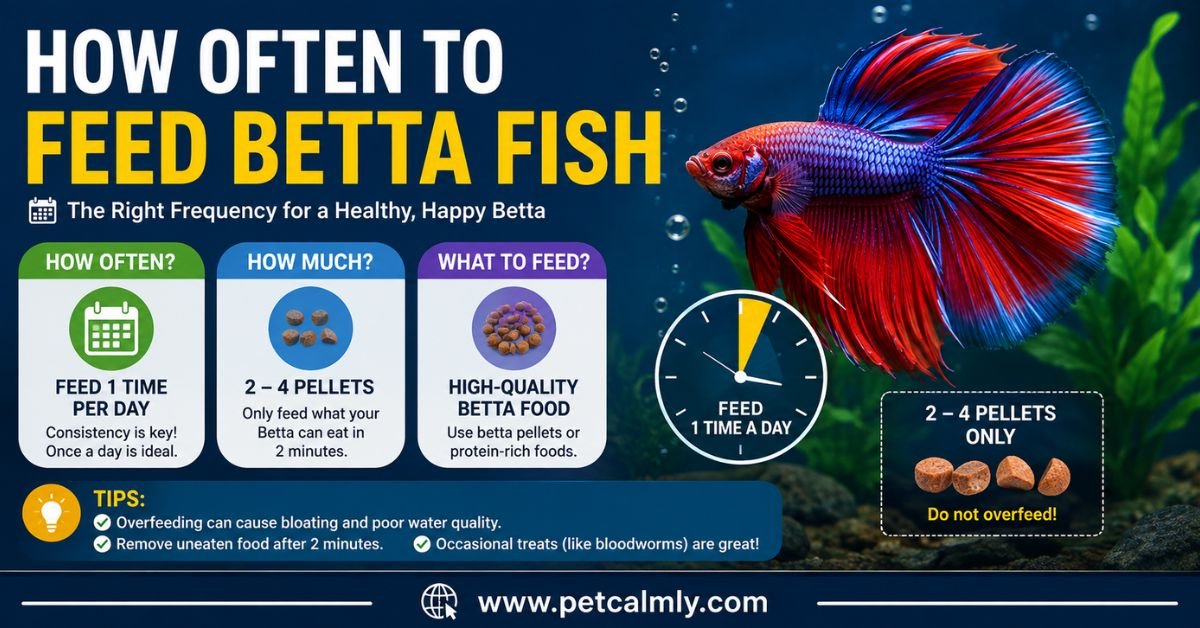
Most healthy adult betta fish do best eating once or twice a day, with one fasting day built into the week to help their digestion reset. A typical meal is small around 2 to 4 pellets, or roughly what fits inside your betta’s eyeball because their stomachs are only about the size of that same eyeball. Feed too much, too often, and you’re not being generous. You’re setting your betta up for bloating, constipation, and dirty water that stresses the whole tank.
That’s the short answer. But if you’ve landed here, you probably want more than a number you want to understand why bettas are so easy to overfeed, what a real weekly rhythm looks like, and how to tell the difference between a fish that’s just being a picky eater and one that actually needs help. Let’s go through all of it.
Why Betta Feeding Confuses So Many New Owners
Here’s the thing nobody tells you when you bring home your first betta: they will beg for food constantly, and they will act thrilled the moment more food hits the water, even if their belly is already full. Bettas don’t have an off switch the way some people assume pets do. In the wild, food is unpredictable, so their instinct is to eat whenever it’s available not to self-regulate.
That instinct is exactly why so many new owners accidentally overfeed. You see an eager fish swimming up to the glass, you drop in a pinch of flakes, and it looks like the right thing to do. It isn’t always. A betta’s enthusiasm at feeding time tells you almost nothing about whether it’s actually hungry.
The Short, Direct Answer to “How Often Should I Feed My Betta Fish?”
For a healthy adult betta in a properly heated tank (78–82°F), the safest general schedule looks like this:
- Twice a day, small meals, roughly 6–8 hours apart, or
- Once a day, if you prefer a simpler routine and your betta stays a healthy weight either way
- One fasting day per week (no food at all) to let its digestive system catch up
Both once-daily and twice-daily feeding are considered acceptable by experienced betta keepers — what matters more than the exact frequency is the total daily amount and consistency. A betta eating one measured meal a day and one eating two smaller half-portions can both end up healthy, as long as neither is overfed.
How Much Food Is “Enough” for One Meal?
This is where most feeding mistakes actually happen not in the frequency, but in the portion size. A betta’s stomach is tiny, roughly the size of its own eyeball, which is a genuinely useful mental image when you’re standing over the tank trying to decide how much to drop in.
A reasonable single feeding looks like:
- 2–4 betta-specific pellets, which expand once they hit the water
- A pinch of flakes small enough to be gone in under two minutes
- A few pieces of frozen or freeze-dried food (bloodworms, brine shrimp) if you’re using that as the day’s meal
A simple rule that works well in practice: your betta should be able to finish eating within about two to five minutes. If food is still floating or sinking to the substrate after that, you fed too much.
A Sample Weekly Feeding Schedule for Adult Bettas
Having an actual weekly rhythm removes a lot of the daily guesswork. Here’s a schedule that’s commonly used by experienced keepers and tends to keep bettas at a healthy weight without malnourishing them:
| Day | Feeding Plan |
|---|---|
| Monday | 2–3 pellets, morning and evening |
| Tuesday | 2–3 pellets, morning and evening |
| Wednesday | Frozen or freeze-dried treat (brine shrimp or bloodworms), small portion |
| Thursday | 2–3 pellets, morning and evening |
| Friday | 2–3 pellets, morning and evening |
| Saturday | Fasting day — no food |
| Sunday | 2–3 pellets, once or twice |
Fasting days aren’t cruel they’re closer to what a betta would experience naturally, and they give the digestive tract a real chance to clear out. Skipping food for a single day will not harm a healthy adult betta. It’s actually one of the simplest ways to prevent bloating and swim bladder issues down the line.
Feeding Frequency Changes by Life Stage
A feeding schedule that’s right for an adult betta is completely wrong for a fry or a young juvenile. Growth stage changes everything about how often and how much a betta needs to eat.
Betta Fry (Newly Hatched to a Few Weeks Old)
Fry need to eat far more frequently than adults often 3 to 5 tiny meals a day because they’re growing rapidly and have very limited energy reserves. They typically start on infusoria or similarly sized live foods before graduating to baby brine shrimp.
Juvenile Bettas (Roughly 4–6 Months Old)
Young bettas that are still developing benefit from higher-protein food and slightly more frequent feeding than adults, since they’re putting energy into growth as well as day-to-day activity. This is also the stage where feeding food specifically formulated for young or growing fish, rather than adult betta pellets, tends to serve them better.
Adult Bettas (6+ Months Old)
Once a betta reaches maturity, growth slows dramatically, and its calorie needs drop with it. This is the stage where the once-or-twice-daily, small-portion approach described above becomes the standard.
Senior Bettas
Older bettas often slow down, both in activity and appetite. Some owners find their senior betta does better with slightly smaller, more frequent meals, since a slower metabolism combined with the same portion sizes as adulthood can lead to weight gain.
Signs You’re Overfeeding Your Betta
Overfeeding is by far the most common feeding mistake, and it tends to sneak up gradually rather than happening all at once. Watch for:
- A visibly rounded or swollen belly, especially when viewed from above
- Leftover food sinking to the substrate or floating after a few minutes
- Cloudy or smelly water that seems to need more frequent changes than usual
- Lethargy after meals, where your betta sits at the bottom instead of swimming normally
- Bloating or constipation, sometimes visible as a stringy, trailing waste thread
If several of these show up together, it’s worth cutting back the portion size and adding an extra fasting day that week, then watching how your betta responds.
Signs You’re Underfeeding Your Betta
Underfeeding is less common but does happen, particularly with owners who read about overfeeding risks and swing too far in the opposite direction.
- A visibly sunken or concave belly, giving the fish a pinched look near the tail
- Reduced color vibrancy over time
- Increased aggression or fin-nipping in community tanks, sometimes linked to hunger
- Lower activity levels and reduced interest in exploring the tank
A betta that looks thin along its back, rather than smoothly curved, is usually a sign it needs a bit more food, not less.
What to Feed a Betta Fish (and Why Variety Matters)
Bettas are carnivores by nature, which shapes everything about what belongs in their diet. In the wild, they eat insects, larvae, and small aquatic invertebrates — not plant matter, and not generic tropical fish flakes that are formulated for very different species.
A well-rounded betta diet generally includes:
- Betta-specific pellets as the daily staple, since they’re formulated with the right protein levels and are easy to portion precisely
- Freeze-dried or frozen bloodworms and brine shrimp as occasional treats, a couple of times a week
- Daphnia or other small live foods, if you want to add enrichment and encourage natural hunting behavior
Rotating between two or three food types across the week, rather than feeding the exact same pellet every single meal, tends to support better nutrition and keeps your betta more engaged at feeding time.
Does Water Temperature Affect Feeding Frequency?
Yes, more than most new owners expect. Bettas are tropical fish, and their metabolism is directly tied to water temperature. In water that’s too cold below the recommended 78–82°F range a betta’s digestion slows down significantly, and food that would normally be processed quickly can sit undigested, increasing the risk of bloating.
If your tank temperature has been drifting low, that’s worth checking with a reliable aquarium thermometer before assuming a feeding problem is the cause of a sluggish or bloated-looking fish.
5 Common Feeding Mistakes to Avoid
- Feeding based on begging behavior. A betta swimming excitedly at the glass is not a reliable hunger signal it’s often just a learned response to your presence near the tank.
- Skipping the fasting day because it feels like neglect. It isn’t. It’s a standard part of a healthy routine.
- Using flakes meant for other fish. These often lack the protein ratio bettas need and can cloud the water faster.
- Not removing uneaten food. Leftover pellets or flakes break down and quickly degrade water quality, which affects your betta’s health indirectly.
- Changing feeding amounts too often. Consistency helps you actually notice when something’s off, since you have a stable baseline to compare against.
When Should You Worry About Your Betta’s Eating Habits?
Occasional appetite dips are normal a betta might skip a meal after a water change, a move to a new tank, or a temperature fluctuation. That alone usually isn’t cause for concern.
You should pay closer attention, and consider reaching out to a veterinarian experienced with fish, if you notice:
- Refusal to eat for more than 3–4 days with no clear environmental cause
- Persistent bloating that doesn’t improve even after a fasting day or two
- Visible signs of illness alongside appetite loss clamped fins, unusual spots, discoloration, or erratic swimming
- Rapid weight loss despite what looks like a normal feeding routine
- Difficulty swimming or floating oddly, which can point to swim bladder issues sometimes linked to diet
General pet-care guidance can help you build a solid routine, but it isn’t a substitute for veterinary input when something looks genuinely wrong. Fish-specific veterinary care exists for a reason, and prolonged appetite loss combined with other symptoms is exactly the kind of situation where a professional opinion matters more than another article.
What Should Betta Owners Actually Do, Starting Today?
If you’re not sure your current routine is right, here’s a practical way to reset it:
- Pick either once or twice daily feeding and commit to that rhythm for two weeks.
- Measure your portions — 2 to 4 pellets, or a similarly small amount instead of eyeballing a “pinch.”
- Add one fasting day into your weekly schedule if you don’t already have one.
- Watch your betta’s belly shape every few days rather than reacting to begging behavior.
- Remove uneaten food within a few minutes to protect water quality.
- Keep tank temperature steady in the 78–82°F range so digestion works the way it should.
Small, consistent adjustments like these tend to matter far more than finding some perfect, exact formula.
Conclusion
Feeding a betta well isn’t about precision to the pellet it’s about consistency, small portions, and paying attention to your specific fish rather than following a rigid script. Once or twice a day, small measured meals, and a weekly fasting day covers the vast majority of healthy adult bettas. From there, your job is mostly observation: watching the belly, watching the water, and adjusting gradually rather than reacting to every eager swim toward the glass.
If you’re ever genuinely unsure whether what you’re seeing is normal, a fish-experienced veterinarian is always a better resource than guesswork.
More Information About Pets, Please Visit Our Website: Ich Treatment for Freshwater Fish
Freshwater Fish Diseases
Freshwater Aquarium Algae Control
How to Cycle a Fish Tank With Plants
Why Is My Fish Tank Water Cloudy?
Freshwater Aquarium Maintenance
Frequently Asked Questions
1: How many times a day should I feed my betta fish?
Once or twice a day works well for most healthy adult bettas. What matters more than the exact number of feedings is keeping portions small and including a weekly fasting day.
2: Can betta fish go a day without eating?
Yes. Healthy adult bettas can comfortably go a full day, or even up to a week or two in some cases, without food. A single planned fasting day each week is actually recommended, not harmful.
3: Is it bad to feed my betta fish twice a day?
No, twice-daily feeding is completely fine as long as each portion is small and the total daily amount isn’t excessive. Splitting one day’s food into two smaller meals can even help prevent bloating compared to one large feeding.
4: How do I know if I’m overfeeding my betta?
Watch for a rounded or swollen belly, leftover food sitting in the tank after a few minutes, cloudier water than usual, and sluggish behavior after meals. These are the clearest signs that portions need to come down.
5: What happens if I forget to feed my betta for a day?
Nothing harmful. A healthy adult betta can miss a day of feeding without any negative effects, since they’re well adapted to inconsistent food availability in the wild.
6: Should I feed my betta fish flakes or pellets?
Betta-specific pellets are generally the better daily staple, since they’re formulated with the protein levels bettas need and are easier to portion accurately. Flakes made for other fish species often don’t match a betta’s nutritional needs as closely.