Short direct answer
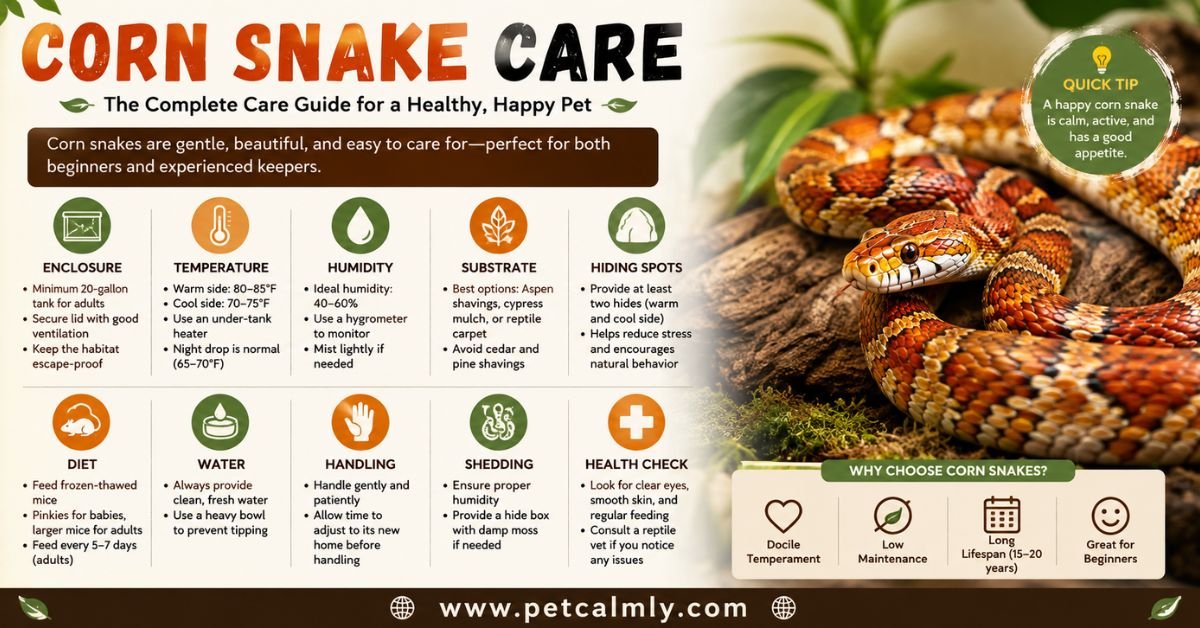
Good corn snake care means a secure 20–40 gallon (or larger) enclosure with a warm side around 85–88°F and a cool side around 75°F, a humidity level of 40–50% (raised to 60%+ during shedding), a solid substrate for burrowing, fresh water at all times, and appropriately sized rodent prey every 7–14 days depending on age. Corn snakes are calm, hardy, and forgiving of small mistakes, which is exactly why they’re one of the most recommended snakes for first-time reptile owners.
If you’ve just brought home a corn snake, or you’re still deciding whether one is right for you, this guide walks through everything from setup to feeding to the behaviors that sometimes worry new owners and it tells you honestly which of those behaviors are normal and which ones mean it’s time to call a reptile vet.
Why Corn Snakes Are One of the Best Beginner Pet Snakes
Corn snakes (Pantherophis guttatus) get their name from the corn-kernel-like pattern on their belly scales, not from any love of cornfields though wild corn snakes are often found near grain stores, hunting the rodents that gather there. That hunting instinct is part of what makes them such easy captives: they’re food-motivated, they settle into a routine quickly, and they rarely show the defensive stress that some other species do.
A few reasons corn snakes tend to work well for new owners:
- They stay a manageable size, usually 3–5 feet as adults
- They’re not venomous and rarely bite once settled in
- They tolerate gentle, regular handling better than many species
- Their care requirements are well understood, with decades of captive breeding behind them
- They come in dozens of color morphs, so you can pick a look you love without changing the care routine
None of that means corn snakes are “low maintenance” in the sense of being ignorable. They still need a properly built habitat and a consistent routine. What it means is that the margin for error is a little wider than it is for more sensitive species, which takes some pressure off while you’re learning.
Corn Snake Habitat Setup: What Your Snake Actually Needs
The enclosure is where most beginner mistakes happen usually because the tank is too small, too dry, or missing a hiding spot on both the warm and cool sides. Get this part right and a lot of the “problem behaviors” people ask about (hiding constantly, refusing food, glass surfing) tend to resolve on their own.
Enclosure Size and Type
A hatchling corn snake can start in a 10-gallon tank or small rack tub, but they grow fast, and it’s usually easier on both you and your snake to house them in an appropriately sized enclosure from early on rather than upgrading every few months. As a general guideline:
- Hatchlings to juveniles: 10–20 gallon equivalent, with plenty of hiding cover so they don’t feel exposed
- Subadults to adults: 30–40 gallon equivalent (roughly 36″ x 18″ x 18″), front-opening if possible for easier, lower-stress handling
Corn snakes are excellent escape artists they can push through surprisingly small gaps, so a secure, latching lid isn’t optional. Screen tops need to be clipped or locked; a snake that gets loose in a house is genuinely hard to find and can end up somewhere dangerous.
Substrate Options
The substrate is the material lining the bottom of the enclosure, and it does more than look nice — it holds humidity and lets your snake express natural burrowing behavior. Reasonable options include:
- Aspen shavings — a classic choice, good for burrowing, holds moderate humidity
- Coconut fiber (coco coir) — holds humidity well, useful if you’re in a dry climate
- Cypress mulch — good moisture retention for enclosures that run humid
Avoid cedar and pine shavings specifically the aromatic oils in these woods are known to irritate reptile respiratory tissue. Sand isn’t a good fit for corn snakes either; it doesn’t offer the same burrowing benefit and can be an impaction risk if ingested with food.
Temperature and Humidity Gradients
Corn snakes are ectothermic, meaning they rely on their environment, not their own metabolism, to regulate body temperature. That’s why a temperature gradient not a single tank-wide temperature matters so much. Your snake needs to be able to move to the warm side to digest a meal and to the cool side to bring its temperature back down.
| Zone | Temperature |
|---|---|
| Warm side (basking area) | 85–88°F |
| Cool side | 72–75°F |
| Nighttime drop | Down to ~70°F is fine |
| Humidity | 40–50% normally, 60%+ during shedding |
Use an under-tank heat mat controlled by a thermostat, and check temperatures with a digital thermometer rather than relying on the heat mat’s built-in dial those are notoriously inaccurate. A thermostat isn’t a luxury item here; an uncontrolled heat source is one of the more common causes of thermal burns in pet reptiles.
Hides, Enrichment, and Climbing Branches
Provide at least two hides one on the warm side, one on the cool side so your snake never has to choose between feeling secure and being at the right temperature. A snake that only has one hide, positioned on the cool side, will often sit in the open on the warm side looking stressed simply because it doesn’t want to leave its only shelter to warm up.
Corn snakes also appreciate some structure to explore: a sturdy branch, a few artificial or safe live plants, and a water dish large enough to soak in. This isn’t just decoration mild environmental enrichment is linked to reduced stress behaviors in captive reptiles more broadly, and a snake with things to investigate tends to be a calmer, more confident handling subject.
Feeding Your Corn Snake the Right Way
What Do Corn Snakes Eat
In captivity, corn snakes eat appropriately sized frozen-thawed mice (or rats, once large enough). Frozen-thawed is strongly preferred over live prey it removes the risk of the rodent injuring your snake, and most corn snakes take frozen-thawed prey without any trouble once they’re established feeders.
Prey size is simple to judge: the rodent should be roughly the same width as the thickest part of your snake’s body, not longer than it is wide.
Feeding Schedule by Age
| Age | Prey Size | Frequency |
|---|---|---|
| Hatchling | Pinky mouse | Every 5–7 days |
| Juvenile | Fuzzy/small mouse | Every 7–10 days |
| Subadult | Adult mouse | Every 7–10 days |
| Adult | Adult mouse or small rat | Every 10–14 days |
This is a starting point, not a rigid rule. Some individual snakes do better slightly more or less often, and body condition a healthy, evenly proportioned body without a sunken spine or excess fat is a better guide than the calendar alone.
Common Feeding Mistakes
- Feeding prey that’s too large. This is the single most common mistake, and it can lead to regurgitation, which is much harder on a snake than simply skipping a meal would have been.
- Handling too soon after feeding. Give your snake 24–48 hours to digest before picking it up. Handling right after a meal is a common, preventable cause of regurgitation.
- Feeding in the main enclosure and then immediately handling for “playtime.” Snakes don’t distinguish this the way we’d like some become defensive at open-hand approaches near feeding time because they’ve learned to associate hands with food. If this happens, try using long feeding tongs and keeping feeding and handling sessions clearly separated by time.
- Assuming a skipped meal is an emergency. It usually isn’t see the behavior section below.
Corn Snake Behavior: What’s Normal and What’s Not
This is the section most new owners actually come here for. A snake can’t tell you when something’s wrong, so learning to read behavior is the closest thing you have to a conversation with your pet.
Understanding Shedding (Ecdysis)
Corn snakes shed their skin as they grow, roughly every 4–6 weeks in younger snakes and less often in adults. A few days before a shed, you’ll notice:
- Dull, cloudy-looking skin
- Eyes turning a milky blue-grey (“in blue”)
- Reduced appetite and increased hiding
- More defensive or jumpy behavior than usual
All of this is normal. During this stage, your snake’s vision is genuinely impaired, which is part of why it may seem more skittish it’s not personality, it’s biology. Raise humidity slightly and avoid handling until the shed is complete and the skin comes off in one clean piece. If shed comes off in fragments, or if you notice retained shed around the eyes (visible as a stuck, cloudy cap even after the rest of the skin is off) or the tip of the tail, a warm soak and gentle assistance can help; if it persists across sheds, it’s worth a vet visit, since retained eye caps in particular can lead to complications if left unaddressed.
Why Corn Snakes Hide or Refuse Food
New owners often panic the first time their snake refuses a meal, but appetite loss is one of the most normal, least concerning things a corn snake does. Common, harmless causes include:
- Pre-shed cycle (see above)
- Seasonal brumation-like slowdown, especially in cooler months, even in an indoor, temperature-controlled setup
- Recent environment change a new enclosure, a move, or even rearranging the hides can cause a temporary strike
- Being close to full-grown, where adult corn snakes naturally eat less often
A healthy corn snake can safely skip several meals without any harm. What matters is the overall trend, not any single missed feeding. If your snake is alert, has good body weight, and is otherwise behaving normally, the best move is usually to wait a week and try again not to force-feed or repeatedly disturb it.
Handling and Bonding Tips
Corn snakes generally tolerate handling well, but “tolerate” is the operative word it’s not the same as seeking it out, and respecting that distinction is part of good care.
- Support the body in multiple places rather than gripping; snakes feel more secure when they’re not dangling
- Move slowly and let the snake move through your hands rather than restraining it
- Start with short 5–10 minute sessions, especially with a new snake still settling into its enclosure
- Watch for tail-rattling, hissing, or a pulled-back “S” posture these are communication, not aggression, and mean it’s time to put the snake back and try again later
- Avoid handling for at least 48 hours after feeding and during active shed
A snake that seems “flighty” for the first week or two after coming home is usually just adjusting. Consistent, calm, low-pressure interaction over several weeks does more for trust than any single long handling session.
Daily and Weekly Corn Snake Care Checklist
Use this as a quick reference once your setup is established:
Daily
- Check and refresh water
- Quick visual check for signs of illness or escape risk
- Spot-clean any waste
Weekly
- Check thermostat and thermometer readings on both sides
- Check humidity levels, especially if a shed is due
- Feed on schedule (adjusting for age and body condition)
Monthly
- Full substrate refresh or deep clean, depending on substrate type
- Inspect hides, décor, and enclosure seals for wear or escape gaps
- Weigh your snake if you have a small scale, to track growth trends over time
When Should You Worry: Signs of Illness in a Corn Snake
Most corn snake quirks are behavioral, not medical but a few signs genuinely warrant a call to a reptile-experienced veterinarian rather than a wait-and-see approach:
- Open-mouth breathing, wheezing, or mucus around the mouth or nose possible respiratory infection
- Persistent refusal to eat for several months combined with weight loss, especially outside of a normal seasonal slowdown
- Repeated regurgitation, rather than a single incident traceable to handling too soon or prey that was too large
- Swelling, redness, or a foul smell around the mouth could indicate mouth rot (infectious stomatitis)
- Lethargy paired with a limp, unresponsive body rather than normal restfulness
- Visible parasites (mites), or unusual lumps under the skin
- Blood in stool, or no bowel movement for an extended period alongside straining
None of these are things to diagnose or treat at home. A reptile vet ideally one with specific exotic or herp experience, since general small-animal vets don’t always have reptile-specific training is the right call any time you see these signs. Corn snakes hide illness well, which is a survival instinct in the wild but means that by the time symptoms are obvious, the underlying issue may already be established. Early veterinary input is genuinely valuable here, not just a formality.
What Should New Owners Do Before Bringing a Corn Snake Home
If you’re still in the planning stage, a little preparation now prevents most of the stress later:
- Set up and stabilize the enclosure first. Get temperatures and humidity holding steady for a few days before your snake ever arrives.
- Locate a reptile-experienced vet in your area before you need one, not during an emergency.
- Buy your first few feedings of appropriately sized frozen prey in advance, along with tongs.
- Decide where the enclosure will live away from direct sunlight, drafts, and constant loud noise or foot traffic.
- Set realistic expectations about the settling-in period. Most new corn snakes need one to two weeks of minimal handling to decompress before they show their real temperament.
Conclusion
Corn snake care isn’t complicated once you understand the logic behind it: a stable temperature gradient, the right humidity, appropriately sized meals on a sensible schedule, and enough hides that your snake never has to choose between safety and comfort. Almost everything that looks alarming to a new owner hiding, a skipped meal, a defensive posture before a shed has a normal, biological explanation once you know what to look for. The behaviors that don’t fit that pattern, like labored breathing or ongoing weight loss, are exactly the ones worth taking to a vet without delay.
Corn snakes reward patience. Give one a properly built home and a calm, consistent routine, and you’ll likely find they’re every bit as low-drama and rewarding as their reputation suggests.
More Information About Pets, Please Visit Our Website: Corn Snake Diet Feeding Schedule
Corn Snake Temperature and Humidity
What Is the Best Bedding for Corn Snakes?
Corn Snake Shedding Problems
Baby Corn Snake Diet
Corn Snake Diet in the Wild
How to Tell If a Corn Snake Is Healthy
Best Bedding for Corn Snakes
Frequently Asked Questions
1: How long do corn snakes live as pets?
With good care, pet corn snakes commonly live 15–20 years, and some individuals live even longer. Their lifespan is one of the reasons a corn snake is a genuine long-term commitment, not just a starter pet to outgrow in a year or two.
2: Do corn snakes need a heat lamp, or is an under-tank heater enough?
An under-tank heat mat controlled by a thermostat is standard and sufficient for corn snakes, since they don’t require UVB lighting the way many lizards do. Some keepers add a low-wattage overhead bulb for a visible day-night cycle, but it isn’t essential as long as the ambient room lighting provides a natural rhythm.
3: Is it normal for a corn snake to bite?
Bites are uncommon in corn snakes and usually happen only when a snake mistakes a hand for food or feels cornered. A defensive bite from a corn snake is minor more of a quick pinch than anything dangerous and it typically stops once the snake feels secure again. Frequent biting is a signal to slow down handling, not a sign of a “mean” snake.
4: Can I house two corn snakes together?
No corn snakes should be housed individually. They’re solitary animals, cohabitation increases stress and the risk of one snake injuring or even eating the other (especially with a size mismatch), and it also makes it much harder to track each snake’s individual feeding, shedding, and health status.
5: Why does my corn snake keep trying to escape or “glass surf”?
Persistent glass surfing (repeatedly pushing against or climbing the enclosure walls) usually points to something in the setup, not personality commonly an enclosure that’s too small, missing a secure hide, sitting in an area with too much foot traffic, or temperatures outside the comfortable range. Reviewing the habitat setup section above is the right first step before assuming it’s just how your snake is.
6: What’s the difference between brumation and illness?
Brumation is a natural, reptile-specific slowdown in activity and appetite, often triggered by shorter days or cooler temperatures, even in an indoor enclosure with stable heating. A brumating snake is typically still alert when disturbed and maintains normal body weight over the short term. Illness, by contrast, usually comes with additional signs labored breathing, ongoing weight loss, lethargy that doesn’t lift when the snake is handled, or visible physical symptoms. When in doubt, a vet check is the safer route to rule out illness rather than assuming it’s brumation.