Short direct answer
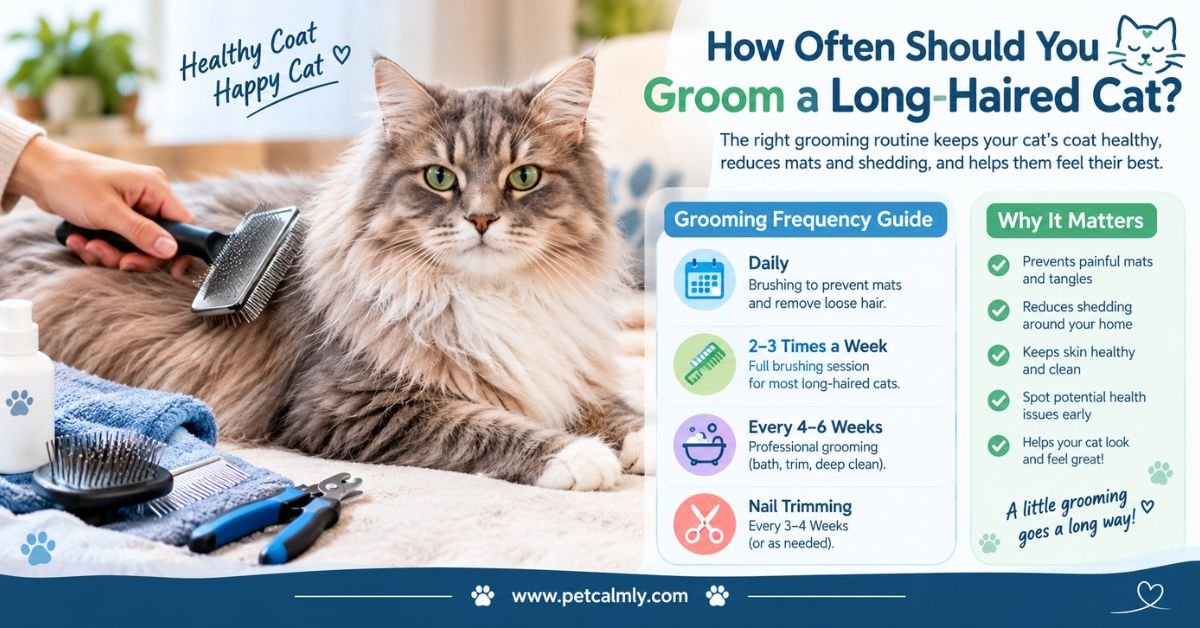
Most long-haired cats need grooming 4-7 times per week, with daily brushing during shedding seasons. The exact frequency depends on your cat’s coat thickness, lifestyle, and how prone they are to matting. Cats who spend time outdoors or have thicker coats may need daily attention, while some indoor cats with silkier coats can go 3-4 days between brushing sessions.
Why Long-Haired Cat Grooming Actually Matters
If you’ve recently adopted a long-haired cat or inherited one from a family member, you might be wondering: Do I really need to brush them that often?
The answer is yes and honestly, regular grooming is one of the most overlooked responsibilities of long-haired cat ownership. I’ve seen countless situations where owners discovered the hard way that skipping grooming sessions leads to painful matting, health issues, and stressed cats who now hate being touched.
The good news? A consistent grooming routine doesn’t have to be complicated. Once you understand what your cat actually needs and settle into a rhythm, it becomes part of your normal pet care routine rather than a chore.
Long-haired cats can’t maintain their coats the way their short-haired cousins can. Their longer fur is more prone to tangling, mats can form quickly (sometimes within days), and those gorgeous coats actually hide potential skin and health problems. Regular brushing prevents these issues before they start.
This guide covers everything you need to know from the practical details of grooming frequency to the warning signs that your cat needs immediate attention, plus solutions for the cats who’d rather do anything than sit still for a brushing.
Why Long-Haired Cats Need Regular Grooming (Beyond Aesthetics)
Understanding why grooming matters helps you stay committed when your cat gives you that “please stop” look.
The Matting Problem
Mats form when loose hair tangles together and tightens against the skin. For long-haired cats, this happens naturally because their coat structure is different. Unlike short hair that falls out cleanly, long hair tends to wrap around itself. Add regular shedding, dust, and humidity, and you’ve got the perfect recipe for painful mats.
When mats go unaddressed, they don’t just look bad. They pull on the skin, restrict movement, trap moisture and parasites underneath, and eventually become painful enough to affect your cat’s behavior and quality of life. Cats with severe matting often become irritable, overgroom the areas around mats (causing bald spots and skin irritation), or stop grooming altogether—which leads to additional matting and hygiene issues.
The worst-case scenario? Mats so severe that they require professional de-matting or even surgical removal, both of which are uncomfortable and expensive.
Skin Health and Circulation
When you brush your cat regularly, you’re doing more than removing loose hair. You’re:
- Stimulating blood flow to the skin
- Distributing natural oils throughout the coat
- Removing dead skin cells and dust that accumulate near the base of the hair
- Catching early signs of skin problems (dryness, flaking, lumps, parasites)
Long-haired cats’ coats actually insulate heat against their skin, which can trap moisture and create an environment where skin problems thrive if the coat isn’t properly maintained.
Early Detection of Health Issues
During grooming sessions, you’re in a perfect position to notice things that might otherwise go undetected:
- Lumps or bumps under the fur
- Changes in skin appearance
- Signs of parasites (fleas, mites)
- Abnormal hair loss or bald patches
- Skin redness or irritation
- Weight changes (easier to feel on a groomed cat)
Cat owners sometimes miss health problems simply because they can’t see under the fur. Regular grooming eliminates this blind spot.
Reducing Hairballs and Digestive Issues
Long-haired cats ingest more loose hair during self-grooming, which contributes to hairball formation. While not every hairball is preventable, reducing the amount of loose hair in your cat’s environment significantly decreases how many they end up swallowing and vomiting.
Grooming Frequency: What the Research Actually Shows
Let me be direct: there’s no single “correct” answer because it depends on individual factors. But veterinarians and feline behavior specialists generally agree on a baseline.
The Standard Recommendation
Most veterinary sources recommend brushing long-haired cats at least 3-4 times per week as a minimum. The AAFCO (Association of American Feed Control Officials) guidelines and common veterinary practice suggest that 5-7 times per week is ideal for most long-haired cats, with daily grooming during heavy shedding seasons (spring and fall).
Here’s why the range exists: it depends on your specific cat and situation.
Factors That Determine Your Cat’s Grooming Schedule
Coat Thickness and Texture
Persians, Ragdolls, and Birmans have denser, thicker coats that mat more easily and need more frequent grooming—often daily, even outside shedding season.
Maine Coons and similar breeds with silkier, less-dense coats might do fine with 4-5 brushing sessions per week.
Indoor vs. Outdoor Exposure
Indoor cats have fewer environmental contaminants (dust, dirt, pollen) accumulating in their coats, so they need somewhat less frequent grooming than outdoor or outdoor-access cats.
Outdoor cats pick up debris, get mats more easily, and expose their coats to weather and environmental factors that require more maintenance.
Age and Activity Level
Kittens and younger cats often have sleeker coats that don’t mat as quickly. Older cats sometimes develop drier skin and less resilient coats, requiring gentler but still regular grooming.
Senior cats also move more slowly, which means they’re more prone to urine or feces getting stuck in their rear-end fur—making regular grooming essential for hygiene.
Shedding Season Intensity
During spring and fall, most long-haired cats shed dramatically. Many owners think daily brushing during these seasons is overkill, but it’s actually the best way to prevent mats from forming while your cat is losing that much hair.
Health Conditions
Cats with skin conditions, allergies, or obesity need more frequent grooming (or specialized grooming techniques) to prevent mats and catch problems early.
A Practical Weekly Schedule
Here’s what a realistic grooming plan looks like:
Off-Season (Winter and Summer): 4-5 brushing sessions per week, 10-15 minutes each
Shedding Season (Spring and Fall): 6-7 times per week, with at least 1-2 daily sessions during peak shedding
For High-Mat-Risk Breeds: Daily brushing year-round is the honest recommendation
How to Tell Your Cat Actually Needs Grooming
Your cat will give you signs, but many owners miss them because they’re subtle.
Visible Signs It’s Time to Brush
The “Unkempt” Look
This is hard to describe until you’ve seen it, but a long-haired cat’s coat starts looking flat, separated into sections, or like it’s “lay too long in one direction.” This means loose hair is building up and mats are starting to form underneath.
Small Tangles or Knots
You’ll notice small tangles, especially around the back legs, under the arms, and around the rear end. Catching these early is key they’re simple to brush out when small but become painful mats if left alone.
Visible Mats
These look like small clumps of hair fused together, usually occurring in areas where your cat lies down frequently (chest, back legs, belly). Some mats appear as discolored patches because they’re collecting dust or causing the hair beneath to bend awkwardly.
Clumped Fur Around the Back End
This is common in overweight cats or those who have trouble grooming themselves. Urine, feces, or just matted fur around the rear end is a sign your cat needs immediate grooming and potentially a vet check.
Behavioral Signs
Excessive Self-Grooming
If your cat is grooming specific areas excessively or you notice bald spots, they might be trying to manage mats or skin problems on their own.
Reluctance to Be Touched
Cats with painful mats will flinch when you pet certain areas or become defensive about being handled. This is their way of telling you they’re uncomfortable.
Increased Scratching or Skin Irritation
Scratching that goes beyond normal grooming behavior might indicate mats irritating the skin or parasites hiding in the coat.
How to Groom Your Long-Haired Cat at Home
Understanding the “why” is one thing. Actually doing it is another. Here’s the practical breakdown.
1: Before You Start: The Right Tools Matter
Using the wrong tools is frustrating for you and uncomfortable for your cat. Invest in quality grooming supplies:
- Slicker brush: This is your primary tool. Look for one with fine, short, close wires that can reach through long coats to remove loose hair and catch mats early.
- Metal comb: Use this after brushing to check for any remaining tangles and to work through mats or sparse areas gently.
- Deshedding tool (optional but helpful): Tools like the FURminator are particularly useful during shedding season to remove loose undercoat.
- Mat splitter (for existing mats only): This specialized tool gently separates matted sections without pulling hair out by the roots. Use carefully or avoid altogether if you’re unsure.
Budget $30-$60 for a quality brush and comb set. Cheap brushes don’t work effectively, shed their bristles into your cat’s coat, and make the whole process frustrating.
2: The Grooming Process: Setting Your Cat Up for Success
Choose the Right Timing
Groom your cat when they’re calm and relaxed. Most cats are more receptive after eating, during their natural calm periods (often late afternoon), or after a brief play session that tires them out slightly.
Avoid grooming right after they wake up or when they’re in an active, playful mood. They’ll be less patient.
Find a Comfortable Location
Use a place where your cat feels secure—not a cold, strange bathroom. Sit on the floor or use a low surface so your cat feels they can walk away if needed (even though you want them to stay, they’re less anxious if escape feels possible).
Some cats prefer being on your lap; others prefer being on a table or grooming mat. Watch your cat’s preferences.
Start with Positive Associations
If your cat isn’t used to grooming, spend a few days just touching them with the brush without actually brushing. Let them sniff it. Brush for just 30 seconds, then stop and give them a treat. Build the association that grooming = good things.
The Actual Brushing Technique
- Start gently: Begin with the slicker brush in areas your cat finds most pleasant—usually the head, cheeks, and sides.
- Use short, gentle strokes: Don’t press hard. Let the brush do the work. Brush in the direction the fur grows, not against it.
- Work systematically: Move from head to tail, covering the entire body. Don’t skip under the legs or the chest area—these mat easily.
- Check for mats as you go: If you hit resistance or feel a tangle, stop and gently work it apart with your fingers or the metal comb before continuing.
- Pay special attention to problem areas: Focus extra time on behind the ears, armpits, back legs, belly, and rear end. These zones mat fastest.
- End on a positive note: Keep sessions to 10-15 minutes initially. It’s better to groom more frequently for shorter sessions than to push your cat past their patience limit.
3: Dealing with Existing Mats
If you find a mat:
- Don’t pull: Pulling on mats is painful and teaches your cat to resist grooming.
- Use your fingers first: Gently tease the mat apart with your fingers or the metal comb using small, gentle motions.
- Consider a mat splitter: These tools can separate mats gently, but they require practice. If you’re unsure, move to professional grooming.
- Know when to give up: If a mat is severe, close to the skin, or your cat is showing pain, stop and call your groomer. Forcing it risks hurting your cat and injuring their skin.
Professional Grooming vs. Home Grooming: Which Do You Need?
The honest answer: most long-haired cat owners benefit from a combination of both.
When Home Grooming Is Sufficient
Home grooming works perfectly fine if:
- You’re consistent with your schedule
- Your cat tolerates it reasonably well
- You catch mats early before they become severe
- You have the basic tools and technique down
- Your cat has a manageable coat type
Regular home grooming actually keeps your cat more accustomed to touch and handling, which is good for their overall well-being and makes vet visits easier.
When Professional Grooming Becomes Necessary
You should consider professional grooming if:
- Your cat’s coat is already severely matted
- You’re unable to maintain the grooming schedule
- Your cat becomes anxious or aggressive during home grooming
- Your cat has specific coat types known for extreme matting (Persians, severely undercoated breeds)
- You want a professional bath and nail trim done safely
- Your cat has mobility issues or weight problems that make self-grooming difficult
For cats with severe matting: Professional de-matting can be uncomfortable and sometimes requires sedation, which is why prevention through regular home grooming is so valuable.
Finding a Cat-Friendly Groomer
Not all groomers are comfortable with cats, and many cat-specific facilities focus on Persian cats. When looking for a groomer:
- Ask if they specialize in long-haired cats
- Inquire about their handling techniques (fear-free or certified trainers are a good sign)
- Ask what they do if a cat becomes stressed
- Request a short introductory visit where your cat just meets them without grooming
- Get references from other cat owners if possible
5 Common Grooming Mistakes That Make Things Worse
Learning what not to do can prevent a lot of problems.
Mistake 1: Waiting Too Long Between Sessions
Waiting two weeks to groom your long-haired cat and then wondering why their coat is a matted mess is like skipping brushing your teeth for a month and expecting them to be fine. Regular maintenance is the only strategy that works.
If you’ve gotten behind, don’t overcompensate with an intense grooming session. That stresses your cat and won’t untangle everything anyway. Go back to your regular schedule and know that mats that can’t be gently brushed out will need professional attention.
Mistake 2: Brushing Too Aggressively
Some owners think they need to brush hard to be effective. Actually, this causes discomfort, breaks hair, and makes your cat hate grooming. The brush should glide through the coat smoothly. If it’s catching or pulling, you’re either using the wrong tool or your cat has mats that need gentler, more patient handling.
Mistake 3: Ignoring the Undercoat
The undercoat (the dense hair beneath the outer layer) is where most mats form. You need to brush deep enough to reach it, but not so hard that you’re hurting your cat. A slicker brush reaches the undercoat if you use it correctly; you may need a deshedding tool during shedding season.
Mistake 4: Brushing Wet Coats
Grooming your cat right after a bath or during humid weather when their coat is damp is tempting, but wet hair tangles more easily. Always brush dry coats.
Mistake 5: Skipping Problem Areas Because Your Cat Doesn’t Like It
The armpits, rear end, and belly are the areas cats most dislike having touched and they’re also where mats form fastest. Skipping these areas means you’re missing the most important grooming zones. Instead of avoiding them, work on building positive associations with grooming these sensitive spots using treats and patience.
Health Issues That Develop From Poor Grooming
Understanding the consequences helps reinforce why consistency matters.
Matting-Related Skin Problems
Mats restrict air circulation to the skin underneath, creating warm, moist environments where bacteria and yeast thrive. This leads to:
- Secondary skin infections
- Hot spots (areas of inflamed, infected skin)
- Odor coming from the coat
- Persistent itching and discomfort
Parasite Infestations
Fleas, mites, and other parasites hide deep in ungroomed coats where treatments are less effective. Regular grooming helps you notice parasites early and ensures treatments reach the skin.
Mobility and Behavioral Changes
Cats with severe matting experience:
- Restricted movement (they move differently to avoid mats pulling)
- Behavioral changes (increased irritability or withdrawn behavior)
- Difficulty accessing their litter box hygienically (contributing to litter box avoidance)
- Pain-related aggression or anxiety
Urinary and Fecal Issues
Long-haired cats are prone to getting urine or feces caught in their rear-end fur, especially if overweight or arthritic. Matted fur in this area prevents proper self-cleaning, leading to:
- Urinary tract issues (bacteria multiplying in urine-soaked fur)
- Parasitic infections
- Litter box avoidance
- Urinary accidents in the home
Making Grooming Easier: Strategies for Resistant Cats
Not every cat cooperates willingly. Here are realistic strategies.
Start Young
Kittens that grow up with grooming accept it as normal maintenance. If you have an adult cat who resists, you’re re-training their association with handling.
Use Treats and Positive Reinforcement
Offer high-value treats (tiny pieces of cooked chicken, tuna, or commercial treats) during grooming, not just after. This reinforces the behavior while it’s happening.
Some cats are more motivated by play or attention than food. Pay attention to what matters most to your cat.
Keep Sessions Short Initially
Two minutes twice a day is better than 15 minutes once a week if your cat isn’t accustomed to grooming. Gradually extend sessions as your cat builds tolerance.
Try Different Brushes
Some cats dislike slicker brushes but accept metal combs or deshedding tools. Experiment to find what your cat tolerates best.
Groom During Calm Windows
Most cats have predictable times when they’re naturally more relaxed. Typically, this is late afternoon or after eating.
Consider Calming Aids
If your cat is extremely anxious about grooming:
- A Feliway diffuser in the grooming area can help reduce stress
- Some cats respond well to a grooming wipe (towel with a mild, cat-safe scent) before brushing
- Consult your vet about whether calming treats or supplements might help
Never force grooming. A stressed cat can cause injury to themselves or you, and it worsens their association with handling.
Seasonal Grooming: Why Shedding Season Requires Extra Attention
Spring and fall aren’t just slightly busier for grooming they’re fundamentally different.
Understanding Seasonal Shedding
Long-haired cats undergo dramatic seasonal shedding as they adjust their coats for temperature changes. This isn’t a gradual process; it’s often a 2-3 month period where hair loss increases 5-10x normal levels.
During peak shedding, you might brush your cat and find enough loose hair to fill a small ball. This isn’t excessive—it’s normal. But it also means mats can form rapidly if you don’t stay on top of brushing.
The Shedding Season Strategy
During heavy shedding (typically March-May and September-November):
- Increase brushing to daily, especially if your cat is prone to matting
- Use a deshedding tool in addition to your regular slicker brush
- Be extra vigilant about checking behind ears, armpits, and back legs
- Wipe your cat with a damp cloth or grooming wipe daily to catch loose hair before it mats
Why this matters: Owners who slack on grooming during shedding season often end up with their cat matted in multiple areas, requiring professional de-matting or worse. A few extra minutes daily saves significant problems later.
Post-Shedding Grooming
Once shedding season passes, your cat’s coat stabilizes and grooming becomes easier. However, some cats benefit from a complete undercoat brush-out once shedding has peaked this removes embedded loose hair and prevents secondary matting. If your cat tolerates it, this can be done at a groomer or at home with patience.
When to Call Your Vet: Red Flags in Coat and Skin Health
Grooming isn’t just about maintenance it’s an opportunity to catch health issues early. Know when professional help is needed.
Contact Your Vet If You Notice:
Excessive Hair Loss or Bald Patches
Some shedding is normal; bald patches are not. This can indicate:
- Ringworm or other fungal infections
- Mites or parasites
- Allergies
- Stress-related overgrooming
- Underlying health issues
Skin Abnormalities
Red, inflamed, flaky, or weeping skin suggests infection or dermatological issues requiring veterinary treatment.
Odor from the Coat or Skin
A mild, pleasant “cat smell” is normal. Strong odor from the coat itself (especially in certain areas) can indicate:
- Skin infection
- Anal gland issues
- Underlying health problems
Lumps or Bumps
Any new lumps, bumps, or skin growths should be examined by your vet, especially if they’re bleeding or infected.
Changes in Behavior Related to Grooming
If your cat suddenly becomes aggressive during grooming, obsessively licks certain areas, or shows signs of pain when touched in areas they previously tolerated, there’s likely an underlying issue.
Extreme Matting Requiring Sedation
If your cat’s coat is so severely matted that professional grooming would require sedation, your vet should evaluate them first to ensure they’re healthy enough for the procedure.
Special Considerations for Specific Long-Haired Breeds
Different breeds have different coat challenges.
Persian Cats
Persians have the densest, most mat-prone coats of any domestic cat breed. Many breeders and owners recommend daily grooming year-round, sometimes twice daily during shedding season. Persians also have shorter muzzles, making self-grooming more difficult.
Grooming focus: Head, face (gently around eyes), ears, chest, back legs, and rear end need extra attention.
Maine Coons
Maine Coons have long, silky coats that are less prone to matting than Persians but still require regular grooming.
Recommendation: 4-5 times per week typically works well, with daily grooming during shedding season.
Grooming focus: The undercoat can be surprisingly dense; don’t neglect it just because the outer coat looks sleek.
Ragdolls and Birmans
These cats typically have semi-long coats that are somewhat less dense than Persians. Many do well with 4-5 grooming sessions per week, increasing to daily during shedding season.
Grooming focus: These cats often have lighter, silkier coats, so gentler techniques work best.
Himalayans and Colorpoint Persians
These cats combine Persian coat density with colorpoint coloring. They require similar daily grooming commitments as Persians.
Norwegian Forest Cats and Siberian Cats
These breeds have evolved thick coats for cold climates. Their coats are somewhat less prone to matting than Persians but still need consistent grooming.
Recommendation: 3-4 times per week off-season, daily during shedding season.
Creating a Grooming Routine That Actually Sticks
Having all this information is one thing; actually maintaining a routine is another. Here’s how to make it stick.
Build It Into Your Schedule
Choose specific days and times for grooming, just like you would for any other responsibility. Monday, Wednesday, and Friday evenings after dinner, for example. Written routines are more likely to happen than vague intentions.
Make It Part of Bonding
Frame grooming as quality time with your cat, not a chore you’re checking off. Most cats eventually come to enjoy the attention and physical contact, especially if positive associations are built early.
Track Your Grooming
For the first month, keep a simple note about when you groom and any mats or issues you find. This helps you:
- Identify patterns (maybe you need daily grooming, not 4x weekly)
- Notice early warning signs of matting
- Stay accountable to your schedule
- Provide information to your vet if issues arise
Adjust Based on Your Cat’s Individual Needs
If you’re grooming 4 times weekly and still finding mats, increase to 5-6 times. If you rarely find anything and your cat’s coat looks great, you might be able to maintain at the lower end of the range but don’t skip sessions for weeks and expect good results.
Invest in the Right Tools and Keep Them Accessible
Keep your slicker brush and comb in an easy-to-reach location. If your tools are in a closet upstairs and you’re sitting downstairs, you’re less likely to groom.
Frequently Asked Questions
1: Can I bathe my long-haired cat instead of brushing?
A: Bathing isn’t a substitute for brushing it’s actually harder for most cat owners. Most cats dislike water, and while a bath can help with shedding and odor, it doesn’t prevent mats the way brushing does. If you do bathe your cat, you must brush them after, when their coat is fully dry. Some cats benefit from occasional baths (a few times yearly) combined with regular brushing, but brushing is the primary grooming method for long-haired cats.
2: My cat absolutely refuses to be groomed. What should I do?
A: Start with extremely short sessions (30 seconds) and high-value treats. You might also try different times of day or different grooming tools. If your cat remains resistant after consistent, positive-reinforcement attempts, professional grooming might be worth it—a skilled groomer experienced with anxious cats can make the experience less stressful. If your cat shows aggression or extreme fear, consult your vet; there might be an underlying issue or your vet might recommend calming strategies.
3: Do groomers need to sedate my cat?
A: Most healthy cats don’t need sedation for grooming if the groomer is experienced with cats. Some groomers prefer sedation for severely matted or anxious cats, which is usually safe but requires veterinary involvement. If a groomer suggests sedation as routine, get a second opinion. Sedation carries small risks and shouldn’t be casual.
4: How much does professional grooming for long-haired cats cost?
A: Prices vary widely by location and coat condition, but expect $50-$150+ for a full grooming of a long-haired cat. Severely matted coats cost more. During busy shedding season, appointments might take longer and cost more. Getting quotes from 2-3 local groomers gives you a realistic range for your area.
5: Can I use human hair products on my cat’s fur?
A: No. Human shampoos and conditioners have a different pH balance than cat skin and can cause irritation. If you bathe your cat, use feline-specific grooming products. For regular brushing, you don’t need any products just a proper brush and technique.
6: My cat is elderly and hates grooming. Do they still need regular brushing?
A: Yes, arguably more so. Senior cats often have difficulty grooming themselves and become more prone to matting and skin problems. Because they’re less mobile and more sensitive to pain, grooming needs to be gentle and brief. If your senior cat truly can’t tolerate brushing, discuss with your vet there might be underlying pain or arthritis making grooming uncomfortable, and your vet might recommend pain management or modified grooming techniques.
More Information About Pets, Please Visit Our Website: How to Reduce Cat Shedding Hair
How to Clean Cat Ears at Home
How to Bathe a Cat Safely at Home
Cat Ear Infection Symptoms
Best Cat Brushes for Shedding
Cat Digestive Health Tips
Best Cat Vitamins for Indoor Cats
Conclusion
Long-haired cat grooming gets easier once you accept that consistency is non-negotiable. A few minutes every few days prevents hours of problem-solving and vet visits later.
The best part? Most cats eventually come to enjoy or at least tolerate grooming, especially if they’ve been doing it since kittenhood. The physical touch, the attention, and the relief of having loose hair removed actually feels good to them once they trust the process.
Your consistent grooming also deepens the bond with your cat. You’re noticing small changes in their body, their skin, their behavior. You’re caring for them in a way that goes beyond feeding and play. That matters.
If you’re struggling with your routine or noticing issues with your cat’s coat or skin, reach out to your vet or a cat-specialized groomer. They can assess your individual cat and give recommendations tailored to their specific needs.
Long-haired cats are beautiful, intelligent, and affectionate companions. They’re worth the grooming commitment.